10,000-Word Analysis: 7 Truths About 100 Top AI Startups
AI Startup Evolution: Lessons from the Leonis AI 100
> Special thanks to Special Agent Universe’s strategic advisor for the recommendation.
---
Overview: A Three-Year Sprint Through an Entire Market Cycle
The last three years in AI have been as transformative as three decades of traditional tech progress.
Timeline Highlights:
- Nov 2022: ChatGPT launches, igniting a wave of innovation.
- Early 2023: Thousands of AI projects emerge, but monetization lags. Skepticism rises.
- 2024: Model capabilities leap forward; paying customers arrive.
- 2025: AI products enter complex verticals (healthcare, law, finance), where compliance and workflow integration raise barriers but also strengthen competitive moats.
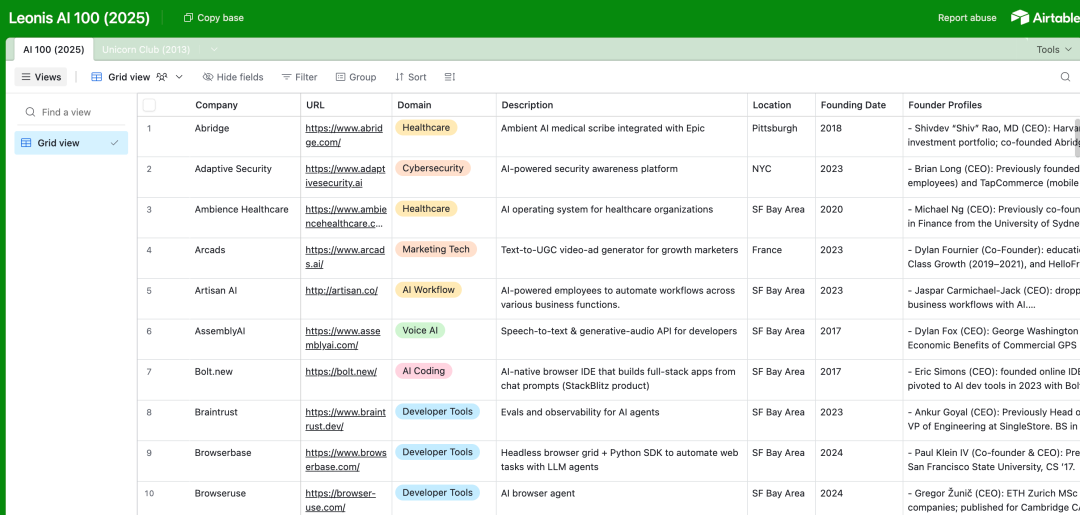
The Leonis Capital team — a VC fund founded in China in 2021 — analyzed over 10,000 startups and selected the 100 fastest-growing AI companies based on signals such as fundraising, hiring, user adoption, GitHub trends, media coverage, ProductHunt entries, and estimated ARR.
📎 Company Directory: Leonis AI 100 Airtable
---
Seven Key Insights from the Leonis AI 100
1. Smaller, Flatter Teams Deliver Massive Output
Core Observation:
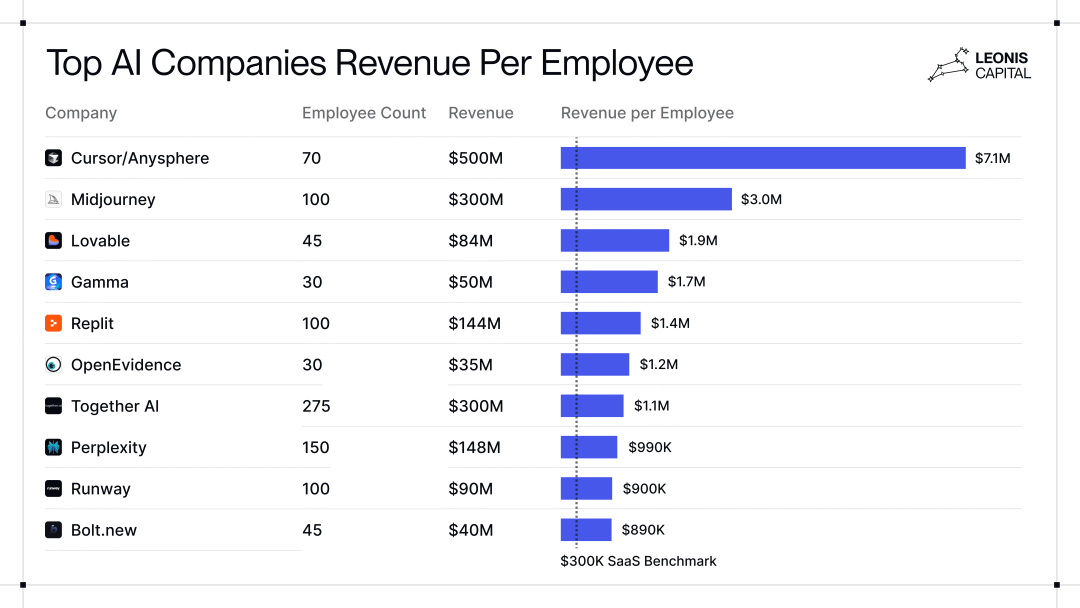
AI startups achieve exceptional per-employee revenue compared to pre-IPO SaaS firms — in some cases 3–10× higher.
Examples:
- Midjourney: ~$200M ARR with 40 employees (~$5M per person).
- Lovable: ~$100M ARR with 45 employees (~$2.2M per person).
Why this works:
- Heavy use of AI for internal processes — product dev, sales outreach, customer support.
- Fewer organizational layers, more direct engagement between technical teams and customers.
- Capital allocated to compute and data rather than large teams.
- Products are highly standardized, reducing client-specific engineering costs.
Parallel Trend:
Platforms like AiToEarn官网 allow creators and small teams to publish and monetize AI-generated content widely without expanding headcount — mirroring the leverage AI startups enjoy.
---
2. Product-Led Growth Comes First, Sales Later
Pattern:
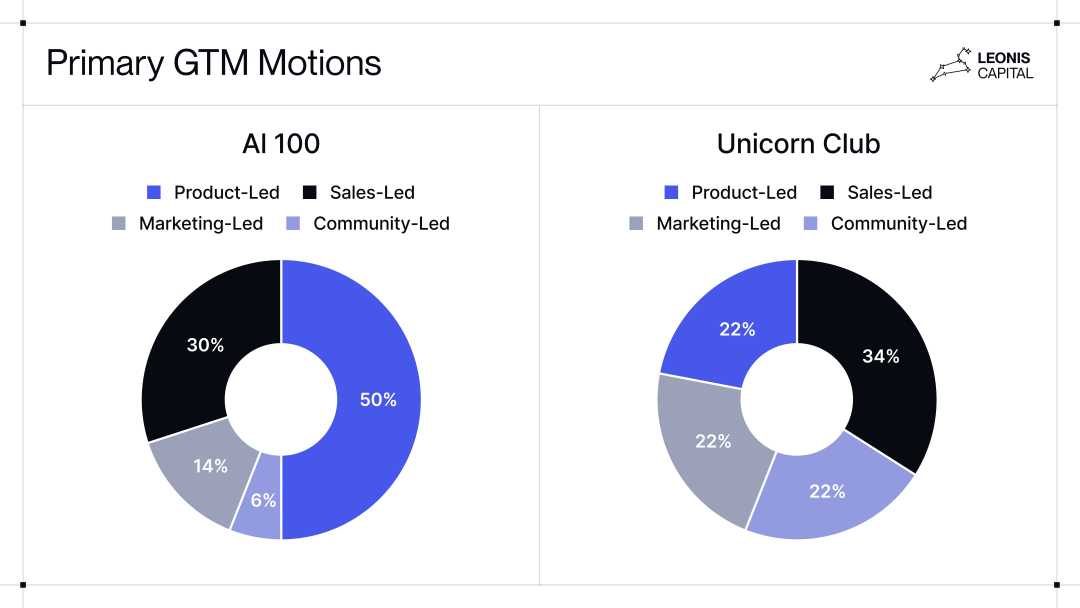
Over 80% of AI Top 100 companies start with self-service sign-up before building formal sales teams.
For horizontal products:
- Individual developers adopt tools (e.g., Cursor).
- Internal team usage grows organically.
- Sales team formalizes procurement and pricing after adoption.
For vertical products (e.g., healthcare, legal):
- Enterprise sales is necessary from day one due to compliance and integration requirements.
---
3. Multiple Winners Instead of "Winner-Takes-All"
Why:
- AI use cases are broad, enabling niche market specializations.
- Low lock-in; users mix and match tools across providers.
Examples:
- Programming: Replit, Cursor, Cognition Labs.
- Image Gen: Stability AI, Midjourney, Krea, OpenArt.
- Video Gen: Synthesia, HeyGen.
- Voice: ElevenLabs, Cartesia, Deepgram.
- Healthcare: Abridge, Freed AI.
Note: Signs of consolidation are emerging (e.g., Cursor outpacing rivals).
---
4. Rapid Pivots Are the New Norm
Key Stat:
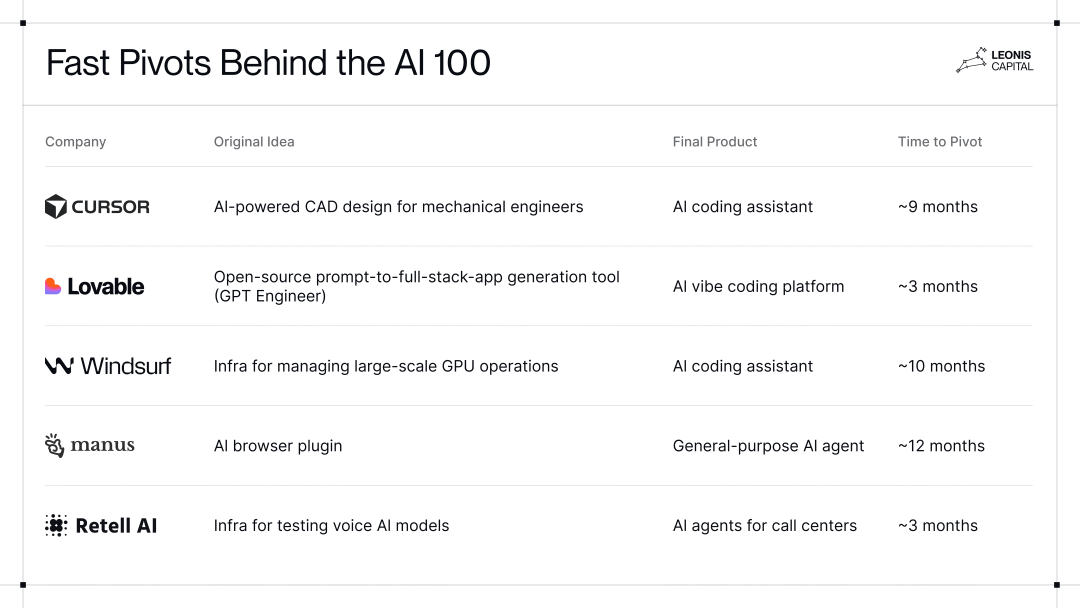
66% of AI Top 100 companies pivoted at least once — faster than the SaaS-era Unicorn Club (54% pivot rate).
Drivers:
- Tracking foundation model advancements in real time.
- Shared infrastructure makes product reconfiguration faster and cheaper.
- Technical talent is highly transferable across domains.
Case Examples:
- Manus: From browser extension to general-purpose AI Agent.
- Cursor: From AI CAD software to programming assistant.
- Windsurf: From GPU management infra to AI programming tools.
---
5. Market Breakouts Happen in Sequence
Pattern:
- Writing & programming →
- Creative media (images, video, audio) →
- Vertical domains (healthcare, law, finance).
Trigger:
- Performance thresholds in foundational models (e.g., Claude 3.5 boosting code reliability → rise of Vibe Coding startups).
Founder Tip:
Perfect execution too early fails; enter near capability turning points for optimal growth.
---
6. Revenue Surge After 2024
Shift:
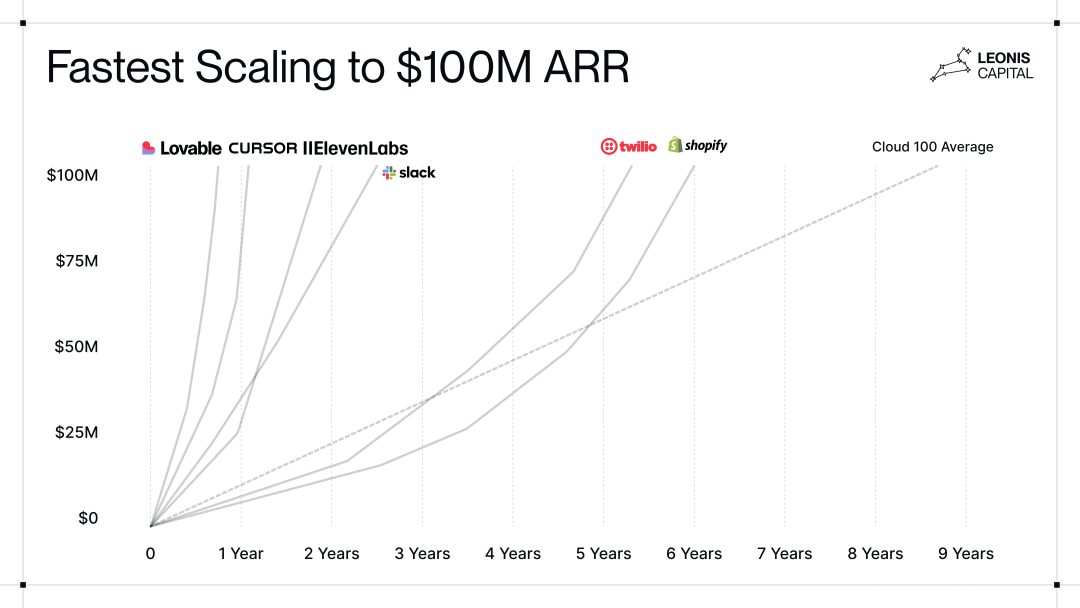
Late 2024 saw an abrupt jump in revenues across AI startups:
- Cursor: $100M ARR in 12 months.
- ElevenLabs: $100M ARR in 22 months.
Drivers:
- AI replaces skilled labor, creating urgent value.
- Fast conversion to paid usage.
Cautions:
- Many companies have low gross margins due to high compute costs.
- "Vibe Revenue" (ARR from letters of intent or one-off deals) can inflate numbers.
- Sustainability requires strong NRR and retention.
---
7. Rise of Research-Driven Founders
Data:
- 82% of AI Top 100 CEOs have technical backgrounds.
- Median founder age: 29 (vs SaaS median of 34).
Advantages:
- Intimate understanding of model capabilities and limitations.
- Ability to predict tech breakthroughs.
- Technical credibility attracts talent, investors, and technical buyers.
---
Funding Landscape Highlights
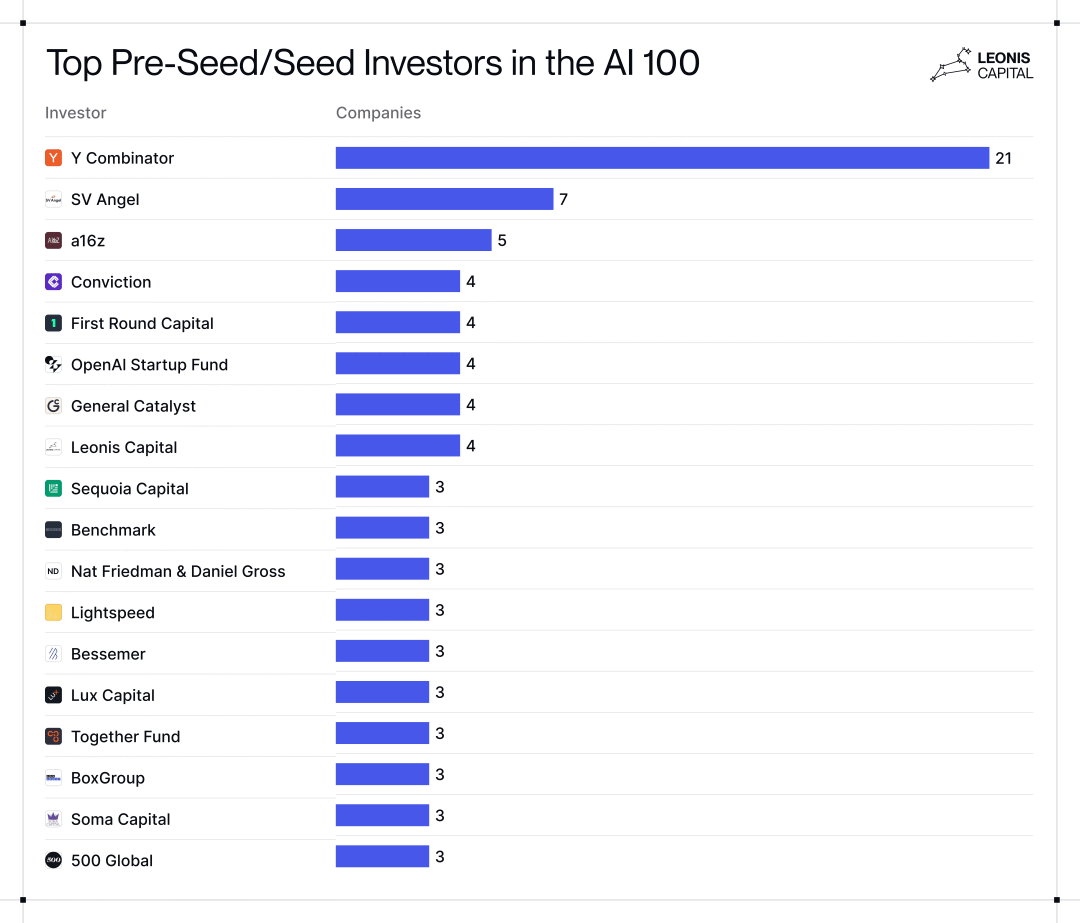
Early Stage:
- YC leads (21 companies backed).
- a16z, Sequoia Capital moving earlier into seed deals.
- Angel networks (SV Angel) and AI-native funds (Conviction, Nat Friedman/Daniel Gross) rising.
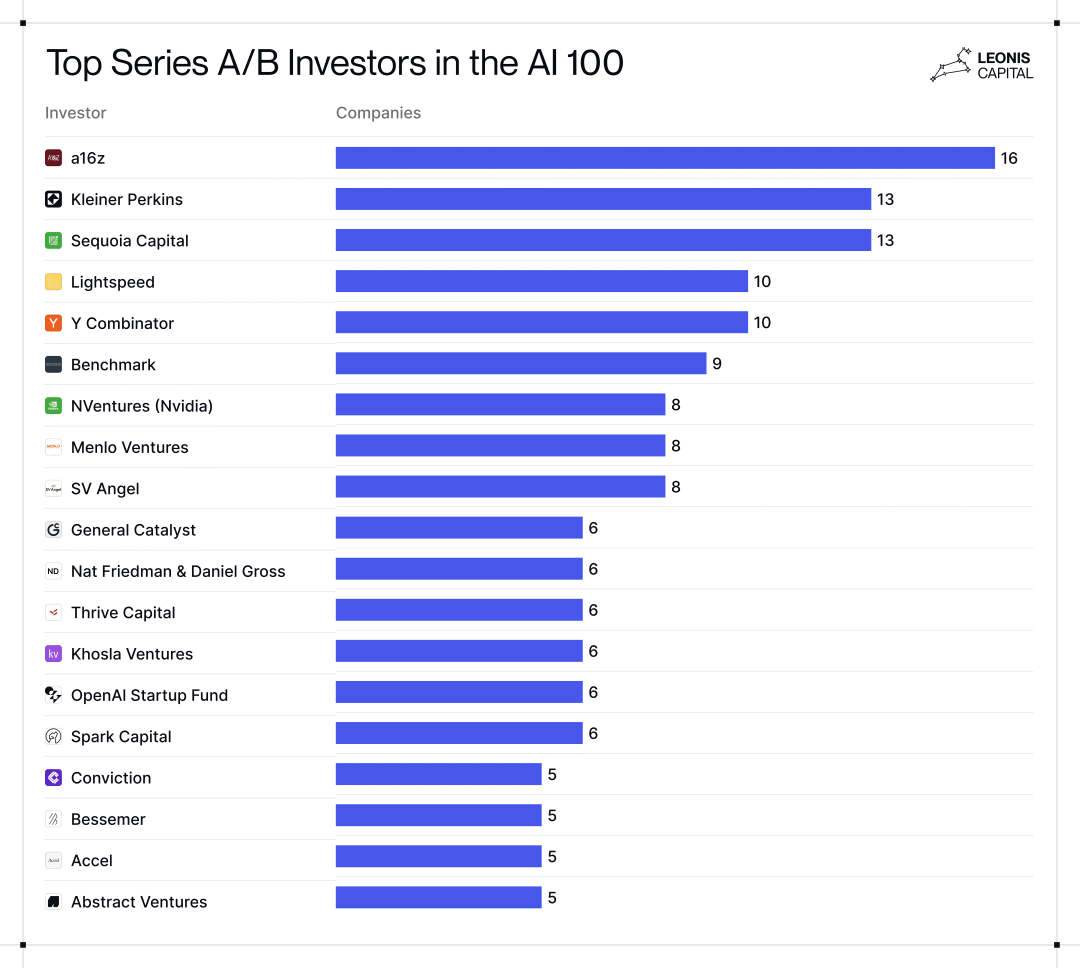
Series A & B:
- Dominated by a16z, Kleiner Perkins, Sequoia, Lightspeed, Benchmark, Menlo Ventures.
- Strategic investors like NVIDIA (NVentures) and OpenAI Startup Fund target infra and application-layer winners.
---
Key Takeaways
- Lean, tech-heavy teams achieve massive output.
- PLG-first strategies dominate early-stage user acquisition.
- AI markets currently support multiple winners.
- Rapid pivots are common and often model-driven.
- Market entry timing depends on model capability thresholds.
- Revenue acceleration post-2024 confirms customer willingness to pay — but gross margins matter.
- Technical and research-driven founders are shaping the AI startup landscape.
---
Tip for Creators & Founders:
Leverage open-source ecosystems like AiToEarn官网 to scale production, distribution, and monetization efficiently across platforms — from Douyin and Bilibili to YouTube and X (Twitter). Integrated AI generation, publishing, analytics, and model rankings can help capture market opportunities fast, especially near turning points in model capability.
---
Would you like me to also prepare a visual one-page executive summary from this rewritten content, with charts and bullet highlights? That would make it ideal for investors or founder pitch decks.