32 Random Numbers, 1 Minute to Simulate Earth’s Next 15 Days | Google DeepMind
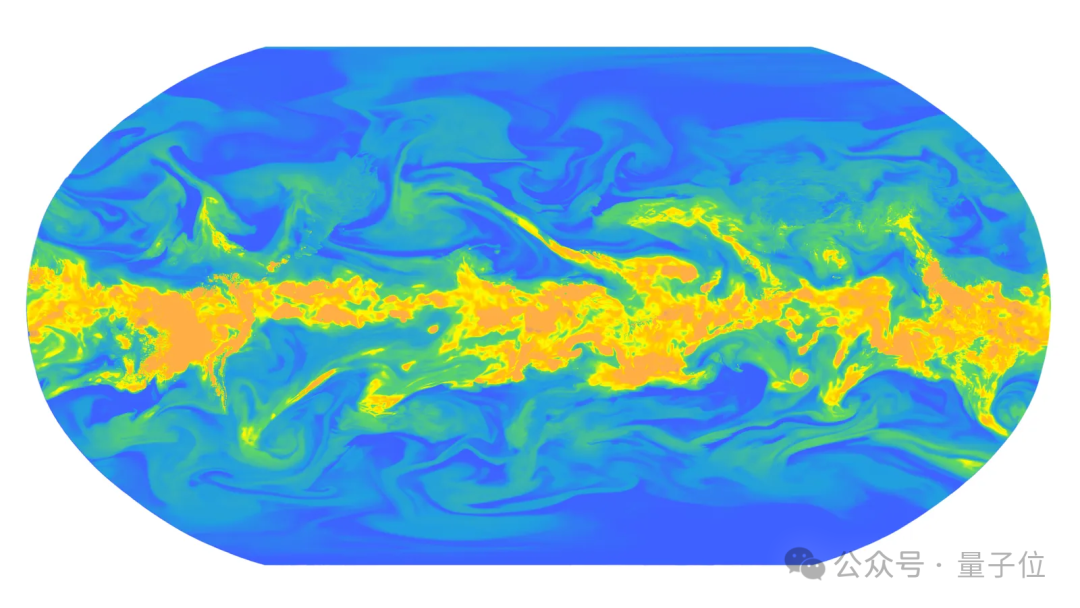
Weather Forecasting Enters a New Era
Google DeepMind has just unveiled WeatherNext 2, pushing weather checks to hourly, real-time precision.
Key Improvements
- 8× faster than the previous generation
- Hourly resolution: instead of “rain tomorrow afternoon,” now “light rain from 2–3 pm, intensifying 3–4 pm, stopping between 5–6 pm.”
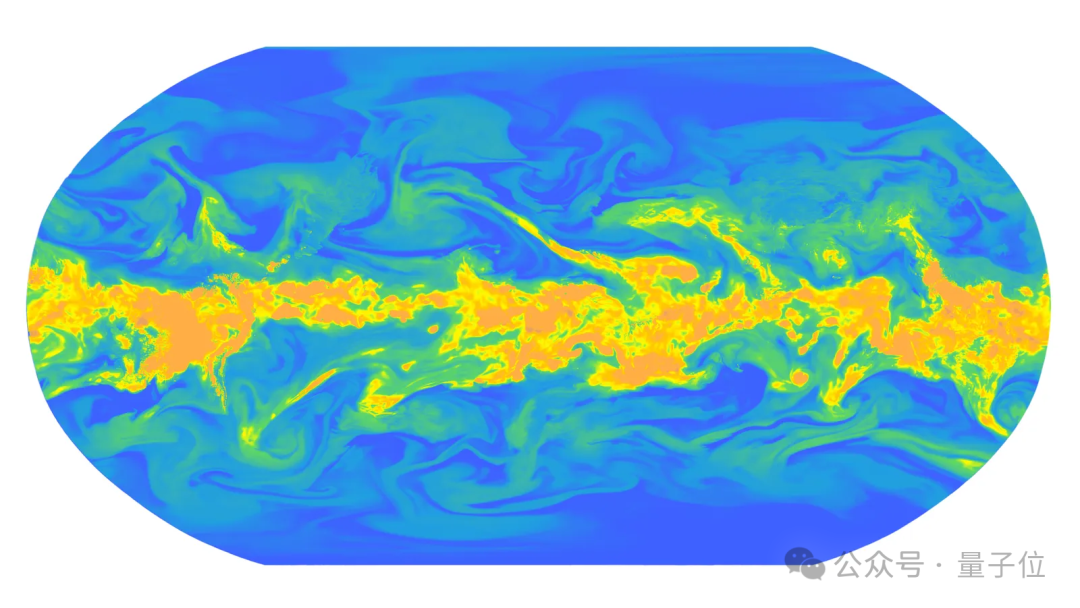
It generates many possible future scenarios from the same input — dozens or even hundreds — providing richer probabilistic insights.

A traditional supercomputer might take hours for such simulations. WeatherNext 2:
- Runs in one minute
- Requires only a single TPU
Results:
- 99.9% of forecast variables and lead times outperform WeatherNext 1
- Detects extreme event impacts (heat waves, heavy rain) earlier than before
---
Why Precision Matters
Industries tied to weather forecasts include:
- Energy systems – load balancing
- Urban planning – manpower allocation
- Agriculture – crop scheduling
- Logistics & aviation – daily operations
Because the atmosphere is a chaotic system, even tiny changes affect weather days later.
Traditional method:
- Run multiple simulations with different initial conditions
- Analyze thousands of outputs
- High computational cost
---
FGN — The Breakthrough Powering WeatherNext 2
The secret is FGN (Functional Generative Networks), introduced by Google DeepMind.
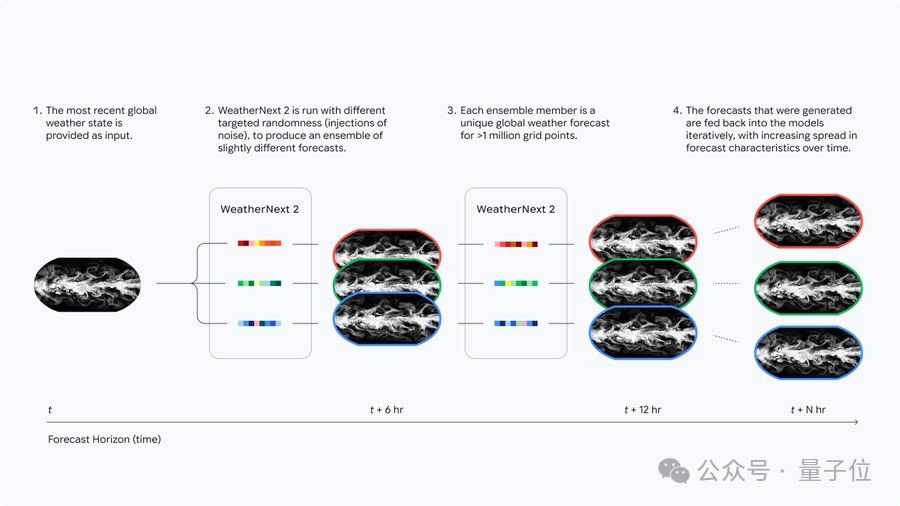
How FGN Works
Unlike models that add more physical equations, FGN:
- Adds small, globally consistent random perturbations to the core model
- Turns the model into a mini-Earth with natural variability
- Uses a 32-dimensional random vector per forecast run
- Passes the vector through every layer — influencing internal states and producing coherent weather fields
- Generates a different plausible future by changing the vector
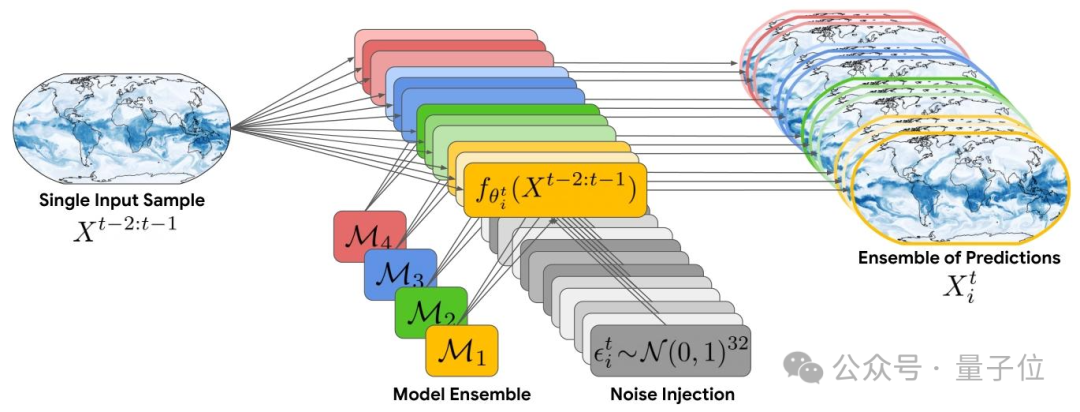
Because FGN is a sampleable random function:
- Low-dimensional noise yields globally consistent change patterns
- Training focuses on single-point error (CRPS), forcing the model to learn structural weather rules
- 32 random numbers can generate 87 million-dimensional physically consistent weather variations
---
Performance — Better Than GenCast
FGN exceeds DeepMind’s previous flagship, GenCast, with:
- Lower prediction errors
- Better probabilistic accuracy
- More natural spatial structures
- Improved wind/temperature/geopotential height coordination
- Balanced probabilistic width — avoiding extremes
Extreme Weather Example
For typhoon paths, FGN reaches GenCast’s accuracy 24 hours earlier — a critical gain for emergency planning and transportation.
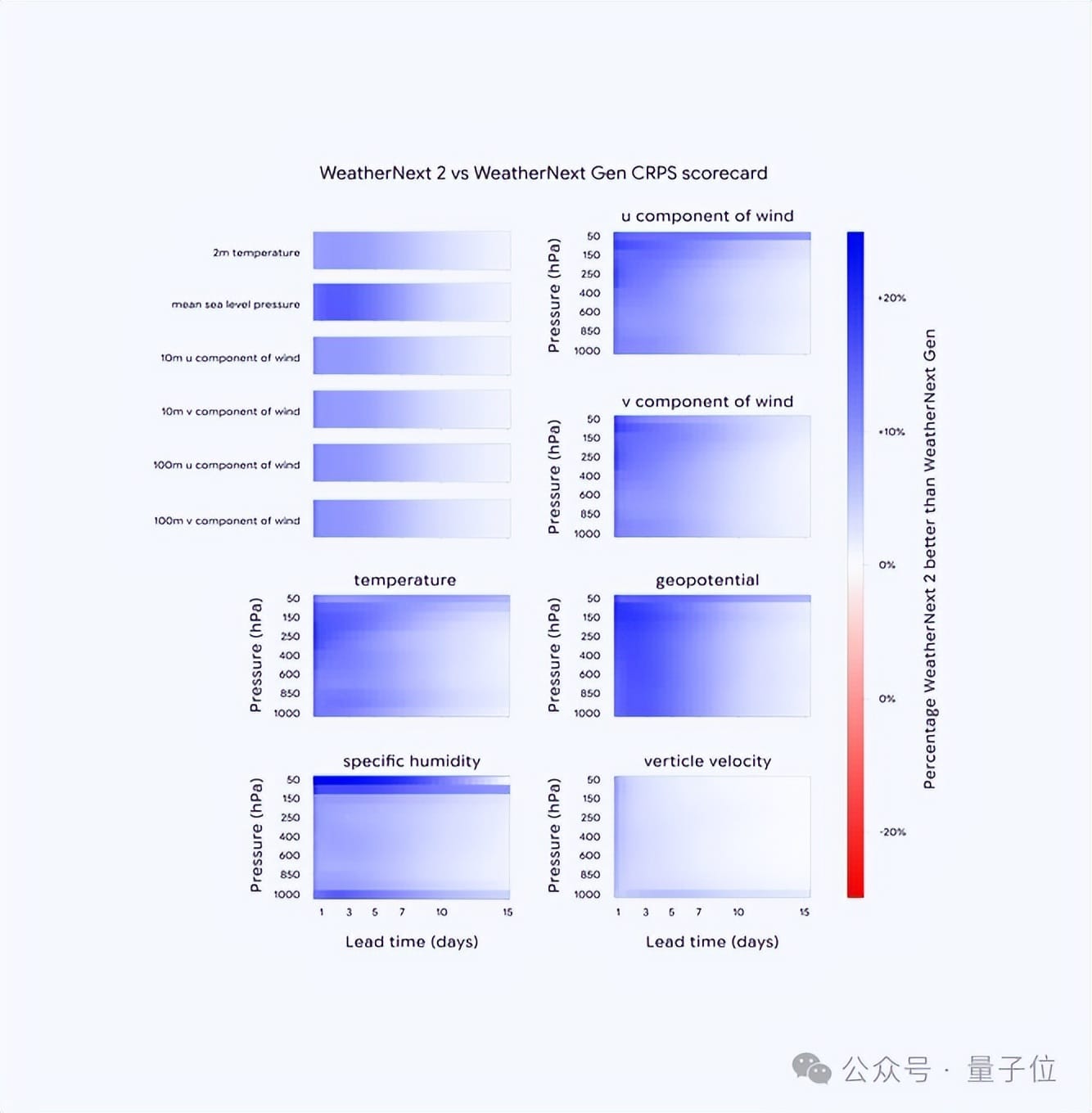
Efficiency:
- 15-day global forecast
- Generated in < 1 minute on one TPU
- 8× faster than before
Minor artifacts may appear with high-frequency variables, but overall FGN is stable, efficient, and practical.
---
Paper: https://arxiv.org/abs/2506.10772
Reference: Google DeepMind Tweet
---
AI’s Expanding Role in Meteorology
WeatherNext 2 exemplifies AI’s impact on high-resolution, real-time data for decision-critical domains.
For creators and developers in AI + content:
- Platforms like AiToEarn官网 enable global AI content monetization
- Publish & track on Douyin, Bilibili, YouTube, X
- Integrate analytics & AI模型排名
- Empower creativity with the same efficiency principles driving modern AI weather models