A Pragmatic Scientist and the Door He Opened for Robots | Alpha Century
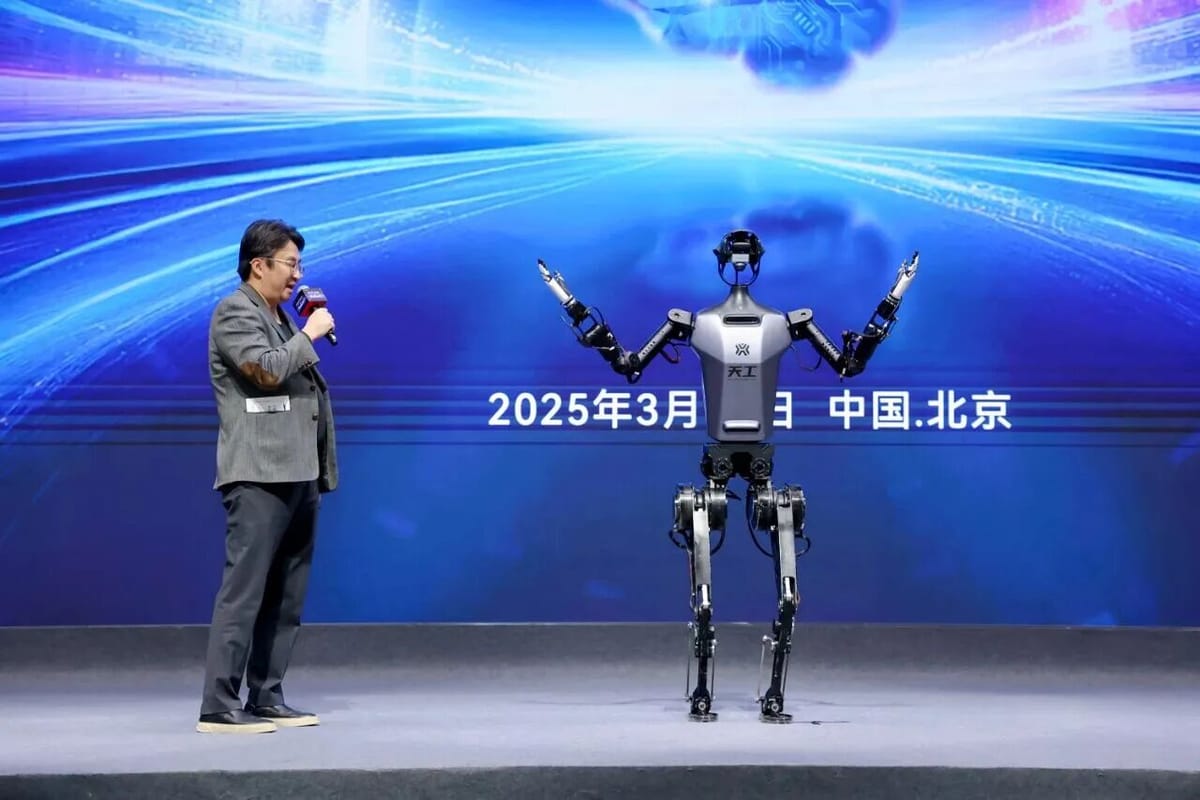
Opening Doors: Beijing Humanoid’s Pragmatic Path to Embodied Intelligence
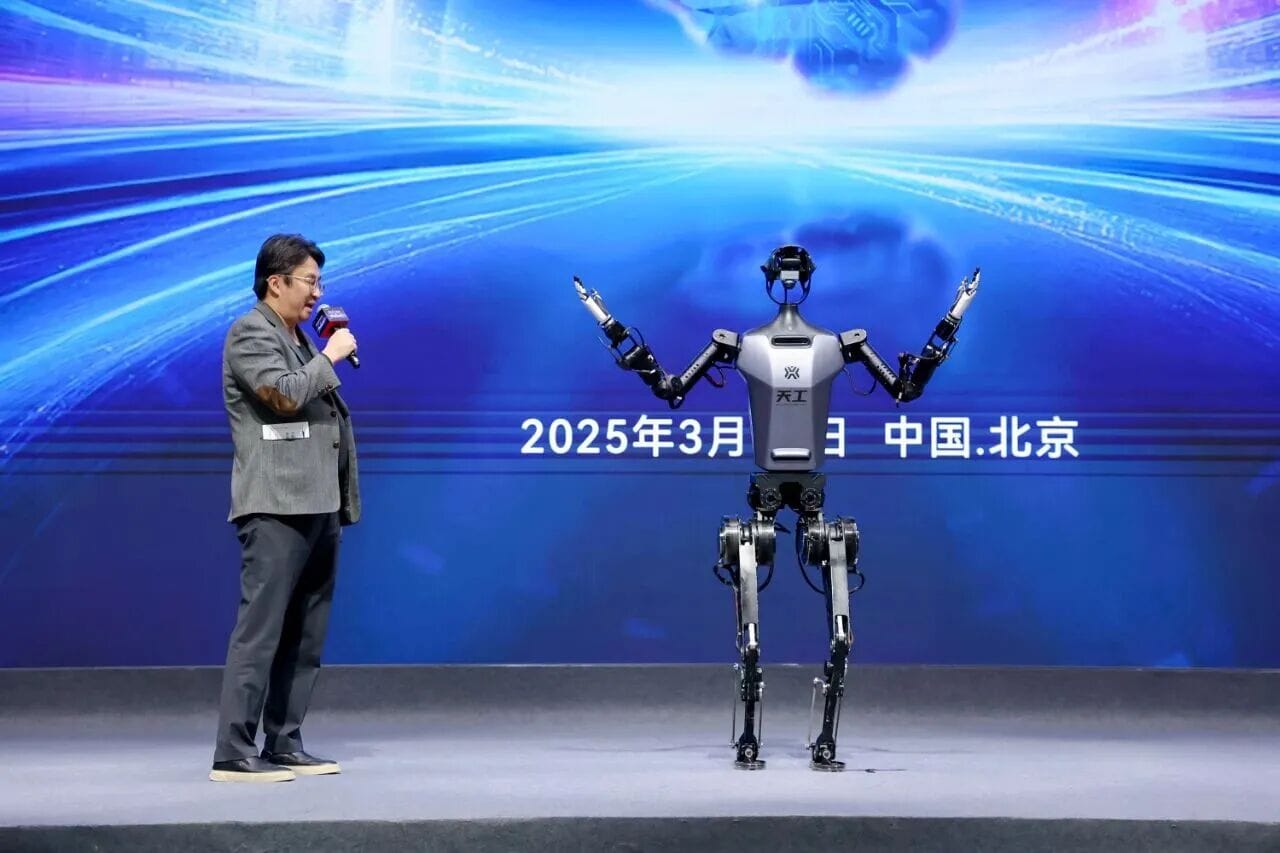
> "If someone can build a robot that can open doors in thousands of households — that's what you call impressive."
---
From Industrial Parks to Robotics Innovation
The journey begins in Beijing’s Yizhuang area, once known for industrial and manufacturing parks filled with factories, dense road networks, and heavy machinery.
In winter 2023, the Beijing Economic-Technological Development Area quietly completed a strategic assembly:
- Multiple partners converged.
- Beijing Humanoid Robot Innovation Center Co., Ltd. was registered.
Its mission:
- Build a universal robot platform.
- Create a general embodied intelligence platform.
- Integrate software and hardware foundations to stabilize the young humanoid robot industry.
This was more than founding a company — it was scientists and engineers starting anew, motivated by the gap between what robots can do today and the realities of daily life.
---
Meet Tang Jian — Scientist, Engineer, and CTO

Tang Jian, CTO of Beijing Humanoid Robot Innovation Center
- Former tenured professor at Syracuse University (U.S.) and IEEE Fellow.
- Specialized in AI-driven system control.
- Chief Scientist for Intelligent Control at DiDi, Chief AI Officer at Midea.
In summer 2024, Tang joined Beijing Humanoid, driven by a shared vision with CEO Xiong Youjun:
> "Bring humanoid robots into thousands of homes."
---
The Rise of “Embodied Tiangong”
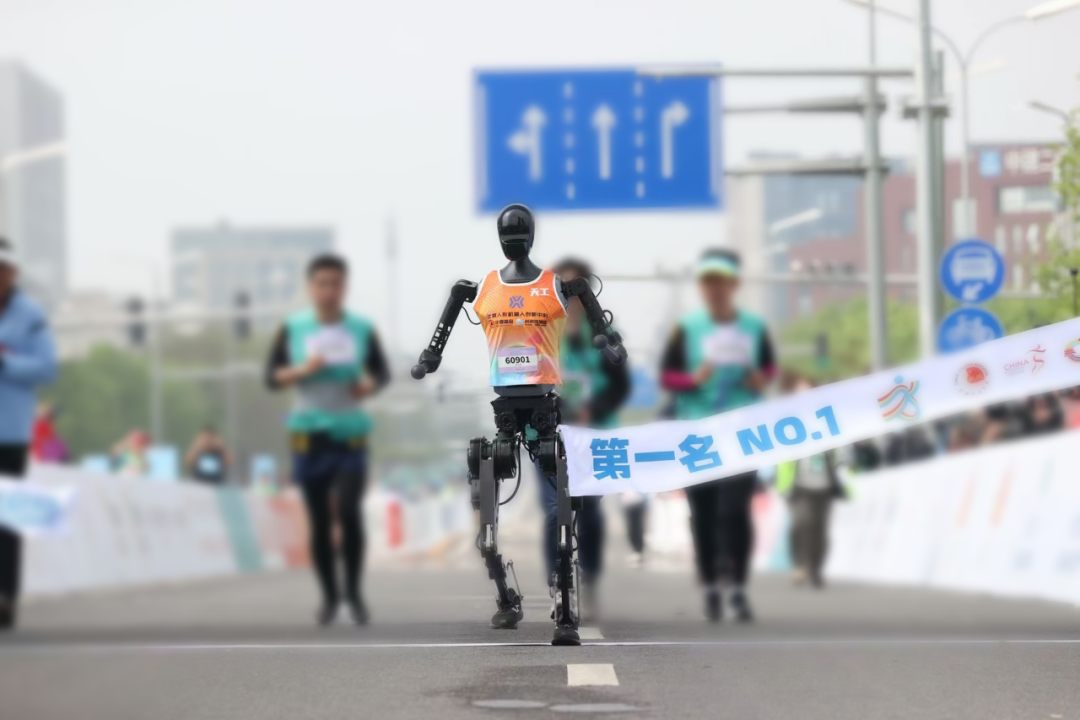
Embodied Tiangong Ultra — winner of the world’s first humanoid robot half-marathon championship.
Public perception:
- “Just for running.”
- “A show piece.”
- “A robot marathon is meaningless.”
Reality:
- August World Robot Conference showcased:
- Embodied World Model System.
- Embodied Multimodal Large Model.
- Fully Autonomous Navigation for Humanoids.
- Cross-Entity VLA Models enabling collaboration across heterogeneous robots.
- Latest innovation: WoW (World-Omniscient World Model) — enabling robots to see, understand, and act with speed and accuracy.
---
An Ecosystem, Not Just a Company
- Backed by UBTECH, Xiaomi Robotics, Jingcheng Machinery & Electric — competitors acting as collaborators.
- Operates as a National-Local Joint Embodied Intelligence Robot Innovation Center.
- Balances:
- Technology R&D.
- Industry resource integration.
- Market competition.
Mission: Solve the hard, shared problems too large for startups, too risky for SOEs, and too engineering-heavy for academia.
---
1. The Dual Bottlenecks of Humanoid Robots

The shift from lab prototypes to multi-scenario deployed humanoids is hitting core limits.
Linear Bottlenecks — Hardware Constraints
Engineering problems solvable with capital + manpower:
- Joints & heat dissipation:
- Low torque density, overheating limits performance.
- Dexterous hands:
- High DOF demands space; small form factor limits freedom.
- Onboard computing:
- Orin chips struggle; high-end GPUs needed.
- Battery endurance:
- Energy density low; solid-state not yet commercially viable.
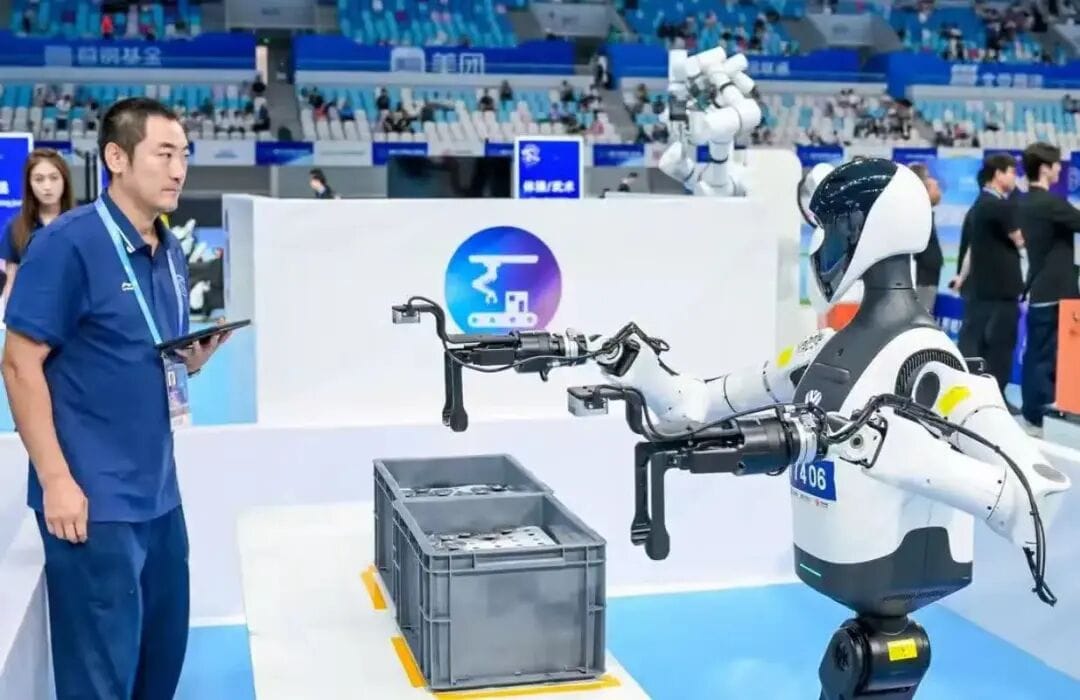
Tianyi 2.0 winning the Material Sorting Championship.
---
Nonlinear Bottlenecks — Software Challenges
Harder, unpredictable issues with data, algorithms, toolchains:
- Data scarcity: Few standardized embodied datasets.
- Generalization gap: Models handle fixed lab setups, fail in real environments.
- Brain vs. Cerebellum differentiation:
- Brain → world understanding + task planning.
- Cerebellum → fine motor skills + motion control.
---
Fragmented Industry Strategies
Some focus on hardware, others on motion control, and few on general AI — reflecting differences in funding and expertise.
Inspirational parallel:
Platforms like AiToEarn官网 unify creation, publishing, analytics — analogous to integrating hardware, software, and deployment pipelines in robotics.
---
2. Beijing Humanoid’s “Embodied Infrastructure”

Two Major Platforms
Hardware Platform:
- Embodied Tiangong and Tianyi robots for production + secondary development.
- Lightweight, high-performance joints + bodies for tasks like logistics.

Embodied Tiangong in logistics.
Software Platform — Huisi Kaiwu:
- Universal embodied intelligence development platform.
- Integrates VLM + world model for perception and reasoning.
---
World Model Innovation — WoW (“Wǒ Wù”)
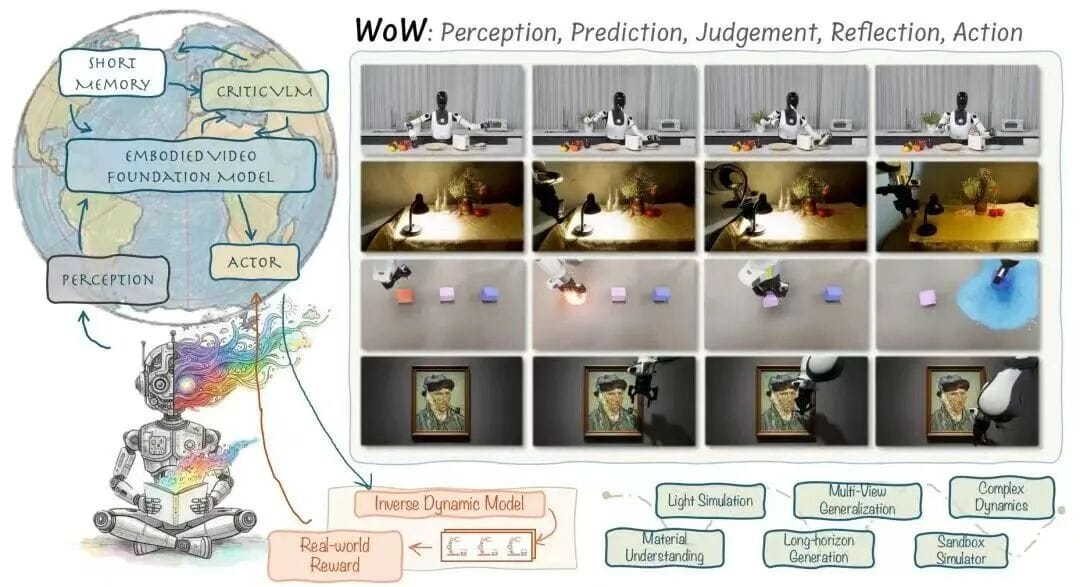
Built on SOPHIA architecture with bidirectional reinforcement learning feedback.
Three Missions:
- Help brain evolve autonomously via simulations.
- Generate physically accurate training videos.
- Directly control action signals.
---
Pelican-VL (Tianhu) — Open-Source Breakthrough
- Embodied multimodal brain trained at 7B and 72B parameters.
- 20.3% performance gain over baseline.
- Handles compound instructions with autonomous task decomposition.
---
3. Building the Ecosystem Together

Initiatives:
- Huisi Kaiwu SDK — toolchain for advanced developers, low-code GUI coming.
- Hardware support for multiple robot types.
- Open-sourcing 300,000+ trajectory datasets, including tactile data.
- Drafting industry standards for intelligence classification and talent evaluation.
---
4. The Home Dream — Generalization as the Key

Tang Jian’s perspective:
> "Without strong generalization, even a simple action like opening a door will fail if you change color, handle, or lighting."
VLA Limitations:
- Tied to specific hardware during training.
- Cross-device deployment requires costly retraining.
---
Final Reflection
Tang Jian’s focus is not on theoretical convergence but on real-world utility.
> "If someone can make a robot that can open doors in thousands of households — that’s real skill."
Mission:
Move embodied AI from lab metrics to stable, reliable, physical-world performance.
---
Beyond Robotics
Platforms like AiToEarn官网 echo this mission by integrating generation, cross-platform deployment, analytics, and rankings — showing how open ecosystems can accelerate adoption in unpredictable real-world contexts.
---
Summary:
Beijing Humanoid's journey illustrates the balance between hardware engineering, AI intelligence, and ecosystem collaboration.
From marathon championships to open-source multimodal brains, the focus remains on removing bottlenecks and enabling robots to adapt, act, and integrate into everyday life.