
Agent Breakthrough: A Complete Guide to Core Development Workflow
Contents
- Agent Overview
- Core Evolution and Key Modules of Agents
- Building an Agent Based on a Large Model (Developer’s Perspective)
- Evaluating an Agent
---
Introduction: From Data to Decision‑Making
When data can think and code can make autonomous decisions, we shift from ordinary workflows to Agentic AI. But how does a fully autonomous data analyst come into being?
After two years of iteration and deep research — refining architecture design, verifying in practice — we have distilled the core blueprint for Agent development.
This guide walks you through the Agent’s “mind” and “body”: planning, memory, tool orchestration, context engineering — showing how to gradually construct an entity that truly thinks and acts.
Whether you are curious, learning, or experimenting as a peer, you’ll find architectural insights and actionable practices rooted in real-world projects.
> 📝 Every section is distilled from actual project experience — autonomy in AI is no longer a distant ideal.
---
A Fully Autonomous Agentic AI Data Analyst — Possible?
Yes.
I have worked on AI Agent product development for more than two years — from the OlaChat web assistant, to a coding copilot, to a data analysis Agent called Dola.
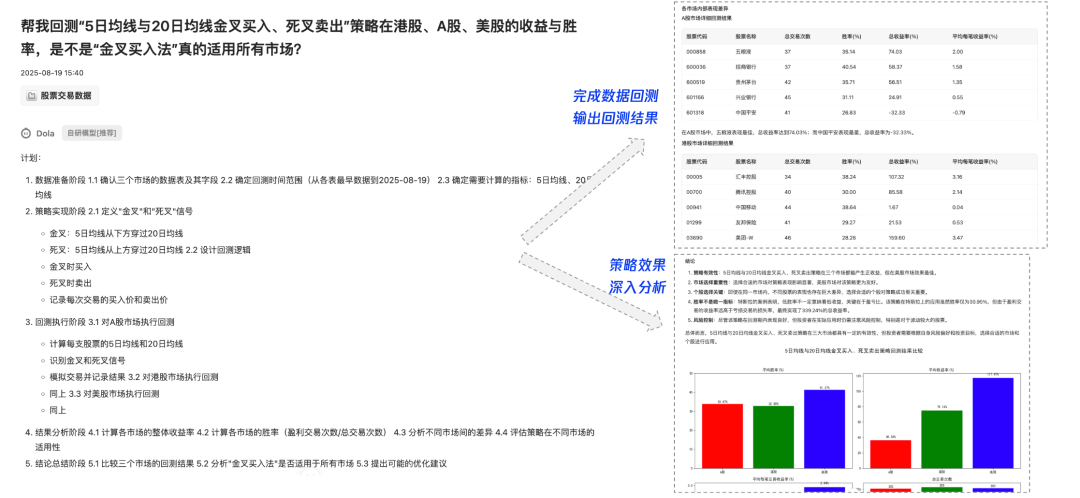
Dola (by Tencent PCG Big Data Platform) is a new‑generation, Agent‑powered data analysis assistant. You provide a data table — Dola acts as your dedicated AI analyst.
What Dola Can Do:
- Autonomous complex analysis: anomaly attribution, persona comparison, stock/fund back‑testing, housing price prediction.
- SQL automation: write SQL from scratch, fix errors, execute queries.
- Python processing & visualization.
- Generate complete reports — no coding needed; you interact in natural language.
This means Dola can autonomously take on real analyst and operations tasks.
---
---
01 — Agent Overview
1.1 What is an Agent?
An Agent — an intelligent entity capable of:
- Perceiving its environment (e.g., multimodal input like vision or voice).
- Autonomous decision‑making (via deep learning / reinforcement learning).
- Executing tasks (via APIs, tools, or physical devices).
- Continuous learning and evolution (adaptation over time).
---
1.2 Basic Framework
Early AI Agent architecture looked like this:
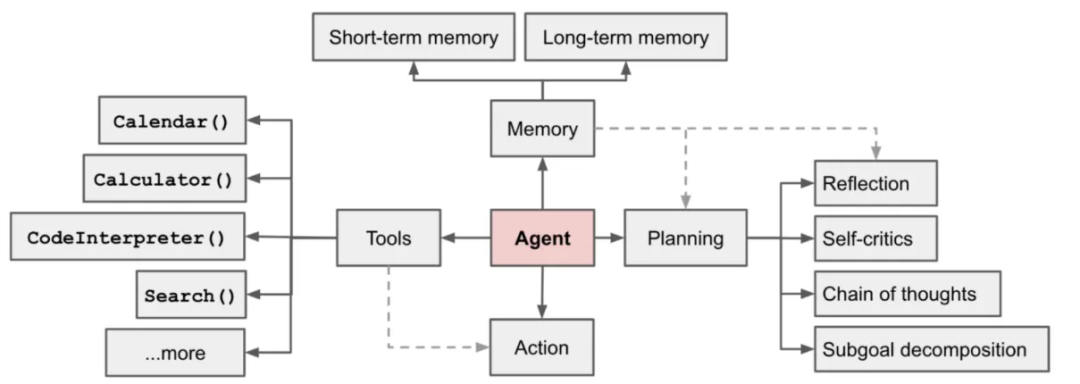
Over time, these evolved into modern Agentic AI designs — adding:
- Memory modules
- Advanced context management
- Autonomous tool use
---
💡 Tip for Teams Building Production Agents
If your Agent outputs need to reach audiences quickly across platforms, consider open‑source solutions like AiToEarn官网:
An AI content monetization platform with:
- AI content generation tools
- Cross‑platform publishing
- Analytics
- For publishing directly to Douyin, Kwai, WeChat, Bilibili, Rednote, Facebook, Instagram, YouTube, X (Twitter).
---
Core Components of an AI Agent
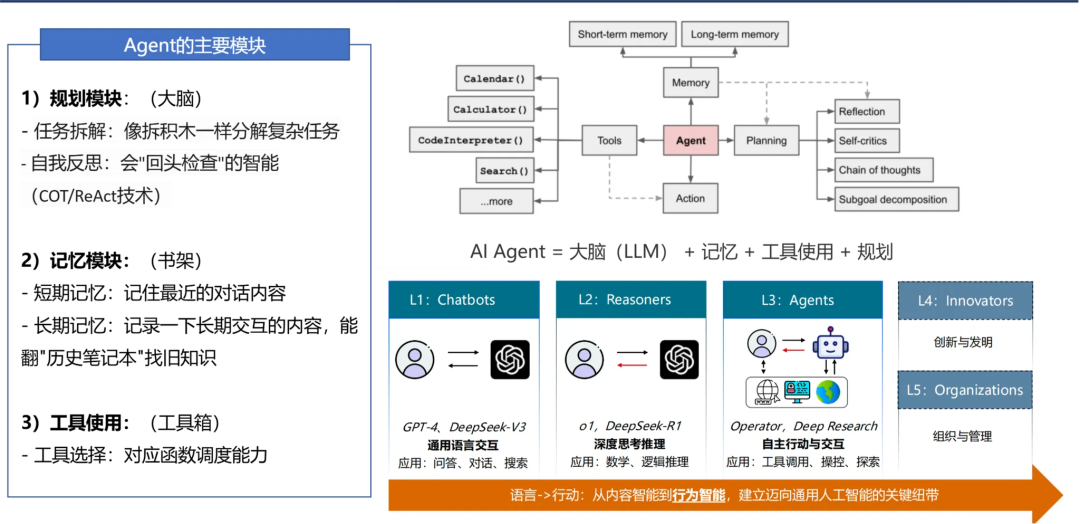
AI Agent = Brain (LLM) + Memory + Tool Use + Planning
Large model development is shifting focus from content intelligence to behavior intelligence, aiming for AGI capabilities:
- Dialogue
- Reasoning
- Autonomous scheduling
- Innovation
- Organization
---
1.3 Agent Classification
Types:
- Reflection Mode — Self‑refine after executing tasks.
- Tool Use — Invoke external tools/APIs.
- Planning Mode — Organize tasks upfront.
- Multi‑Agent Collaboration — Agents cooperate to achieve goals.
---
1.4 Agent Development Stages
Multi‑agent collaboration progress:
- Early Exploration (Early–Mid 2023) — Basic exchange and simple parallelism.
- Framework Maturity (Mid 2023–Mid 2024) — e.g., Microsoft AutoGen’s conversable agents.
- Application Deepening (Mid 2024–2025) — Domain‑specific agents, complex workflows.
---
Main Frameworks
- AutoGen — highly customizable dialogue‑based agents.
- LangGraph — precise process control.
- Crew AI — quick team collaboration systems.
---
💡 Note on Framework Choice
LangChain and similar can be code‑heavy; self‑built frameworks may offer more autonomy.
---
02 — Evolution & Core Modules
Early Agents resembled workflows — pre‑defined steps executed in sequence.
Workflows are rigid; Agents explore solutions autonomously.
Key Modules:
- Planning
- Memory
- Tool scheduling (Function calls / MCP)
- Execution
---
Planning Module
Purpose:
- Task decomposition — break into subtasks (e.g., CoT reasoning).
- Reflection and refinement — learn from past steps (e.g., ReAct loop: Think → Act → Observe → Answer).
---
Memory System
Why:
- Large models forget due to limited context windows.
- Layers:
- Short‑term — current session.
- Mid‑term — topic summaries.
- Long‑term — user profiles, accumulated knowledge (via vector DB + RAG).
---
Tool / Function Scheduling (Function Call)
Enables:
- Real‑time, up‑to‑date info retrieval.
- Specialized actions through APIs/software.
Risks:
- API failure.
- Privacy breaches.
- Multistep failures.
---
MCP Protocol
Standardized tool/resource integration.
Host ↔ MCP Client ↔ MCP Server — manage Resources, Tools, Prompts.
Advantages:
- Rapid tool onboarding.
- Ecosystem compatibility.
Limitations:
- Log tracing difficulty.
- Possible performance bottlenecks.
- Output format inconsistency.
---
03 — Building an Agent on a Large Model
Effectiveness depends on:
- Framework design — single vs multi‑Agent based on scenario.
- Context engineering — beyond prompt writing, includes memory and multi‑turn dialogue management.
---
Context Engineering Principles
- Optimize KV‑cache hit rate.
- Use dynamic, state‑aware prompts.
- Extend context using file systems.
- Maintain focus via goal restatement.
- Preserve errors for learning.
- Avoid few‑shot overfitting.
- Ensure terminology consistency.
- Dynamically adjust prompts.
- Define tool capability boundaries.
- Control feedback granularity.
- Balance long‑term memory with short‑term context.
- Set human intervention thresholds.
- Use multi‑Agent competitive validation.
---
Memory System Implementation
Layer data: recent actions, thematic summaries, verified long‑term facts.
---
Function Call Flow
- User request → App system.
- Prompt composition → LLM.
- Tool decision → Approval → Execution.
- Result integration → Natural language reply.
---
MCP Flow
Similar, but tools/resources are managed via MCP server—eliminates need for manual API integration.
---
Multi‑Agent Applications
Enhance problem‑solving via context division and collaboration protocols.
---
04 — Evaluating Agents
Benchmarks:
- AgentBench
- InfoQuest
- MINT
- ToolBench
- GTA
- ToolDial
- AgentBoard
- WorkBench
- DataSciBench
Evaluation remains complex—especially in multimodal, multi‑turn scenarios.
---
References
See original list — includes research papers, surveys, frameworks (LangChain, AutoGen, CrewAI, MemoryOS).
---
Team & Community
Qiyu Team — 360 Group
Largest frontend team, offering career paths and training for:
- Engineers
- Lecturers
- Translators
- Leaders
---
💡 If interested in frontend + AI, scan QR code to join the discussion group.

---
Final Note
For deploying Agents with cross‑platform content output, AiToEarn offers:
- AI generation tools
- Simultaneous publishing (Douyin, Kwai, WeChat, Bilibili, Rednote, Instagram, YouTube…)
- Analytics & model ranking (AI模型排名)
It connects cutting‑edge Agent capabilities with real business value.
---
Would you like me to create a flowchart cheat‑sheet summarizing the Planning → Memory → Tool Use → Execution pipeline for quick reference?


