
AI Agent Development Summary: 17 Architecture Implementations

AI Agent Architectures – Practical Guide

---
Datawhale Insights
Source: Coggle Data Science
---
The AI agent field is evolving rapidly, but most resources are still too abstract and overly theoretical.
This project offers a clear, structured, and hands-on learning path for developers, researchers, and AI enthusiasts to master building intelligent systems.
> Repository: https://github.com/FareedKhan-dev/all-agentic-architectures
Key Goals
- From theory to code: Every architecture is explained and implemented end-to-end in runnable Jupyter Notebooks.
- Progressive learning path: Notebooks build concepts step-by-step — from basic patterns to advanced multi-agent and self-aware systems.
- Real-world relevance: Use cases include financial analysis, programming, social media management, and medical triage.
---
Learning Roadmap Overview
Part 1: Foundational Patterns (Notebooks 1–4)
- Reflection
- Tool Use
- ReAct (reason/action loop)
- Planning
---
Part 2: Multi-Agent Collaboration (Notebooks 5, 7, 11, 13)
- Multi-Agent Systems (agent teams)
- Meta-Controller (intelligent routing)
- Blackboard Systems (shared memory)
- Ensemble (parallel diverse analysis)
---
Part 3: Advanced Memory & Reasoning (Notebooks 8, 9, 12)
- Episodic + Semantic Memory
- Graph World-Model
- Tree of Thoughts
---
Part 4: Safety, Reliability & Real-World Interaction (Notebooks 6, 10, 14, 17)
- Dry-Run Harness
- Simulator
- PEV (Plan–Execute–Verify)
- Metacognitive Agents
---
Part 5: Learning & Adaptation (Notebooks 15, 16)
- Self-Improvement Loop
- Cellular Automata
---
Architecture 1 – Reflection
Purpose: Upgrade LLMs from single-pass generators to thoughtful self-reviewers.
Workflow:
- Generate draft
- Critique output
- Refine final answer
| When to Use | Strengths | Weaknesses |
| --- | --- | --- |
| Code review, complex summarization, content optimization | Improves quality, low overhead | Self-limited by existing knowledge, adds latency/cost |
---
Architecture 2 – Tool Use
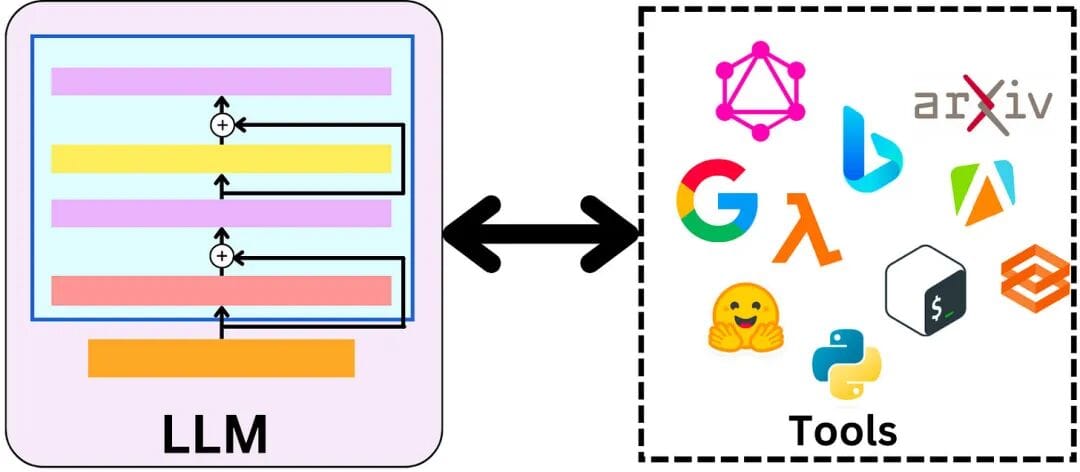
Purpose: Bridge reasoning with real-world data & APIs.
Workflow:
- Receive query
- Decide if tool is needed
- Execute tool
- Integrate result into reasoning
| When to Use | Strengths | Weaknesses |
| --- | --- | --- |
| Web research, DB queries, scientific computation | Real-time, factual grounding, extensible capabilities | API/key management, tool reliability risks |
---
Architecture 3 – ReAct (Reason + Act)
Dynamic loop alternating thinking and acting.
Workflow:
- Goal received
- Reason step
- Act step (tool call)
- Observe result
- Repeat until complete
| Strengths | Weaknesses |
| --- | --- |
| Adaptive & handles complexity | Higher cost/latency, looping risks |
---
Architecture 4 – Planning
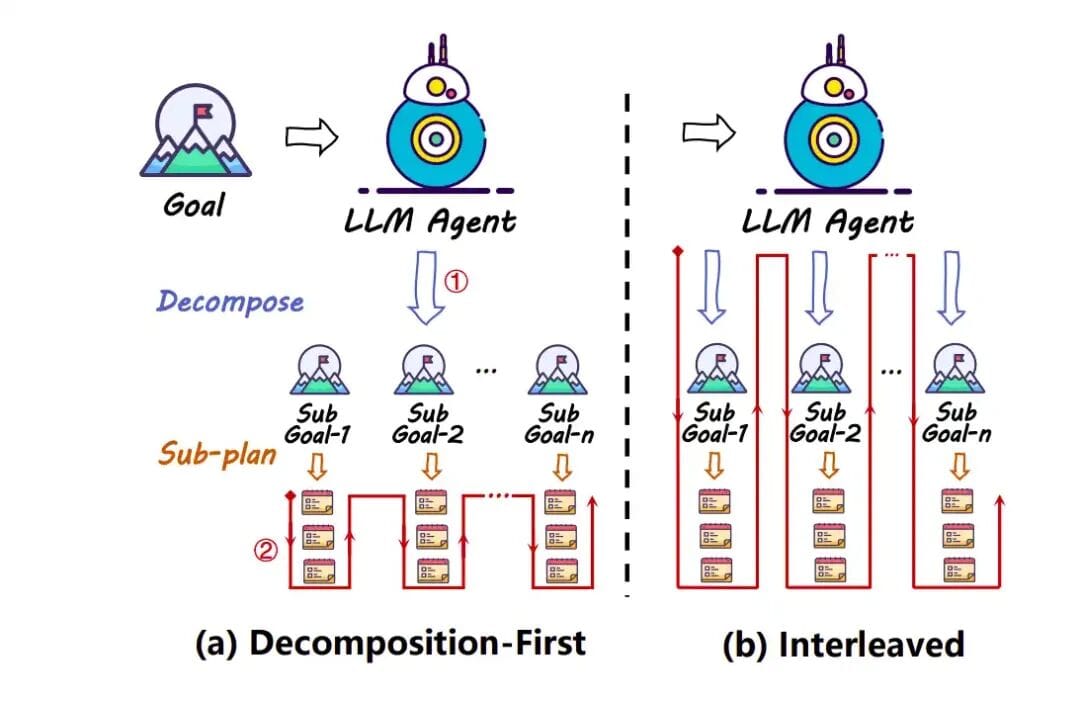
Purpose: Pre-plan all steps before execution.
Workflow:
- Receive goal
- Produce subtask list
- Sequential execution
- Synthesize final answer
| Strengths | Weaknesses |
| --- | --- |
| Structured & efficient | Brittle if environment changes |
---
Architecture 5 – Multi-Agent Systems
Simulate a team of specialized agents.
Workflow:
- Task decomposition
- Role assignment
- Collaboration
- Final synthesis
| Strengths | Weaknesses |
| --- | --- |
| Specialization, scalability, parallelism | Coordination complexity, higher cost |
---
Architecture 6 – Planner–Executor–Verifier (PEV)
Purpose: Add error detection & recovery.
Workflow:
- Plan → Execute → Verify → Reroute if needed
| Strengths | Weaknesses |
| --- | --- |
| Robust & modular | Slowest, validator design complexity |
---
Architecture 7 – Blackboard Systems
Purpose: Opportunistic multi-agent collaboration via shared memory.
| Strengths | Weaknesses |
| --- | --- |
| Flexible, modular | Controller quality critical, harder debugging |
---
Architecture 8 – Episodic + Semantic Memory
| Memory Type | Function |
| --- | --- |
| Episodic | Event recall (vector DB) |
| Semantic | Facts & relations (graph DB) |
Combined workflow provides personalized, context-rich interactions.
---
Architecture 9 – Tree of Thoughts (ToT)
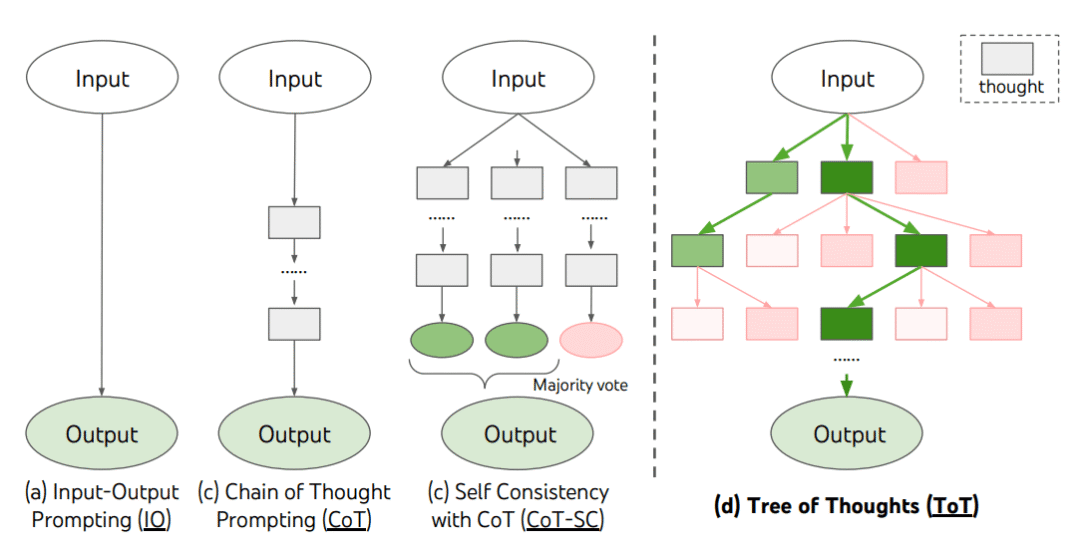
Generates multiple candidate next steps at each reasoning phase.
Invalid/weak paths are pruned; promising ones expanded.
| Strengths | Weaknesses |
| --- | --- |
| Robust, handles complexity | High compute cost, evaluator quality matters |
---
Architecture 10 – Simulator / Mental Model-in-the-Loop
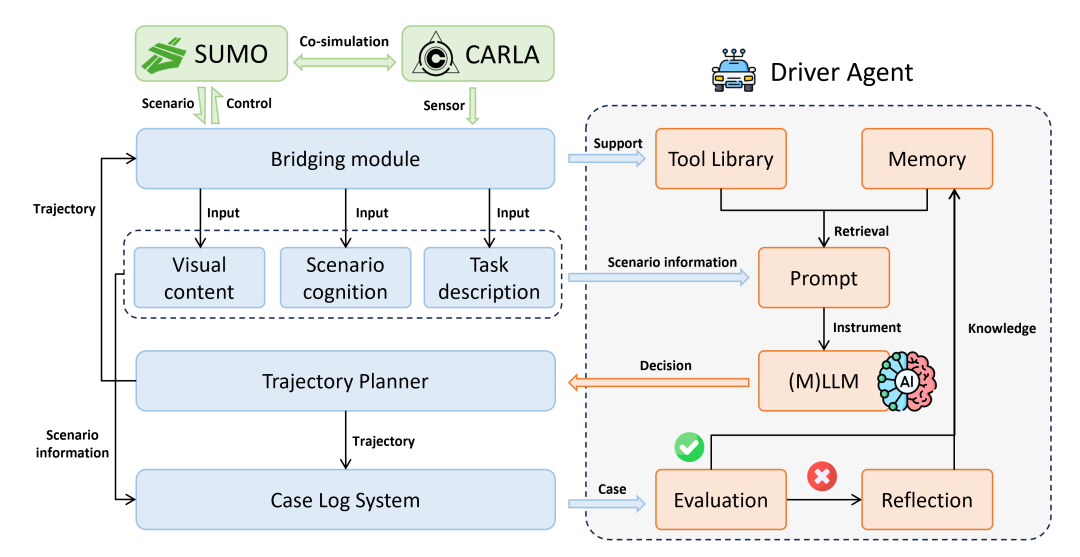
Test actions in simulation before real execution.
| Strengths | Weaknesses |
| --- | --- |
| Safety, foresight | Dependent on simulator realism, compute overhead |
---
Architecture 12 – Graph / World-Model Memory
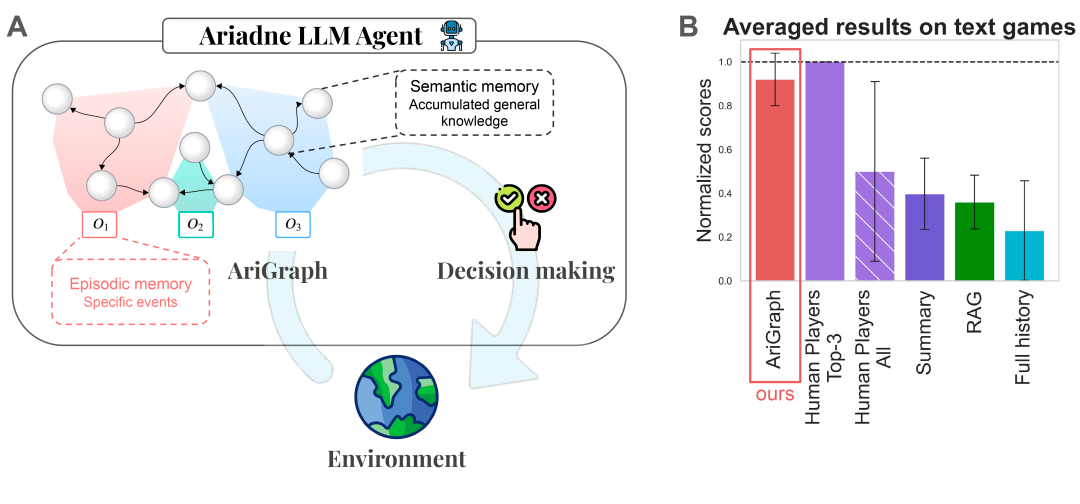
Structure knowledge as nodes & edges for complex reasoning.
| Strengths | Weaknesses |
| --- | --- |
| Queryable, multi-hop reasoning | Complex schema & updates |
---
Architecture 13 – Parallel Exploration + Ensemble
Distribute problem to multiple agents in parallel, then aggregate.
| Strengths | Weaknesses |
| --- | --- |
| Reduced bias, higher reliability | Very high cost/latency |
---
Architecture 14 – Dry-Run Harness
Simulate actions before real execution.
Ensures auditable safety.
| Strengths | Weaknesses |
| --- | --- |
| Safety, traceability | Deployment delays, dry-run support needed |
---
Architecture 15 – Self-Improvement Loop
Iteratively generate → critique → revise.
| Strengths | Weaknesses |
| --- | --- |
| Higher quality, continuous learning | Possible bias reinforcement, high cost |
---
Architecture 16 – Cellular Automata/Grid
Emergent behavior from simple local rules.
| Strengths | Weaknesses |
| --- | --- |
| Highly parallel, adaptable | Rule design difficult, poor introspection |
---
Architecture 17 – Reflective Metacognitive Agents
Maintain a self-model to guide safe decisions.
| Strengths | Weaknesses |
| --- | --- |
| Safety, domain-awareness | Complexity, performance overhead |
---
Integrations:
Platforms like AiToEarn官网 connect these architectures to global content monetization — enabling generation → multi-platform publishing → analytics in one open-source pipeline.
Supported Channels: Douyin, Kwai, WeChat, Bilibili, Rednote, Facebook, Instagram, LinkedIn, Threads, YouTube, Pinterest, X (Twitter).


