Amazon Lays Off 14,000: How Can Ordinary People Avoid Being “Optimized” by Algorithms?

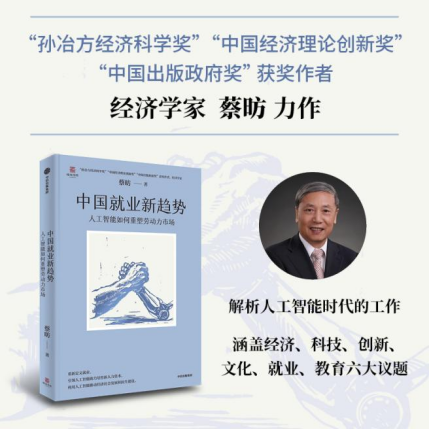
China’s New Employment Trends: How Artificial Intelligence is Reshaping the Labor Market
Excerpted from Citic Publishing Group. Source: Cai Fang.
---
Amazon’s Layoffs as a Signal of a Larger Trend
Recently, Amazon announced layoffs affecting 14,000 corporate employees — about 4% of its corporate workforce.
- Reason given: Amazon CEO Andy Jassy emphasized the goal is reshaping corporate culture and adapting to AI-driven transformations — not purely financial pressure or job automation.
- Beth Galetti, Senior VP of People Experience & Technology, told employees: layoffs are necessary because “the world is changing rapidly.”

Key insight:
AI’s impact on employment goes far beyond replacing jobs — it restructures organizational hierarchies, workflow processes, and core corporate culture.
When “adapting to AI” overtakes “declining profits” as the primary reason for layoffs, anxiety naturally spreads across the labor force: Who will be spared from the AI transformation?
---
China’s Unique Position — Strength and Challenge
- Largest labor force worldwide
- Rapid AI innovation leadership
- Challenges:
- Aging before wealth accumulation
- Incomplete urbanization
- Pressure from industrial upgrading
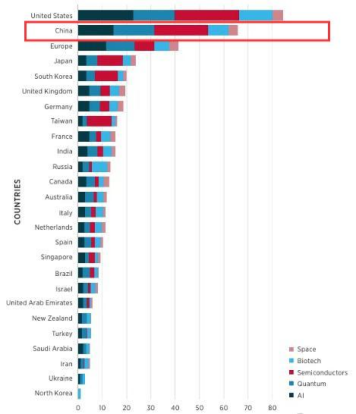
China ranks #2 globally in technological strength
Source: Harvard University 2025 Global Critical and Emerging Technology Index (AI, semiconductors, biotechnology, space, quantum)
Economist Cai Fang highlights:
> “Given the nature of AI, its employment impact and disruption will be unprecedented — this time is truly different.”
---
I. Why “This Time is Different”
Historic Scale & Pace of Disruption
Like steam engines, electricity, and the internet, AI is a general-purpose technology — destined to reshape all industries.
What makes AI unique is its ability to directly challenge human intelligence, from creative work to complex problem-solving.
Lag effect: Historically, new tech destroys jobs before creating new ones. In the AI era, this lag may extend significantly — possibly permanently.

---
Two Stages of AI’s Employment Impact
- Stage One — Skill Gap Expansion
- Automation replaces low human capital tasks while creating jobs with higher skill requirements.
- Retraining challenges (example: truck drivers → AI engineers) prolong employment adjustment pain.
- Stage Two — AI Surpasses Human Intelligence
- AI agents, embodied AI, and robotics increasingly replace all human roles.
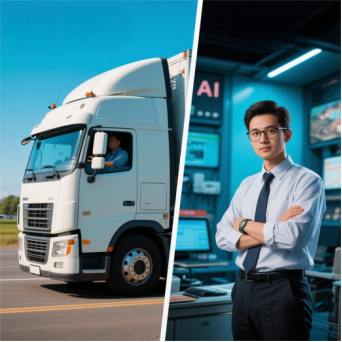
China’s “Triple Squeeze”: AI penetration + population aging + structural employment mismatch.
---
Practical Note for Creators:
Platforms like AiToEarn allow individuals to turn AI-powered creativity into income — integrating AI content generation, cross-platform publishing, analytics, and model rankings for Douyin, Kwai, WeChat, Bilibili, Xiaohongshu, Facebook, Instagram, LinkedIn, Threads, YouTube, Pinterest, and X (Twitter).
See AiToEarn博客 • AiToEarn文档 • AI模型排名
---
II. Strategies for Individuals
1. Develop Irreplaceable Human Skills
Cai Fang identifies three difficult-to-automate skill categories:
- Empathy & emotional intelligence: communication, leadership, teamwork
- Tacit knowledge: undocumented, experience-based skills
- Practical wisdom: combining rationality, emotion, and experience

---
2. Shift from “One-Time Learning” to “Lifelong Learning”
- AI evolves faster than human knowledge systems — continuous skill renewal is essential.
- Learning by doing: use AI tools and understand their logic
- Doing while learning: apply new knowledge immediately to enhance workflows

---
3. Redefine Career Planning
Focus on industries with Baumol’s cost disease — slow productivity growth but sustained demand:
- Education, healthcare, social work, culture, arts, sports, entertainment, civic services
Also, embrace new employment forms — flexible work, freelancing, platform economy — to cushion impact.
---
Tool Spotlight:
AiToEarn官网 helps creators adapt to AI shifts by integrating AI production with monetization across global platforms. This supports “AI-resilient” career building.
---
III. National-Level Strategies
Building a “Tech for Good + Employment First + Shared Outcomes” Framework
1. Invest in Whole-of-Life Human Capital
- Break hukou barriers; provide equal access to public services and training
- Expand compulsory education; integrate “just-in-time” skill training for older workers

---
2. Guide AI Technology Toward Good
- Embed ethical principles: employment-friendly algorithms
- Align incentives: tax/R&D benefits for human-AI complement tech
- Employment-oriented regulation:
- Prevent algorithmic bias
- Maintain human oversight of critical labor decisions
- Include gig workers in social protections
- Ensure workplace safety in AI collaboration scenarios
---
3. Build Inclusive Welfare Systems
- Shift to universal welfare coverage
- Strengthen redistribution via taxation and transfers
- Maintain economic growth to expand shared benefits
---
Innovation in Practice:
Platforms like AiToEarn embody “tech for good” by enabling creators across Douyin, WeChat, Facebook, YouTube, and more to monetize AI output.
---
Final Reflection
The true challenge is not man vs. machine, but ensuring technology serves human well-being.
AI is not the end point — it’s a starting line for re-examining our values and development path.
As the “15th Five-Year Plan” approaches, individuals, businesses, and nations must:
- Reshape human capital
- Construct inclusive institutions
- Guide technology toward the good
Only then can we turn disruption into opportunity — achieving high-quality, full employment in the AI era.
---
Practical Example of Tech-for-Good:
AiToEarn官网 integrates AI content generation, publishing, analytics, and rankings for simultaneous posting across major platforms — illustrating how AI ecosystems can support inclusive prosperity.