Honghao Wang

Karpathy’s Latest Post: Wake Up! AI Isn’t Human — It Has No Desires and No Fear of Death

AI news

Karpathy’s Latest Post: Wake Up! AI Isn’t Human — It Has No Desires and No Fear of Death

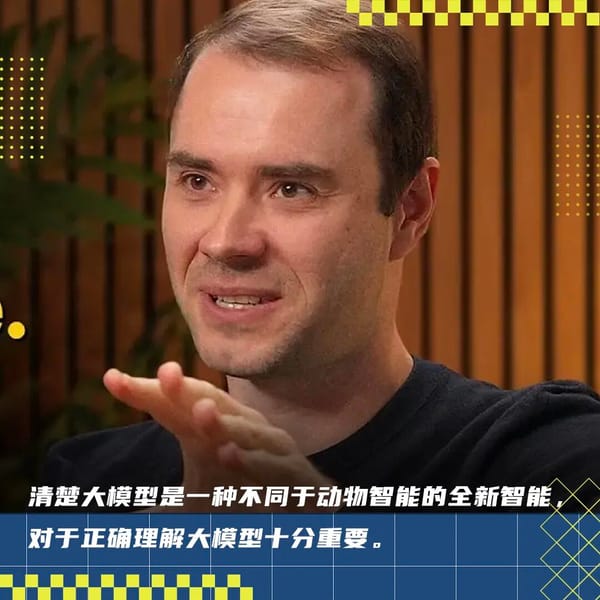
![image](https://blog.aitoearn.ai/content/images/2025/11/img_001-556.jpg) ## Introduction — Humanity’s First Encounter with **Non-Biological** Intelligence Artificial Intelligence marks humanity’s first experience with intelligence that did not arise from biological processes. Historically, humans — as the pinnacle of animal intelligence — interpret unfamiliar forms of intelligence through

Ten-Minute Breakthrough: Terence Tao Uses Gemini Deepthink to Help Mathematicians Solve Erdős Problem Proof

AI news

Ten-Minute Breakthrough: Terence Tao Uses Gemini Deepthink to Help Mathematicians Solve Erdős Problem Proof

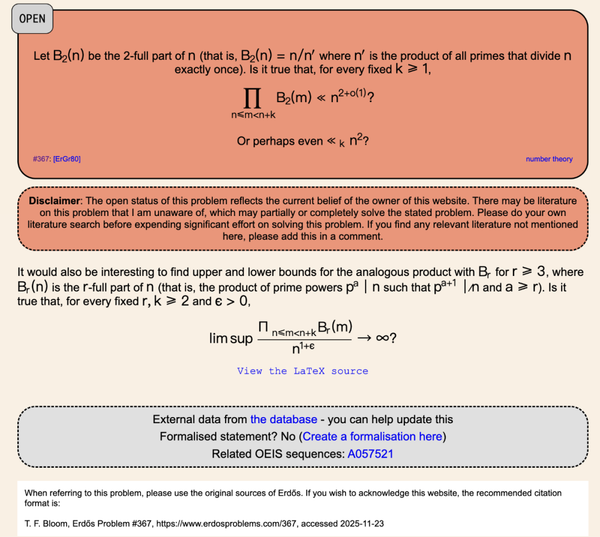
Machine Heart Report Introduction There is a dedicated website for mathematical research and problem-solving, focusing on challenges posed by the legendary mathematician Paul Erdős. This site — the Erdős Problems website — contains a curated collection of problems across fields such as number theory, combinatorics, and graph theory. Researchers, academics, and enthusiasts

AI news

Large-Scale Language Models: Tackling Training Instability and Intelligent Reasoning Challenges | Open Source Daily No.798

MoonshotAI / Kimi-K2 GitHub: https://github.com/MoonshotAI/Kimi-K2 Stars: 9.5k License: NOASSERTION Overview: Kimi-K2 is an ultra-large-scale language model from Moonshot AI, based on a Mixture of Experts (MoE) architecture. It is optimized for cutting-edge knowledge work, reasoning, and coding tasks, with strong capabilities for autonomous intelligence. Key Features

AI news

How to Draw a "Universal" Architecture Diagram: Three Core Principles of Architectural Thinking

Technical Solution Communication Methodology Table of Contents * Introduction * Macro Level * Medium (Meso) Level * Micro Level * Supplementary Notes --- > “A picture is worth a thousand words.” In daily work, expressing design ideas often involves diagrams. Yet, differences in knowledge, thinking styles, and architectural priorities (e.g., high-concurrency systems, complex B-end