Chips Are Like Chongqing, Says Intel
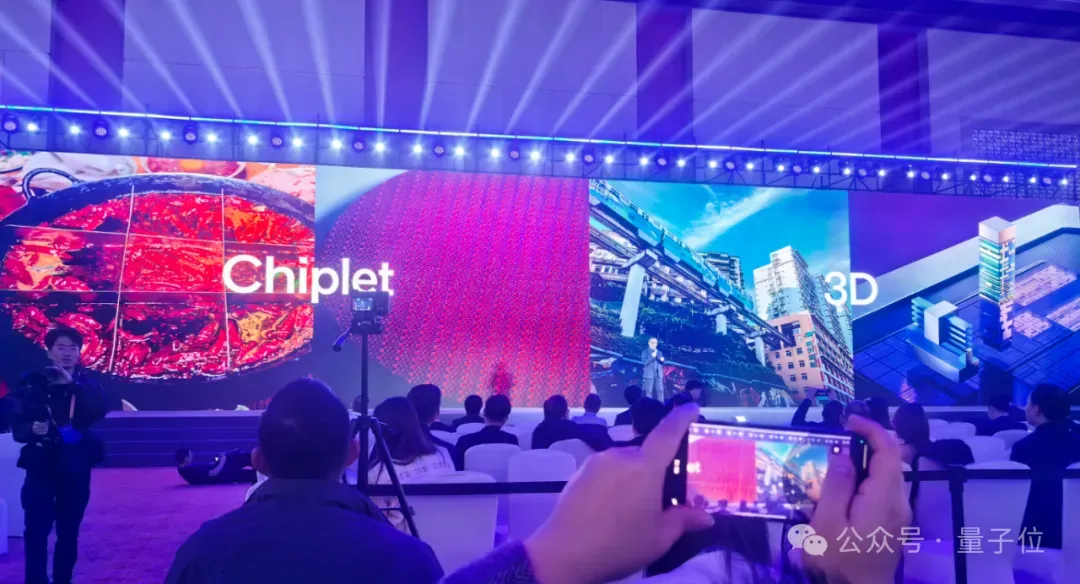
A Striking Analogy: Chip Meets Chongqing
> Remarkable analogy — someone compared a chip to Chongqing.
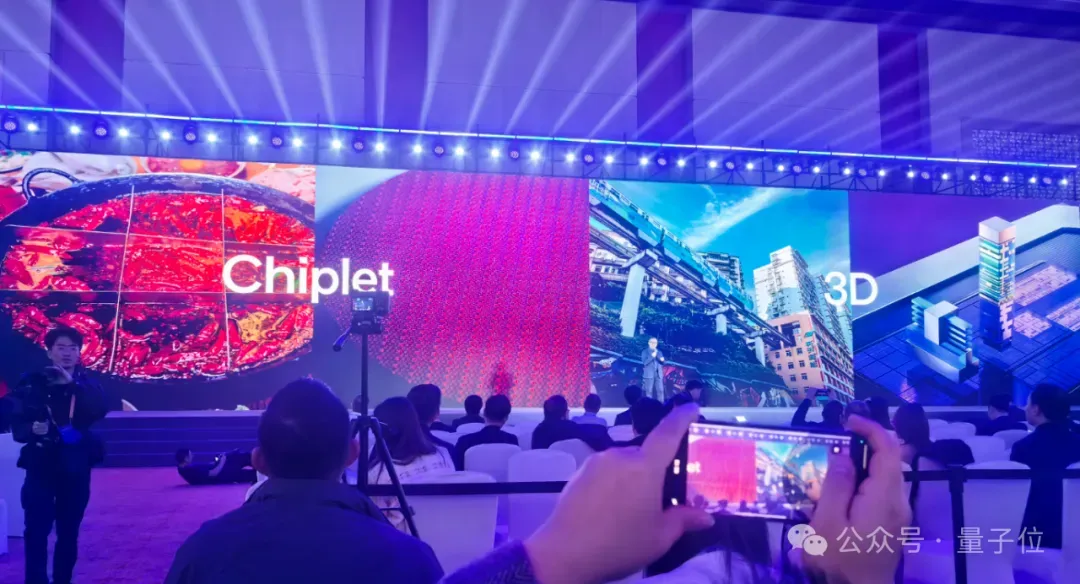
This comparison comes directly from Wang Zhicong, Chairman of Intel China.
At first glance, the diagram above does look remarkably similar. Wang explained:
> Chongqing’s urban planning and architecture represent the extreme in space utilization; its intricate layout resembles the cross-section of Intel’s 18A process chip — a miniature device encapsulating the essence of a metropolis.
>
> Similarly, in Chiplet technology, Intel now splits a chip into small dies (compute cores, GPU, I/O, and single-function IPs) and integrates them through unified packaging — just like discrete dishes in a hotpot meal.
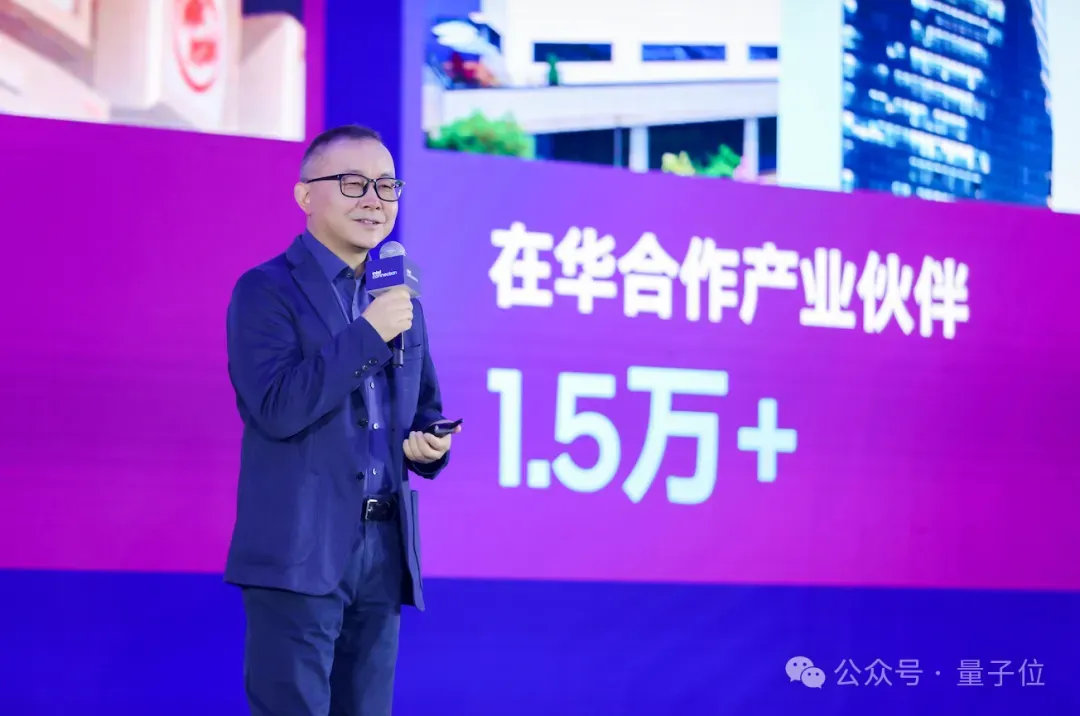
△ Wang Zhicong, Chairman of Intel China
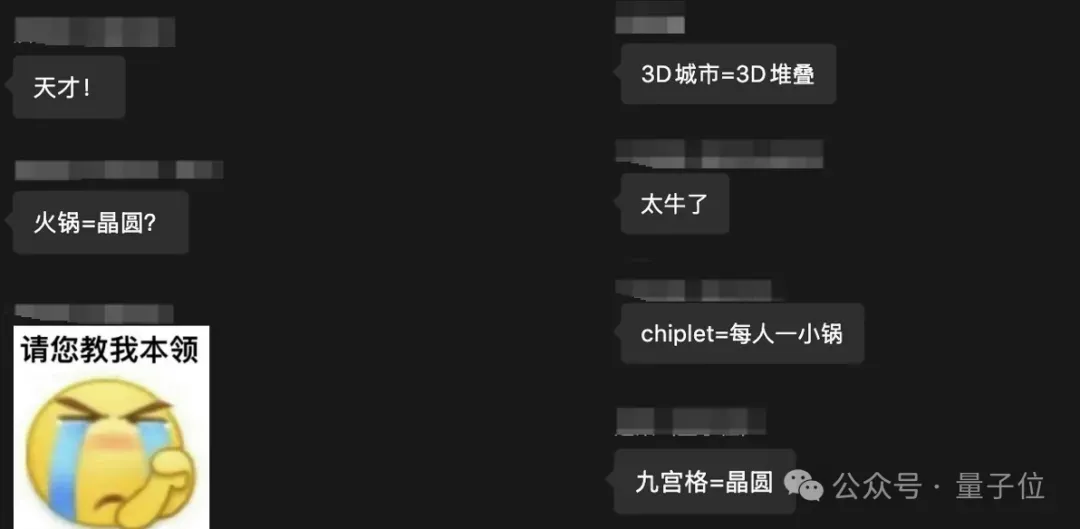
Many at QbitAI were amazed, calling the metaphor “genius”.
---
Intel’s 40th Anniversary in China
This year marks Intel’s 40th year in the Chinese market.
At the Technology Innovation and Industry Ecosystem Conference in Chongqing, Intel unveiled multiple innovations — reaffirming its role in shaping the PC industry where every ripple of Moore’s Law impacts the entire supply chain.
As processes approach physical limits, and AI large models redefine laptop metrics via Tokens, Intel VP Gao Song offered a deep rethink of manufacturing and interaction paradigms.
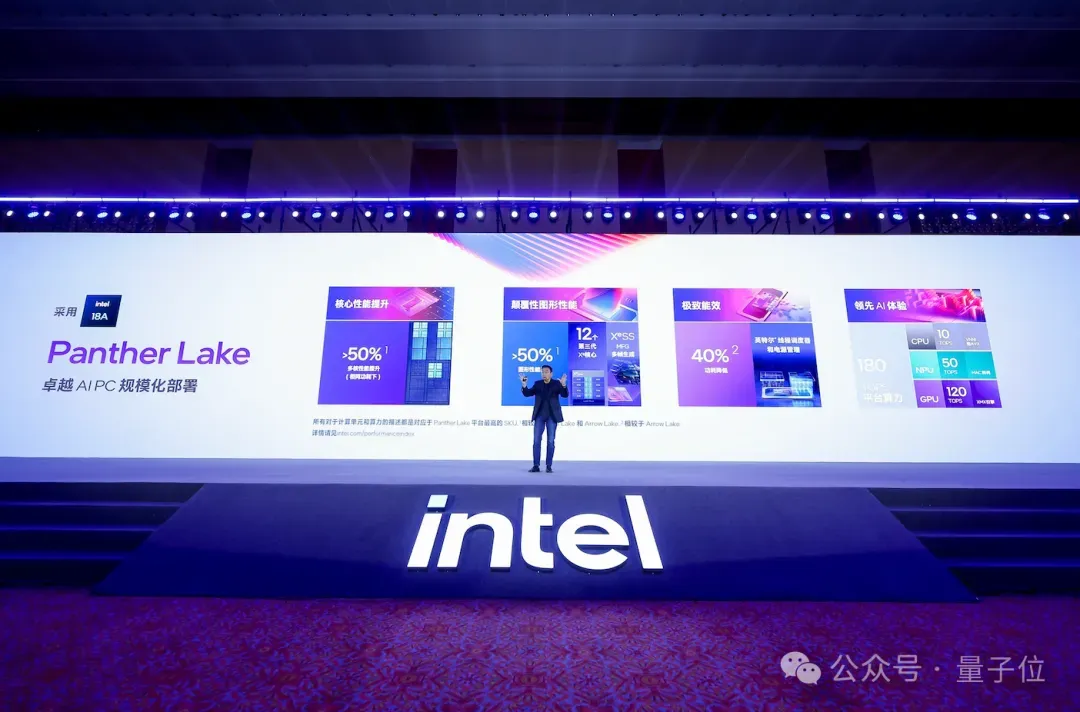
△ Gao Song, VP and GM of China Software Engineering & Client Computing Group
---
New Technology: Entering the Angstrom Era
Intel is officially entering the Angstrom era (1 Å = 0.1 nm) with next-gen AI PC platform Panther Lake, now in production.
Two key breakthroughs power the leap:
- RibbonFET Gate-All-Around Transistors
- Wrap channel on all sides for enhanced current control.
- Achieves precise switching, low leakage, and solves scaling challenges.
- PowerVia Back-Side Power Delivery
- Moves power to the transistor’s back, removing signal-power “traffic jams.”
- Cuts voltage loss significantly.
Intel 18A process gains:
- +15% performance at same power
- −25% power at same performance
- +30% transistor density
---
New Product: Panther Lake’s Efficiency Leap
Set for launch at CES next January, Panther Lake integrates manufacturing and architecture intelligence:
- Combines Lunar Lake’s high efficiency + Arrow Lake’s high performance
- +50% multi-core performance
- +50% graphics performance
- −40% power consumption
- 180 TOPS AI compute power for large AI models on-device
---
New Paradigm: AI-Augmented → AI-Native PCs
Gao defines five core capabilities for AI-native PCs:
- Perception
- Cognition
- Execution
- Memory
- Learning
Software optimizations include:
- Sparse Attention
- Speculative decoding
- KV Cache compression
These raise Token throughput 2.7× for faster, smoother AI agent response.
---
New Approach: The AI High-Quiet Gaming Laptop
Intel’s “Hexagonal Warrior” laptop concept balances:
- High performance
- Surface temperature control (<42°C at keyboard deck)
- Silence
- Long battery life
With XeSS multi-frame generation tech: Even thin-and-light laptops can run AAA titles like Black Myth: Wukong smoothly.
---
New Opportunities: Intelligent Edge Boom
Four emerging edge computing traits:
- Generative AI at scale
- Multimodal data processing
- AI + control systems integration
- Industry-specific AI assistants
Intel supports partners (e.g., CVTE) in transitioning from OPS to AI SoC-integrated solutions.
---
New Collaboration: Building the “汇山海” Ecosystem
Gao highlighted China’s growing model ecosystem:
- DeepSeek — advanced reasoning
- Tongyi Qianwen — vast knowledge base
- ModelBest — small-model optimization
Example: Edge-side image search tuned with a re-ranking model jumped accuracy from 85% → 96%.
---
Data Centers: Computing Power Is Turning into Electrical Power
Chen Baoli, VP of Intel’s Data Center & AI Group, warned:
- AI electricity consumption to rise 3.5× in 5 years
- Cumulative DC investment to hit $7T USD
> Electricity is now the truest measure of computing demand.
---
CPU + GPU: Perfect Training Partners
Xeon 6 processors excel in:
- I/O & Memory — MRDIMM memory + PCIe 5.0 for faster data movement
- AI Acceleration — AMX engine boosts vector search by 72%
- Reliability — “Five-nines” uptime + TDX security
---
Ecosystem Case Studies
- Volcano Engine — preprocessing cut 90%; costs down 83%
- ZTE — orthogonal supernode servers with 8,192 cards per cabinet
- Huaqin Technology — ETH-X supernode design for >100KW AI clusters
- xFusion — AI infra deployment cycle cut from 12 months to 1 week
- Luxshare — 128 cards per single cabinet “Shanghai Q” solution
---
Future Roadmap
By 2026, Intel plans Xeon 6+ with latest process tech and new GPUs — ensuring sustained DC compute improvements.
---
Closing Highlights
Intel CEO Pat Gelsinger greeted the audience in Chinese for the first time:
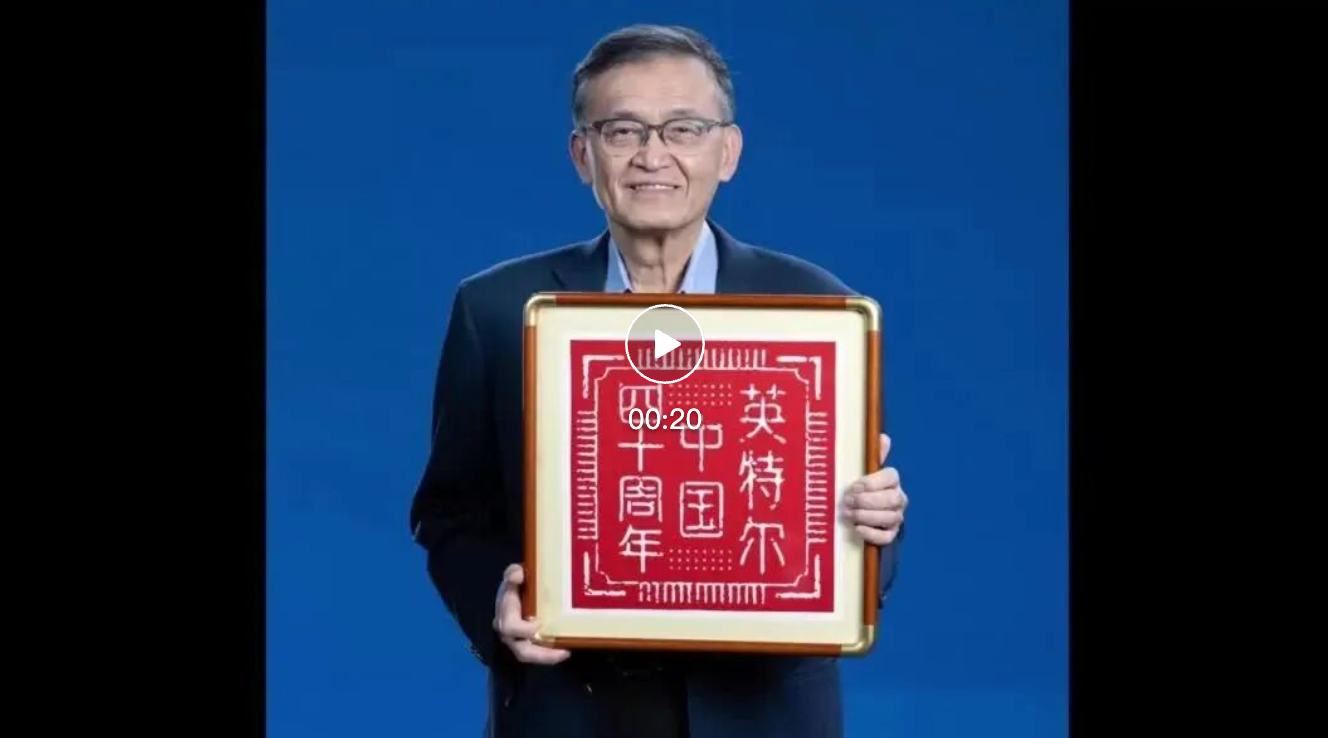
Video link: https://mp.weixin.qq.com/s/A_KifMXHIex-Bd6GllY05w
---
Tools for AI Creators
Platforms like AiToEarn官网:
- Open-source global AI content monetization
- Integrates generation, cross-platform publishing, analytics, and model ranking
- Supports Douyin, Kwai, WeChat, Bilibili, Xiaohongshu, Facebook, Instagram, LinkedIn, Threads, YouTube, Pinterest, X (Twitter)
For AI-native PCs and edge computing workflows, such tools bridge tech insights to multi-platform influence — and revenue.
---
Would you like me to also create an executive summary table for all Intel’s new technologies mentioned in this piece so it’s faster to skim? This would make the Markdown even more useful for tech leaders.