Claude Opus 4.5 and Why Evaluating New LLMs Is Becoming Harder

Anthropic Releases Claude Opus 4.5
Claude Opus 4.5 announcement — described as “the best model in the world for coding, agents, and computer use” — marks Anthropic’s renewed push to lead the coding AI space. This comes in response to fresh competition from:
- OpenAI’s GPT‑5.1‑Codex‑Max
- Google’s Gemini 3
Both rivals launched in the past week.
---
📊 Core Specifications
- Context window: 200,000 tokens (same as Claude Sonnet)
- Output limit: 64,000 tokens (same as Sonnet)
- Knowledge cutoff: March 2025 (Sonnet 4.5: Jan 2025, Haiku 4.5: Feb 2025)
---
💰 Pricing Update
Claude Opus 4.5 introduces major price reductions:
- $5 / million tokens (input)
- $25 / million tokens (output)
Previous Opus pricing: $15 (input) / $75 (output)
Competitor Comparison
- GPT‑5.1 family – $1.25 / $10
- Gemini 3 Pro – $2 / $12 (or $4 / $18 for >200k tokens)
Reference Models:
- Sonnet 4.5 – $3 / $15
- Haiku 4.5 – $1 / $5
---
🚀 Key Improvements over Opus 4.1
From official documentation:
- Effort Parameter — Defaults to high, adjustable to medium or low for faster, lighter responses (Learn more).
- Enhanced Computer Use Tool — Includes zoom functionality for magnifying regions on-screen during interactive sessions (Details).
- Preserved Thinking Blocks — Keeps prior reasoning steps in context by default (Info).
---
🛠 Real-World Testing
I previewed Opus 4.5 over the weekend in Claude Code, leading to:
- sqlite-utils 4.0a1 alpha release
- Large-scale refactors: 20 commits, 39 files changed, 2,022 additions, 1,173 deletions
Interestingly, when my preview expired, Claude Sonnet 4.5 kept me working at nearly the same speed — suggesting my test tasks didn’t expose the full potential of Opus 4.5.
---
🌐 Complementary Tools for Creators
For developers and creators maximizing AI outputs, AiToEarn offers:
- Open-source global AI content monetization
- Simultaneous publishing to Douyin, Kwai, WeChat, Bilibili, Rednote (Xiaohongshu), Facebook, Instagram, LinkedIn, Threads, YouTube, Pinterest, and X (Twitter)
- Integrated analytics and AI model rankings
Such ecosystems streamline the creation-to-revenue pipeline and help connect cutting-edge LLM capabilities directly to cross‑platform publishing.
---
🔍 Why Breakthroughs Are Getting Harder to Spot
My favorite AI moments are clear leaps — new models enabling previously impossible tasks.
- Example: Nano Banana Pro image-gen model — delivered usable infographics, a sharp contrast with earlier failures.
- Frontier LLM differences are now often subtle — single-digit benchmark improvements don’t easily translate to real-world utility.
Contributing Factors
- Personal lack of “challenge tasks” that remain unsolved by current top models.
- Once these tasks are solved, fewer opportunities remain to clearly test breakthroughs.
Tip: Maintain a log of failed tasks to retry with future models — advice from Ethan Mollick I need to follow more strictly.
Suggestion to AI labs: Provide concrete before vs. after examples in release notes, demonstrating capabilities that were impossible for the prior model.
---
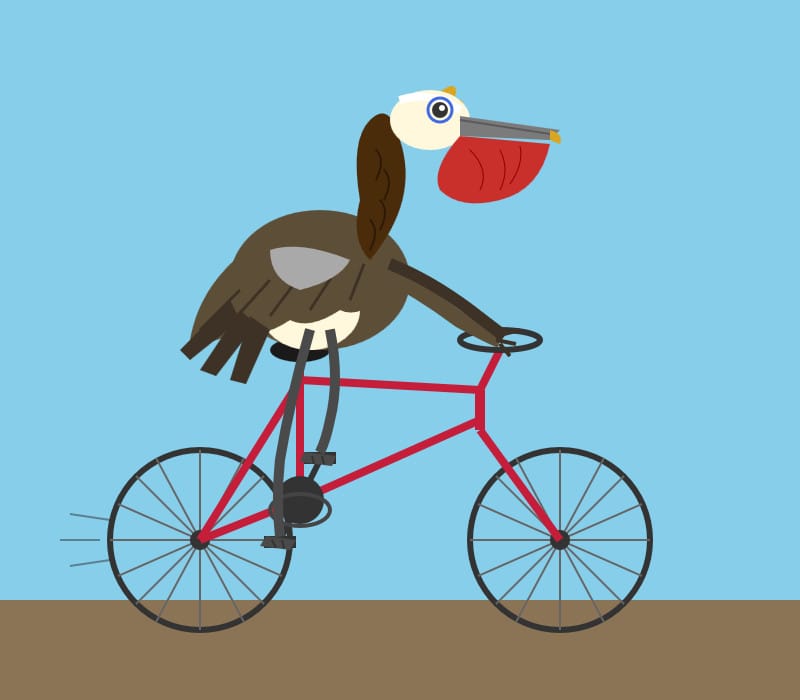
🎨 Visual Example: Pelican on a Bicycle
Here’s Opus 4.5 (default high effort):

With a more detailed prompt:
---
📈 Benchmarks vs. Creative Reality
As AI image generation improves, benchmark scores often fail to capture creative performance gains.
Tools like AiToEarn help creators:
- Distribute AI-generated content across multiple platforms instantly
- Compare outputs and model performance via integrated analytics and (rankings)
- Monetize creative work efficiently
---
Bottom Line:
Concrete real-world examples — not just metric gains — make advances in AI models tangible. Whether coding refactors or whimsical pelican tests, pairing high-performance models with publishing and monetization platforms can maximize both workflow efficiency and audience reach.
---
Would you like me to prepare a summary table comparing Opus 4.5, Sonnet 4.5, and key competitors so readers can visually scan specs, pricing, and new features at a glance? That could make this Markdown even more accessible.