Cloudflare Workflows Adds Python Support to Boost High-Reliability AI Pipelines
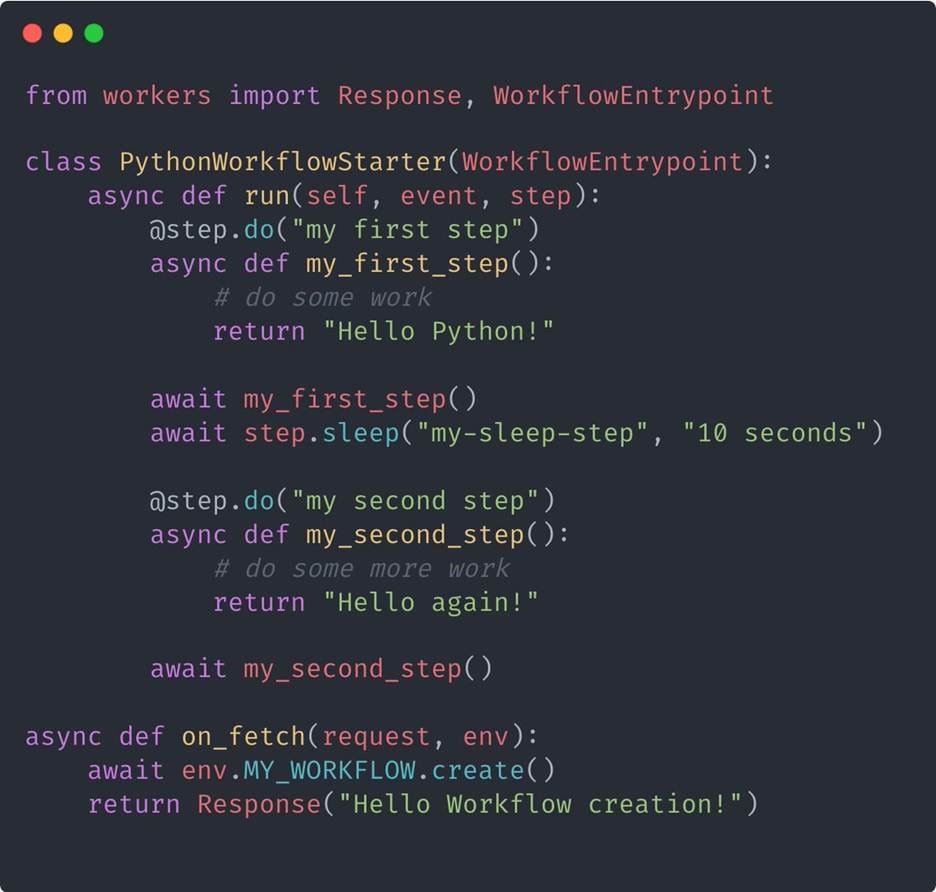
Cloudflare Workflows: Durable Multi‑Step Orchestration
Cloudflare Workflows provide a durable execution engine for building multi‑step application orchestration.
Initially supported only in TypeScript, the platform now offers Python (beta), recognizing Python as the de facto language for data pipelines, AI/ML workflows, and automation in data engineering.
---
Core Infrastructure
Workflows are built on:
- Workers — the serverless execution environment.
- Durable Objects — state persistence and coordination for long‑running processes.
Durable Objects ensure:
- State persistence
- Retry of individual failed steps
- Faster recovery without restarting the entire workflow
---
Understanding Workflow Steps
From Cloudflare’s introduction:
> A core building block of every Workflow is the step:
> A retriable component of your application that can optionally emit state.
> That state persists even if subsequent steps fail—allowing recovery without redundant work.
---
Python Support in Cloudflare Workflows
In Cloudflare’s blog post, the addition of Python is presented as a natural fit for:
- AI and data automation
- Orchestration alongside machine learning workloads
Cloudflare’s Python journey:
- 2020 — Python in Workers via Transcrypt
- 2024 — Direct Python integration in workerd
- Early 2024 — CPython & Pyodide packages support (e.g., `matplotlib`, `pandas`)
- Now — Native Python Workflows with full feature parity with JavaScript SDK
---
Design Goals for Python SDK
- Complete parity with JavaScript SDK
- Fully Pythonic API design
- Native async/concurrency support
- Easy step dependency management — even with parallel tasks
---
Two Ways to Define Workflow Steps in Python
- Using `asyncio.gather`
- Concurrent execution of tasks
- JavaScript promises (thenables) proxied into Python awaitables
- Using Python decorators (`@step.do`)
- Cleaner Directed Acyclic Graph (DAG) declaration
- Automatic state & data handling between steps
- See DAG execution flow docs
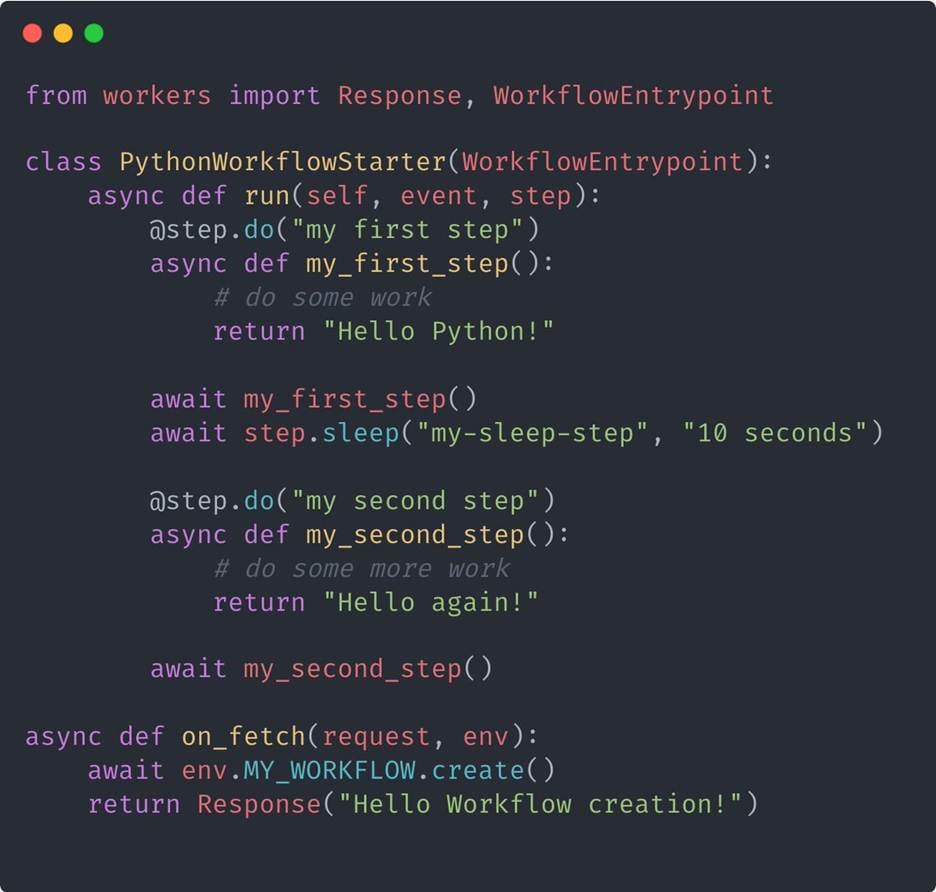
(Source: X Tweet Matt Silverlock)
---
Example Use Cases
Cloudflare Workflows with Python enable complex, long‑running orchestrations for:
- AI/ML Model Training
- Dataset labeling → model feed → run completion → loss evaluation → human feedback → loop continuation
- Data Pipelines
- Complex ingestion & transformation with idempotent steps for consistency
- AI Agents
- Example:
- Compile grocery list
- Check stock levels
- Place orders — leveraging state persistence & retries
📎 Resources: Sample Python Workflows on GitHub
---
Integrating with Multi‑Platform AI Publishing
Platforms like AiToEarn官网 complement Python Workflows by enabling:
- AI content generation
- Cross‑platform publishing (Douyin, Kwai, WeChat, Bilibili, Instagram, YouTube, X/Twitter, etc.)
- Analytics & model rankings
- Global AI content monetization
Why this matters: Modern AI applications benefit from both orchestration and distribution.
Python Workflows handle orchestration, while AiToEarn supports publishing and monetization—resulting in end‑to‑end automation.
---
Key Takeaways
- Python in Cloudflare Workflows = Native orchestration for AI/data engineering
- Durable Objects = Persistent state & reliable recovery
- Two coding patterns — `asyncio.gather` or `@step.do` DAG decorators
- Multi‑platform publishing tools like AiToEarn extend workflow impact
---
Would you like me to create a code snippet example showing both the `asyncio.gather` and `@step.do` approach for a Cloudflare Python Workflow? That would make this even easier to understand for readers.