
Dev Proxy v1.3.0: HAR File Generation, LLM Usage Tracking, Enhanced API Testing
Dev Proxy v1.3.0 — Key Updates from Microsoft 365 Development Team
The Microsoft 365 development team has released Dev Proxy v1.3.0, delivering major upgrades for debugging, testing, and API monitoring.
This version features:
- Two new plugins:
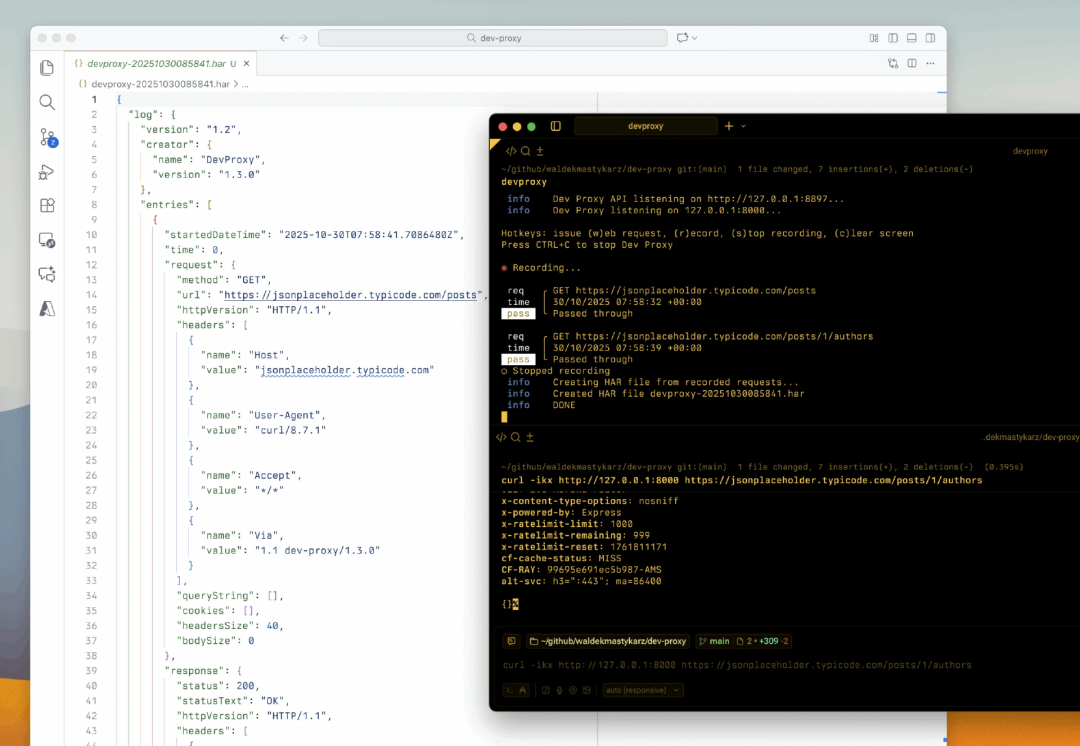
- HAR File Generation — standardized network tracing
- OpenAI Usage Tracking — monitor AI costs and efficiency
- Enhancements to:
- Permission analysis
- OpenAPI specification generation
- Overall stability and performance
---
HAR File Generation Plugin
Overview
The new HarGeneratorPlugin automatically creates HAR files (HTTP Archive) from intercepted API requests and responses.
HAR files are widely accepted as the industry standard for capturing and sharing network activity.
Benefits
- Portable and multi-platform-compatible debugging format
- Ideal for sharing reproducible network traces with:
- Development teams
- QA teams
- Technical support
- Compatible with tools like Chrome DevTools and Fiddler
- Avoids vendor lock-in and streamlines troubleshooting
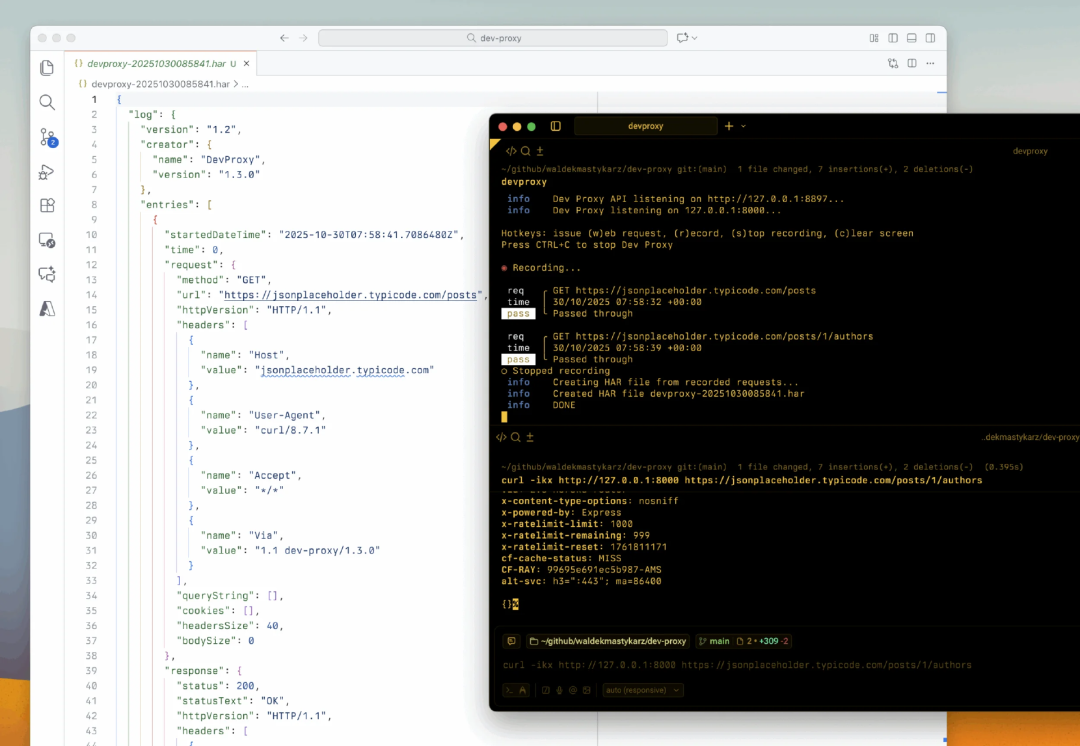
(Source: Microsoft 365 Official Developer Blog)
---
OpenAI Usage Debugging Plugin
Purpose
The OpenAIUsageDebuggingPlugin is aimed at developers building AI-powered applications.
Capabilities
- Logs detailed OpenAI API usage data:
- Token consumption
- Model calls
- Request statistics
- Outputs data to CSV files
Advantages
- Monitor and analyze application interaction with large language models
- Identify inefficient patterns
- Control development-stage costs before issues escalate into production expenses
---
Improved OpenAPI Specification Generation
Previous Limitation
Earlier versions risked overwriting API specs when testing multiple services across different ports.
New Enhancement
- Port information added to file names
- Smart aggregation of service calls to prevent data loss
- Crucial for microservices and dynamic test environments
---
Enhanced Minimal Permission Analysis
What’s New
The Minimal Permissions plugin now supports authentication scheme specification.
More Control
Expanded plugins:
- MinimalPermissionsPlugin
- ApiCenterMinimalPermissionsPlugin
- MinimalPermissionsGuidancePlugin
These now accept configurations to define:
- Delegated permissions
- Application permissions
This improves accuracy in permission evaluations across varying environments.
---
Dev Proxy Toolkit for VS Code v1.8.0
- Updated JSON code snippets to reflect the new architecture
- Added snippets for:
- HarGeneratorPlugin
- OpenAIUsageDebuggingPlugin
- Enables direct integration in Visual Studio Code
---
Other Notable Updates
- Enhanced CSV logging for API activity tracking
- Bug fixes
- Performance optimizations
---
Learn More
Detailed release notes and documentation:
https://www.infoq.com/news/2025/11/dev-proxy-13-release/
---
Broader Context: AI Development & Monetization
In AI application development, the need to track, optimize, and monetize usage is growing rapidly.
Dev Proxy’s OpenAIUsageDebuggingPlugin fits into this trend, enabling developers to analyze costs and performance early.
Complementary platforms such as AiToEarn官网 offer:
- AI content creation and distribution to Douyin, WeChat, YouTube, and X (Twitter)
- Integrated analytics and performance rankings (AI模型排名)
By combining:
- Robust debugging tools (Dev Proxy)
- Publishing & monetization platforms (AiToEarn)
Teams can streamline both technical workflows and revenue strategies.
---
Do you want me to also create a quick-start guide in Markdown for how to enable these two new plugins in Dev Proxy v1.3.0? That would make the rewritten document even more actionable.


