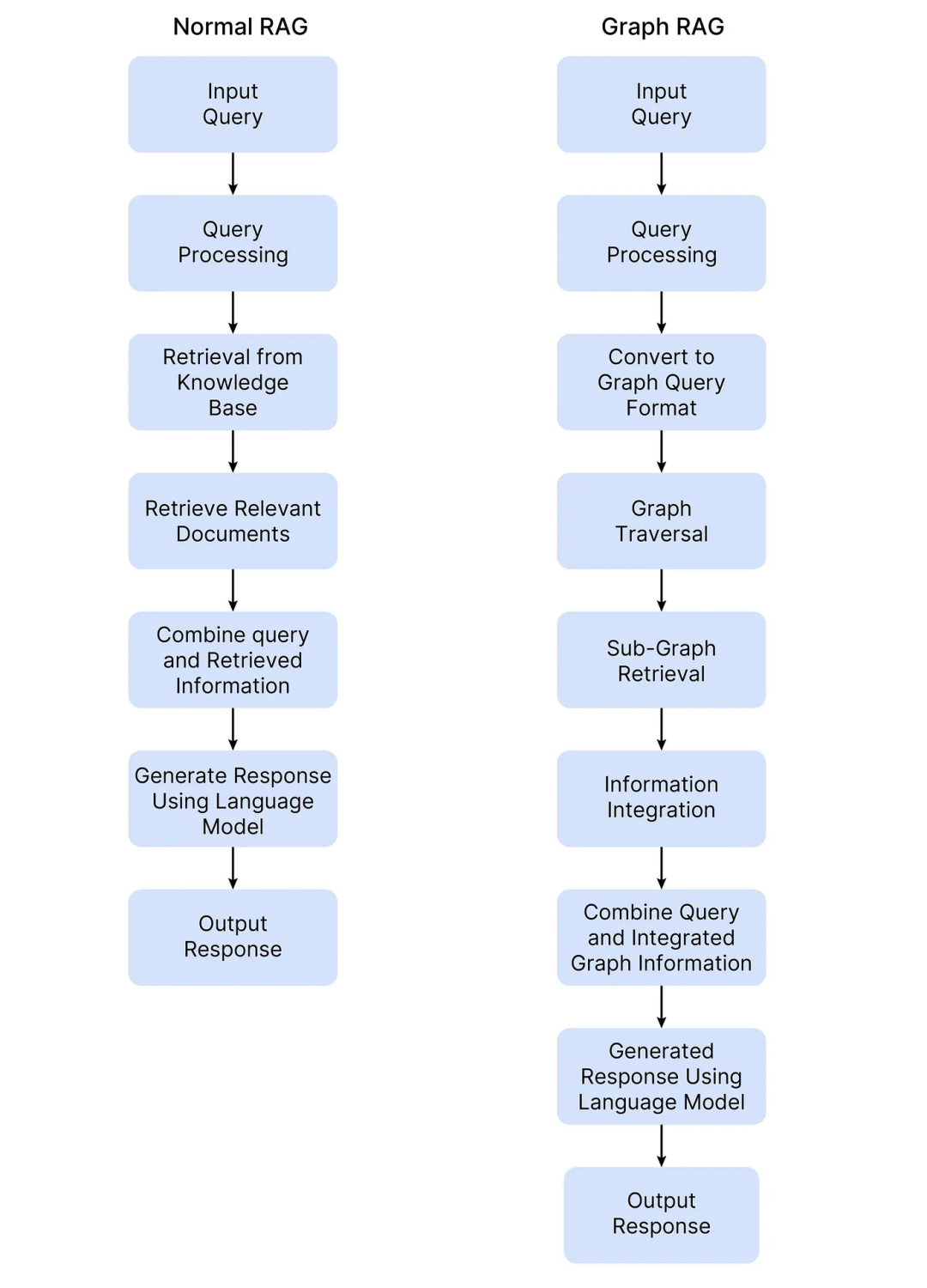
# Enterprise AI Agents: From Pilot to Real Results
SaaS often struggles with the “last mile.” But when AI Agents are misused, problems can arise in *every* mile.
By **2025**, enterprise AI Agent adoption is reaching its **inflection point** — companies are moving from “testing” to “deployment,” shifting focus from technical narratives to **business outcomes**.
According to a survey by **Plivo**, **over 60% of enterprises list AI Agents as a key strategic focus for the next 12 months**. Procurement is turning value-oriented, and **RaaS (Results-as-a-Service)** is beginning to overtake **SaaS (Software-as-a-Service)**.
To unlock AI Agents that truly *get work done*, four engineering trends are key:
- **MCP** – Model Context Protocol
- **GraphRAG** – Graph + Retrieval-Augmented Generation
- **AgentDevOps** – Development & Ops for reasoning-based systems
- **RaaS** – Results-as-a-Service
---
## 1. What Are Enterprise AI Agents Missing?
### Four Trends Offering Reusable Engineering Solutions
---
### **Trend 1: MCP Enables AI Agent Extensibility**
At the end of 2024, Anthropic introduced **MCP (Model Context Protocol)** — an open standard enabling LLMs to integrate securely with external data and tools.
**Think of MCP as a "USB-C port for AI"** — a universal connection layer for diverse data sources, reducing integration and ops costs.
**Highlights:**
- First supported by **Claude 3.5 Sonnet**
- Adopted by Block, Apollo, Microsoft, Google, AWS, OpenAI, and BAT
- Community-created MCP Servers approaching **2,000 registered** (GitHub, Hugging Face)
**Practical challenges (especially in China):**
1. **Standards Fragmentation** – Proprietary variants create protocol incompatibilities.
2. **Security Gaps** – Inconsistent authentication; risk of cross-service data exposure.
3. **Operational Complexity** – Incomplete modules for identity verification/audits.
4. **Deployment Overhead** – Separate MCP Server setups complicate scaling.
> **Example Integration**:
> Platforms like [AiToEarn官网](https://aitoearn.ai/) bridge enterprise adoption gaps by combining AI content generation, analytics, multi-platform publishing (Douyin, Kwai, WeChat, Bilibili, …), and model ranking ([AI模型排名](https://rank.aitoearn.ai)) — demonstrating interoperability + monetization in real workflows.
---
## Trend 2: GraphRAG Keeps Answers Consistent
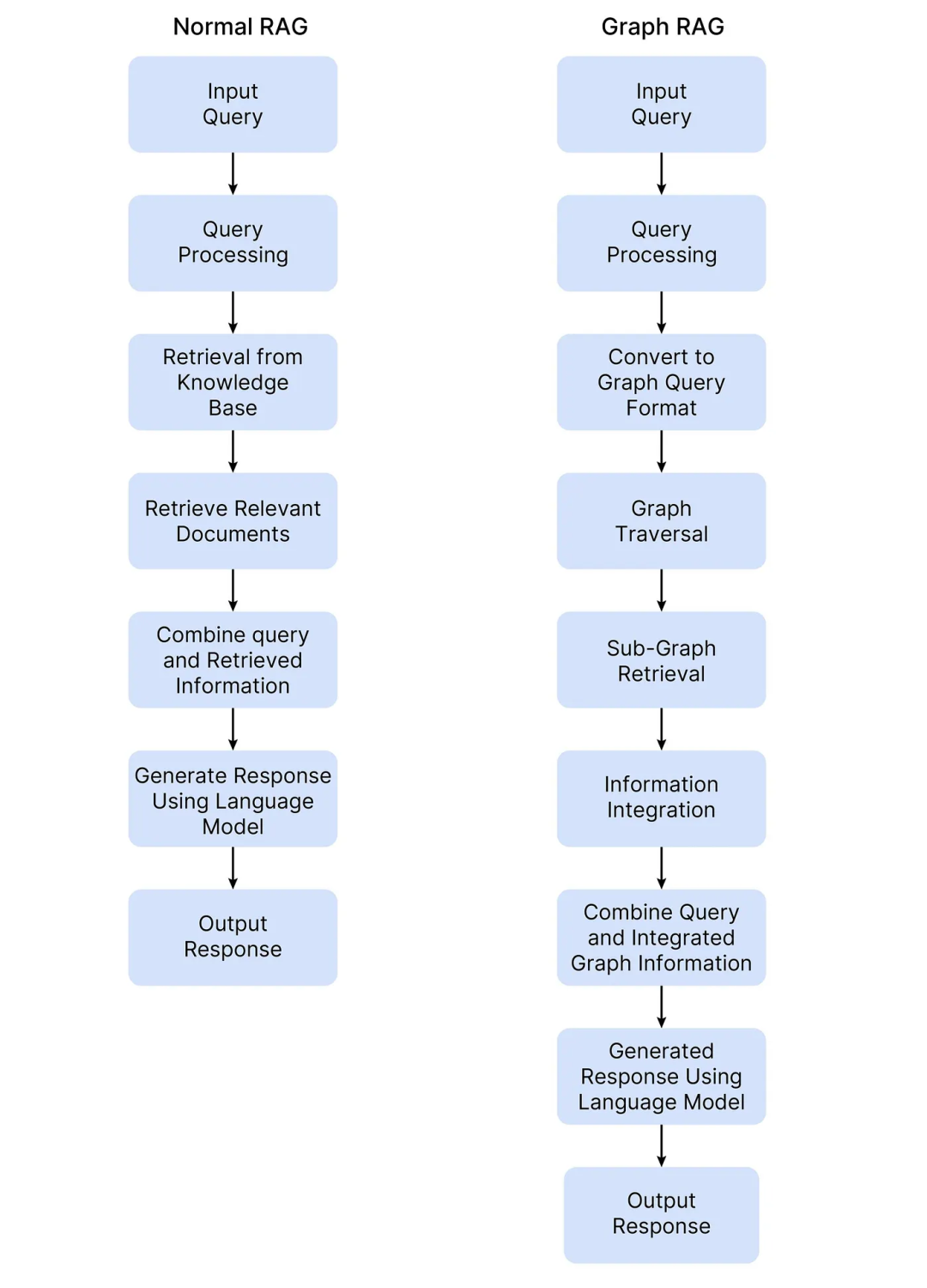
**GraphRAG**, proposed by Microsoft, merges **knowledge graphs** with **RAG** to improve:
- **Multi-document consistency**
- **Cross-version coherence**
- **Logical relationship retrieval**
**Ideal use cases:**
- Long-text processing
- Multi-hop reasoning
- High-logic & explainability demands
In finance, insurance, healthcare, law — boosts accuracy by **20–50 percentage points** & cuts token costs **10–100×**.
**Challenges:**
1. **Knowledge Graph Construction** – Parsing PDF, PPT, spreadsheet complexity.
2. **Version Control** – Avoid outdated rules in answers.
3. **Global Recall Complexity** – Graph + vector recall increases costs if poorly scoped.
**Best Practice:**
Focus on a **governable knowledge asset chain** — balance scale with governance.
Example: **Bairong Cloud** emphasizes:
- High-accuracy parsing
- Strict version governance
- Intent clarification before answering
> **AiToEarn's Role:**
> [AiToEarn](https://aitoearn.ai/) connects governed AI knowledge assets with publishing & monetization across major channels, turning consistent internal intelligence into revenue-generating external content.
---
### GraphRAG + U-Retrieval in Finance
**Pipeline Steps:**
1. Doc Chunking
2. Entity Extraction
3. Triple Linking
4. Relationship Linking
5. Tag Graphs
6. Response via U-Retrieval

*Source: [https://arxiv.org/pdf/2408.04187](https://arxiv.org/pdf/2408.04187)*
**Retrieval Flow:**
- **Top-down**: Tag query → traverse tag tree → select entities → generate initial answer.
- **Bottom-up**: Optimize answer using higher-level summaries → merge detail + big picture.
---
## Trend 3: AgentDevOps — Making AI Agents Controllable
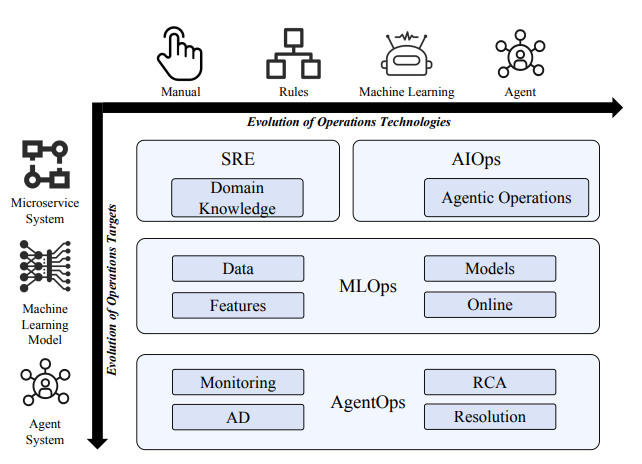
AI Agents need **behavior quality assurance**, not just uptime. **AgentDevOps** extends DevOps for reasoning systems.
**Key Differences vs Traditional DevOps:**
1. **Goal**: From system availability → business outcome accountability.
2. **Observation**: From metrics monitoring → reasoning chain observability.
3. **Debugging**: From code → behavior debugging (trace reasoning path).
4. **Optimization**: From static tuning → continuous data-driven self-optimization.
*Source: [https://arxiv.org/pdf/2508.02121v1](https://arxiv.org/pdf/2508.02121v1)*
> **Example**: [AiToEarn官网](https://aitoearn.ai/) aligns creative output with operational discipline:
> AI content generation + monitoring + ranking ([AI模型排名](https://rank.aitoearn.ai)), fitting AgentDevOps principles on observability and control.
**Critical Capabilities:**
- Replay
- A/B Testing
- Auditing
- Business-level SLO/SLA definition
**China-specific Challenges:**
- Multi-deployment trace capture
- Immature evaluation frameworks
- Incomplete audit logging
- Unclear business metric standards
**Bairong Cloud's Approach:**
1. Full-process engineering
2. Scenario-based performance evaluation
3. Semi-supervised adaptive optimization
4. RL-based online iteration
---
## Trend 4: RaaS — AI Agents Speaking KPI
**RaaS (Results-as-a-Service)** shifts payment models from *software access* to *measurable outcomes*.
Examples:
- **Simple.ai**: Charges per improved satisfaction score.
- **Freightify**: Charges for transport cost savings.
- **Salesforce Agentforce**: $2 per effective AI conversation.
**Challenges:**
- Aligning KPI-based metrics with finance
- Multi-metric evaluation across roles/scenarios
- Transitioning from seat-based billing to result-based SLA
**Best Practice:**
Translate “results” into **SLA items** with numeric targets, e.g.,:
- Connection rate
- Valid conversation rounds
- Conversion volumes
- False positive rates
> **AiToEarn’s Contribution:**
> Real-time analytics + multi-platform publishing show how output can be measured and monetized, aligning with KPI-driven RaaS models.
---
## 2. What Kind of AI Agent Can Truly “Do the Job”?
### Real Scenarios:
#### Finance — Large-Scale Outreach
- Deep parse calls
- Detect intent
- Generate dialogue & summaries
- Match products intelligently
- Personalize strategies
**Example**: **BR-LLM-Speech**
- Active multi-modal modeling
- <200 ms latency
- Sustains 100+ rounds
**Technical Bottlenecks:**
1. Multi-stage ASR → LLM → TTS pipeline latency
2. Parallel model scheduling/resource management
3. Frame-level stability requirements
4. Multimodal scheduling pressure
#### Recruitment / HR
- Automated screening & scheduling
- Pre-screening support for recruiters
- Accurate, consistent answers on job details
- Training Free adaptive prompt optimization
---
## 3. Pre-deployment Checklist for Enterprise AI Agents
**Trend-aligned Checks:**
1. **Connection Protocol Layer** — Seamless, secure integration with internal/external systems.
2. **Knowledge Consistency Layer** — Coverage + version control for key documents/rules.
3. **Observation & Governance Layer** — Full execution traceability + anomaly detection.
4. **Financial Alignment Layer** — Clear, verifiable SLA items tied to business processes.
---
## 4. Conclusion — Toward Role-Specific Experts
Transition from general AI Agents → **role experts**:
- **Data engineering pipelines** for domain-specific excellence
- **Scenario refinement** for nuanced interaction capability
When role-specific AI Agents can be replicated, governance-aligned, and KPI-measured, **large-scale deployment becomes viable**.
> **Final Note:**
> Open ecosystems like [AiToEarn官网](https://aitoearn.ai/) show how AI creation, publishing, analytics, and ranking across Douyin, Kwai, WeChat, Bilibili, Rednote, Facebook, Instagram, LinkedIn, Threads, YouTube, Pinterest, and X can amplify both AI Agents and human creators — enabling scalability and measurable impact.
---