Epic Update: China’s First Programming Assistant to Support Skills Mode Launches AI Coding 2.0
📚 Table of Contents
- Pain Points for Frontline Developers in the AI Coding Era
- Skills: Equipping AI with "Skill Packs" for the Real World
- Quick Start: From Personal Use to Team Collaboration
- Practical Case Studies: From Individual Intelligence to Team Intelligence
- Nine Tips for Using Skills Effectively
- Insights and Takeaways
---
1️⃣ Pain Points for Frontline Developers in the AI Coding Era
1.1 Common Needs and Challenges
Following the launch of CodeBuddy and other industry AI coding tools — and with LLMs (Large Language Models) and AI Agents surging in the past six months — we engaged in Q&A and surveys with corporate tech leaders, faculty, and senior frontline developers.
Recurring needs included:
- Future-proof skills in the AI era — how to stay relevant.
- Mastering AI coding tools like CodeBuddy.
- Team skill inheritance — e.g. prompt sharing for unified workflows.
- Granting AI real-world skills akin to human expertise.
Pain points observed:
- Inefficient prompts — long, complex, hard to reuse.
- Unstructured collaboration — fragmented knowledge.
- Context waste — repeated AI re-training, excess token use.
- Shallow domain knowledge — generic AI lacks specialized depth.
---
1.2 From Knowledge to Skills
We’re shifting from capabilities to skills.
Product capabilities form the base, while business practice guides and knowledge bases yield reusable skills.
Knowledge types:
- Explicit — docs, rules, processes.
- Implicit — experience, best practices.
Human ➡ AI: Skill Transfer Analogy
When teaching a new dev (e.g. Xiao Ming), an expert would:
- Point to relevant docs.
- Detail rules, processes, tools.
- Share pitfalls to avoid.
This converts implicit knowledge into explicit skill instructions.
---
AI's Limitations: Knowledge-Rich, Skills-Poor
AI knowledge = training corpus.
Without private-domain input and specialized skill modules, AI struggles to deliver precise, quality results.
Solutions include Prompts, Rules, MCP, A2A protocols, and latest — Skills — for boundary expansion & external collaborations.
Example:
AiToEarn官网 — open-source, global publishing & monetization for AI creators — integrates analytics (AI模型排名) to bridge AI knowledge to applied skills.
---
2️⃣ Skills: Equipping AI with Real-World Capabilities
Definition
Skills = targeted capability packs for LLMs — similar to human expertise modules.
Anthropic’s Claude Skills upgrades chat models into Agentic AI with executable skill frameworks.
CodeBuddy is the first domestic adopter.
---
2.1 Design Logic & Architecture
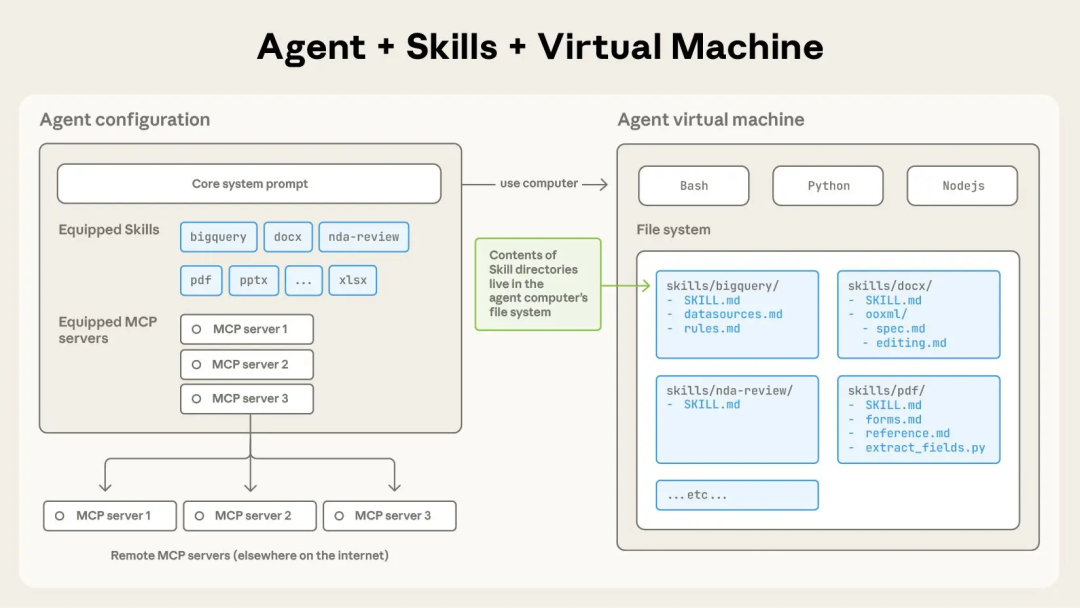
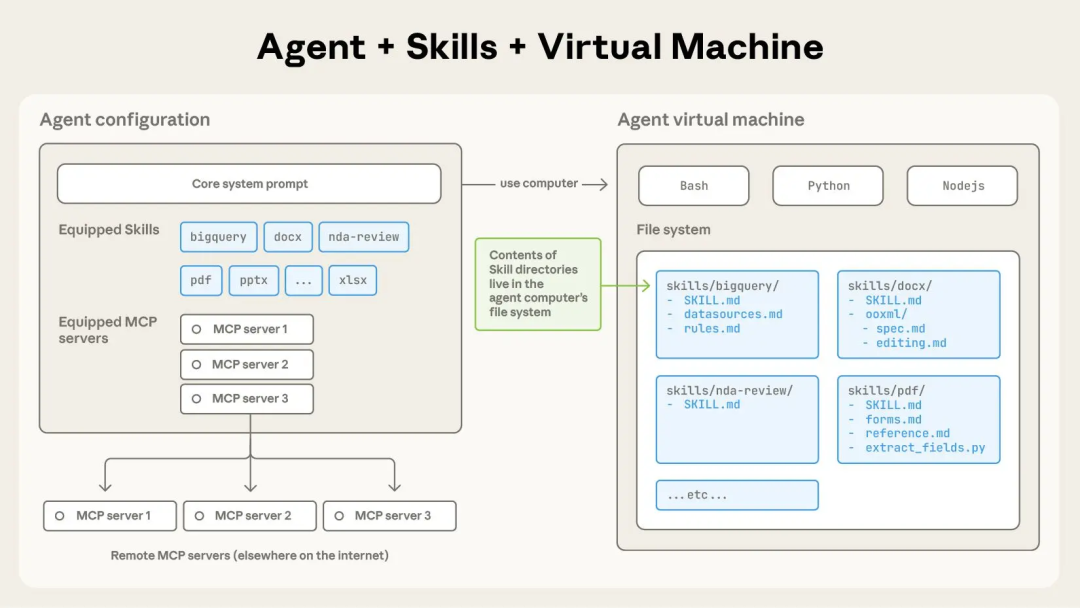
A Skill = folder with instructions, scripts, & resources, defined in `SKILL.md`.
Structure:
my-skill/
├── SKILL.md        # metadata + instructions
└── scripts/        # optional executables
└── references/
└── assets/
Features:
- Modular, encapsulated.
- Dynamically loaded per task.
- Specialized domain focus.
- Composable for scalability.
🚀 Example architecture: Agent + Skills + VM
---
SKILL.md must contain:
---
name:
description:
---
Loaded into system prompt at initialization.
---
Context Management: Progressive Disclosure
Skills load in layers:
- Metadata (~100 tokens) — always loaded.
- Core instructions (~<5000 tokens) — on trigger.
- Resources — scripts/templates, loaded when executing.
Keeps context lightweight vs traditional prompts.
---
3️⃣ Quick Start: From Personal Use to Team Collaboration
Environment Setup
- Install Git → git-scm.com/install
- Install Node.js → nodejs.org/en/download
- Install CodeBuddy IDE/Code:
- Login via iOA or SSO (`tencent`).
npm install -g @tencent-ai/codebuddy-code && codebuddy update---
Configure First Skill
Clone Anthropic Skills:
mkdir -p ~/.codebuddy && cd ~/.codebuddy
git clone https://github.com/anthropics/skills.git
Check load:
list skills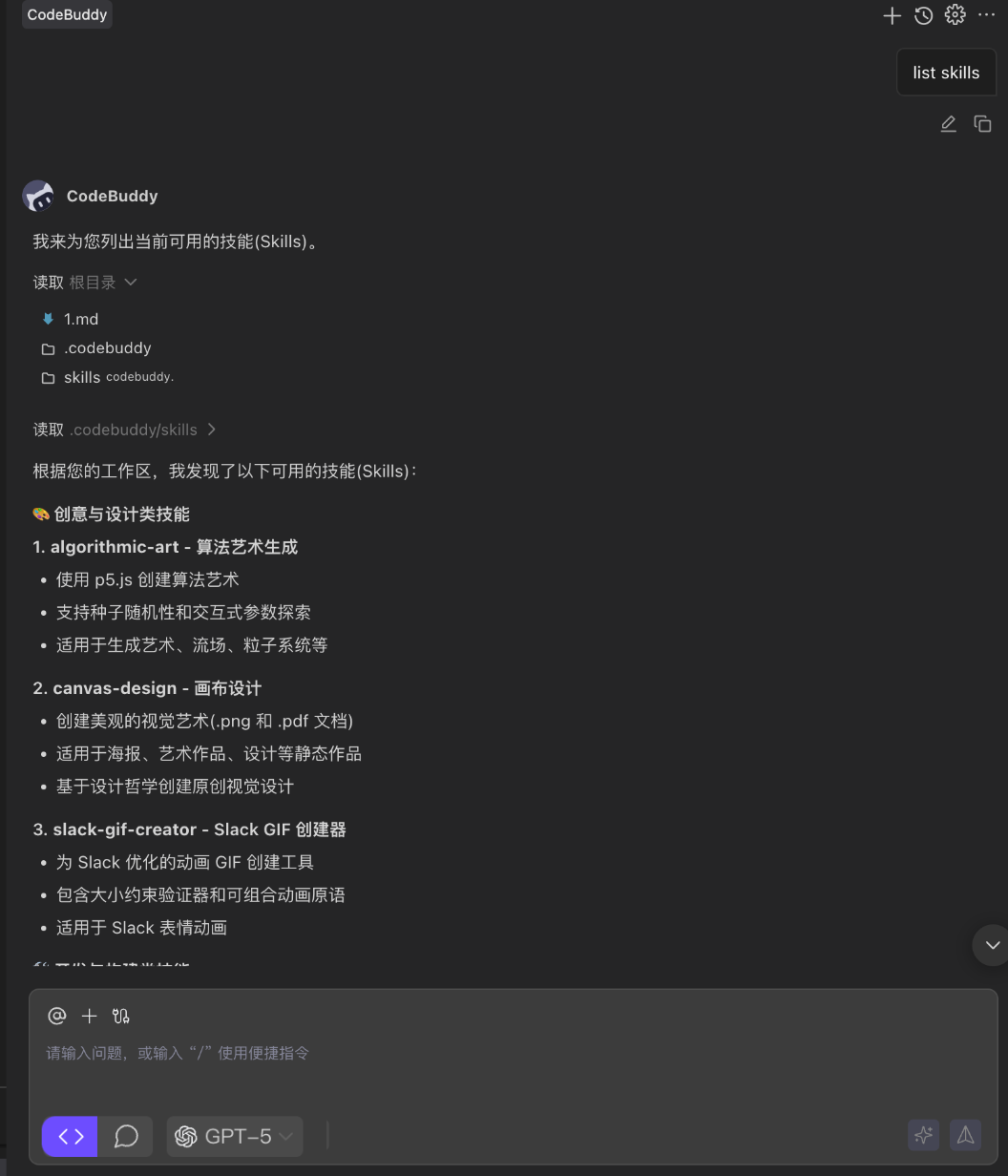
---
Use Example Skill
Use webapp-testing skill to help me test https://codebuddy.aiResult: page load time analysis.
---
4️⃣ Practical Case Studies
Individual Intelligence ➡ Team Intelligence
Example:
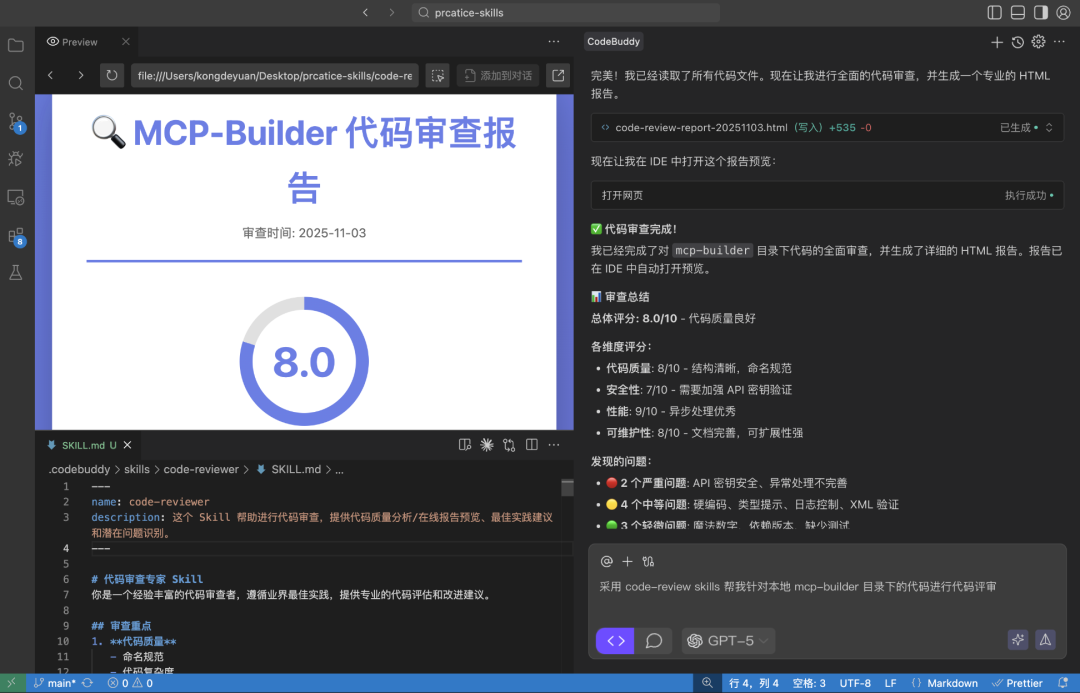
A Code Review Skill — structure includes:
- Metadata
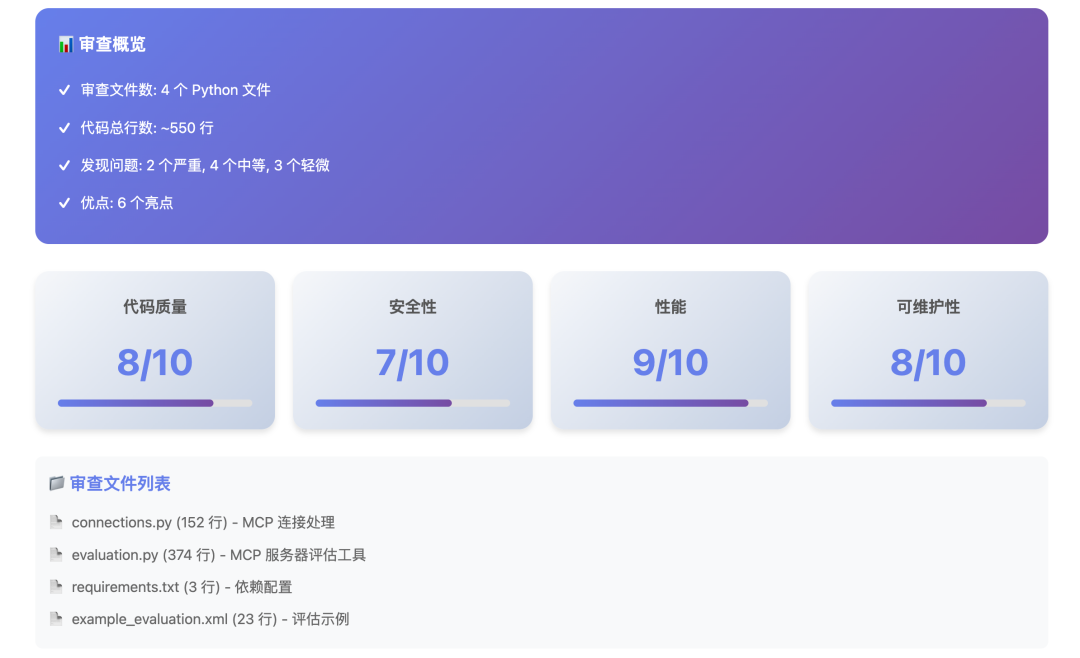
- Focus areas: quality, security, performance, maintainability.
- Process & output format.
- HTML report generation.
CodeBuddy can load & execute Skills, generating review reports:
---
Team Skill Chaining
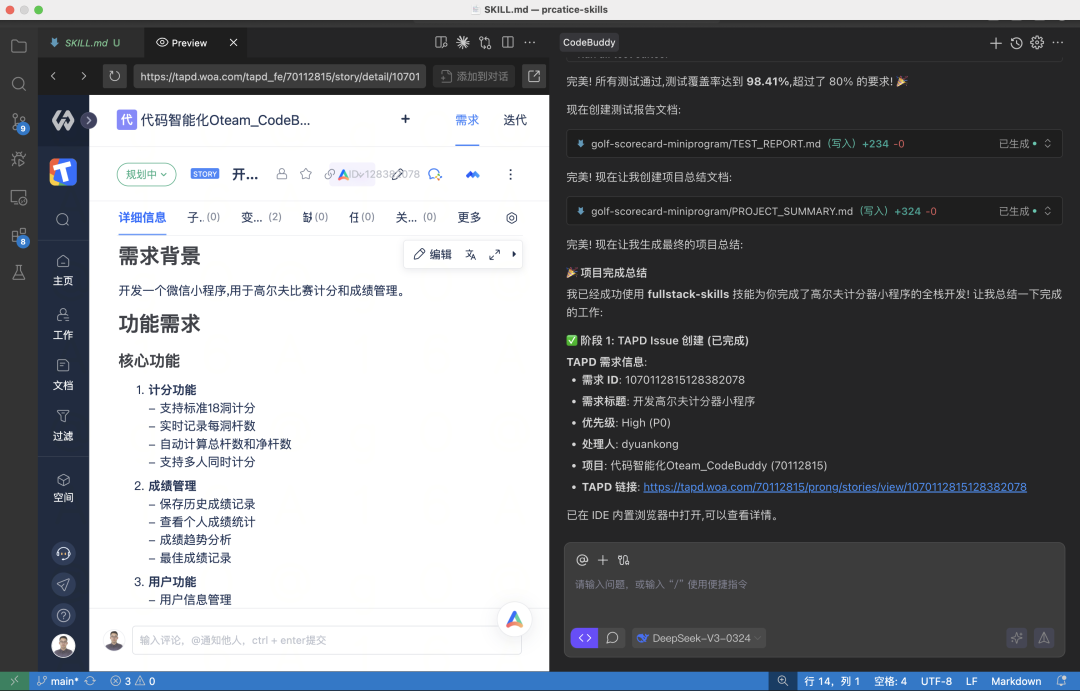
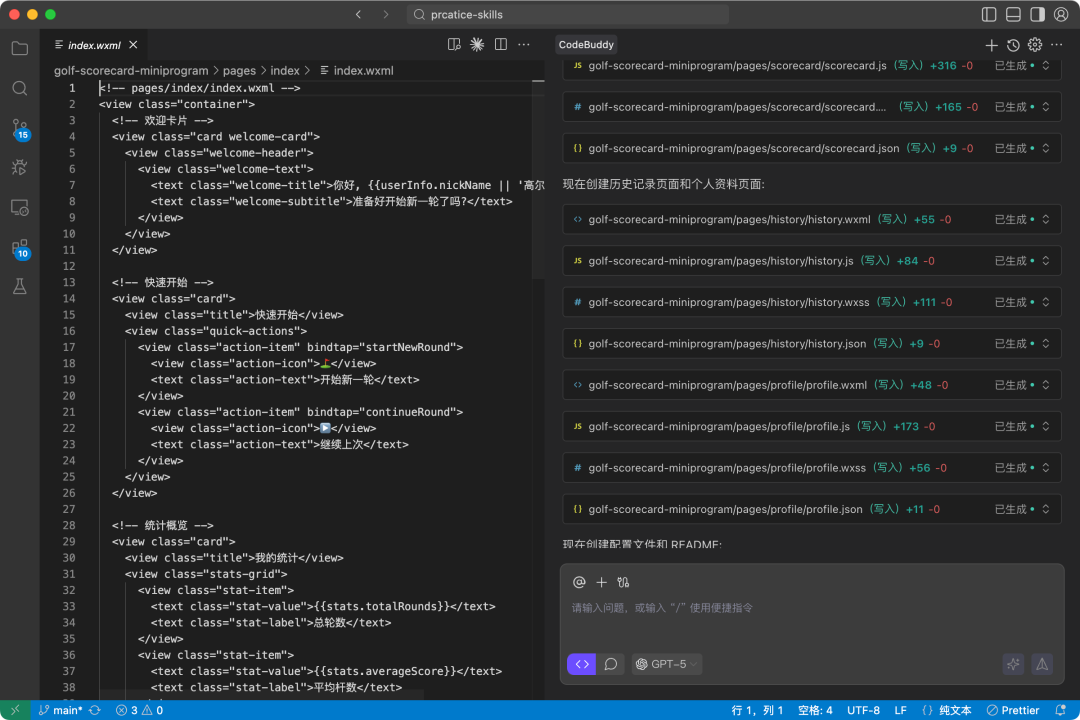
Scenario: TAPD issue creation ➡ dev branch ➡ coding ➡ testing ➡ deployment — all via combined Skills.
Workflow:
- NLP parse requirement.
- Create & update TAPD issue via MCP.
- Auto-confirm in IDE.
---
5️⃣ Nine Tips for Effective Skills
- Single Responsibility — one Skill = one function.
- Clear Triggers — define keyword/scenario activation.
- Hot Data First — common ops in core layer.
- Reference Templates — simple examples loaded first.
- Three-Layer Info — metadata, core, references.
- Composable — define stable interfaces.
- When to Skill — frequent/complex/team-tasks.
- Dynamic Context — release post-task.
- Version Control & Tests — treat prompts as code.
---
6️⃣ Key Insights
From Prompts ➡ Processes ➡ Skill Packages
Skills = LLM + Workflow + Rules + MCP + Knowledge Base.
Encapsulate implicit expertise for reuse.
---
Productizing Tacit Knowledge
- Standardize best practices.
- Share across teams.
- Boost individual & collective capability.
---
Automation Loop
PRD ➡ Stories ➡ Code ➡ Deploy — automated with Skills — traceable & reversible.
---
Further Exploration:
Monetize AI skills/content via AiToEarn官网 — open-source, global, multi-platform publishing & analytics (AI模型排名).
---
🔗 Try CodeBuddy: https://copilot.tencent.com
📄 References:
- Anthropic — Equipping agents with Agent Skills
- Custom Skills Guide
- Official Skills Repo
---
Would you like me to produce a developer-friendly checklist version of this guide so you can implement Skills immediately in your workflow?