First 3D Generative Deconstruction Model PartCrafter Debuts, Gains 2K Stars on GitHub

# PartCrafter: Structured 3D Mesh Generation from a Single Image
Creating editable 3D models from a single image is one of the **major challenges in computer graphics**.
Traditional 3D generative models tend to produce holistic “black-box” assets—making fine-tuning individual components nearly impossible.
---
## Introduction
Researchers from **Peking University**, **ByteDance**, and **Carnegie Mellon University** have jointly introduced **PartCrafter** — an **innovative structured generation model** that can:
- Create **complex 3D meshes** from a single 2D image
- Compose them of **multiple semantically meaningful**, independently controllable parts
**Significance:**
- **Improved controllability** and **interpretability** in 3D generation
- **Accepted at NeurIPS 2025**
- Earned **2000+ GitHub Stars**
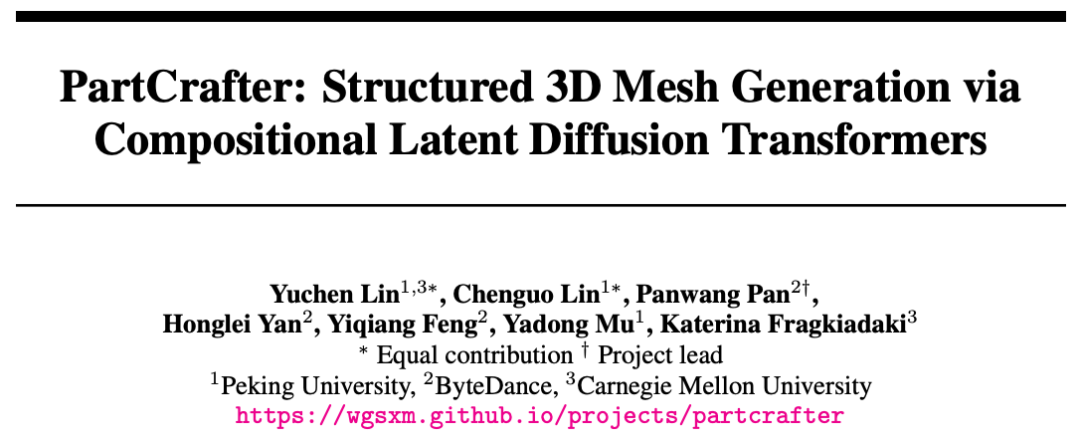
**Official Resources:**
- **Paper Title:** *PartCrafter: Structured 3D Mesh Generation via Compositional Latent Diffusion Transformers*
- **Project Page:** [https://wgsxm.github.io/projects/partcrafter/](https://wgsxm.github.io/projects/partcrafter/)
- **Paper Link:** [https://arxiv.org/abs/2506.05573](https://arxiv.org/abs/2506.05573)
- **Code Link:** [https://github.com/wgsxm/PartCrafter](https://github.com/wgsxm/PartCrafter)
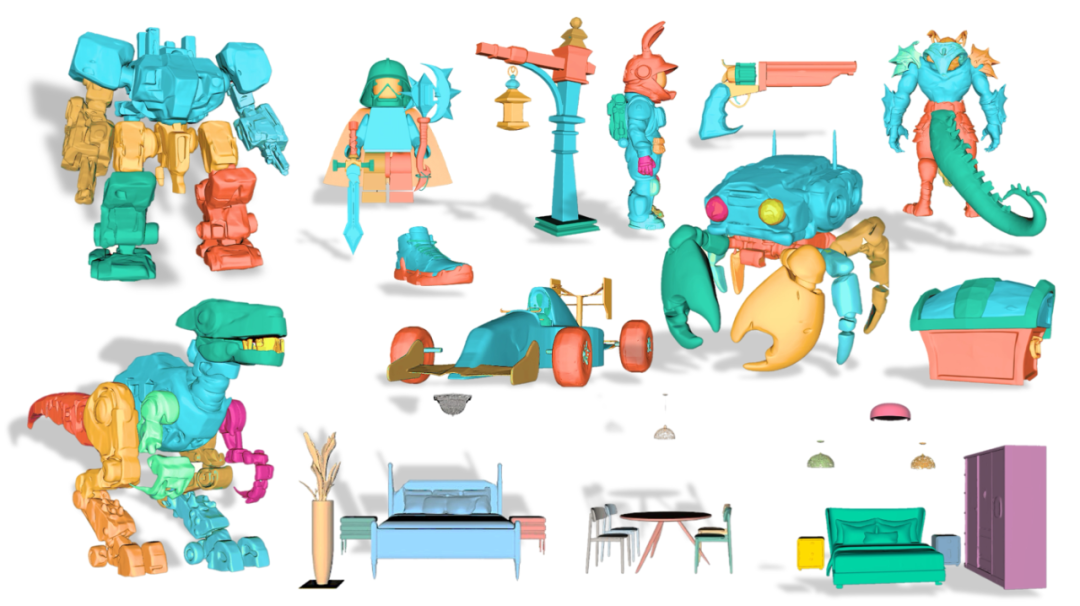
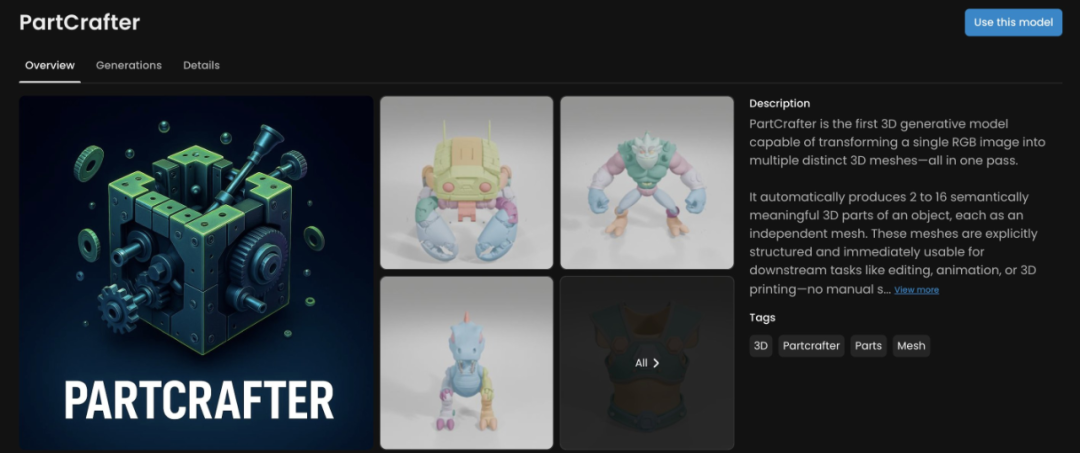
**Key Feature:** Generates multi-part 3D mesh representations **in seconds** without segmentation steps.
---
## Research Background
### Problem with Current Approaches
- Mainstream 3D AIGC models treat objects as **indivisible wholes**
- This makes **independent movement, rotation, or replacement** of components impossible
### Traditional Workflow:
1. **Segmentation**: Identify parts in 2D images
2. **Reconstruction**: Generate each part’s 3D form independently
**Drawbacks:**
- **Slow**: Can take 20+ minutes
- **Error-prone**: Mistakes in segmentation propagate irreversibly
---
## PartCrafter Solution
**Goal:**
An **end-to-end structured 3D generation system** capable of:
- **Direct composite mesh generation**
- **Multiple independent components**
- **Single-image input**
**Benefits:**
- Quality generation at **second-level speeds**
- **Unprecedented controllability**
- Modular content creation workflows
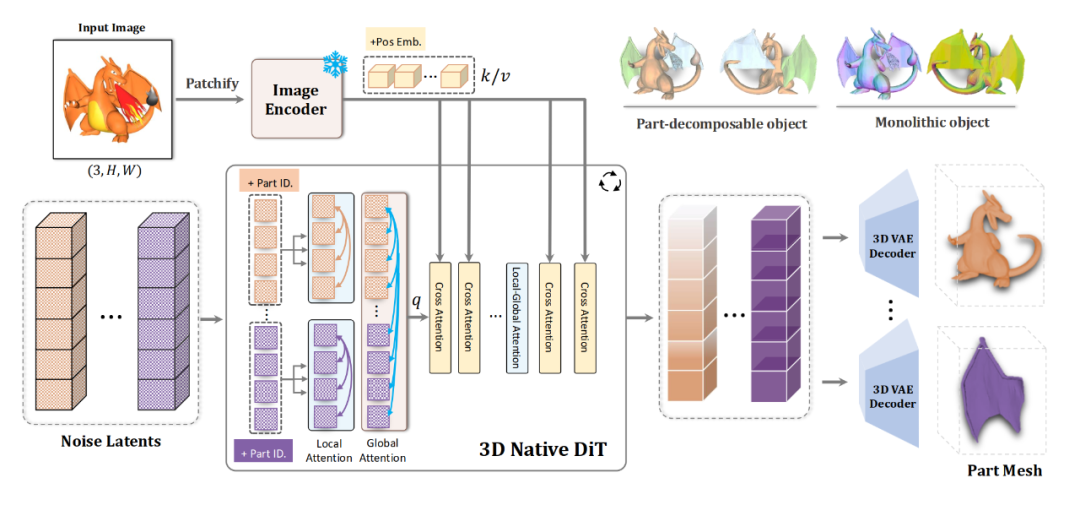
*PartCrafter Network Architecture*
---
## Methodology
### 1. Compositional Latent Space
**Key Idea:**
Each distinct object part gets **its own set of latent tokens** — enabling decomposition into truly independent components.
**Enhancement:**
**Part Identity Embedding** — a unique learnable vector for each part group
- Works like an “ID card” for parts
- Improves semantic awareness and part recognition
---
### 2. Local-Global Denoising Transformer
**Challenge:** Independent part generation often creates distortion in layout or proportion.
**Solution:** Two synchronized attention branches:
- **Local Branch (Local Attention Blocks):**
- Focuses on geometry and detail **within each part**
- Ensures individual components maintain structural integrity
- **Global Branch (Global Attention Blocks):**
- Coordinates spatial relationships **between parts**
- Maintains overall harmony and proportion
**Generation Process:**
Image conditions guide the production of part-separable, structurally consistent 3D models.
---
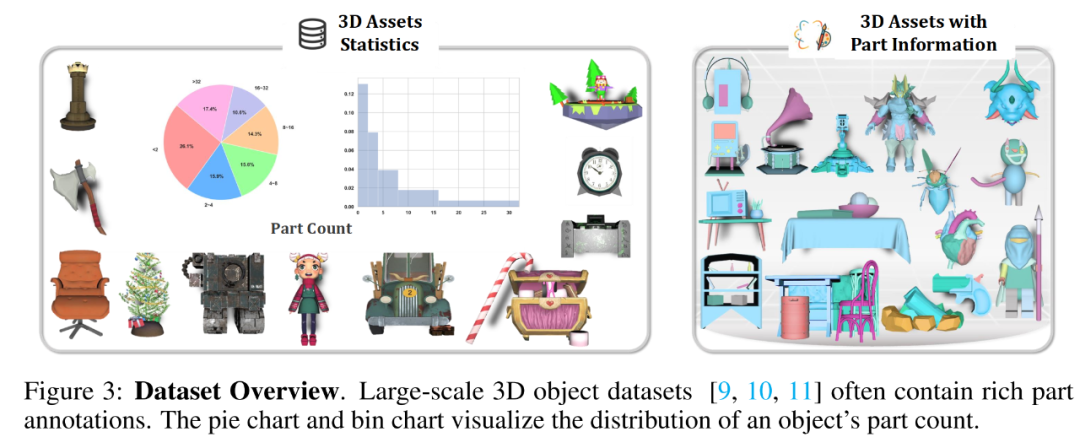
## Dataset Construction
**Need:**
Large-scale 3D datasets with **part-level annotations**
**Problem:**
Popular datasets (Objaverse, ShapeNet, ABO) lack fine-grained part labels.
**PartCrafter Dataset:**
- ~130,000 3D objects
- ~100,000 with accurate multi-part annotations
- Final set: **50,000 high-quality objects**, **300,000 individual parts**
- Quality criteria: texture fidelity, reasonable part count, high IoU
---
## Experimental Results
### 1. Quantitative Results
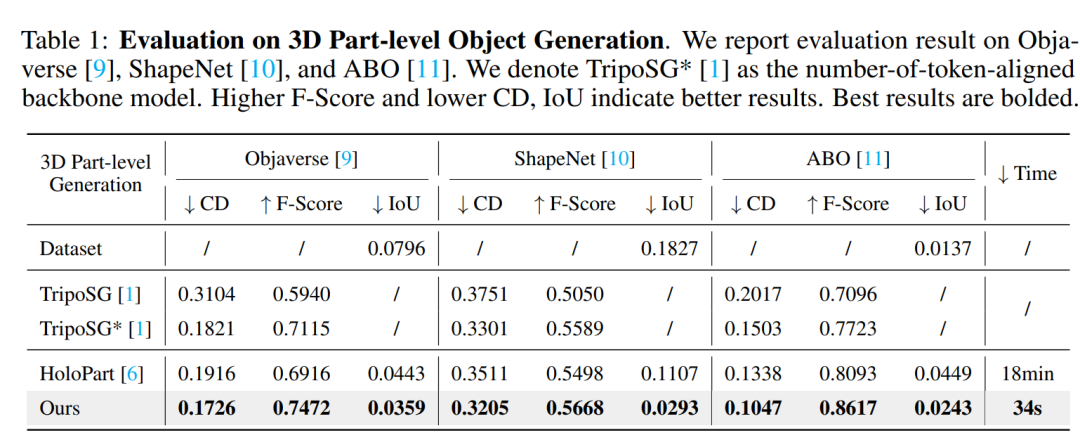
#### 1.1 Object Datasets
- Compared with HoloPart
- Generates high-fidelity meshes in ~34 seconds
- HoloPart slower, requires segmentation, yields lower accuracy
#### 1.2 Scene Datasets
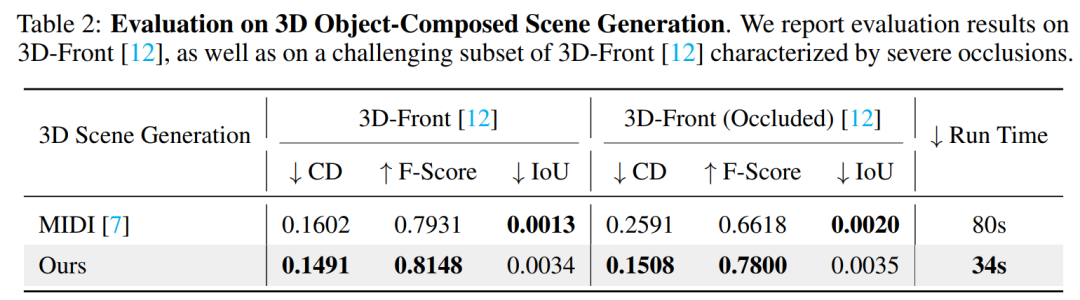
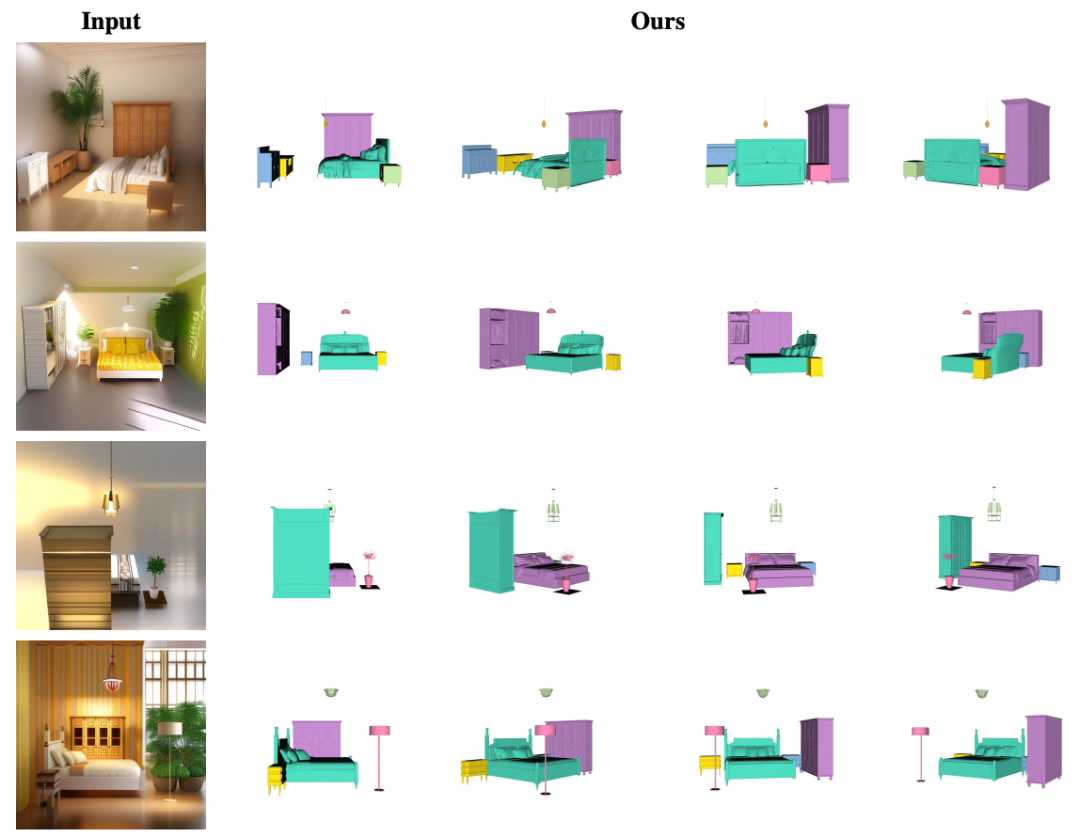
- Compared with MIDI model on occlusion-heavy 3D-Front dataset subset
- PartCrafter maintains quality without segmentation masks
---
### 2. Qualitative Results
**Highlights:**
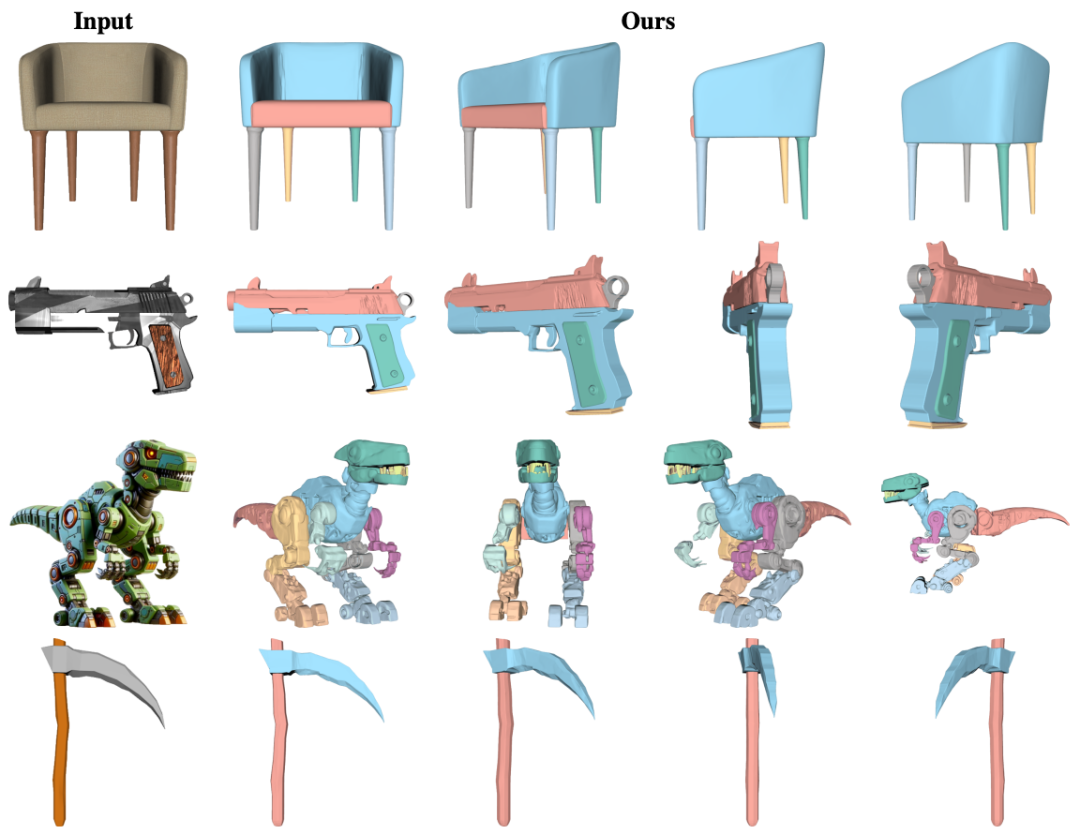
- High geometric fidelity and coherent part integration
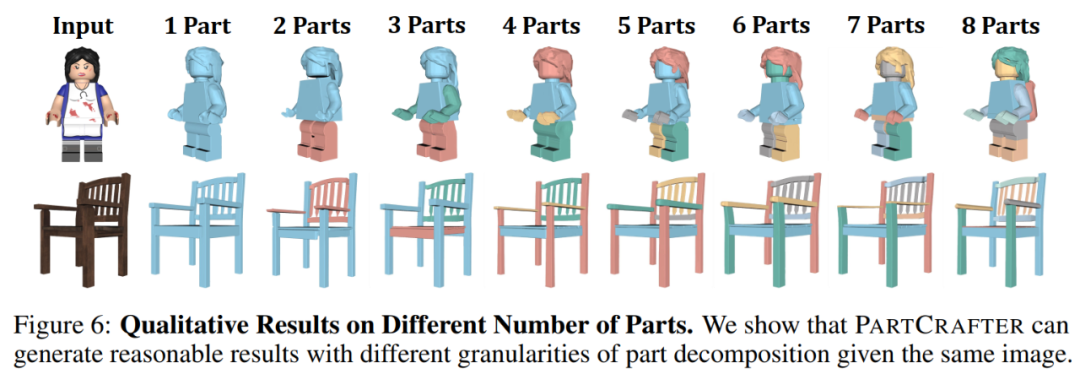
- Adjustable part segmentation granularity (e.g., 3 parts vs. 8 parts)
**Applications:**
- Industrial design
- VR
- Game asset creation
**Platform Synergy:**
**[AiToEarn](https://aitoearn.ai/)** — complements 3D generation by enabling:
- Global publishing
- Analytics
- Monetization
---
#### 2.1 3D Object Reconstruction
#### 2.2 3D Scene Reconstruction
#### 2.3 User-Specified Part Granularity
---
## Conclusion & Outlook
PartCrafter advances 3D generation from **holistic** to **structured** modeling.
**Advantages:**
- Editable parts
- Broader application scope
- Faster pipelines
**Future Impact:**
- Gaming, VR, industrial design
- Modular, hierarchical 3D world models
**Workflow Integration:**
High-quality meshes can flow directly into:
- Rendering
- Animation
- Game development
**Ecosystem Support:**
Tools like **[AiToEarn](https://aitoearn.ai/)** and resources like **[AiToEarn开源地址](https://github.com/yikart/AiToEarn)** & **[AiToEarn文档](https://docs.aitoearn.ai/)** enhance **cross-platform publishing** and monetization — accelerating the path from content creation to market reach.
---This rewrite uses clear headings, concise lists, and emphasized key terms, making the Markdown more readable and structured for technical audiences.
Would you like me to also create an executive summary block at the top for quick reference?