# AI-Driven Words of the Year: How Tech Is Shaping Our Language
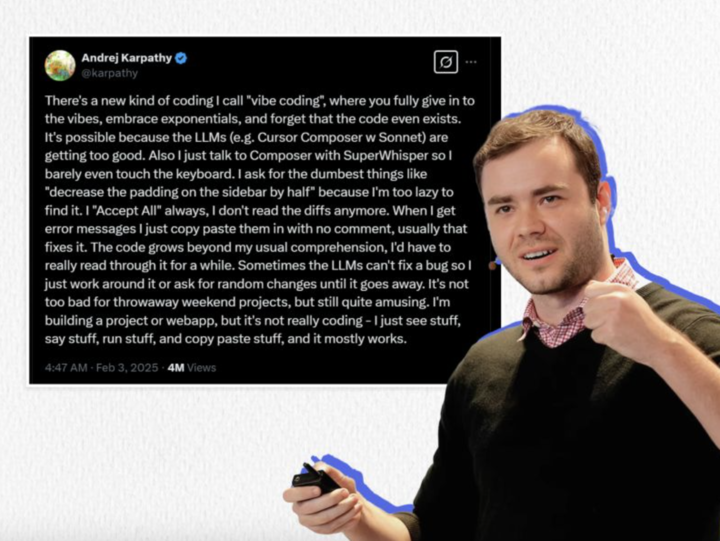
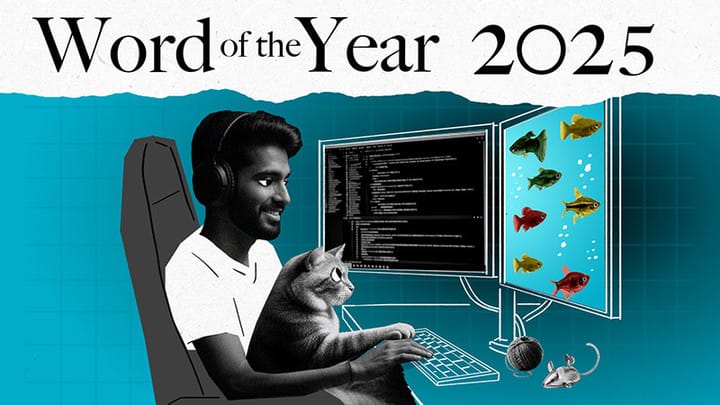
In recent years, **AI-related neologisms** have surged in popularity—appearing in the "Word of the Year" selections from leading dictionaries. The latest example is the **2025 Collins Dictionary choice**: **"vibe coding"**, arguably the hottest AI tech term right now.
Looking back at earlier releases from **Oxford**, **Merriam-Webster**, **Dictionary.com**, and **Cambridge**, it’s clear AI is not just influencing technology—it’s **deeply changing our everyday vocabulary**.
---
## Vibe Coding: The Hottest Tech Term of 2025
"Vibe coding" doesn’t translate neatly into Chinese, but popular renditions include **"atmosphere programming"** and **"coding by vibe"**. Coined by **Andrej Karpathy**—former AI Director at Tesla and founding engineer at OpenAI—the term paints a vivid picture: AI enabling application creation **without consciously writing the underlying code**.

Users without programming knowledge can simply issue **natural language prompts** to the AI, which then generates **functional code**. The developer states the desired features, and the AI does the rest—**coding by feel**.
### Why "Vibe Coding" Won Word of the Year
1. **Data Trends** – Since its debut in Feb 2025, mentions in media and social platforms skyrocketed. Collins’ linguists spotted it in their 24-billion-word corpus, identifying it as a major linguistic shift.
2. **Cultural Significance** – Highlights society’s fascination with AI in 2025. Programmers, everyday users—everyone is discussing AI coding assistance. Collins’ blog notes it **"captures fundamental changes in our relationship with technology"**, crossing far beyond Silicon Valley.
---
### Other Tech-Focused Shortlist Entries (Collins 2025)
- **"clanker"** — From *Star Wars*, now internet slang for criticizing AI chatbots (akin to "artificial dumbs" in Chinese social slang).
- **"biohacking"** — Self-modification via biological engineering.
- **"broligarchy"** — Satirical term for the concentration of power among billionaire tech elites.
Together, these map the 2025 landscape: **AI reshaping both vocabulary and lifestyle**.

---
## AI and Everyday Speech: A Growing Influence
Since 2024, **multiple dictionaries** have spotlighted words tied to the AI boom.
### Oxford Dictionary (2024): *Brain Rot*
Oxford chose **"brain rot"**—slang for **mental decline from overconsumption of low-quality digital content**.

In 2024, awareness rose about endless social media scrolling dulling cognitive abilities. Oxford Languages President Casper Grathwohl called it “a symbol of cultural debate around digital life.”
#### Oxford’s AI-Linked Shortlist Term
- **"slop"** — Low-quality web content generated by AI. It didn’t win, but reflected irritation toward AI-generated spam.

Both *brain rot* and *slop* reflect public concerns about AI’s role in the **digital content ecosystem**.
---
### Merriam-Webster (2023): *Authentic*
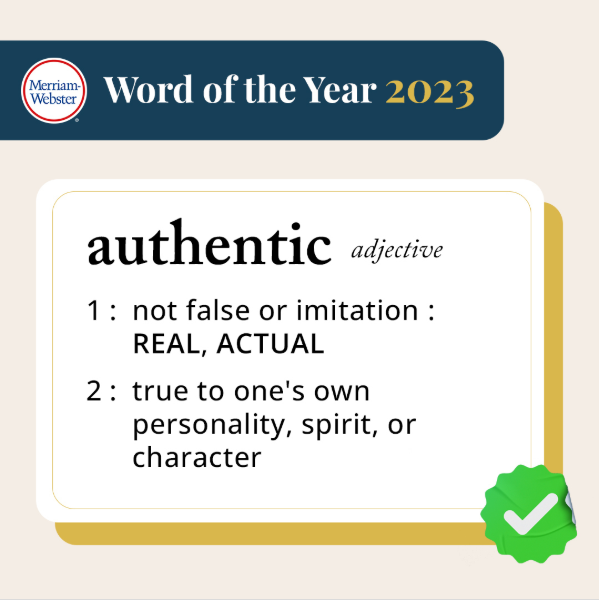
**"Authentic"** means genuine, truthful, and in 2023 became vital amid **deepfakes** and AI-generated media.
---
## AI-Related Words in 2023: “Authentic” and “Hallucinate”
In 2023, AI-related discussions spiked, boosting interest in authenticity. Merriam-Webster highlighted it as society grappled with **chatbots mimicking humans** and AI replicating **celebrity voices**.
---
### Cambridge Dictionary (2023): *Hallucinate*
Cambridge selected **"hallucinate"**, adding a new definition: **AI generating false information**.
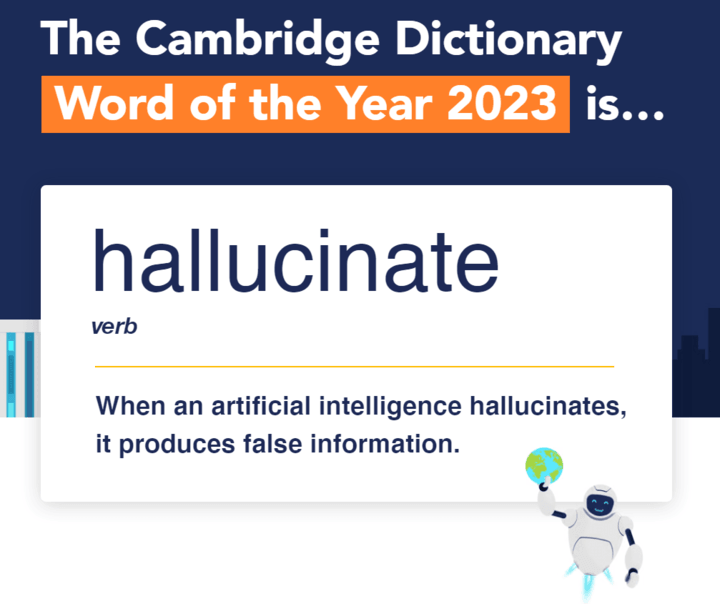
Traditionally, it meant perceiving unreal things. In AI, it describes **LLMs making things up**—a crucial flaw in generative models.
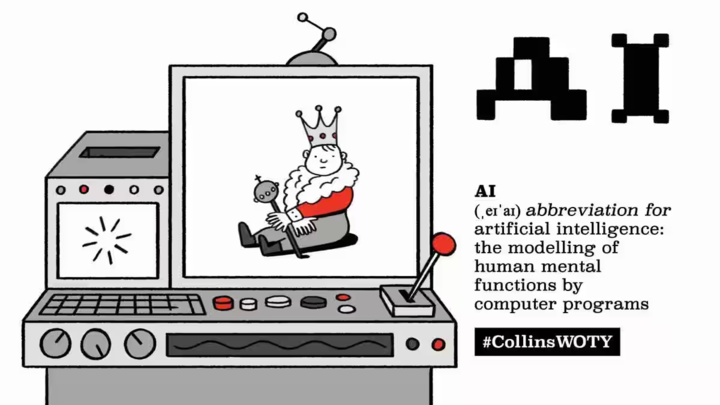
Collins had chosen *AI* itself as Word of the Year for 2023, signaling the dominance of **AI-lexicon**.
---
## When AI Changes the World, It Changes Language
From *vibe coding* to *hallucinate*, AI is shaping vocabulary **to reflect both its benefits and problems**.
Some words:
- Celebrate AI’s convenience.
- Highlight risks & flaws.
- Capture cultural emotions in the digital age.
Our evolving vocabulary acts as a **mirror of technological and societal change**.
---
## One More Thing: Dictionary.com’s Unusual Choice
In 2023, Dictionary.com chose **67**—pronounced “six seven,” not “sixty-seven.”
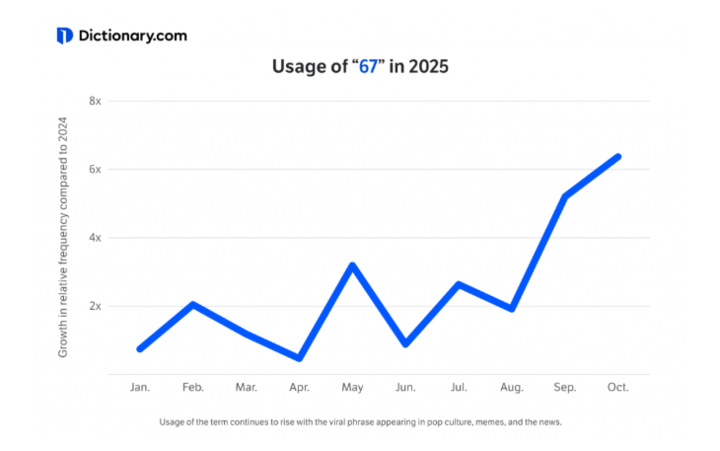
Meaning roughly "okay" or "decent" (6–7 out of 10), its popularity rose rapidly through youth slang. The committee continues to study its significance—but it shows how **memes and social lingo propagate globally at lightning speed**.
---
## AI Platforms Empowering Creators
As language evolves, **AI also transforms content creation**. Platforms like [AiToEarn官网](https://aitoearn.ai/) help creators:
- **Generate** AI content.
- **Publish** across Douyin, Kwai, WeChat, Bilibili, Xiaohongshu, Facebook, Instagram, LinkedIn, Threads, YouTube, Pinterest, X (Twitter).
- **Monetize** content efficiently.
- **Analyze** with model rankings ([AI模型排名](https://rank.aitoearn.ai)).
[GitHub Source for AiToEarn](https://github.com/yikart/AiToEarn)
These tools ensure that **authentic voices and innovative ideas reach audiences** in our fast-changing, AI-influenced world.
---
**Bottom Line:** AI isn’t just letting us *code by vibe*—it’s **rewriting the language** of technology, creativity, and human connection.