Founder’s Sales Playbook: From 0 to $10M ARR Step-by-Step
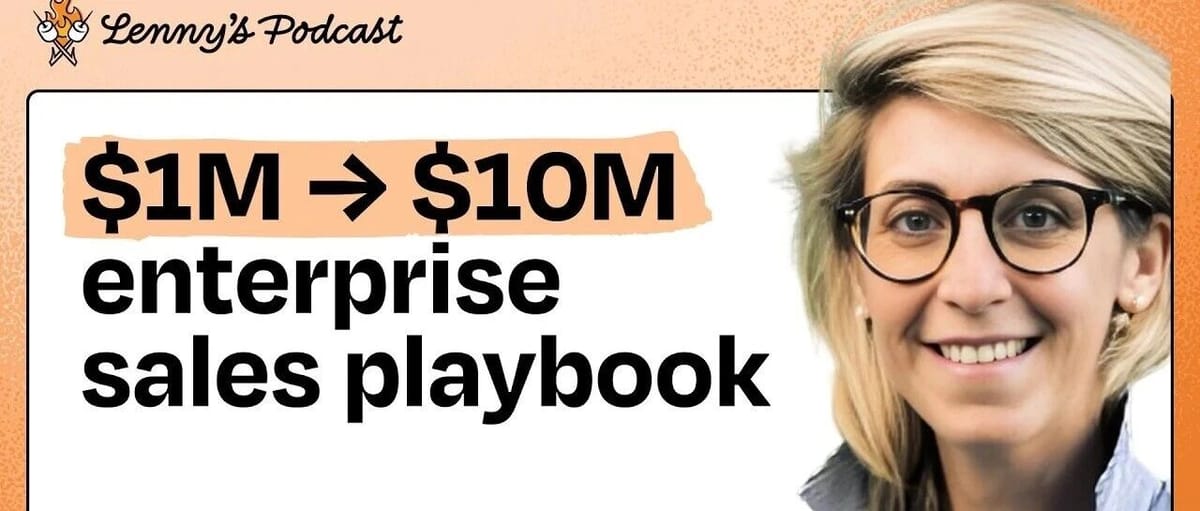
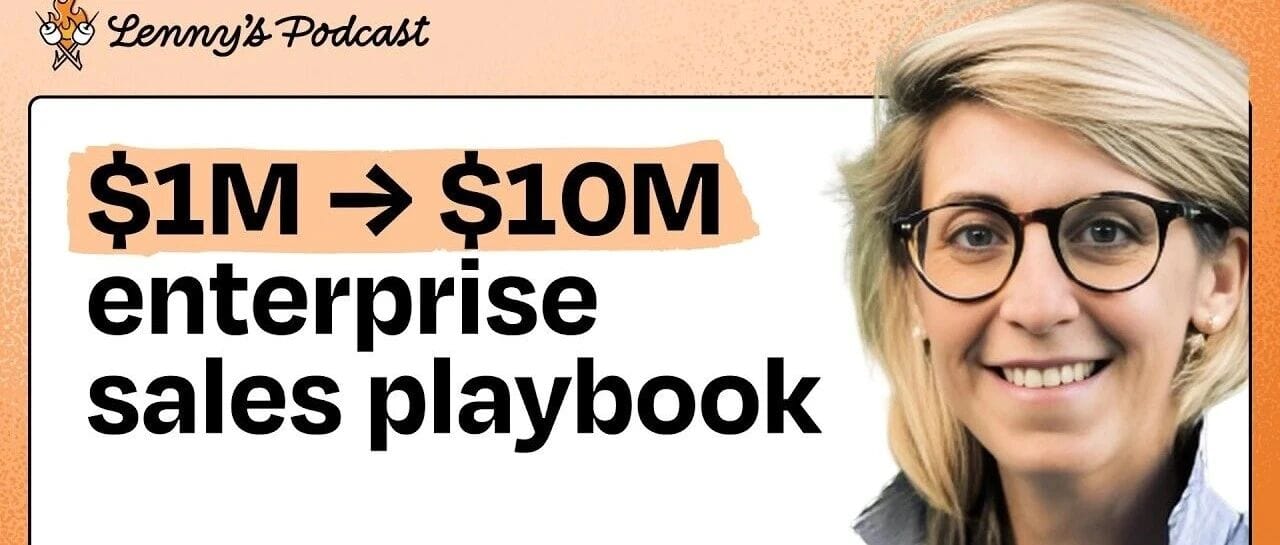
Founder Sales Playbook: From 0 to $10M ARR
---
🚀 Key Takeaways
- Founder = Product
- In early sales, the founder’s unique vision and insights matter more than product features.
- Million‑Dollar Sales Mindset
- Sell a vision, not just a “better” solution — aim for alpha returns that transform customers.
- Choose Customers Counterintuitively
- Target Tier‑1 enterprises first — true early adopters who help shape your product.
- Enterprise Sales is an Art
- Large deals are built through service and co‑creation, not rigid scripts.
- Hiring Sales
- Only after $1M ARR should you hire someone who can “play the founder,” prioritizing vision delivery over conventional sales tactics.
---
🎙 Background
This guide distills two podcast interviews with Jen Abel, co‑founder of Jellyfish, a company that teaches early‑stage founders how to sell, discover customers, and develop repeatable sales models.
We cover:
- Finding prospects
- Outreach strategies
- Running impactful first calls
- Navigating procurement
- Closing large enterprise deals
- Knowing when to hire your first salesperson
---
1️⃣ Why Founders Must Be the First Salesperson
At the start, you are the product.
Your vision motivates early customers far more than a half‑built MVP.
Early-stage sales = fastest feedback loop for market learning.
> Jen Abel: Founder-led sales is about taking a novel insight to market, learning who resonates with it, and aligning your vision to reality.
💡 Tip: Many founders want to “just build and hire sales.” Don’t. Sell yourself first to learn what truly connects.
---
🔗 Relevant Tools
Platforms like AiToEarn官网 let vision‑led founders publish AI-generated content across all major channels, track analytics (AI模型排名), and accelerate market learning alongside direct sales efforts.
---
🌟 Why Founder‑Led Sales = Huge Competitive Edge
3 Key Advantages:
- Visionary Communication — No one articulates your big idea better than you.
- Founder Status — Market leaders are curious to talk directly with you.
- Spotting Seed Moments — Unique ability to detect tiny insights that shape PMF.
⚠️ Caution: Letting salespeople run early discovery risks “telephone game” distortions.
---
2️⃣ Early‑Stage Sales Process — Five Clear Steps
A minimal CRM flow:
- Intro Call — Build connection.
- Second Call / Demo — Tailored to what you learned.
- Proposal / Scope Discussion — Deep dive based on customer context.
- Feedback Iteration — Refine collaboratively.
- Procurement — Treat as its own mini‑sales cycle.
🎯 Identify the final signatory before paperwork starts.
---
3️⃣ Breaking the Ice — Winning Attention in Outreach
Cold Email Formula:
- Relevancy — Why is this worth their time?
- Counterintuition — Make them pause: “Wait, what?”
- Focus on Problem — Not your features.
- Extreme Brevity — 3–4 sentences max.
📝 Start manually: send ~30 thoughtful founder-emails to your ideal prospects before scaling.
> Example:
> “Zero‑to‑one sales talent doesn’t exist.”
> Connect insight to their recent funding and explain why you built your model.
---
4️⃣ First Calls — Build Trust & Identify Real Needs
Goals:
- Learn, don’t pitch.
- Show vulnerability (“We’re early, still learning”).
- Explore problem maturity (“Are you measuring/managing this issue?”).
- Spot buying signals (inviting colleagues/budget owners to next call).
📅 Pro Tip: Schedule the next meeting before ending the call.
---
5️⃣ From Co‑Creation to Closing
Early‑Stage Playbook:
- Co‑create Scope of Work so it’s tailored.
- Start with services if market maturity is low.
- Time‑bound services (e.g., 90 days) to avoid scope creep.
- 40–50% of top‑down SaaS sales start with a service phase.
Procurement Tips:
- Sell to procurement with clarity and differentiation.
- Make their work easier (forms, info).
- Identify the real final signatory.
---
6️⃣ Scaling to $10M ARR — Rethinking Enterprise Sales
“Mid‑Market” Myth:
You’re either playing in SMB (marketing‑led) or Enterprise (sales‑led). Selling to low‑end enterprise = enterprise game.
Counterintuitive Move:
Target Tier‑1 Logos early — industry leaders are true early adopters.
💡 Landing a top player (e.g., Walmart, NVIDIA) boosts credibility and accelerates deal size growth.
---
7️⃣ Sales Mindset Shift — Vision Casting & Value Creation
Problem Selling vs. Opportunity Selling:
- Problem = incremental fix.
- Opportunity = transformative future state.
🎯 Charge premium contracts ($75K–$150K+) to anchor high and get executive buy‑in.
Deal Crafting Ideas:
- Offer dedicated engineering resources.
- Create thought‑leadership opportunities for clients.
---
8️⃣ Building Your First Sales Team
When: ≈ $1M ARR & 7–10 customers with repeatable patterns.
Who:
- People who can “cosplay the founder.”
- Former founders or product/engineering experts.
- Avoid big‑company VP Sales hires.
Why Hire Two: Compares performance and reduces risk given high failure rates.
---
9️⃣ Advanced Tactics & Mindset
Relationships:
Deals often close via text — a sign of trust.
Tools:
Manual outreach > blasting from shared databases.
Embracing “No”:
Quick qualification saves time and preserves future relationships.
> Motto: Don’t aim to be better. Aim to be different.
---
🔗 Scaling Outreach & Thought Leadership
Merge manual relationships with AI-assisted scale via AiToEarn官网 — create once, publish everywhere (Douyin, Kwai, WeChat, Bilibili, Rednote, Instagram, LinkedIn, YouTube, etc.), track analytics, and rank AI models (AI模型排名).
---
📖 阅读原文
🔗 跳转微信打开