# Frontend Is Alive — AI Isn’t Killing It, and the Terminal Is Accelerating
## Introduction
In a time when many proclaim *“AI is disrupting everything”*, it might seem counterintuitive to argue that **frontend development remains essential** and **terminal-side technology is racing ahead**. But a closer look reveals a truth: complexity persists — it’s simply shifting form.
---
## Complexity Never Disappears — It Transforms
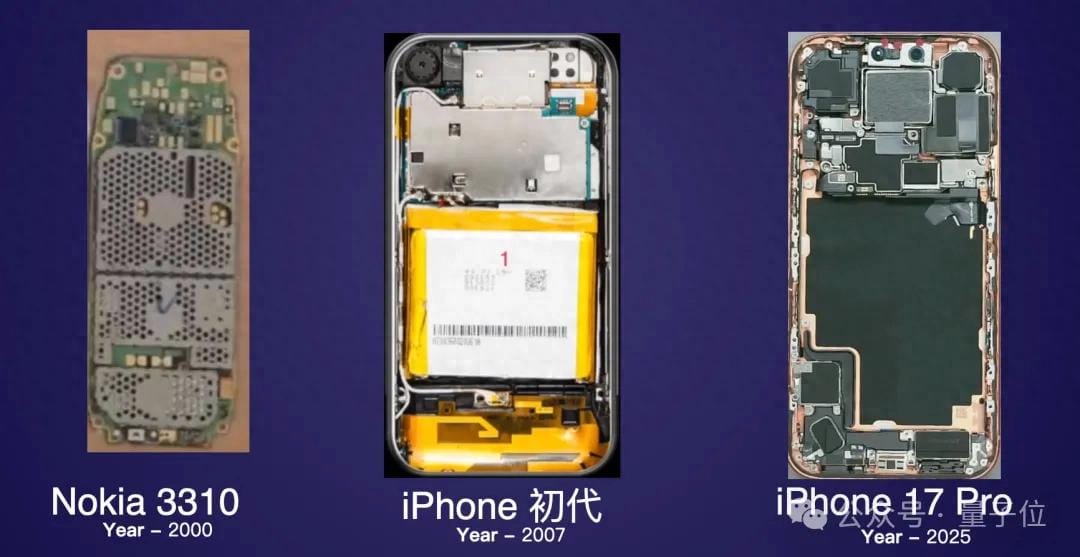
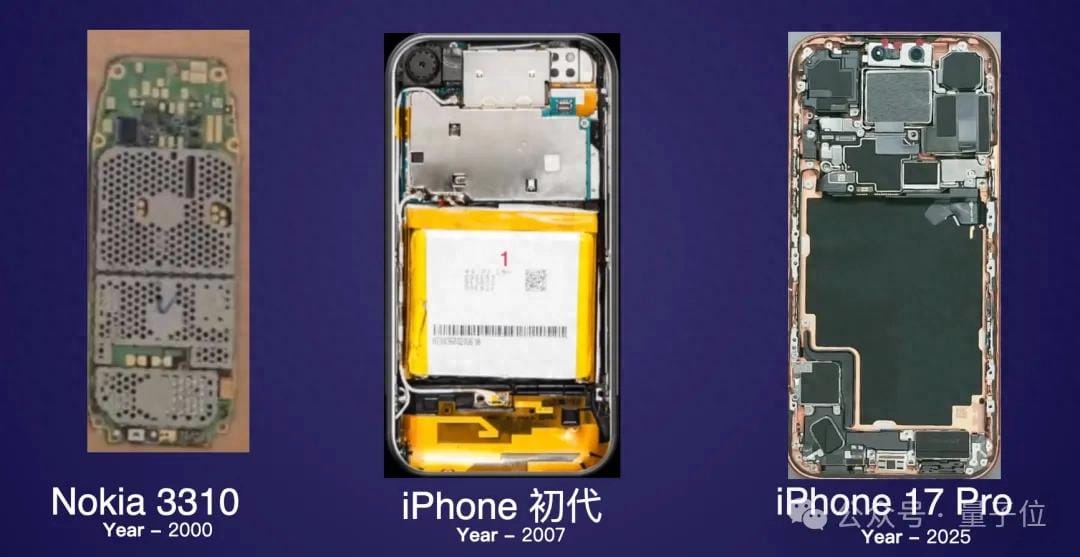
From the **Nokia 3310 (2000)**, to the **first iPhone (2007)**, to the **iPhone 17 Pro (2024)** — the complexity of internal circuitry has grown exponentially.
The motherboard of a Nokia 3310 could fit inside a single sensor module of today’s iPhone. This evolution mirrors **software architecture**: physical complexity transfers into a **digital stack** of models, APIs, networks, and compute resources.
As **Weng Xindan**, Head of Ant Group Terminal Technology Committee, stated at SEE Conf:
> **Frontend developers have always battled entropy — complex systems are our destiny.**
> **In the AI era, it’s time to settle our technical debt.**

---
## Minimalist UIs and Two Cycles Returning to Roots
### The Present-Day AI App Interface
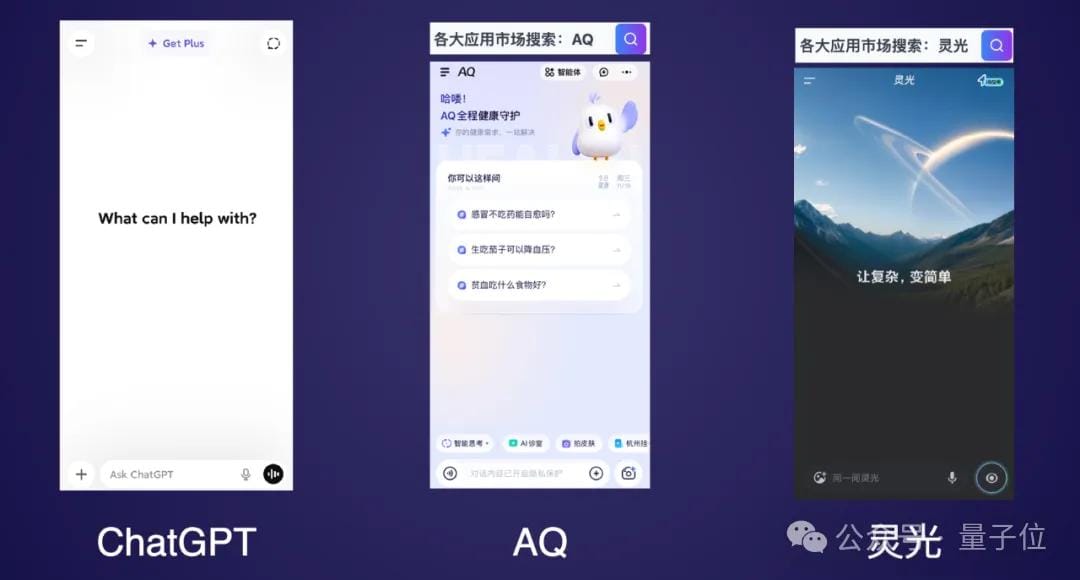
AI applications like **ChatGPT**, **AQ**, and **Lingguang** share a minimal design:
- Single input box
- Chat-style response flow
- No complex navigation or multi-level structures
This feels like a throwback to **early WAP pages** or **Alipay 1.0** — after years of ornate UI in mobile apps, AI appears to have reset aesthetics to bare essentials.
---
### Cycle #1 — Interaction Cycle

- Past: **DOS → GUI** — moving from typed commands to clickable icons
- Now: **GUI → CUI** — returning to conversational interface via natural language
**Key Insight:**
CUI *alone* is inefficient for many tasks. The future lies in **GUI + CUI** coexistence:
- **GUI**: High-frequency, deterministic operations
- **CUI**: Long-tail, complex intent processing
**Current Challenge:**
This fusion paradigm is immature — explaining AI apps’ stripped-down UIs.
---
### Cycle #2 — Architecture Cycle
Early mobile internet scale-out relied on **wide APIs** and gateways, often packing logic into fields like `extend_info`.
In the AI era:
- Large models struggle to parse opaque payloads
- API semantics must be restored for model compatibility
**Lesson:**
AI doesn’t eliminate the frontend — it forces developers to **redo “half-done” architecture work**.
---
## Ongoing Challenges in AI-Driven Systems
### Timeless Frontend Engineering Problems
- Balancing complexity and usability
- Choosing openness vs. control
- Maintaining rhythm between innovation and engineering
Platforms like [AiToEarn官网](https://aitoearn.ai/) showcase how **GUI+CUI synergy** works with AI tools:
- AI-powered, open-source content monetization
- Multi-platform publishing (Douyin, YouTube, Instagram, etc.)
- Analytics & AI model ranking ([AI模型排名](https://rank.aitoearn.ai))
---
## Myth: “Cloud Can Do Everything” — Reality: Endpoint Matters
Even the fastest network has **blind spots**:
- Dead zones halt AI streaming
- Latency disrupts real-time experiences
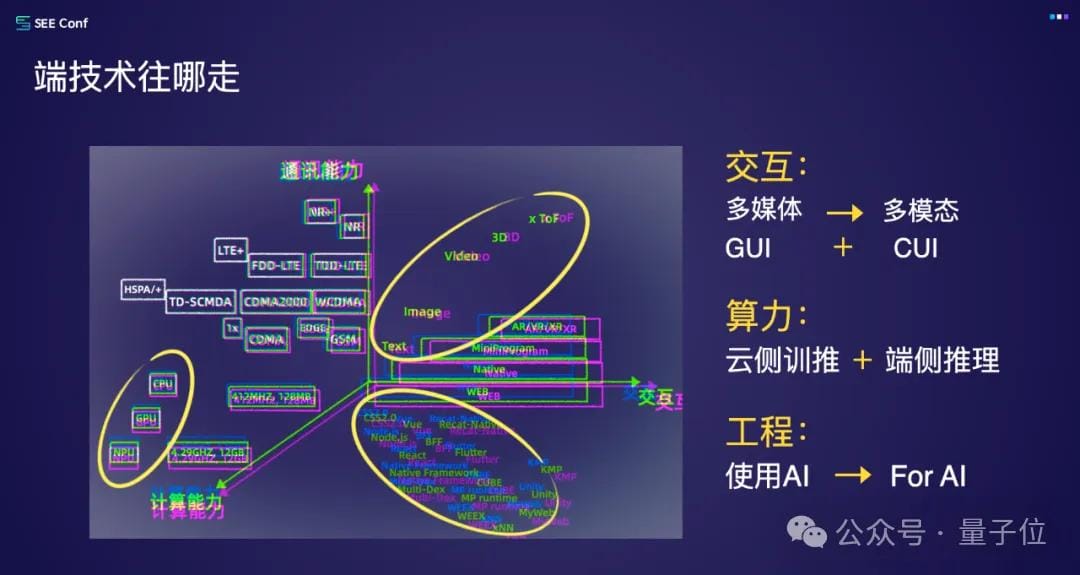
### Network (X-axis)
- GSM (text) → 3G (images) → 4G (video) → 5G (3D, XR)
- Blind spots remain
### Computing Power (Y-axis)
- iPhone 2007: 412 MHz CPU, 128 MB RAM
- iPhone 17 Pro: 4.29 GHz multi-core CPU, 12 GB RAM
- Phones now act as **Edge Computing nodes**
### Future Model
**Cloud-side training + Edge-side inference**:
- Cloud: Model intelligence ceiling
- Endpoint: Local inference for instant experience, privacy, and extreme scenarios
---
## Programmer Anxiety — Misunderstanding the Timeline

**Example: Multi-touch**
- Prototype: 1970s
- Commercialization: 1999 (Fingerworks)
- Apple acquisition: 2005
- iPhone launch: 2007
- Journey: **37 years**
AI follows similar arcs — foundational theory may be old, but real disruption takes decades and hinges on application design.
---
## Frontend’s Critical Role in AI Era
### Transformer History
- Proposed: 2017
- Neural network theory: Mature by 1980
- Needed: 30+ years of internet-scale data for practical deployment
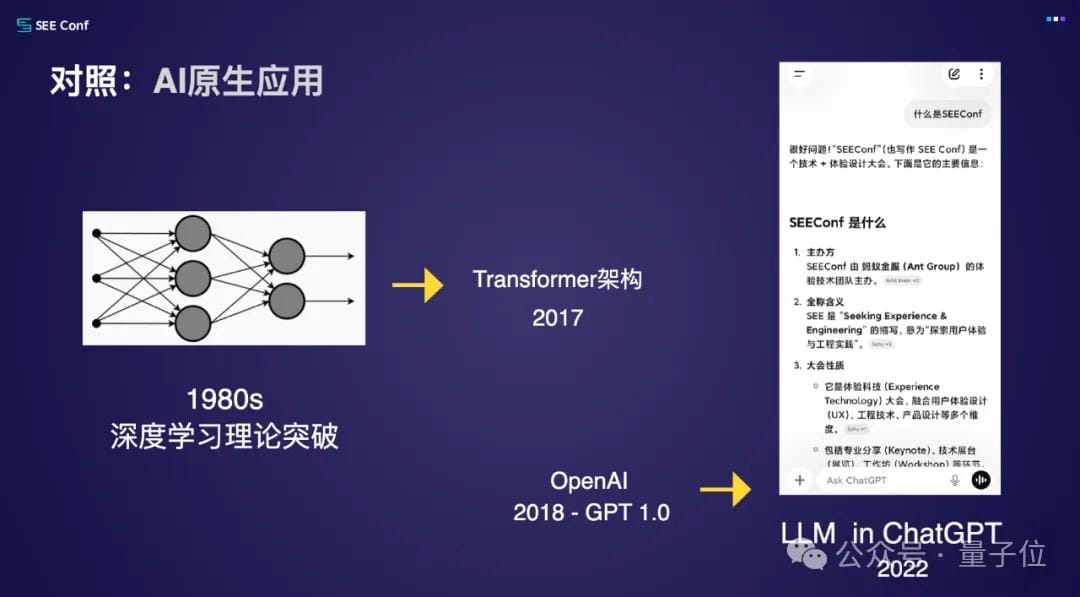
**Opportunity:**
Frontend engineers craft the *application experience* — the missing push that turns tech into daily reality.
---
### Experience as the Product’s Soul

Large models:
- Predict behavior probabilistically
- Lack deterministic service guarantees
**AI limits:**
- May generate code without understanding side effects
- Can produce images without handling weak network loading gracefully
**Developer Moat:**
- Optimize load times
- Prevent memory leaks
- Maintain stability under high concurrency
- Ensure cross-device UI consistency
---
## Conclusion
Frontend engineers remain irreplaceable:
- Machines can’t replicate human sensitivity to UX nuance
- Complexity is eternal — and so is the engineer’s role in taming it
**In the AI era**, the winning formula is:
- Advanced **model capability**
- Refined **engineering craftsmanship**
- Hybrid **cloud-edge architecture**
- Open ecosystems enabling **creation + monetization**
Props to platforms like [AiToEarn官网](https://aitoearn.ai/) which empower creators through AI-driven, cross-platform publishing, analytics, and model evaluation.
**Remember:** *Application is the measuring stick for new technology; experience is the soul.*