Gen Z Team Builds 3D Foundation Model, Secures Major Game Partnership, Redefining 3D Generation Rules
Yingmou Tech and the Rise of AI-Driven 3D Generation
---
From Lab to Global Stage
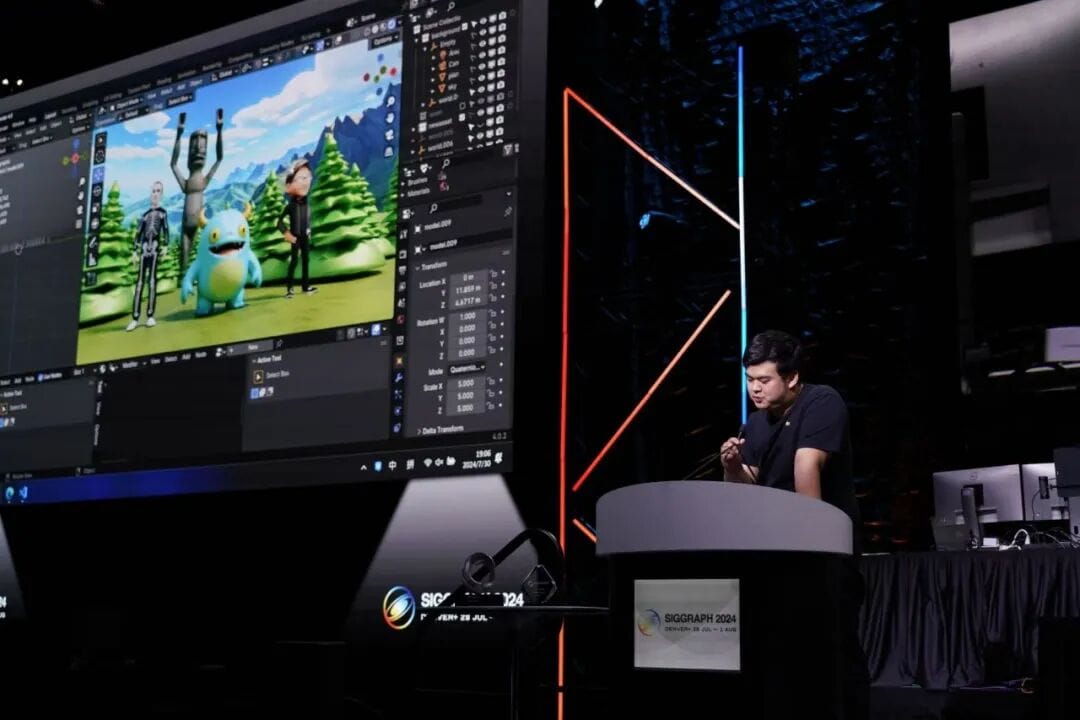
A year and a half ago, the young founding team of Yingmou Tech took their unreleased 3D generative model Rodin to San Francisco’s Game Developers Conference (GDC) — showcasing it live to some of the world’s top game developers.
That live demo captured the attention of multiple game studios. Eventually, Rodin-powered Hyper3D.AI brought large-scale, real-time 3D generation into practical mobile game development.
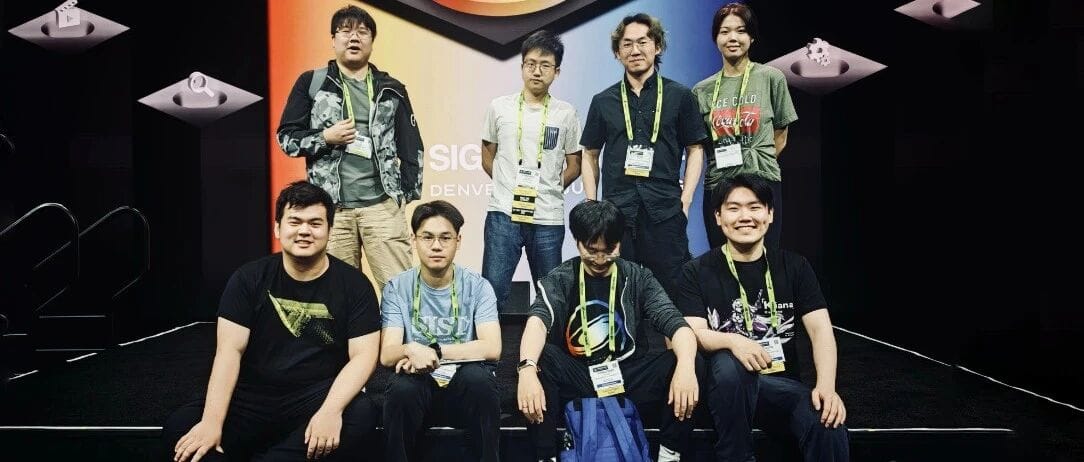
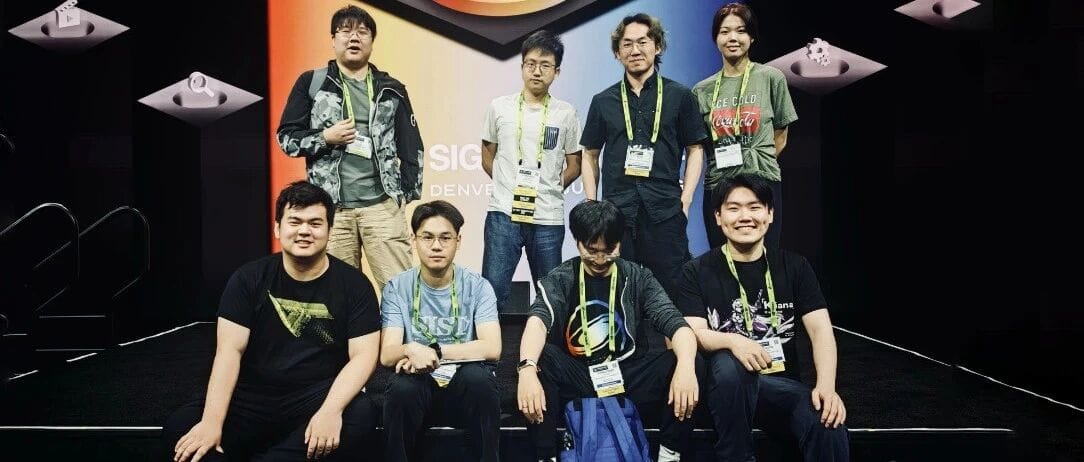
Their research paper — "CLAY: Controllable Large-scale Generative Model for Creating High-quality 3D Assets" — and another paper from the same team were both nominated for Best Paper at SIGGRAPH, the world’s leading computer graphics conference.
CTO Zhang Qixuan reflected:
> "It could be luck to get one best paper nomination. Getting two at once… not sure if that’s luck or bad luck."
---
01 — What Happens When a 3D Model Explodes?
CLAY is trained entirely with native 3D data, overcoming limitations in dataset size and model parameters that typically hamper 3D work. This breakthrough yielded emergent behavior: the ability to generate brand-new objects never seen during training, shifting 3D generation from experimental to production-viable.
From their early light-field capture experiments at ShanghaiTech University, this team has consistently been at the forefront of native 3D R&D.
---
Major Players Are Entering 3D AI
- Roblox — open-sourced CUBE 3D and launched Mesh Generator API
- ByteDance — released Seed3D 1.0 using DIT architecture
- Tencent Hunyuan — scaled 3D model parameters from 1B to 10B
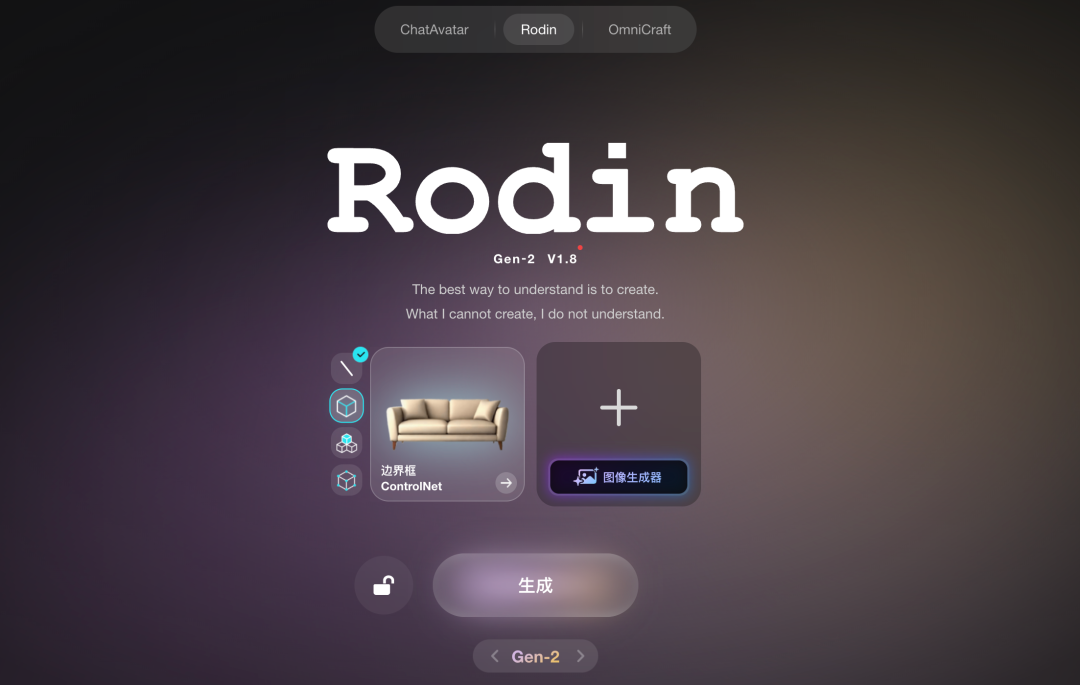
Yingmou Tech’s response: Rodin Gen-2
- Dataset scale: millions of samples
- Model size: 10 billion parameters
- Quality leap: cleaner geometric surfaces, less post-processing
- Supports million-face meshes, HD textures on low-poly models, high-res material outputs
---
Production-Ready Meshes
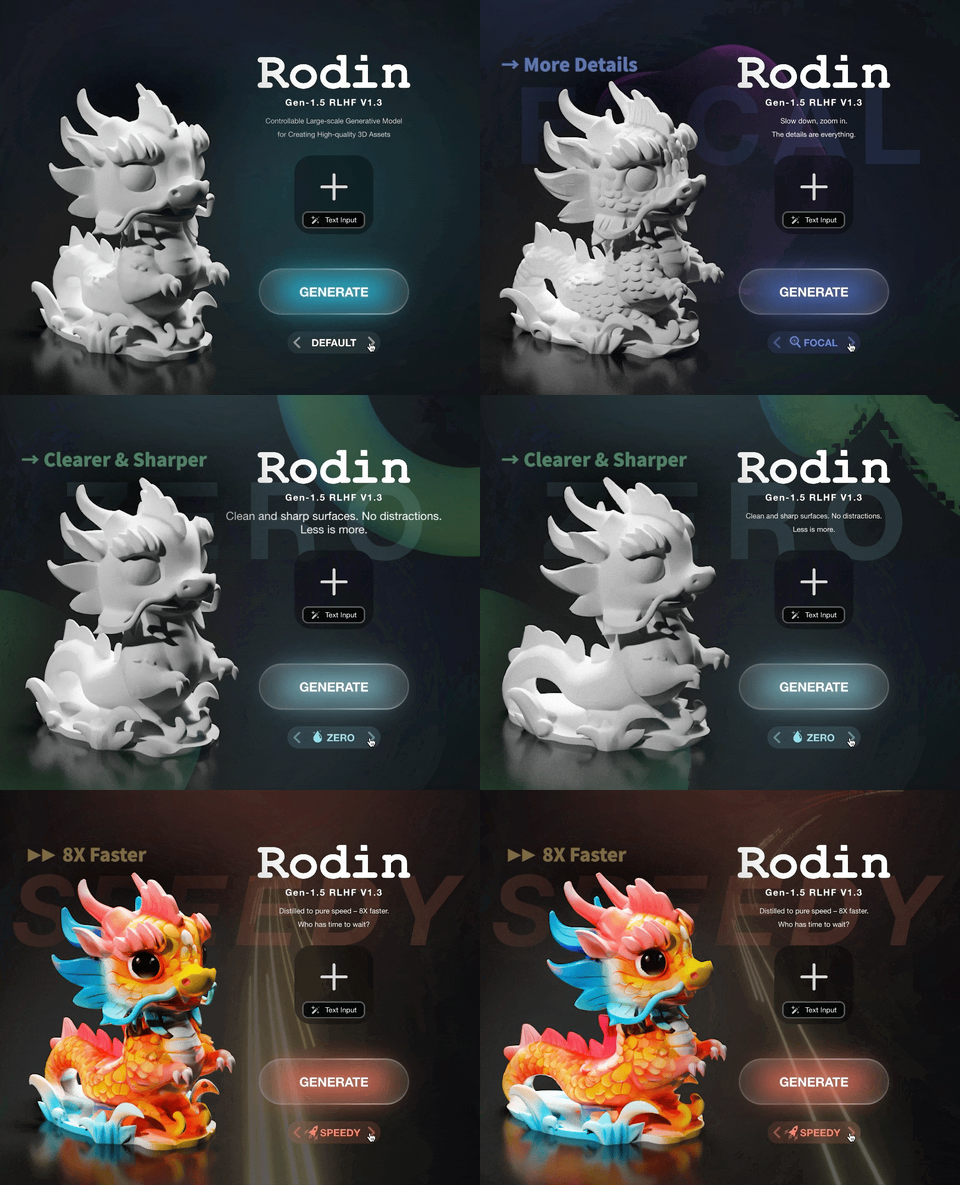
The mesh defines a 3D model’s structure, smoothness, and deformability. Cleaner meshes mean less cleanup in tools like Blender or Unity — shortening the gap to production readiness.
---
Breakthrough: Bang to Parts
Rodin Gen-2 introduces Bang to Parts — selecting any generated model and exploding it into components along its original structure.
Why it matters:
- Gaming: modular equipment swapping
- Industrial design: module-level detail optimization
- 3D printing: large object splitting for production
Old way: generate parts individually, manually adjust relationships
New way: generate whole → split intelligently → edit components
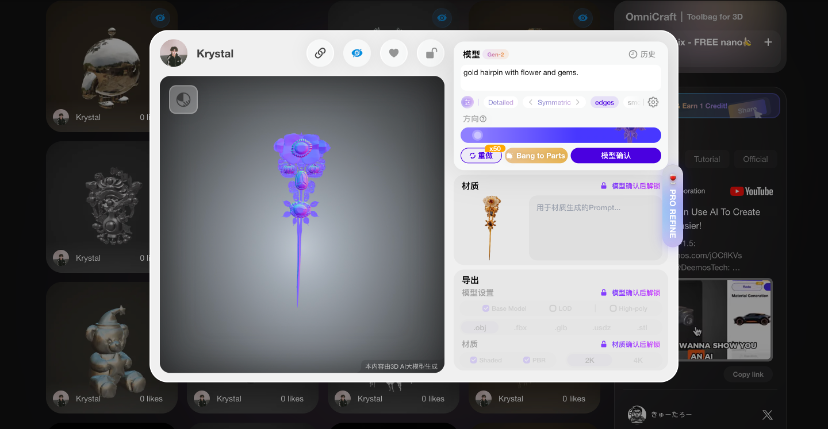
Bang to Parts: instantly reveal component structure
---
Integration and Monetization
Tools like AiToEarn bridge creation and commerce:
- AI-generated content publishing to Douyin, Kwai, Bilibili, Facebook, Instagram, Threads, YouTube, Pinterest, X/Twitter
- Performance analytics
- AI Model Ranking — AI模型排名
These ecosystems help convert 3D AI innovation into real-world value.
---
02 — 3D Scaling & Post-Training
Bang to Parts parallels post-training in AI: refining a foundational 3D model to understand object-part relationships.
Pattern parallels to text/image/video:
- Generate → Understand
- Understand → Generate
- Understanding by Generation
The paper BANG: Generative Explosive Dynamics for 3D Asset Part Segmentation was a Top 10 Technical Paper Fast Forward at SIGGRAPH 2025.
---
Best Paper Win
While they won SIGGRAPH 2025 Best Paper for CAST — scene generation from a single image — Zhang Qixuan was most excited about BANG’s recognition for its workflow impact.
---
Breaking Industry Consensus
When others followed 2D-to-3D pipelines, Yingmou trained native 3D models from scratch — delaying product launch by 6 months but achieving true production fidelity.
---
Quality & Controllability as Core Threads
- Quality: Gen-1 achieved native 3D fidelity; Gen-2 pushed precision with more parameters.
- Controllability: From 3D ControlNet (bounding box, voxel, point cloud) to BANG’s part-level editing.

Rodin’s exclusive 3D ControlNet
Hyper3D.AI delivered a new feature every 9 days over 16 months — including Partial Redo for local model edits.
---
03 — Hidden 3D Powering Visible Applications
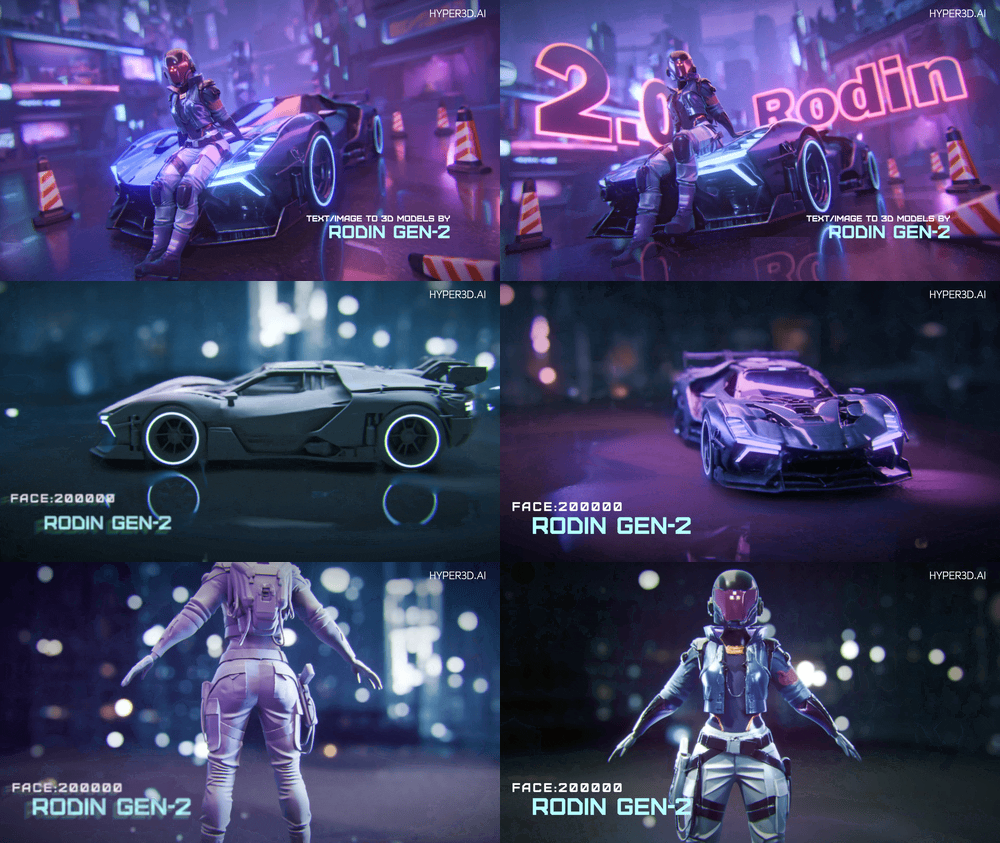
Artwork by T-BOY using Hyper3D.AI Rodin
---
Generation Modes
To meet varied 3D demands:
- Zero: low-poly optimization for <10s generation times
- Focal: high detail
- Speedy: fast previews
- Default: balance of smoothness and detail
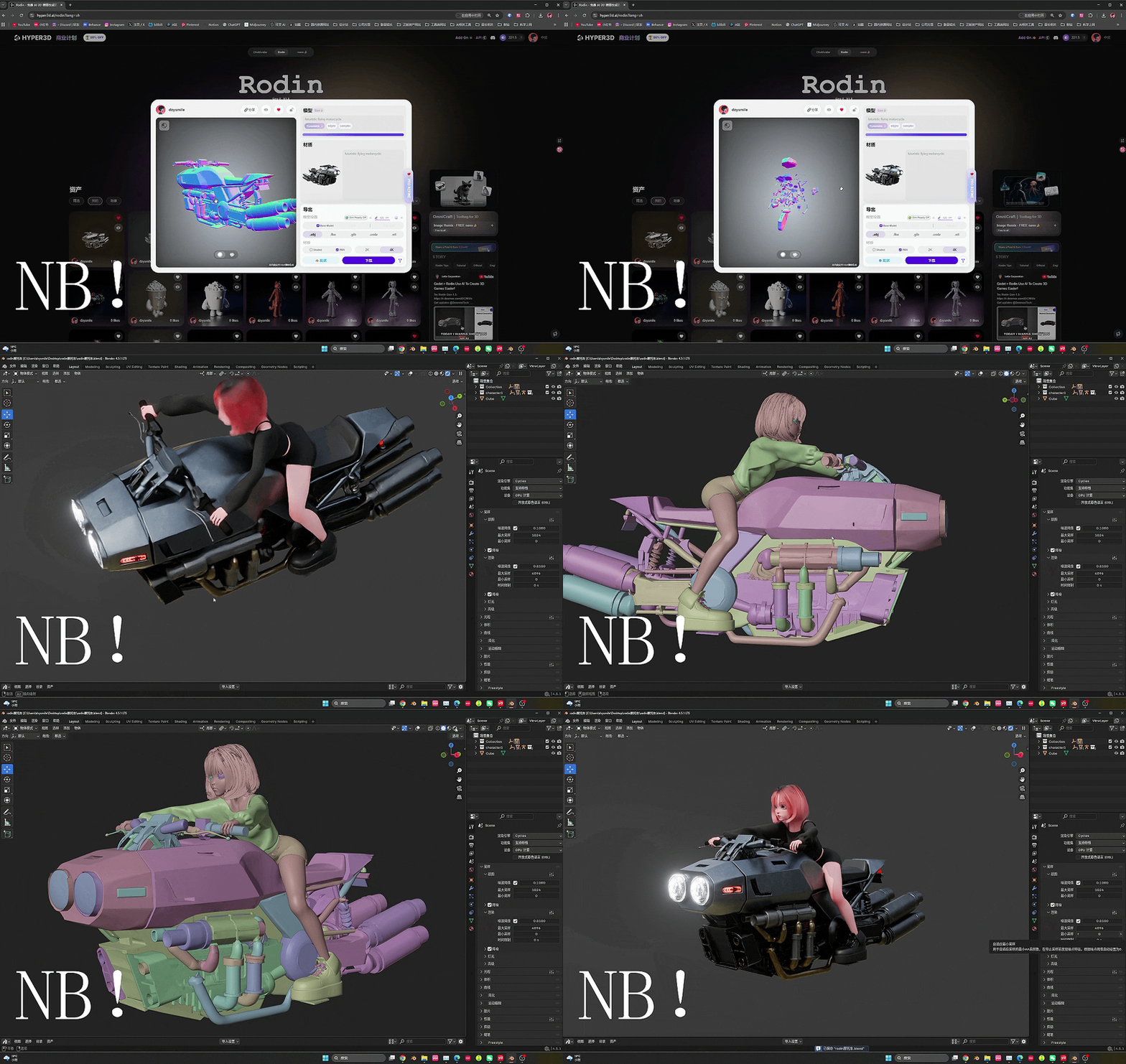
Artwork by Dzysmile using Hyper3D.AI Rodin
---
Beyond Gaming
Partnerships with consumer-grade 3D printer makers enable physical prints of Rodin models.
But 3D will remain “hidden infrastructure” in many applications — quietly enabling spatial consistency, fidelity, and integration.
---
Market-Driven Expansion
The team aims for horizontal growth:
- Gaming → Film modeling → Industrial use cases
- Goal: turn algorithms into SaaS
- Principle: “Market demand comes first.”
---
Why 3D Is Fundamental
3D technology resolves spatial cognition ambiguity, ensuring consistent shape logic.
Example: generating object views from a single image — 3D modeling preserves perspective and occlusion accuracy.
Long-term vision: As AI evolves toward real-world spatial reasoning (AR/VR, industrial design, robotics), 3D will be a cornerstone technology.
---
Ecosystem Support
Platforms like AiToEarn官网 offer:
- AI content generation & optimization
- Multi-platform publishing
- Performance analytics
- Global monetization integration
They make it possible for 3D AI breakthroughs to reach — and profit from — global audiences.
---
In summary: Yingmou Tech’s journey blends deep technical R&D, bold strategic decisions, and ecosystem connections — redefining quality, controllability, and workflow integration for next-generation 3D content creation.