Google Antigravity
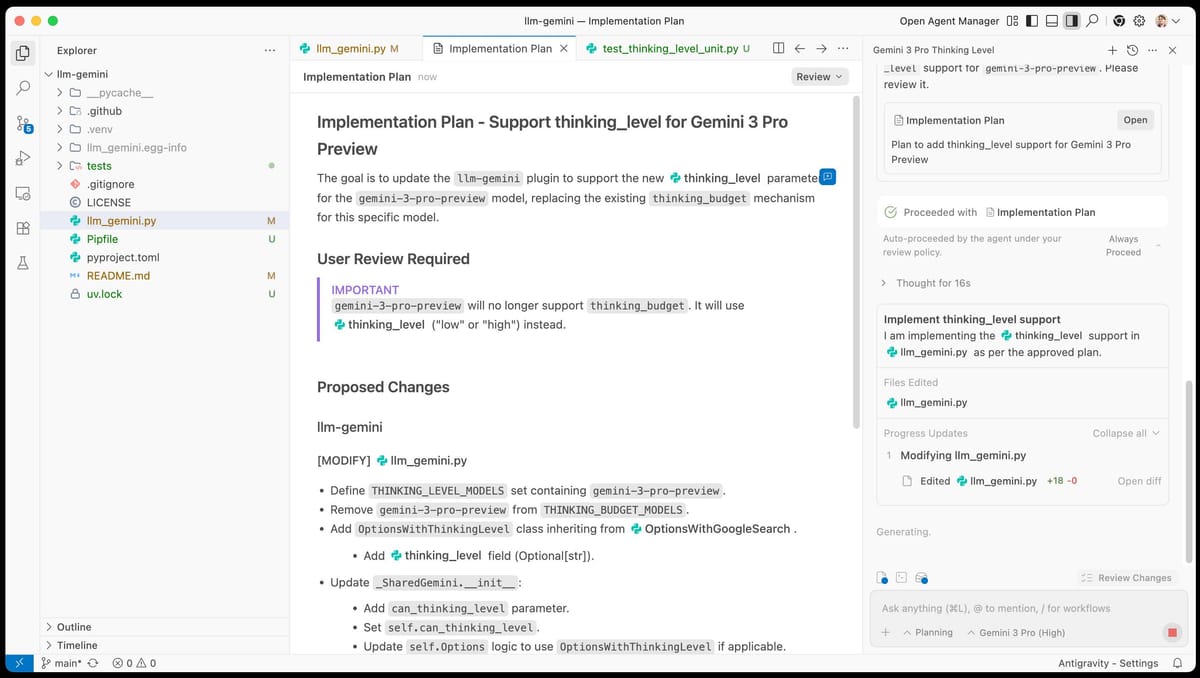
Google Antigravity Overview
Google Antigravity is Google's other major release today, alongside Gemini 3 Pro.
At first glance, Antigravity might appear to be just another VS Code fork or Cursor clone — a desktop app you install, sign in with your Google account, and use as an IDE for agent-based coding with their Gemini models.
Look closer, though, and it offers much more than that.
---
Getting Started
The best introduction is Google's official 14-minute YouTube video: Learn the basics of Google Antigravity.
In it, product engineer Kevin Hou — formerly at Windsurf — demonstrates building an app step-by-step.
---
Key Features
Antigravity introduces a set of novel ideas and offers three main "surfaces":
- Agent Manager Dashboard
- Traditional VS Code–style Editor
- Browser Integration via a Chrome Extension
Agent Manager Dashboard
Allows you to create, configure, and run agents with direct access to Gemini models.
VS Code–style Editor
Provides a familiar coding environment for day-to-day development.
Browser Integration
Via the new Chrome Extension, agents can test and interact with web applications they build — similar to Playwright MCP, but fully integrated.
---
Artifacts
A notable concept in Antigravity is artifacts — though these are completely different from Claude Artifacts.
In Antigravity:
- Artifacts are Markdown documents automatically generated by the agent’s workflow.
- Examples include:
- Task lists
- Implementation plans
- Final “walkthrough” reports of completed work
---
Hands-On Test
I tested Antigravity while adding Gemini 3 support to my `llm-gemini` plugin.
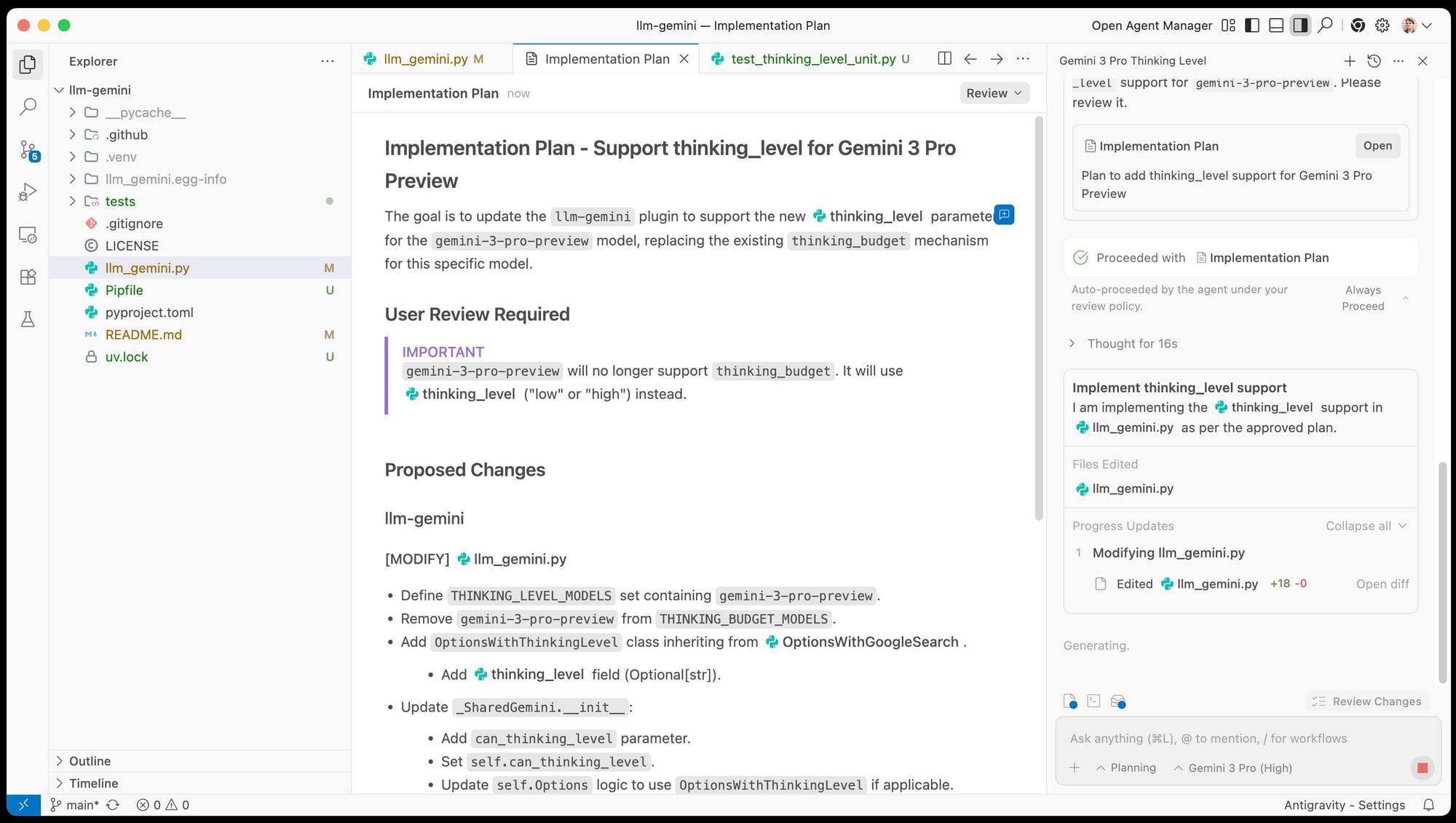
It worked well initially, but later I encountered an error:
> "Agent execution terminated due to model provider overload. Please try again later."
I plan to retry once Google resolves these launch-phase stability issues.
---
Potential in AI Content Workflows
Given Antigravity’s agentic coding focus, it’s easy to see how it could integrate into broader AI-powered content creation pipelines.
Open-source platforms like AiToEarn官网 enable creators to:
- Generate AI-driven content
- Publish simultaneously across multiple platforms:
- Douyin, Kwai, WeChat, Bilibili, Xiaohongshu (Rednote)
- Facebook, Instagram, LinkedIn, Threads
- YouTube, Pinterest, X (Twitter)
- Monetize through integrated analytics and model rankings
Pairing development tools like Antigravity with monetization ecosystems such as AiToEarn开源地址 could significantly streamline the process — from AI-powered creative work to multi-platform publication and revenue generation.
---
Final Thoughts
Antigravity stands out from other coding tools by combining agent workflow automation, browser-based testing, and structured artifact generation.
With initial scaling issues ironed out, it could become a key part of the AI creator toolkit, especially when integrated with publishing and monetization platforms like AiToEarn.
---
If you’d like, I can add a section comparing Antigravity to Windsurf and Cursor, so readers get a clearer sense of how it fits among existing AI-assisted IDEs.
Would you like me to include that?