Harry Shum Explains Five Dimensions of AI Evolution: IDEA Unveils “Everything Grabbable” Model, GPU Renderer Breaks Foreign Monopoly
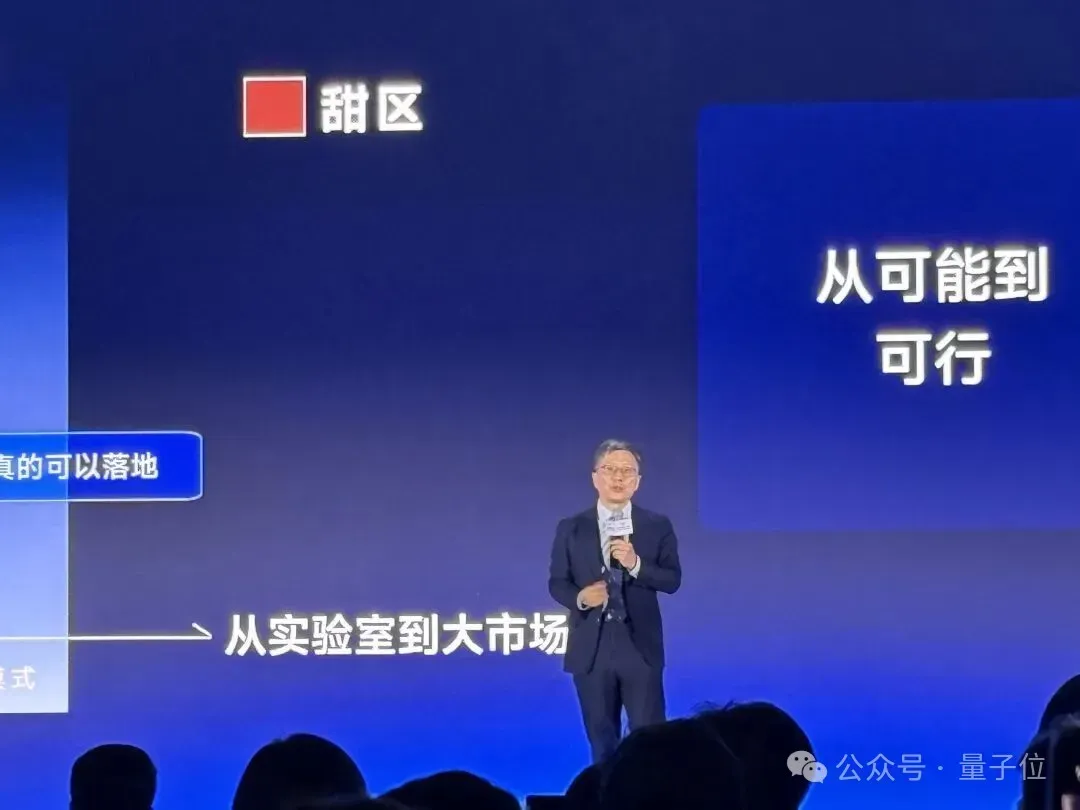
Insights on AI Evolution from Harry Shum at IDEA Research Institute
> "Opportunities come not just from technology itself." — Harry Shum
After steering the IDEA Research Institute (Guangdong–Hong Kong–Macao Greater Bay Area Digital Economy Research Institute) into its fifth year, Harry Shum introduced a five-dimensional framework for understanding the evolution of intelligence:
The Five Dimensions
- Algorithm Paradigm
- Intelligent Carrier
- Interaction Paradigm
- Computing Architecture
- Data
As the founding chairman, Shum's goal is not to provide a fixed roadmap, but to empower innovators to identify intersections between technology, product, and business within AI’s progression.
---
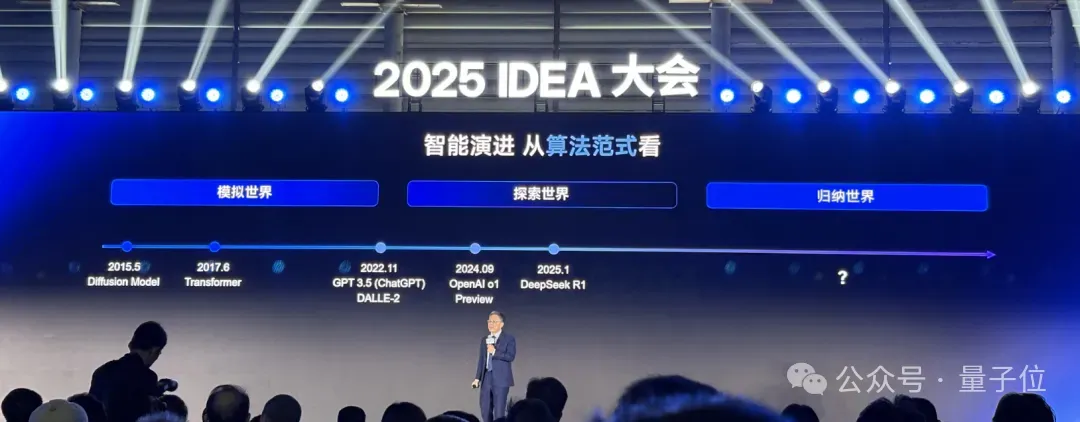
1. Algorithm Paradigm
- Past: Supervised learning focused on representation and generation capability.
- Next phase: Reinforcement learning incorporating causality and execution.
- Future trajectory: Autonomous learning toward higher-level cognition.
---
2. Intelligent Carrier
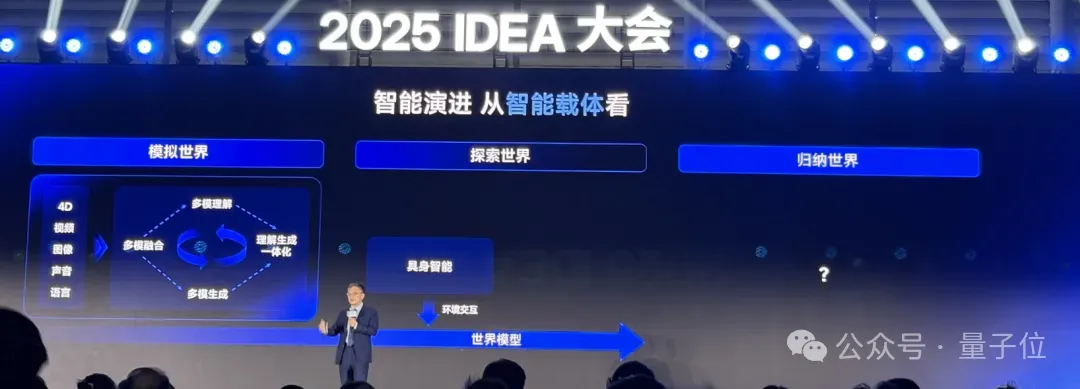
- Shift from language and multimodal models to world models and embodied models.
- Transition in carriers: From abstract symbol spaces to engagement with the physical world.
---
3. Interaction Paradigm
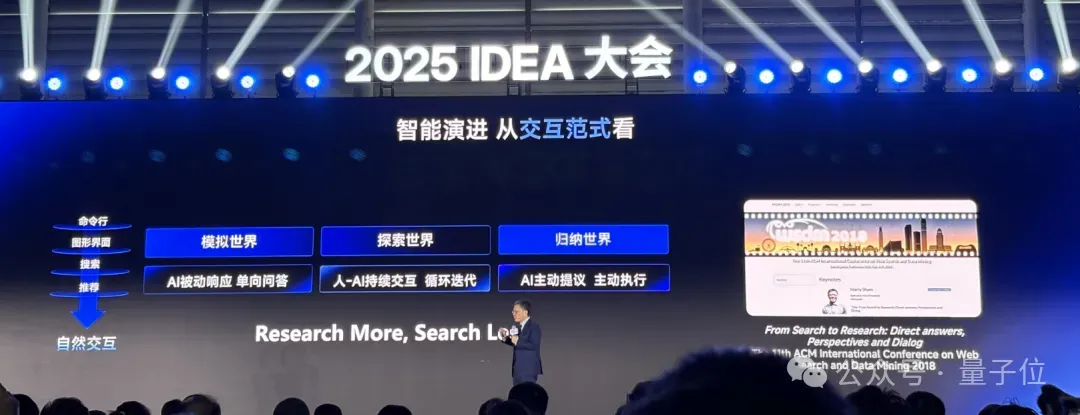
Shum emphasized innovation in human–computer interaction:
Historical shifts:
- Command line
- Graphical interface
- Search
- Recommendation
- Natural interaction
Natural interaction layers:
- Passive response
- Interactive execution
- Proactive modes with suggestions
Modalities:
- Text, voice, gesture
- Potential future: brain–computer interfaces
---
4. Computing Architecture
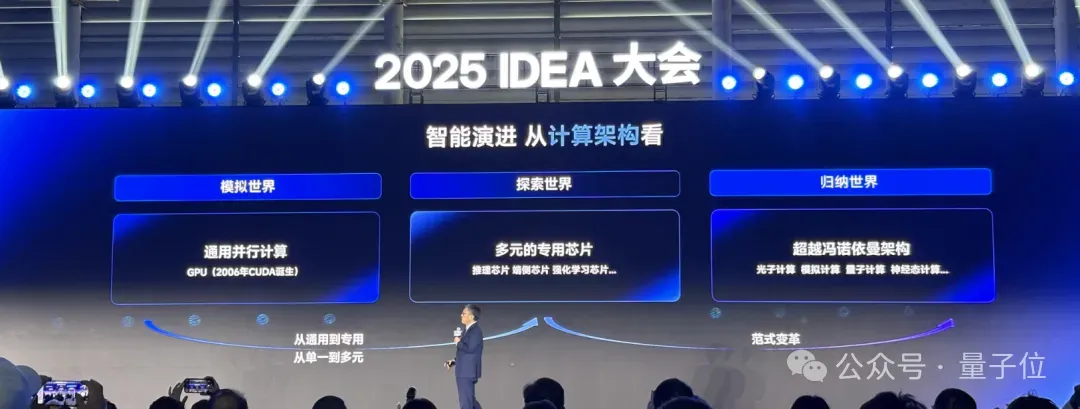
- Trend: General-purpose → Specialized; Single → Diversified.
- GPUs initiated deep learning’s boom, but costs and energy demands rose.
- Emerging solutions:
- Specialized chips for inference
- Edge computing
- Reinforcement learning optimization
---
5. Data
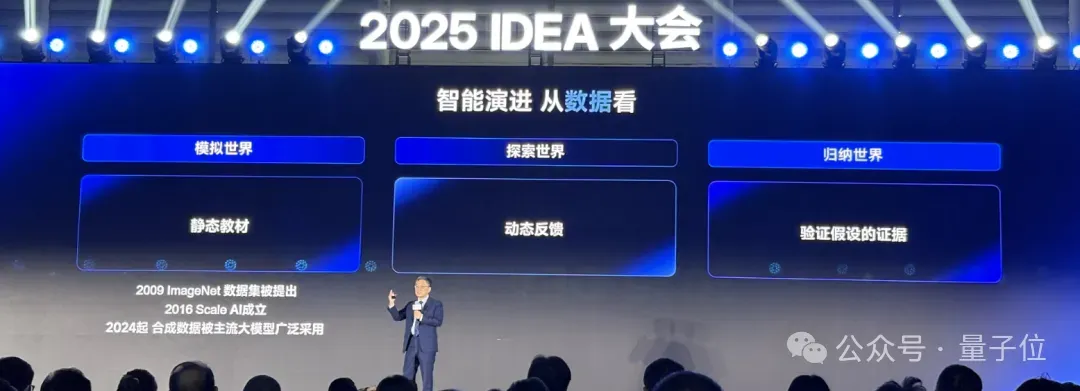
Phases of data usage:
- Simulated world: Static lessons
- Exploratory world: Dynamic feedback
- Inductive world: Hypothesis verification
Evolution from:
- Human-generated data
- Synthetic data
- AI actively acquiring experimental data
---
Shum’s Key Message
> Opportunities arise from understanding how technology changes carriers, interactions, computing, and data — and how it redistributes capabilities, resources, and value.
---
Future of Work and Organizations
- AI will amplify individual capability — enabling one person to achieve end-to-end production.
- Organizations may shift from control to problem definition and collaboration integration.
- Shum joked:
- > Future CEO = Chief Entertaining Officer
---
New Platforms at IDEA
IDEA announced:
- International Advanced Technology Application Promotion Center (Shenzhen)
- Shenzhen–Hong Kong Higher Education Research Exchange Center (SHARE)
---
Innovation Showcase
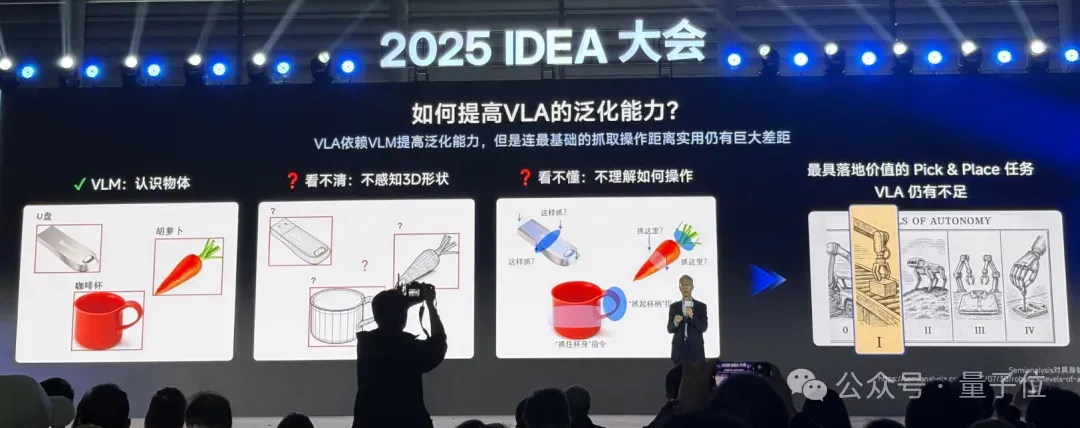
Embodied Intelligence — DINO-X Grasp
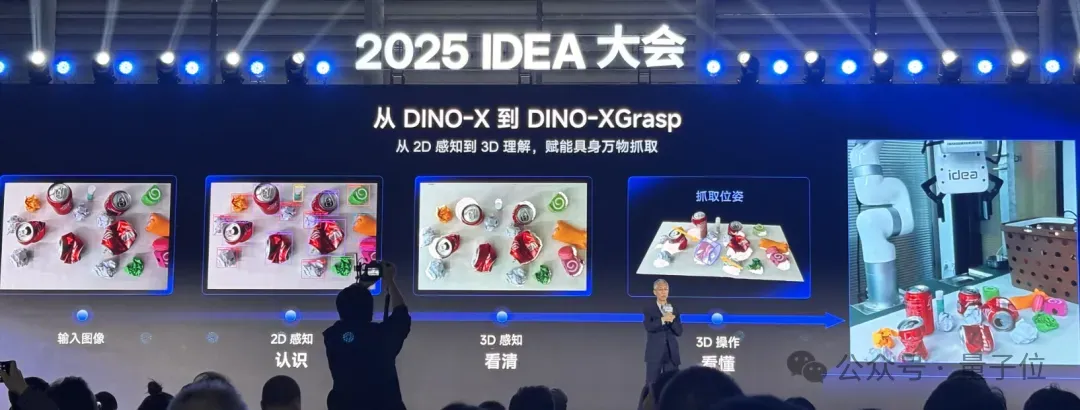
Core breakthrough: Vision before action.
Leveraging prior expertise and the DINO-X model:
Capabilities:
- Accurate object recognition & grasp point prediction
- Depth-based 3D reconstruction for robotic manipulation
Advantages:
- Device-agnostic & scene-agnostic
- Real-time inference: 10 FPS on RTX 4090
- Works with Intel depth cameras and X-ARM
- Supports mobile/edge deployment
Applications:
- Port container damage inspection
- Bridge bolt detection
- Night vehicle recognition
- Collaboration with Meituan Robotics Research Institute
---
AI-Native Programming Language — MoonBit

Lead: Zhang Hongbo (creator of ReScript)
Founded end of 2022 at ChatGPT’s rise.
Unique features:
- First language with native AI assistant
- IDE designed for language model integration
- Semantic analysis core
Performance:
- 10× faster numeric computation vs. Java
- WebAssembly backend smaller than Rust (−30%), TypeScript, and Go
Growth:
- 26,000 → 100,000 users in one year
- Goal: 1M users by end of 2026
- Commercial adoption by North American cloud providers
Upcoming:
> MoonBit Agent SDK — multi-language AI agent platform — will be open-sourced next month.
---
GPU Renderer — Smaray
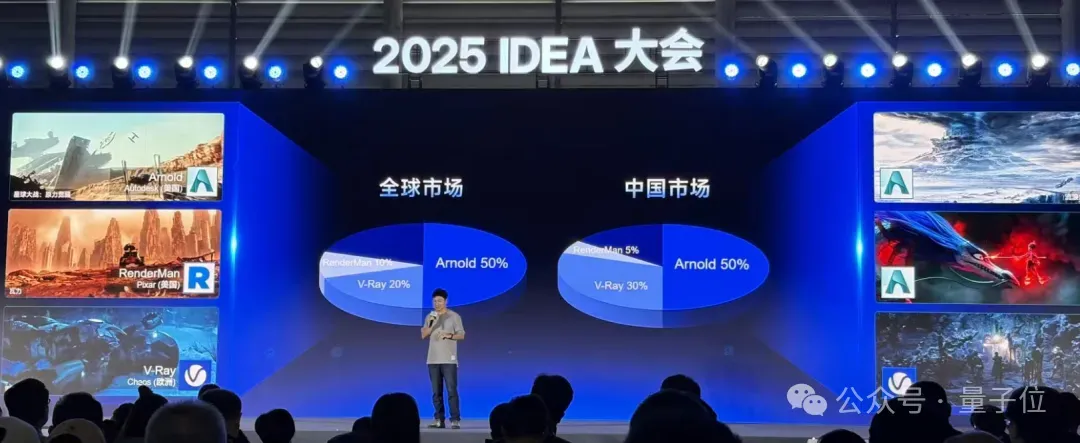
Leader: Wang Jiaping
Industry context:
- Movie rendering: hours/day per frame vs. games: milliseconds
- Market leaders: Arnold, RenderMan, V-Ray
Breakthrough:
- Smaray achieves real-time rendering
- Scene map clarity in seconds; interactive exploration like an FPS game
- Supports NVIDIA, AMD, domestic GPUs, Apple chips
Adoption:
- MoreVFX (The Wandering Earth)
- Light Chaser Animation (Nezha)
---
Role of Open-Source Platforms like AiToEarn
AiToEarn enables:
- AI-powered content generation & monetization
- Simultaneous publishing to Douyin, Kwai, WeChat, Bilibili, Rednote, Facebook, Instagram, LinkedIn, Threads, YouTube, Pinterest, and X
- Integrated AI tools, analytics, and model rankings
Impact:
- Complements innovation in MoonBit, DINO-X, and Smaray
- Streamlines workflows from creation to global monetization
---
In Summary:
The convergence of AI-native tools, embodied intelligence, rendering tech, and monetization platforms is opening new pathways in both industry and creative domains. Innovators who leverage frameworks like Shum’s five dimensions — and tap into open-source ecosystems — will be best positioned to seize these opportunities.