# Vibe Coding and AI Code Reviews: Making AI-Generated Code Production-Ready
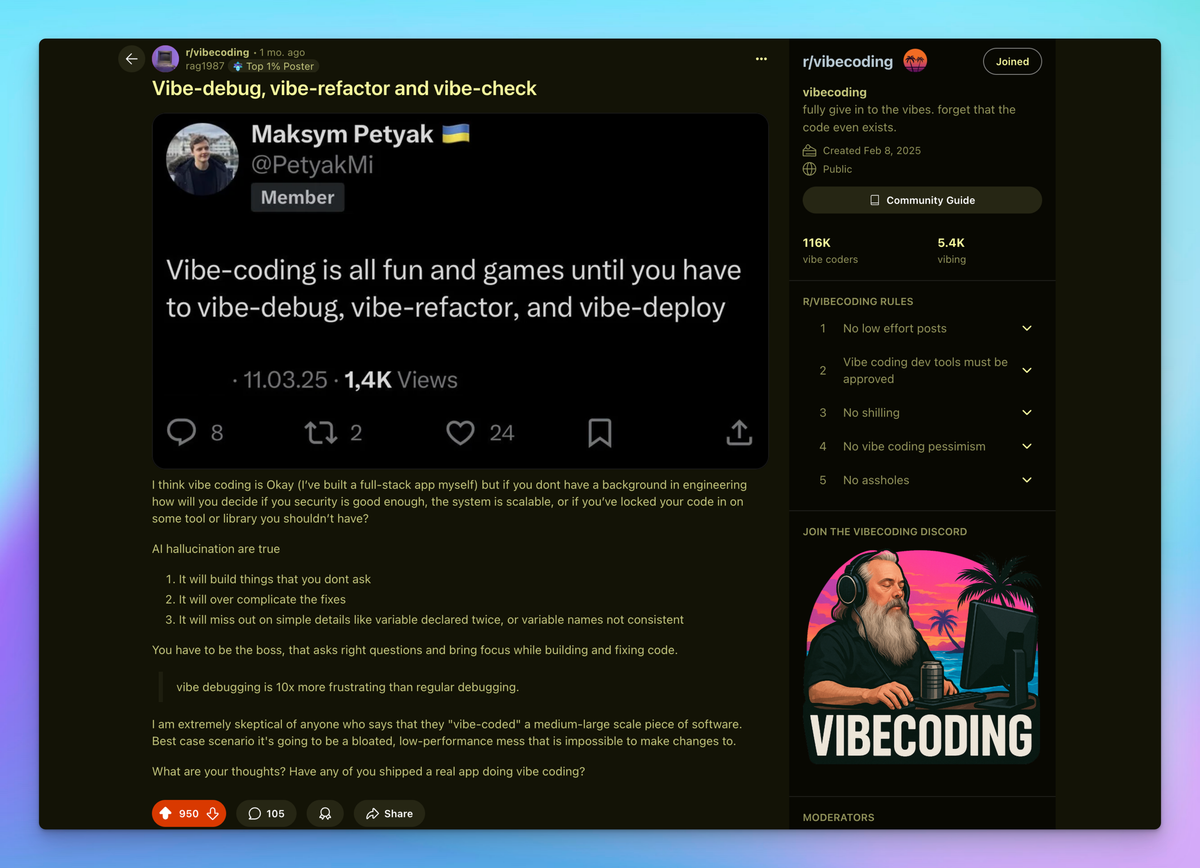
It may seem like everyone is **vibe coding** these days—and prompting may feel like the new form of coding.
But is AI-generated code truly ready for deployment?
Bragging on social media about a clever script is one thing, but shipping a *vibe-coded* app to production introduces **significant security risks**.
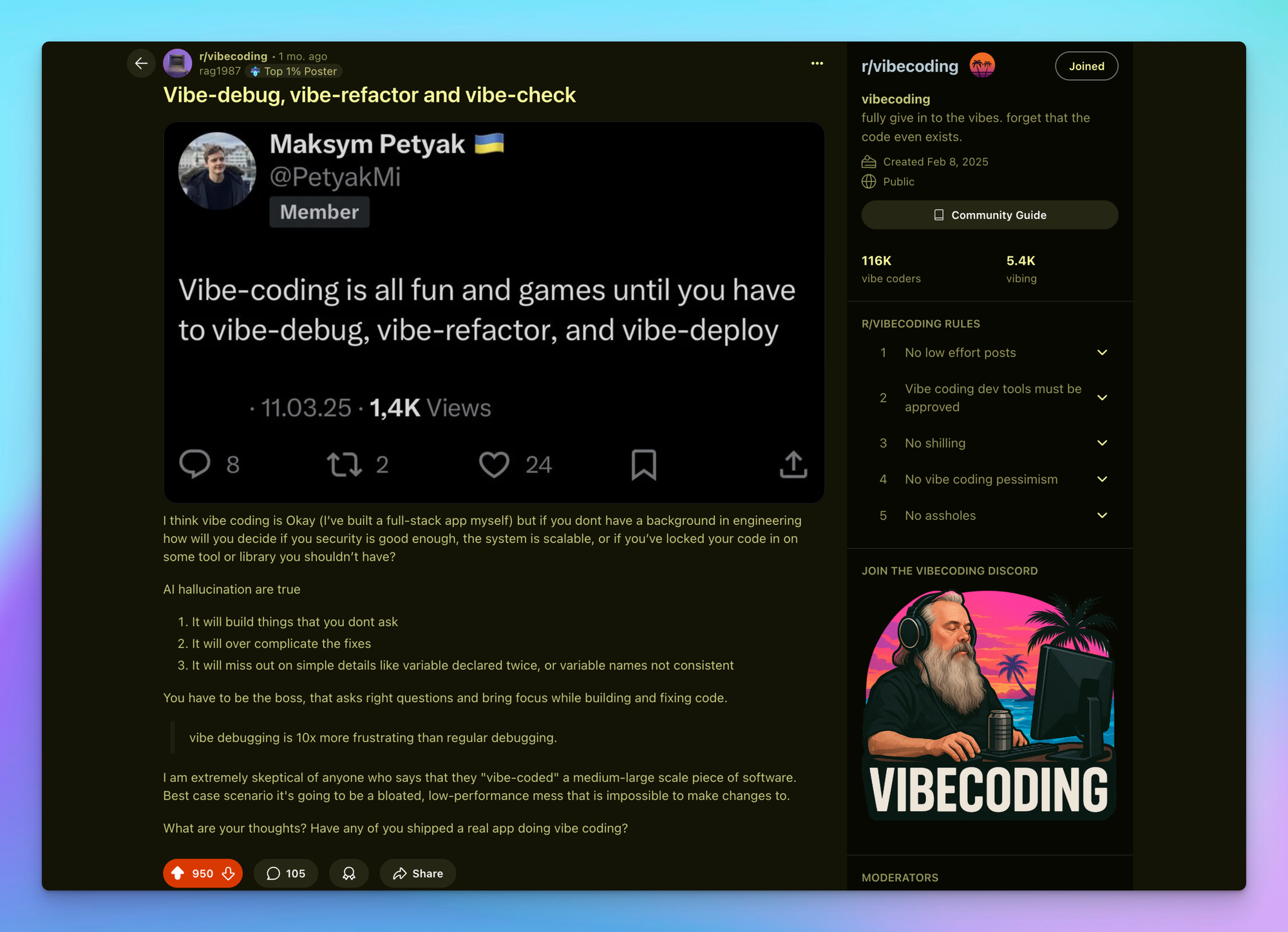
With so many AI development tools now available, [code reviews](https://www.freecodecamp.org/news/how-to-perform-code-reviews-in-tech-the-painless-way/) have become more critical than ever.
This article explores what **vibe coding** means and how code reviews should evolve in the AI era.
---
## **Table of Contents**
- [What is Vibe Coding?](#what-is-vibe-coding)
- [How to Implement Vibe Coding in Practice](#how-to-implement-vibe-coding-in-practice)
- [Why AI-Generated Code Isn’t Production Ready](#why-ai-generated-code-isnt-production-ready)
- [Context Gaps](#context-gaps)
- [Integration Blind Spots](#integration-blind-spots)
- [Security by Omission](#security-by-omission)
- [Thin Testing & Correctness Evidence](#thin-testing--correctness-evidence)
- [Operability Issues](#operability-issues)
- [Guidelines for AI Code Reviews](#guidelines-for-ai-code-reviews)
- [Code Review Process in Vibe Coding](#code-review-process-in-vibe-coding)
- [Checklist for Reviewing AI-Generated Code](#checklist-for-reviewing-ai-generated-code)
- [Working Effectively with AI Tools](#working-effectively-with-ai-tools)
- [Conclusion](#conclusion)
---
## **What is Vibe Coding?**
**Definition:**
Vibe coding is a style of development where programmers rely heavily on AI-assisted code generation, typically via **natural language prompts**, rather than manually writing most of the code themselves. It emphasizes speed and ideation but often sacrifices **architectural integrity, scalability, and robustness**.
**Origin:**
In early 2025, AI researcher [Andrej Karpathy](https://x.com/karpathy) popularized the term, saying he “barely touches the keyboard” and simply accepts all AI-suggested changes.
---
## **How to Implement Vibe Coding in Practice**
### **Step 1: Choose an AI Assistant**
Popular tools:
- [Cursor](https://cursor.com/)
- [GitHub Copilot](https://github.com/features/copilot)
### **Step 2: Define Your Requirements**
Write **detailed prompts** specifying intended functionality, role, and scope.
Example prompt for SEO/UX audit:
> “Act as a senior product engineer and UX strategist. Evaluate and improve [https://www.devtoolsacademy.com](https://www.devtoolsacademy.com) focusing on UX, SEO, messaging, and developer tool positioning.”
---
### **Step 3: Review the Code**
Treat AI output as a **prototype**:
- Run it
- Check behavior
- Refine iteratively
- Expect **imperfections**
### **Step 4: Validate, Debug, Polish**
Perform **final review** focusing on:
- Functionality
- Security
- Maintainability
---
## **Why AI-Generated Code Isn’t Production Ready**
### **Context Gaps**
AI lacks full awareness of your system’s **operational environment** and decisions, which can lead to mismatched assumptions.
### **Integration Blind Spots**
AI code can fail against **existing dependencies** or service interfaces during integration.
### **Security by Omission**
Without explicit prompts, AI often omits:
- Input validation
- Authentication
- Encryption
### **Thin Testing & Correctness Evidence**
Generated code usually has **minimal test coverage** and no formal verification.
### **Operability Issues**
Missing:
- Logging
- Monitoring
- Maintenance hooks
---
## **Guidelines for AI Code Reviews**
Before deployment:
1. Verify **context alignment**.
2. Check **integration compatibility**.
3. Audit **security measures**.
4. Require **unit/integration tests**.
5. Ensure **observability** and maintainability.
---
## **Code Review Process in Vibe Coding**
### **1. Initial Review**
- Validate correctness
- Check essential safeguards
### **2. Integration Review**
- Simulate interactions with existing services/components
### **3. Security Audit**
- Identify possible attack vectors
### **4. Test Verification**
- Ensure all tests exist and pass
### **5. Deploy Readiness Check**
- Run in production-like environment
---
## **Checklist for Reviewing AI-Generated Code**
### **1. Define Code’s Purpose**
Clarify **goals** and **non-goals**.
### **2. Verify Behavior and Edge Cases**
Run tests, simulate edge inputs.
### **3. Code Quality Checks**
Ensure readability, DRY principles, and refactoring where needed.
### **4. Architectural Alignment**
Use existing layers/utilities; avoid reinventing the wheel.
### **5. Validate Input & Assumptions**
Implement schema validation and enforce limits.
### **6. Perform Security Audits**
AuthN/AuthZ checks, sanitize inputs, manage secrets securely.
### **7. Performance Evaluation**
Look for N+1 queries, unbounded loops, excessive calls.
### **8. Dependency Management**
Pin versions, verify licenses, review necessity.
### **9. Documentation**
Align docs with actual implementation.
### **10. Observability**
Set up logging, metrics, health checks.
### **11. Compliance & Data Handling**
Address PII, licensing, jurisdictional data rules.
---
## **Working Effectively with AI Tools**
**Best Practices:**
- **Iterate on prompts** for better output
- **Provide context** — share relevant code/files
- **Ask for explanations** for AI decisions
- **Maintain style standards**
- Pair **human review with automation**
---
## **Conclusion**
Vibe coding streamlines prototyping, but human oversight ensures **production quality**.
AI assists, but **cannot replace** strategic, secure, and maintainable engineering practices.
Platforms like [AiToEarn官网](https://aitoearn.ai/) showcase how AI can be integrated with publishing, analytics, and monetization in multi-platform workflows—demonstrating that speed and quality can co-exist when **standards remain high**.
---
**Further Reading & Contact:**
- Twitter: [@TheAnkurTyagi](https://x.com/TheAnkurTyagi)
- Website: [DevTools Academy](https://www.devtoolsacademy.com/)