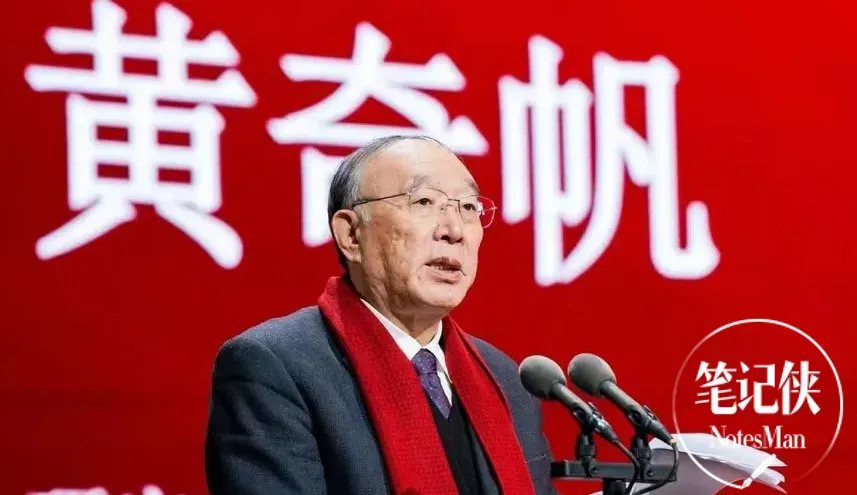
Huang Qifan’s Latest Speech: The 15th Five-Year Plan Unlocks Three Key Dividends
China’s Development: Reform & Innovation as Twin Engines
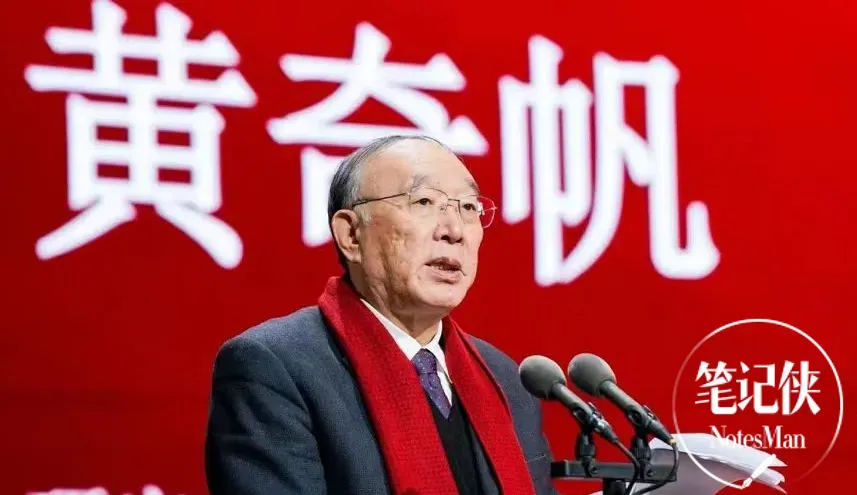
> Source: Opening ceremony of the 2025 “Understanding China” International Conference, Guangzhou — keynote speech by Huang Qifan, Executive Vice Chairman of the Academic Committee of the China National Innovation and Development Strategy Research Association, former Mayor of Chongqing.
> Length: 6,856 words | ~17 min reading time
---
Macroeconomic Trends Overview
Editor’s Message:
The key to China’s sustained growth?
Reform and Innovation — working in synergy.
- Reform: Breaks bottlenecks, builds market frameworks, removes barriers, deepens property rights reform, widens openness.
- Innovation: Drives breakthroughs with ¥3.6T+ R&D spend, quantum tech advances, AI leadership, and rising new-quality productive forces.
Under the upcoming 15th Five-Year Plan, Huang Qifan identifies three major growth dividends.
---
I. Reform & Innovation — Twin Growth Engines
Reform Achievements
- Economic System Reform
- Socialist market economy more complete; high-standard market system established.
- Key laws: Fair Competition Review Regulation, Private Economy Promotion Law.
- “Four pillars and eight beams” unified national market in place.
- Deepened allocation reforms: property rights, fair competition, social credit.
- Key Sector Reform
- Electricity market integration in Southern Grid provinces — 63% market transactions in 2024.
- Rural homestead land reform pilots — separating ownership, qualification, usage rights.
- SOE mixed-ownership reforms boosting vitality and efficiency.
- Opening-Up
- Negative list for cross-border service trade fully implemented.
- Manufacturing fully open to foreign investment; FDI > USD 100B for 5 consecutive years.
- Belt & Road freight train quality/frequency improved; FTZ institutional innovations rising.
- Hainan Free Trade Port preparing customs closure.
---
Innovation Achievements
- R&D Investment & Capacity
- ¥3.6T R&D spend in 2024 (+48% vs 2020); intensity 2.68%.
- Global innovation ranking: #14 in 2020 → #10 in 2024.
- 26 tech innovation clusters in world top 100.
- 460K high-tech firms (up 100% since 13th Five-Year Plan).
- Core Technology Breakthroughs
- Quantum, AI, space, lunar, deep-sea: multiple global firsts.
- IC output +72.6%; domestic chip equipment usage higher.
- “Fuxing” high-speed rail, large aircraft — autonomous production.
- Made in China 2025 goals largely met.
- Innovation Ecosystem
- +83% high-tech firms since 2020; corporate R&D = 77% of total.
- 43.3% of key R&D leaders <45 years old.
- “Three New” economy valued at ¥24T (18% GDP).
---
Reform clears obstacles for innovation by:
- Removing institutional barriers
- Strengthening property rights protection
- Cutting transaction costs
- Innovation fuels reform — tech breakthroughs drive institutional upgrades and economic transformation.
Result: New-quality productive forces advancing China toward socialist modernization by 2035.
---
II. Three Dividends in the 15th Five-Year Plan Period
1. Urban–Rural Integration Dividend
- Align registered population urbanization with permanent resident rate.
- Achieve ~75% urbanization by 2035.
- Equal social service rights (insurance, housing, schooling) for migrant farmers.
- Greater city cluster & metropolitan area human resource support.
---
2. Unified Large Market Dividend
China’s unique mega-market advantages:
- One legal system, language, currency, infrastructure standard.
Benefits:
Network effects, scale economies, reduced costs — attracting FDI.
Challenges: Local protectionism, slow regulation reforms → overcapacity, price suppression.
Goal: Implement “Five Unifications and One Opening”:
- Factor allocation marketization
- Fiscal relationship restructuring
- Local government conduct regulation
- → Create unified, open, competitive, orderly market.
---
3. New-Quality Productive Forces Dividend
Drivers: Multi-point and cross-sector tech breakthroughs in rich application scenarios, full-chain support, strong talent base.
Challenges: Weak basic research, lagging education reform, poor tech–industry integration.
Fourth Plenum Proposals:
- Strengthen original innovation; focus on key core tech.
- Nationwide coordinated innovation system.
- Prioritize: ICs, industrial mother machines, high-end instruments, basic software, advanced materials, bio-manufacturing.
- Deepen sci-tech + industry integration; build world-class innovation hubs.
- Advance education–tech–talent integration.
---
III. Five Pillars of New-Quality Productive Forces
Core Sectors Across History
- Energy — From coal & steam (Industrial Revolution) → electricity → clean energy (solar/nuclear/hydrogen).
- Materials — Stone → Bronze → Iron → modern steel, petrochemicals, graphene, carbon composites.
- Digital Intelligence Technology — AI’s 8-stage evolution (Turing’s framework: deep learning → brain–machine integration).
- Biomedicine — Progress in health & longevity from tribal healers to biotech revolutions.
- High-End Equipment & Advanced Manufacturing — From basic tools → CNC, lithography machines, AI devices; reshaping productivity.
---
IV. Aligning Production Relations with New Productive Forces
New forces require matching systems — institutional reforms in supply-side structures.
Seven Key Recommendations:
- Increase R&D funding — target: GDP share 3% by 15th FYP, 4% by 2035.
- Boost original innovation share in R&D — from ~6% → 20%.
- Strengthen conversion of innovation to products — target: 40–50% conversion rate; reform IP splits to include commercializers.
- Build capital market ecosystems to grow unicorn enterprises.
- Define data property rights clearly; set rules for ownership & usage.
- Invest in education, culture, life quality to solve “double low” issues in human supply–demand.
- Increase tolerance & protection for high-impact innovators & entrepreneurs.
---
Conclusion:
China’s sustainable high-quality growth depends on:
- Focused innovation in the five pillars
- Disruptive breakthroughs in strategic & future industries
- Institutional safeguards supporting conversion & scaling
- Human-centered reforms enabling creativity & consumption
---
Extended Note:
Platforms like AiToEarn官网 embody these principles — using AI to enable creators to produce, distribute, and monetize across Douyin, Kwai, WeChat, Bilibili, Xiaohongshu, Facebook, Instagram, LinkedIn, Threads, YouTube, Pinterest, X — integrating AI generation, analytics, and performance ranking (AI模型排名). They illustrate innovation–market synergy in action, echoing national strategies for cultivating new-quality productive forces.
---