# 43 Talks Salon: Ancient Wisdom Meets AI Thinking
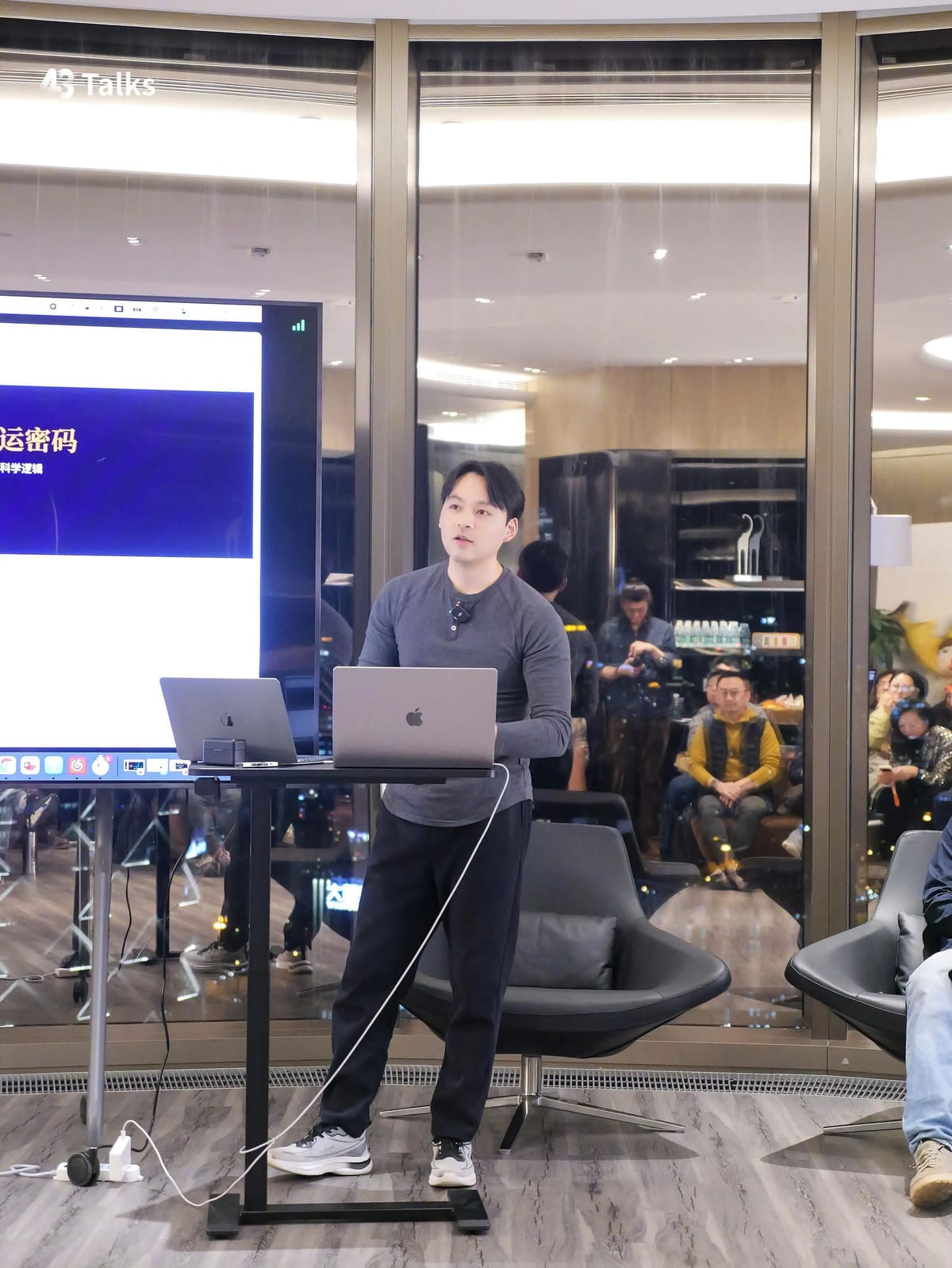
At the **43 Talks** offline salon, conversations usually revolve around **technology, trends, and products**. But in a recent session, AIGC content creator **Tech Commander** — with 250,000 followers — shifted the focus in an entirely unexpected way.
> “Let me be clear—what I’m about to share has no scientific basis.”
Then, with a serious tone, he introduced *Xiuxian* — the ancient Chinese practice of "cultivating immortality."
This wasn’t superstition or parody. Instead, it evolved into **one of the most hard-core theoretical dissections of ancient wisdom**, reframed through the same cognitive tools we use to understand large AI models.
---
## Diverging from Binary Thinking
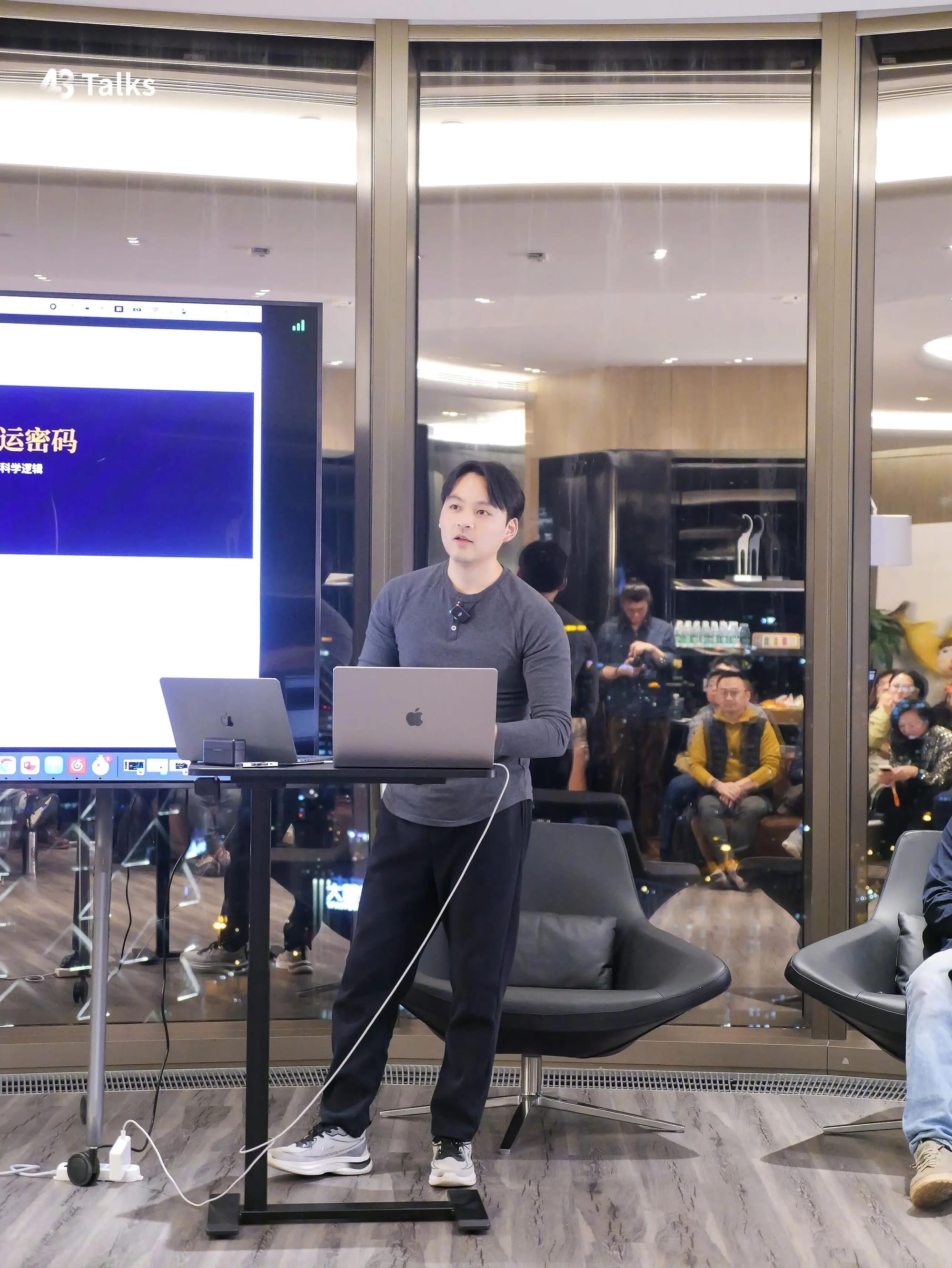
In this salon, the talk felt more like a **thousands-year-spanning thought experiment** than a tech presentation.
Listeners were encouraged to:
- Suspend **binary thinking** (true vs. false, science vs. superstition)
- Ask deeper questions, such as:
**Is our scientific paradigm simply one possible model among many for understanding the world?**

---
## Prediction: Prompting the Universe’s Large Model
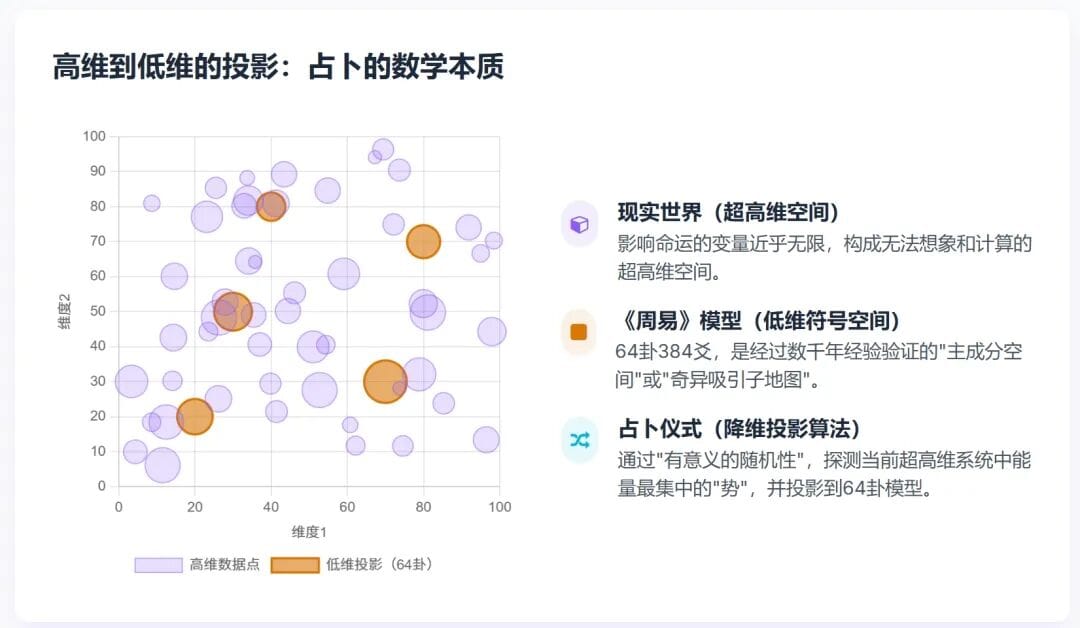
**Core question:** How could shaking a few copper coins make the universe “respond”?
Tech Commander's **bold hypothesis**:
1. **Universe as a Pre-trained Supermodel:**
- Parameters: Beyond any imaginable scale
- Dataset: Everything from the Big Bang to now
- Operation: Continuous, following unknown rules that “generate” reality
2. **Divination as Prompt Engineering:**
- Rituals provide structured input — time, location, ceremonial steps — targeting specific outputs
- The hexagram becomes the **returned output tokens** from the model
- Not predicting a single future, but **sampling probabilities** across possible futures
3. **Practical Approach:**
- Avoid debating “is it scientific?”
- Instead ask: **Does it work?**
- Even if the model’s mechanics are a black box (like GPT writing poetry), repeated meaningful outputs make it a “usable technology”

---
## Compute Power & Algorithms: Who Holds the API Key?
If the **universe is a large model**, who can run it and interpret its results?
Tech Commander’s answer: it depends on **hardware** and **algorithms**.
### Hardware Hypothesis
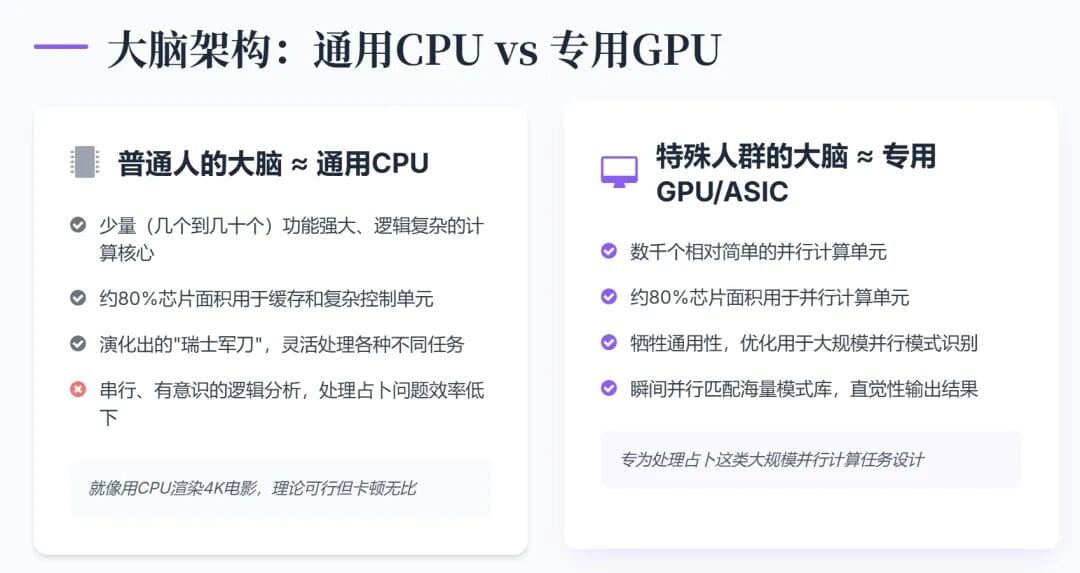
- **Most brains** = CPUs (general-purpose, survival-focused processing)
- **Some brains** = GPUs or TPUs (parallel computation, specialized processing)
- This architecture may allow certain people to naturally process complex “universe model” outputs
### Ancient Algorithms
- **Four Pillars of Destiny**, **Zi Wei Dou Shu** = optimized specialist models
- Iterated over centuries to accurately parse certain “data types” from the universe model
- When **high-end hardware** runs **refined algorithms**, exceptional insights can emerge
> Genius may not be divine inspiration — it might be advanced hardware running an as-yet-unmastered algorithm.


---
## Life Optimization: From External Query to Internal Fine-Tuning
The most exciting extension of this thinking is **turning the model inward** — treating **yourself** as the most complex, yet accessible model.
### Cultivation as Self-Optimization
The Science Captain’s view: cultivation (*xiuxian*) = **deep optimization and fine-tuning of your life system**.
- **Default state:** Like a factory-preset model, basic functions only, no access to source code
- **Goal:** Gain higher system permissions and become your own “model trainer”
---
### Key Process Stages
1. **Inner Observation**
Similar to **model interpretability**: turning inward to understand your body’s parameters and weights.
2. **Repairing Leaks & Transforming Desires**
Comparable to **model optimization/regularization**: limiting overfitting to external stimuli, redirecting energy toward improving core health and efficiency.
3. **Foundation Building**
Achieving a **low-consumption, high-efficiency, stable new version** of yourself.

---
## Practical Links Between Ancient Theory and Modern Tools
Modern open-source platforms like [AiToEarn官网](https://aitoearn.ai/) reflect the same principles:
- **Hardware:** Our brains and devices
- **Algorithms:** AI models and workflows
- **Model:** Integrated systems for creation and monetization
With [AiToEarn开源地址](https://github.com/yikart/AiToEarn) and [AI模型排名](https://rank.aitoearn.ai), creators can:
- Generate AI content
- Publish cross-platform
- Apply analytics for optimization
- Monetize creative output across Douyin, Kwai, WeChat, Bilibili, Rednote, YouTube, Facebook, Instagram, Pinterest, LinkedIn, Threads, and X
---
## Epilogue: Creation, Emergence, and New Perspectives
At the conclusion, someone asked:
**Was Newton’s theory of gravity invented or discovered?**
Science Captain’s reply: *“It just appeared out of nowhere.”*
This resonates with **AI emergence** — abilities materializing spontaneously once a model surpasses a parameter threshold.
Whether Newton’s breakthrough or AI’s emergent skills, **creation is often a phase shift**, not step-by-step derivation.
---
**Final Thought:**
Perhaps the most vital AI-era question isn’t just *What can AI do for us?* but *What can AI help us understand*—
about the universe, creation, and ultimately, ourselves.
By connecting **ancient wisdom** and **modern AI cognition**, we open doors both forward and backward in time—turning understanding itself into a shared global dialogue.