Inspired by the Human Brain’s Hippocampus-Cortex Mechanism, Red Bear AI Rebuilt Its Memory System
Memory — The Key Breakthrough for AI to Evolve from “Instant Q&A Tool” to “Personalized Super Assistant”
Memory is emerging as the pivotal breakthrough that can transform AI from a mere instant answer tool into a truly personalized super assistant.
---
From Transformers to Nested Learning
Recently, Google Research published a paper titled Nested Learning: The Illusion of Deep Learning Architectures. Many see it as a “V2 successor” to the landmark Attention is All You Need paper.
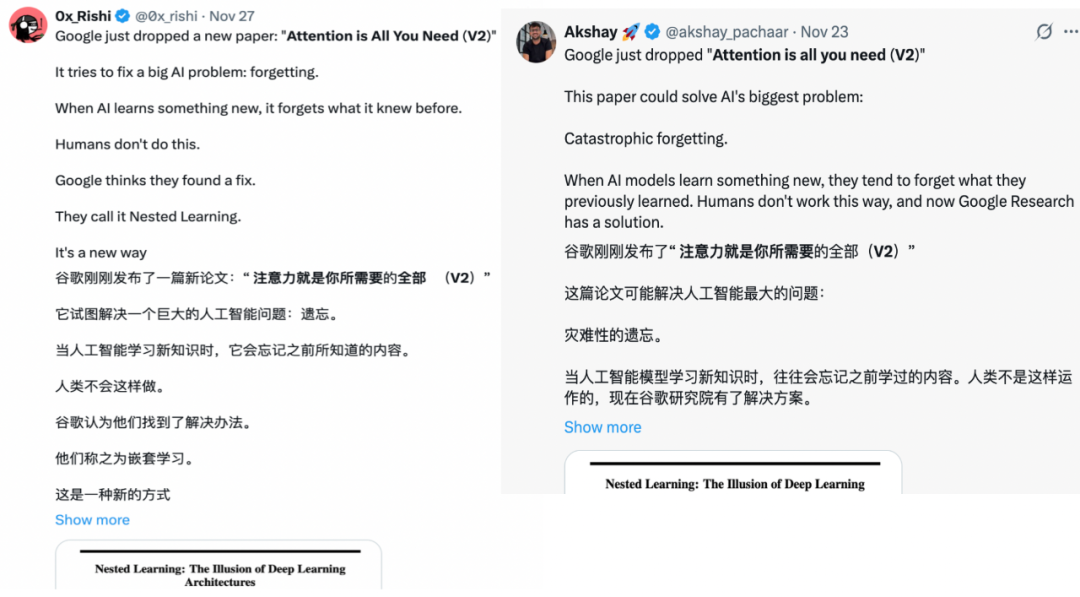
The 2017 Attention is All You Need introduced the Transformer architecture, igniting the large language model (LLM) revolution.
What makes Nested Learning a spiritual sequel is its paradigm-shifting proposal: a machine learning approach that allows LLMs to acquire new skills without forgetting the old — moving toward brain-like memory and continual evolution.
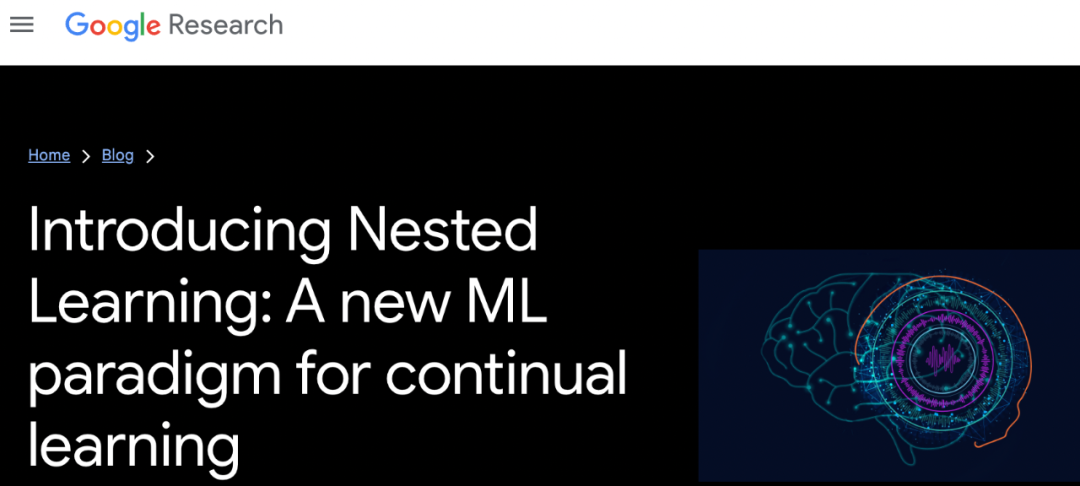
This signals a strategic shift in AI:
- The industry is slowing the “bigger and faster” race.
- Leading figures like Ilya Sutskever declare “Scaling is dead”.
- Focus is shifting toward memory capability and deeper user understanding.
---
Why Memory Is the Missing Piece
Over the past year, LLM apps have gone mainstream, spawning AI agents and “super assistants.” Yet none offer true personalization — most are still instant answer tools.
The key shortcoming: AI forgets too easily — lacking long-term memory.
Everyday Problems
- Opening a new chat window = starting from scratch.
- Multi-agent workflows lack persistent shared memory.
- Enterprises cannot build AI that learns continuously from experience.
All stem from fundamental defects in current LLM memory design.
---
Current Memory Limitations
- Context Window Limits
- Most LLMs: 8k–32k tokens.
- Long conversations push early info out, losing key details.
- Example: In round one, you say “I’m allergic to seafood.” By round five, it’s forgotten.
- Attention Decay (Recency Bias)
- Transformers prioritize recent input over earlier facts.
- Architecture: inherently short-term focused.
---
Fragmented Memory Across Agents
- Different agents maintain isolated memories.
- Switching agents feels like talking to a different AI.
- Users must repeat information.
---
Semantic Drift and Changing Preferences
- Ambiguous references, jargon, multi-language switching → misinterpretations.
- AI’s static knowledge base struggles to match evolving user needs.
---
The Race Toward Long-Term Memory
Research like Google’s Nested Learning points toward continuous learning without forgetting — essential for building AI that acts as a true personal assistant.
Memory advances will enable:
- Consistent conversations
- Continuous workflows
- Personalized recommendations
- Cross-agent cooperation
Platforms such as AiToEarn官网 show how open-source ecosystems can leverage “remembering” AI for multi-platform publishing, analytics, and monetization.
---
Red Bear AI’s “Memory Bear” — Giving AI Human-like Memory
Red Bear AI’s move into memory was driven by real-world customer problems.
Founded April 2024, the company initially built base-level AI platforms. In September, during an intelligent customer service project, they hit a “knowledge forgetting” issue. Multiple attempted fixes — context optimization, external KBs, hyperparameter tuning, long-term memory hacks — all failed.
CEO Wen Deliang realized: memory deficiency may be the core bottleneck stopping AI from evolving beyond instant answers.
---
Strategic Refocus: Multimodal + Memory Science
Red Bear AI switched to a multimodal + memory science path, launching Memory Bear after a year of R&D.
Memory Bear addresses long-term memory issues such as:
- Low accuracy
- High cost
- Frequent hallucinations
- High latency
---
A Human-like Memory Architecture
Inspired by the brain’s hippocampus–cortex mechanism:
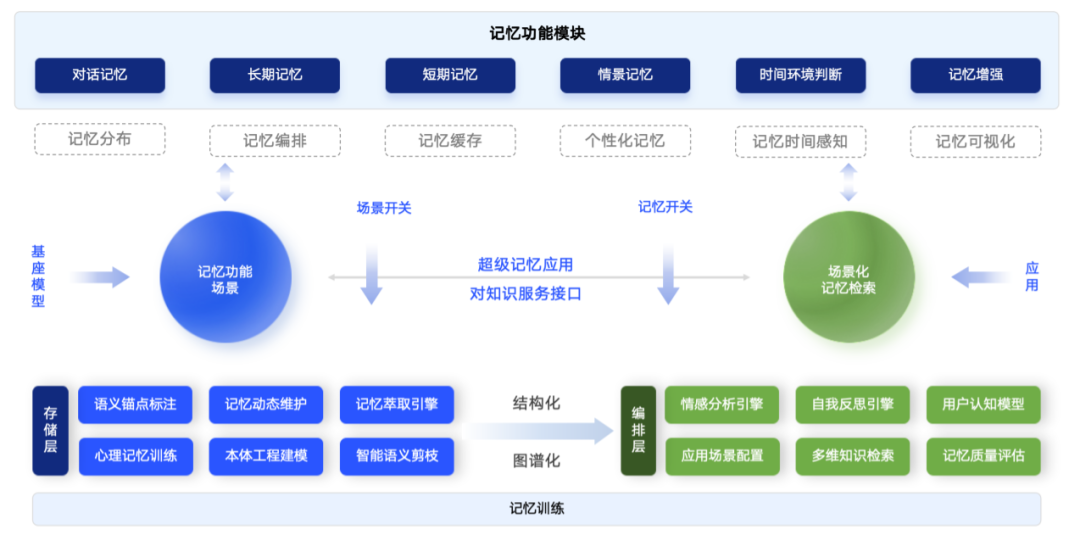
Human analogy:
- Hippocampus: temporary library & index builder
- Cortex: permanent distributed library for consolidation & association
Memory Bear mirrors this with:
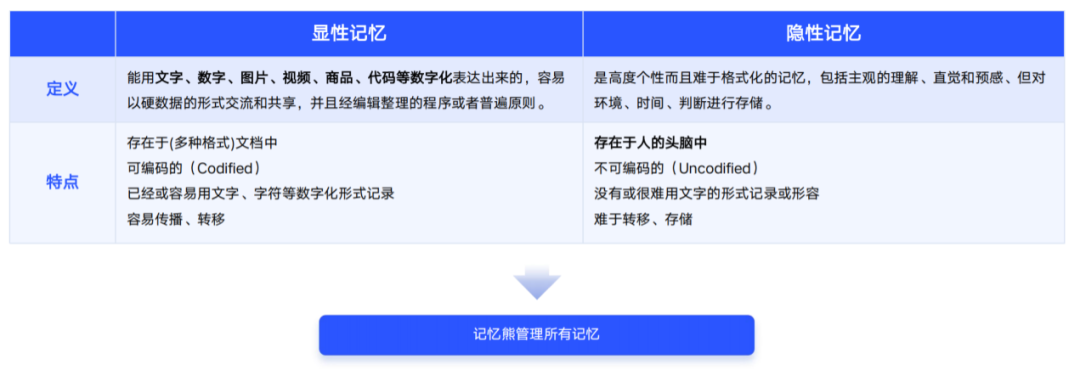
Explicit Memory Layer
- Structured DB storage
- Episodic (conversation history)
- Semantic (domain-specific KB)
Implicit Memory Layer
- External, model-independent
- Behavioral habits, strategies, decision preferences
Emotional Weighting
- Prioritizes emotionally significant or recurring info
- Mimics human vivid memory in emotionally charged situations
---
Performance Highlights
- Token efficiency: +97%
- Context drift reduction: −82%
- Complex reasoning accuracy: 75.00 ± 0.20%
- LOCOMO benchmark: high scores across QA, reasoning, generalization, long sequence processing
- Latency: p50 search = 0.137s, p95 overall = 1.232s
---
Real-world Implementation Scenarios
1. Intelligent AI Customer Service
- Dynamic memory maps for each user
- “Lifetime memory” of customers
- Cross-agent memory sharing
- Results:
- Human replacement rate: 70%
- Self-service resolution: 98.4%
---
2. Marketing
- Interest-based memory maps
- Tracks user journey from click → repeat purchase
- Moves from “You might like” → “I remember what you like and know what you want now”
---
3. Enterprise Digital Transformation
- Unified organizational memory hub
- Breaks down departmental silos
- +50% efficiency in onboarding for new employees
---
4. AI Education
- Personalized teaching + emotion-weighted recommendations
- Tracks error history over months
- Delivers tailored instruction
---
Future Outlook
From Google’s technical research to Red Bear AI’s applied engineering, one consensus emerges: human-like AI memory is the missing link to AGI.
Memory isn’t just a feature — it's a strategic necessity in AI evolution.
Platforms like AiToEarn官网 integrate these capabilities into processes that help creators publish to Douyin, Kwai, WeChat, Bilibili, Xiaohongshu, Facebook, Instagram, LinkedIn, Threads, YouTube, Pinterest, and X (Twitter), while tracking AI model rankings (AI模型排名).
---
Bottom line: Memory Bear doesn’t just remember — it remembers fast, accurately, and efficiently.
---
© THE END