
JD Turns Left, Alibaba Turns Right
JD.com vs. Alibaba: Divergent Paths in the Local Services Arena
In China’s local services battlefield, JD.com and Alibaba are pursuing markedly different strategies:
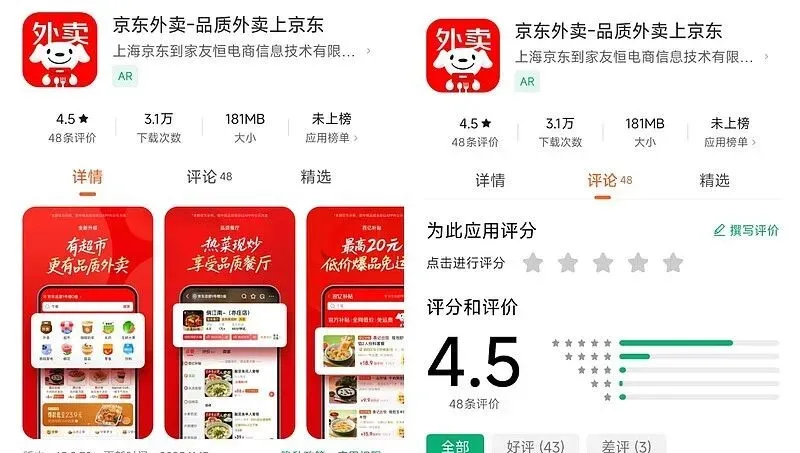
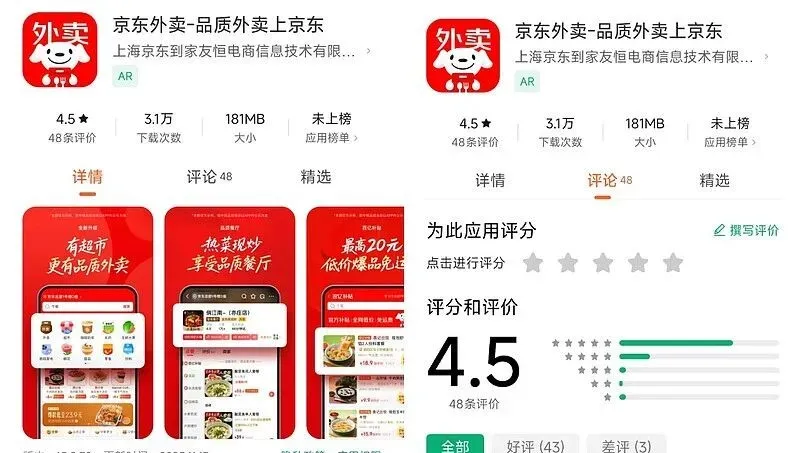
- JD.com: Dispersed deployment — launching standalone apps for food delivery and reviews.
- Alibaba: Integration and upgrade — consolidating traffic through Taobao Flash Sales and Amap.
Despite contrasting approaches, both aim for the same destination: unlocking new growth in a mature, highly competitive market.
---
JD Goes Left, Alibaba Goes Right
JD.com's Standalone Expansion
- November 17, 2025 — At the JD Tasting Festival in Sanya, founder Richard Liu unveiled the JD Food Delivery independent app.
- Motivation: Users were searching for “JD Food Delivery” but couldn’t find a dedicated app. A standalone platform enhances visibility and accessibility.
- Parallel launches:
- JD Reviews (powered by AI LLMs)
- JD True Rankings (similar to Meituan Dianping/Amap rankings, with a no commercialization pledge)
- Consumer lifestyle push:
- Launch of Qixian Coffee — fresh milk only, aggressive store expansion in Beijing to challenge Luckin and Cotti Coffee.
Alibaba's Integrated Approach
- April 30, 2025 — Upgraded Taobao Flash Sales, positioned as a main entry point on Taobao’s home screen.
- September 10, 2025 — Amap released Street Rankings with ¥10 billion subsidies.
- Rumored change: Possible rebranding of Ele.me into Taobao Flash Sales.
- Goal: Traffic concentration by embedding multiple services into existing super-app ecosystems.
---
Strategic Models Compared
| Company | Approach | Key Platforms |
|-----------|--------------------------------------|----------------------------------|
| JD.com | Standalone apps (distributed) | JD Food Delivery, JD Reviews |
| Alibaba | Consolidation (focused) | Taobao Flash Sales, Amap |
JD goes left; Alibaba goes right — two sharply different paths to growth.
---
Behind the Choices
JD.com's Motivation
- Entered food delivery to offset e-commerce growth pressures.
- Leveraging high-frequency services as traffic gateways.
- Subsidies/coupons boosted active users and purchase frequency (+40% YoY), reaching 600M annual active users.
- Retention strategy: Main JD app for existing customers + standalone apps for niche audiences.
Alibaba’s Position
- Strengthening instant retail and local services integration.
- Taobao Flash Sale MAUs grew 25% YoY by August 2025 (370M peak in July).
- October 2025: 100M new users ordering food delivery for the first time via Flash Sales.
- Daily food delivery orders surged from 100M (May) to 200M+.
- Amap DAU reached 360M during National Day week; “Street Sweep Ranking” drew 400M users within 23 days.

---
The Bigger Picture: Traffic as the Core Competitive Asset
Internet competition has evolved through distinct eras:
- PC → Mobile transition — JD & Alibaba thrived.
- Rise of challengers — Pinduoduo leveraged low prices & viral growth.
- Short video commerce boom — Douyin & Kuaishou captured attention.
- Current battlefield — Stock market competition for incremental growth from existing user bases.
---
The Three Growth Stages for Internet Platforms
Stage 1 – Subsidy & Traffic Acquisition
- Heavy subsidies to build habits and app activity.
- > Users follow the biggest coupons and discounts.
Expert insight: Zhu Keli (National Research Institute of New Economy) — subsidies boost market size, confidence, and employment.
Stage 2 – Retention & Engagement
- Post-subsidy, retention becomes key.
- Must create new narratives, run periodic promotions, and maintain perks.
Stage 3 – Incremental Growth in Saturated Markets
- Operational excellence determines winners.
- Continuous detection of niche demands + tight integration of services.
---
AI as a New Traffic Engine
The AiToEarn platform (官网, 核心应用) offers:
- Open-source global AI content monetization
- Multi-platform publishing from Douyin & WeChat to Instagram & YouTube
- Integrated AI generation, analytics, and model ranking (AI模型排名)
For both platforms and creators, AI-driven tools represent strategic ways to multiply reach and conversion — mirroring how JD & Alibaba manage traffic ecosystems.
---
Final Thoughts
- JD.com’s JD Food Delivery could be joined by future standalone offerings.
- Rumors of Taobao Flash Sales rebranding suggest ongoing A/B or gray testing inside Alibaba.
Shared reality: All giants fight for incremental growth within existing user pools, balancing defense of current traffic with innovation in differentiated platforms.
With massive investments in food delivery and instant retail, the core challenge remains:
> How to turn scale into profit while keeping growth ahead of market expectations.
In the race for internet commerce dominance — JD.com is heading left, Alibaba right — but they’re running toward the same finish line: new growth stories, upgraded capabilities, and market leadership.
---
———— / E N D / ————


