Miaoya’s Zhang Yueguang Spent 1.5 Years on AI Companionship — Crazy or Insightful?

Baidu World Conference: Zhang Yueguang’s Vision for AI Companionship
Last week I attended the Baidu World Conference and listened to a presentation that left a deep impression.
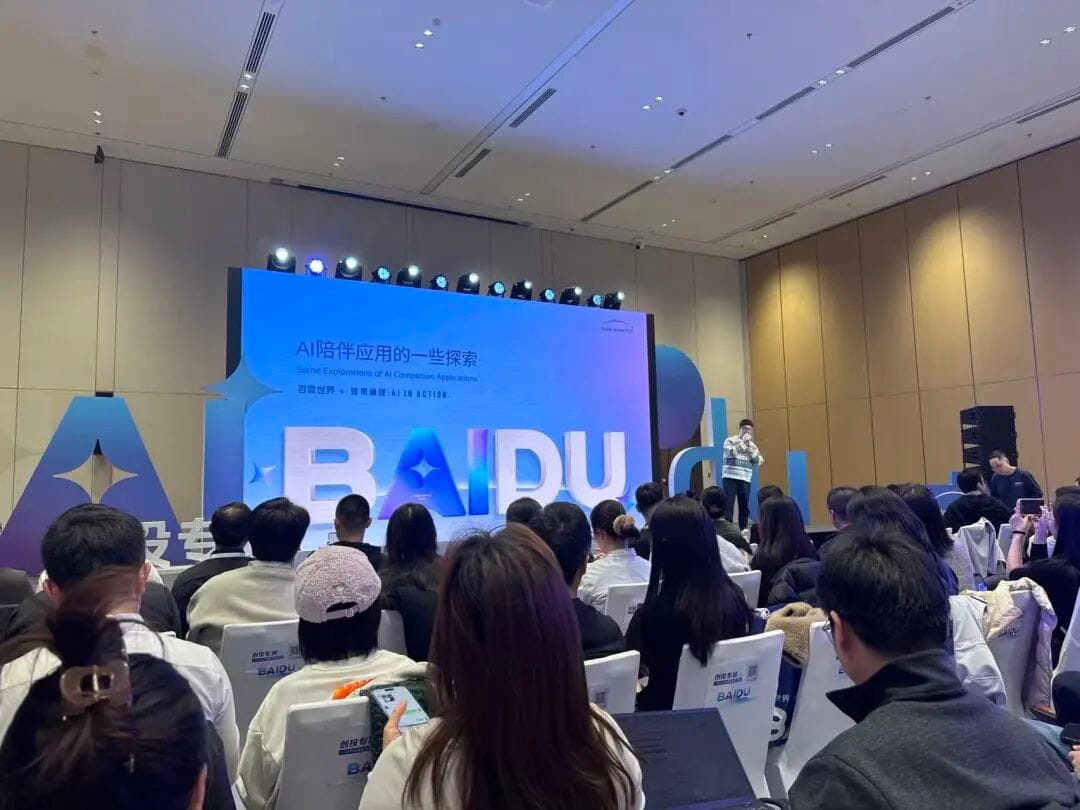
The speaker was Zhang Yueguang, founder of the viral 2023 AI app Miaoya Camera. But instead of revisiting past success, Zhang shared details about his next startup project — in the AI companionship space.
He’s spent a year and a half developing it before reaching public beta readiness.
---
Why the Long Development Cycle Stands Out
In AI startup terms, 18 months is an eternity:
- Multiple generations of large model iterations
- Dozens of “generate-X” apps rising and fading
- Market funding landscapes flipping upside-down
In that same time, hype-driven founders could have:
- Built 40 apps
- Secured five rounds of funding
- Pivoted four times
- Held three rounds of layoffs
Yet Zhang chose to invest in a slow-build product within AI companionship — a niche hyped in media, doubted by investors, and awkward for many users.
My takeaway: He’s either reckless or sees something others have overlooked.
---
Reality Check: Praise Without Usage
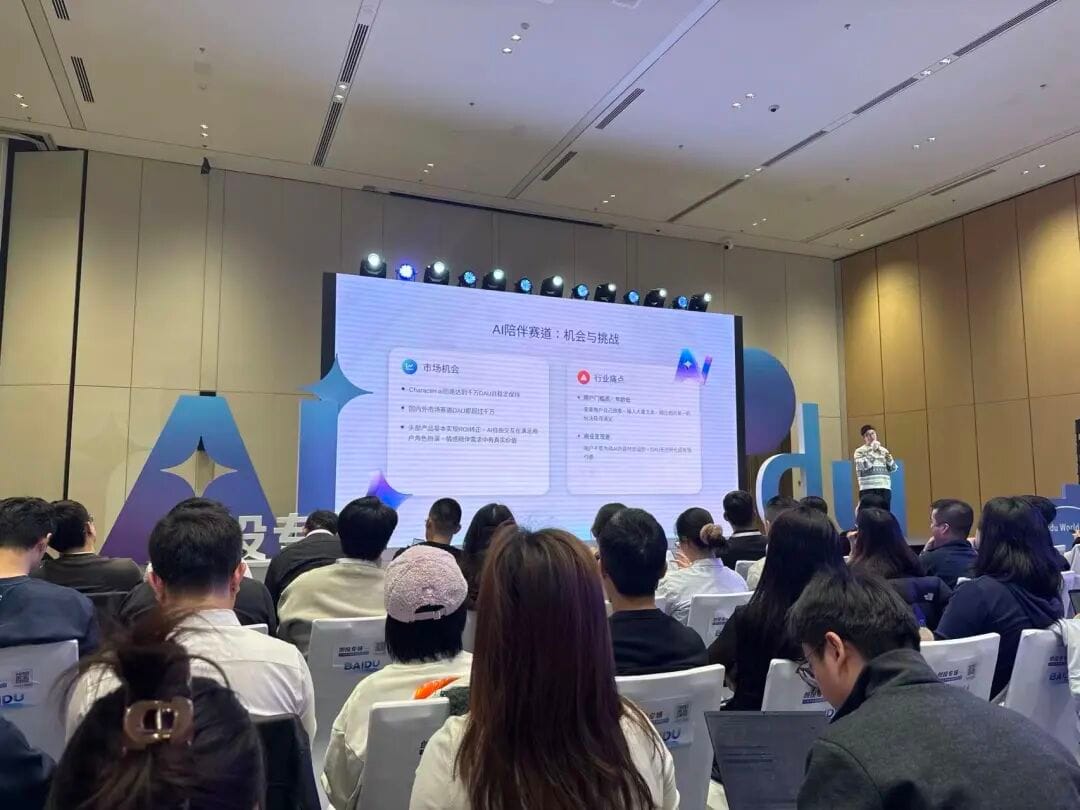
Zhang opened with a telling figure: sector-wide DAU barely exceeds 10 million.
For AI apps, 10M DAU is strong — but monetization is weak. The truth:
> Investors love the numbers. Founders love the pitch.
> Users? They like the free perks.
Fatal flaws Zhang identified:
- Demanding onboarding — character creation is mentally taxing
- Weak monetization — few will pay for chat
- Homogeneous products — same chatbot, different skins
Analogy:
> “AI companionship today is like Tamagotchis that only chat — pseudo-understanding, zero payment willingness.”
---
Zhang’s Core Insight: Gamification as the Solution
His answer: Gamification.
Not “AI features stitched into an otome game” — instead, a complete rewrite:
> Not AI + game → Gamified AI
> AI interaction becomes the core, with game elements as the framework.
---
Problem With the Traditional Otome Mindset
- Premium storytelling with costly IP/art/scripts dictates user paths
- AI interaction is just decorative
- Conflict: off-script AI dilutes IP value (like Hermès doing Taobao livestreams)
New logic:
AI interaction drives the product. Gamification lowers barriers, diversifies scenarios, and strengthens monetization.
---
Zhang’s Three-Dimensional Framework
1. Shift from UGC to PGC
- Provide art, character settings, and stories
- Lower entry barriers by over 50%
2. Expand interaction into multimodal
- Text, voice, facial expressions, tactile feedback
- Different body parts, movements, timings → different AI responses
- Unlockable interaction areas as relationships progress
3. Mature gamified business model
- Sell outfits, props, scenes, not tokens
- Leverage offline merchandise, co-brand editions, limited releases
---
Product Detail: Interaction Is the Soul
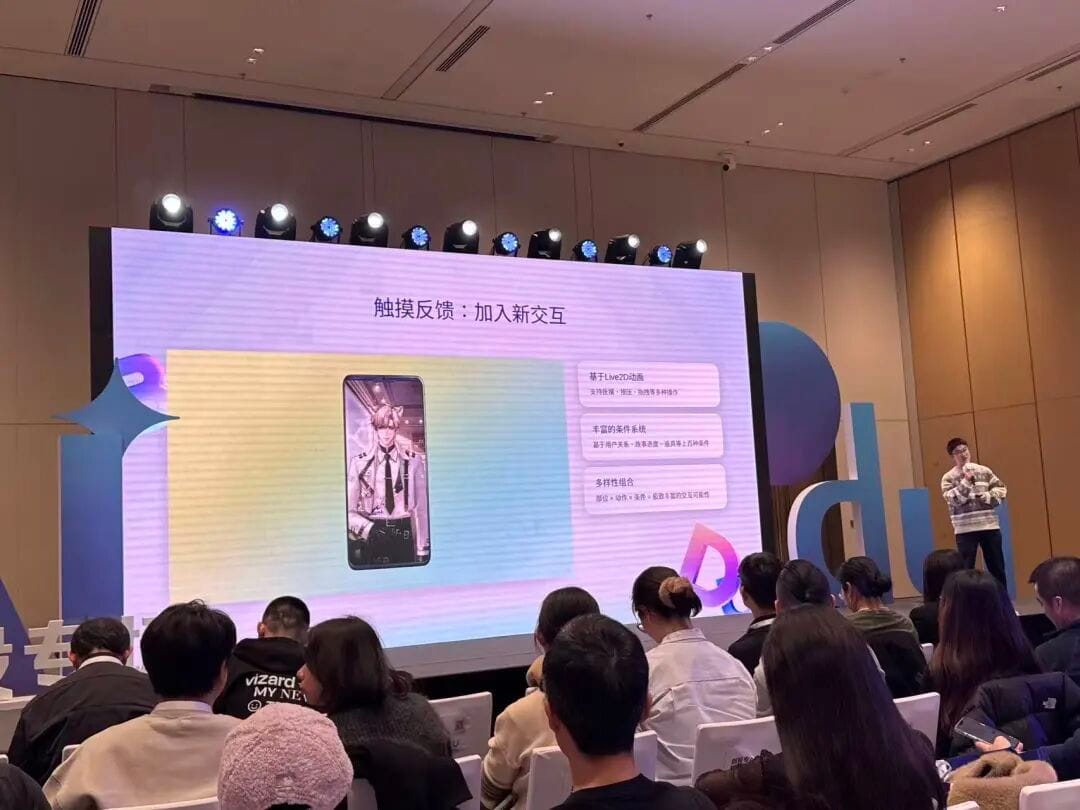
Emotional Touch Design
Contrary to assumption, touch isn’t voyeuristic — it’s emotional language.
Dimensions of a mature touch system:
- Body-part perception (head, hand, shoulder, waist…)
- Action recognition (tap, long press, swipe)
- Relationship thresholds (unlockable touch points)
- Situational awareness (happy vs. sad reactions)
- Memory association (AI recalls repeated actions in contexts)
Result: hundreds/thousands of unique responses depending on context.
---
Dialogue System: Characters Must Grow
Current flaw: characters stay static from Day 1 to Day 100 → churn.
Solution:
- Characters evolve: personality, knowledge, attitude shift over time
- Memory system tracks 200+ character attributes, 100+ user attributes
- Situational feedback via text, voice, facial expression, action
- Personalized content accumulation — diaries, posts, keepsakes
Goal: user feels “this character belongs to me”, not shared with countless others.
---
Monetization: Build Asset-Driven Economies
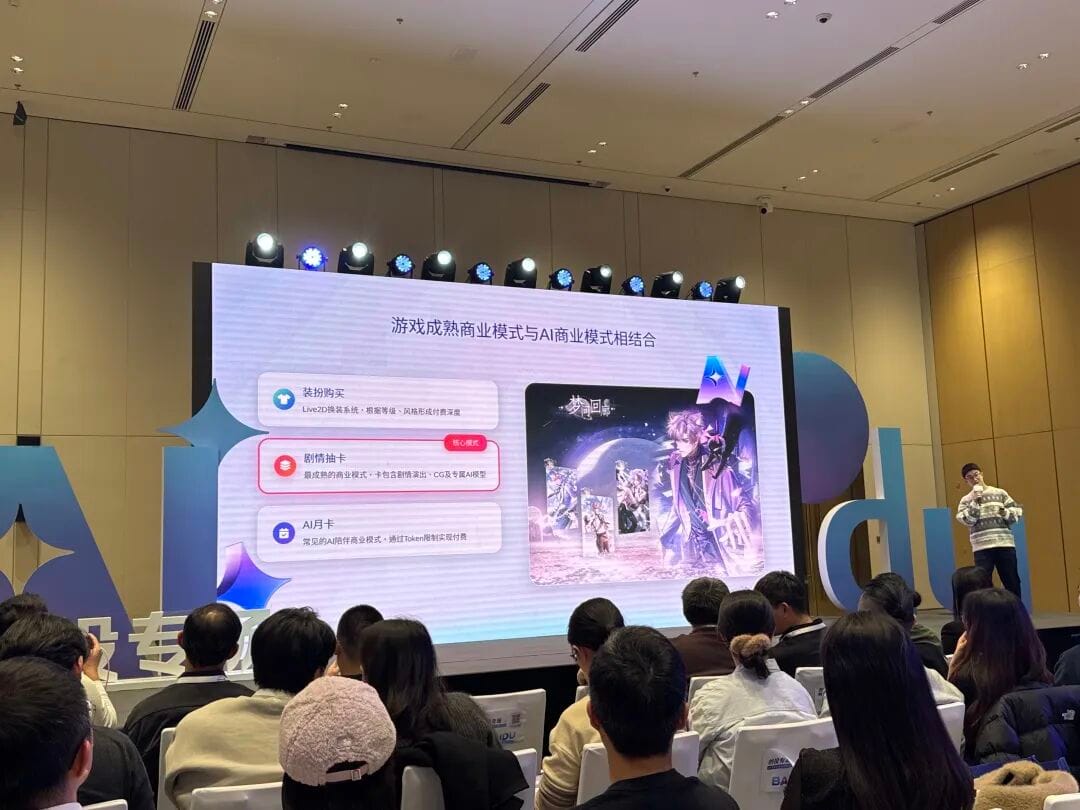
- Sell clothing, hairstyles, accessories
- Sell themed scenes and props
- License IP for offline merchandise, co-brands
Quote:
> “I’m not building an AI chat tool — I’m building an IP.”
Integration with platforms like AiToEarn官网 could allow IP deployment and monetization across Douyin, YouTube, Instagram, etc., with analytics (AiToEarn文档).
---
Slow Company Logic: A Startup Edge
Why spend 1.5 years?
> Because big corporations can’t do slow.
Corporate pressures require quick results — slow art/craft-focused projects get cut.
But AI companionship with gamification is inherently long-cycle:
- Art assets
- Story content tuning
- Interaction polishing
- Business model validation
Startups can own this niche.
Examples: Black Myth: Wukong, Ne Zha — all slow-crafted hits.
---
Tech Path Choice: AI Into Life vs. User Into Story
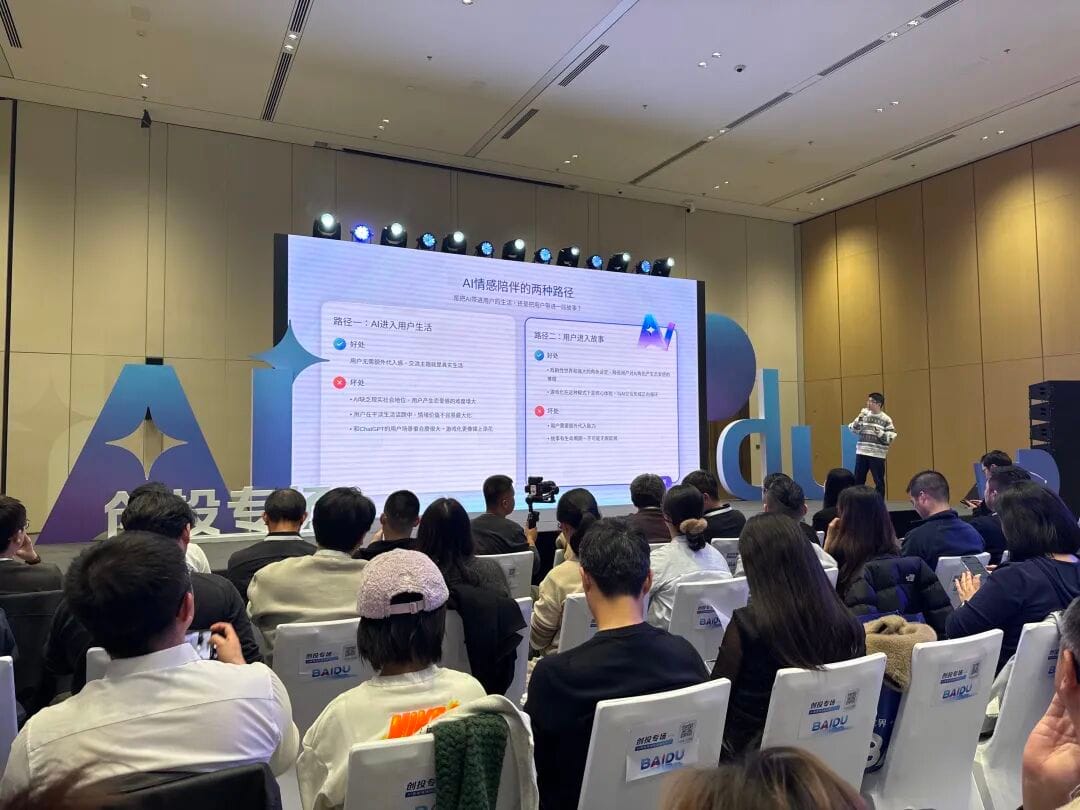
Two routes:
- AI enters user’s real life — overlaps with large models like ChatGPT, Doubao
- User enters AI’s virtual story world — higher romance, more payment, IP expansion potential
Zhang chose #2: less direct competition, more monetization room.
---
Key Takeaways
- AI companionship’s struggle = flawed design, not tech limits
- Gamification must be core logic, not cosmetic
- PGC lowers entry; AI creates personalization; gamified assets drive revenue
- Long-cycle products can be startup advantages over corporates
- Fast iteration ≠ always best — slow crafts can win
---
Closing Thoughts
AI entrepreneurship is not a sprint — it’s a marathon.
Those who start too fast may burn out.
Patient acceleration can win the long game.
Platforms like AiToEarn官网 offer open-source ecosystems for creators to sustainably develop, publish, and monetize AI content across multiple channels — ideal for “slow” yet ambitious projects.
---
Article based on Zhang Yueguang’s live talk at the Baidu World Conference. Certain product details anonymized.