[Morning Read] Building Native-Grade Web Apps with Local-First Data
![[Morning Read] Building Native-Grade Web Apps with Local-First Data](/content/images/size/w1200/2025/11/img_001-456.jpg)
Introduction to LiveStore

LiveStore is a new local-first data layer designed to simplify building high-performance, native-grade web applications.
It automatically synchronizes data using reactive SQLite and event sourcing.

🔗 LiveStore GitHub: https://github.com/livestorejs/livestore
---
Native App Quality: Inspiration from Linear
High-quality software like Linear is setting new standards in the industry. Native applications often feel superior due to:
- Unique UI and UX integration with the operating system
- Instant responsiveness
- Reliable data handling
The key question: Can prioritizing data management allow web apps to match native quality?
---
Four Core Traits of Native Apps
- Distinct UI — Native look and feel based on OS conventions
- Deeply integrated UX patterns — Platform-specific interaction paradigms
- Speed — Instant reaction to user actions
- Data handling — Reliable, fast access to data without excessive loading screens
> “It just works… even without a connection, I can still jot down my thoughts.”
---
Data Availability: The Native Advantage
Web state management often leaves users worrying about:
- Poor network conditions
- Whether their input is saved
- Overcomplicated data handling
The speaker emphasized simplifying architecture to match the offline reliability of apps like Apple Notes.
📖 Breaking Big Data Limits in the Browser
---
Limits of Traditional Data Management
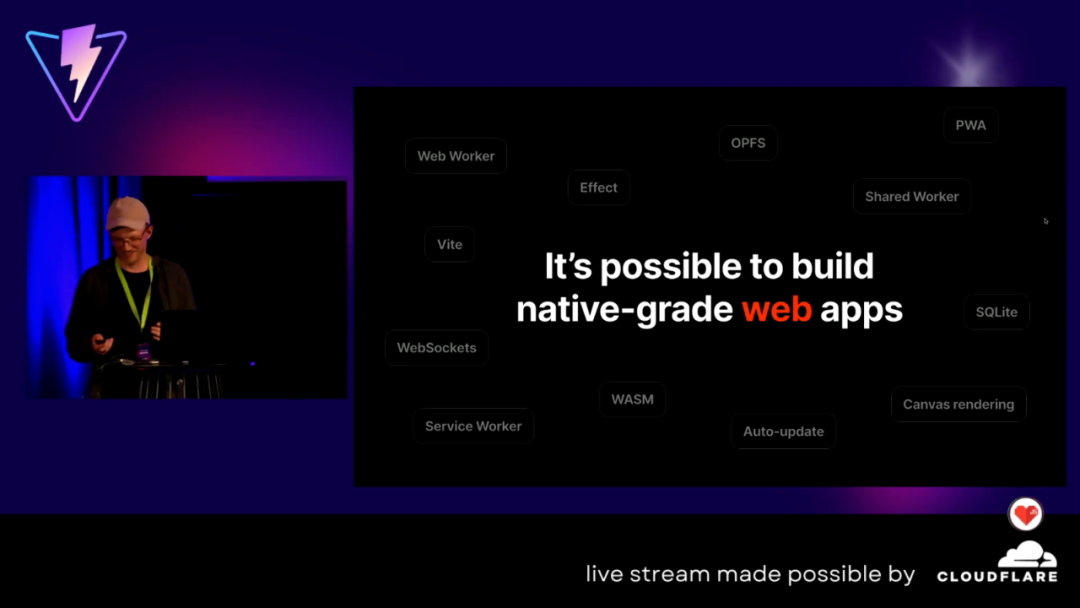
Three-Tier Architecture Challenges
- Remote canonical database → API → frontend client
- Both API and client are caches for the database
- Complexity from:
- Data transformations
- Pagination
- Query optimization
- Mapping API data to React state
- Hydration after SSR
---
Imperative Boilerplate
Optimistic mutations, cache invalidations, and state synchronization in apps like Linear can require hundreds of lines of code just to map database content to client state.
Key pain points:
- Multi-level data mapping/hydration
- Imperative cache handling
- High maintenance costs
---
Declarative Data Management via Sync Engines
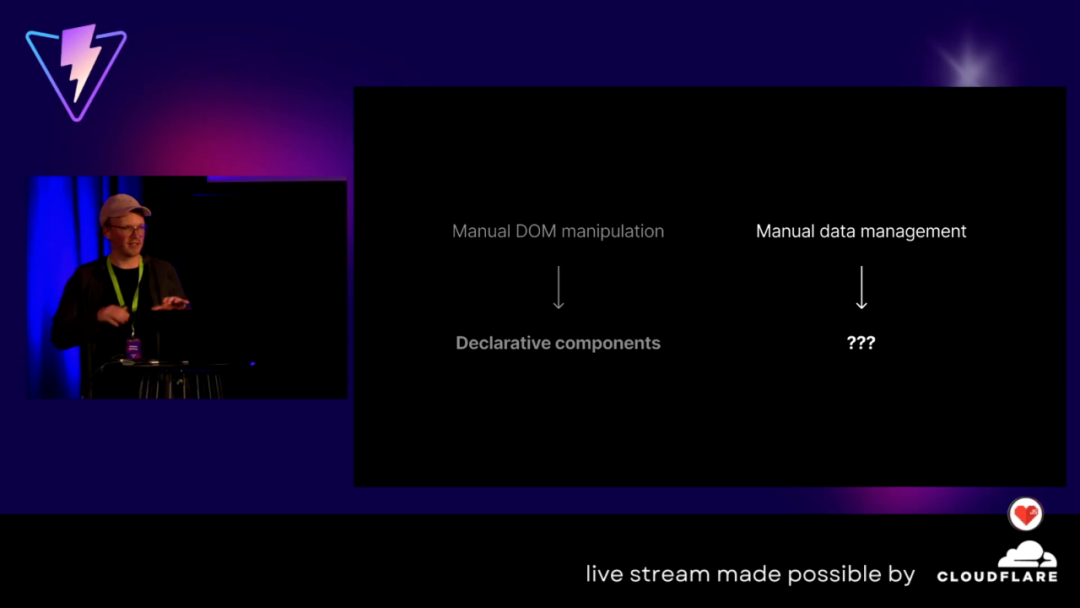
Declarative programming transformed the DOM manipulation era into the React component model.
Data handling is still stuck in the imperative stage—Sync Engines aim to change that.
---
How Sync Engines Work
- Declare data queries on the client
- Engine automatically handles:
- Fetching
- Sorting
- Filtering
- State updates
📖 Paradigm Shift in Frontend UI Code
---
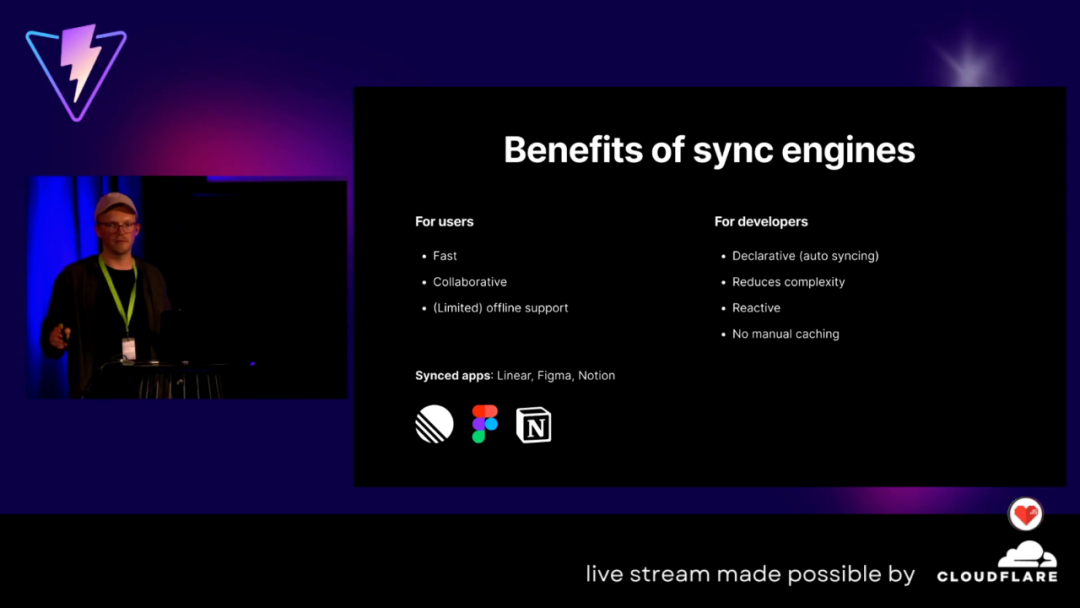
Benefits
For Users:
- Faster response times
- Real-time collaboration
- Partial offline capability
For Developers:
- Declarative, reactive data management
- No manual cache invalidation
- Reduced mental load
📖 State-Driven vs Signal-Driven Rendering
---
LiveStore: Client-Centric, Local-First
Built during the development of the Overtone music app, LiveStore evolved from MIT’s Riffle project.
Goals:
- Extreme performance (target: 120 fps)
- Collaboration features
- Developer-friendly tooling
---
Technical Foundations
- SQLite — mature DB for complex queries and fast ops
- Event sourcing — single source of truth, Git-like push/pull
Advantages:
- 120 fps rendering
- Automatic sync workflows
- Web, React Native, and server-side support
---
Event Sourcing in LiveStore
- Tracks all state changes as events
- Enables push/pull sync between clients
- Allows features like time-travel debugging and offline consistency
---
LiveStore API & Demo
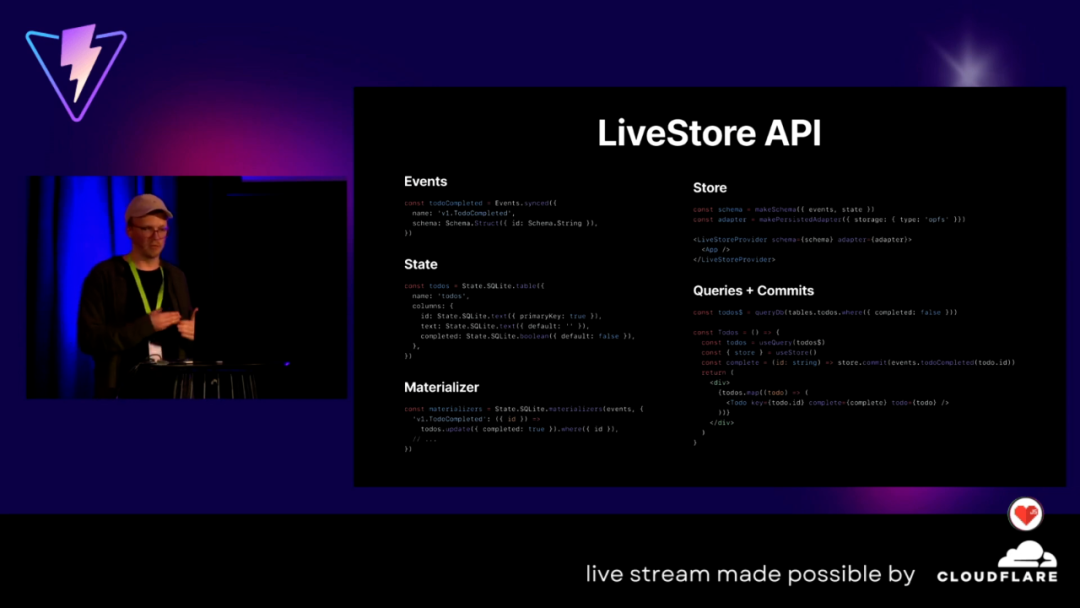
Key principles:
- Synchronous queries — no “loading” states
- Schema defines:
- Events
- State (SQLite tables)
- Materializers/reducers
In React:
{/* Components access data instantly */}
📖 Build MCP Server with Node.js
---
Task Tracker Demo
- 120 fps rendering
- Complex SQLite filtering/sorting/grouping
- All state (including scroll) persists across reloads
- Real-time sync across tabs—even offline
Dev Tools:
- Database Tab
- Event Log
- Query Inspector
- Sync Inspector
---
Looking Ahead: Data Streams for AI & Agents
LiveStore aims to be developer- and agent-friendly, making it suitable for AI-native applications.
Different from REST architectures, chat and agent systems thrive on LiveStore’s event-driven model.
---
Highlights Recap
- Native-level experience is the gold standard for web apps
- Data management defines native quality limits
- Three-tier architectures add costly complexity
- Sync engines enable declarative simplicity
- LiveStore’s local-first, event-sourced architecture delivers speed, reliability, and offline readiness
---
🎥 Original video: https://www.youtube.com/watch?v=h5Bs0vEka5U
---
Synergy with AI Tools
Platforms like AiToEarn官网 complement LiveStore by:
- Generating AI content
- Publishing across multiple channels (Web + mobile)
- Providing analytics and monetization tools
This mirrors LiveStore’s ethos of integrated, streamlined workflows for both developers and creators.
---
Would you like me to also produce a condensed one-page executive summary of this rewritten Markdown so it’s easier to share with stakeholders? That could make the key points even quicker to digest.