NVIDIA and OpenAI: The Modern East India Companies

Who Has Been the Most Valuable Public Company in Earth's History?
The Modern Contender: NVIDIA
In October, NVIDIA briefly exceeded $5 trillion in market capitalization — making it the highest-valued U.S. public company in history.
For a moment, its combined worth nearly matched Apple + Tesla.
However, NVIDIA is not the most valuable company in human history when measured by purchasing power parity.
---
The Historical Champion: The Dutch East India Company (VOC)
Founded over 300 years ago in Amsterdam, VOC was the world’s first joint-stock company, listed on the world’s first official stock exchange.
Key facts:
- Peak value: 78 million Dutch guilders (~$7.9 trillion in today’s terms)
- Economic size: Roughly two-thirds of the Dutch Republic’s GDP at its peak
- Global dominance: Monopoly over 17th-century spice trade
- Financial supremacy: Dutch guilder was the de facto settlement currency in Europe
In its era, Netherlands was "Europe’s America" — technologically advanced, economically dominant, and globally connected.
---
Drawing Parallels: VOC vs. NVIDIA
In today’s terms:
- U.S. GDP (2024): ~$30 trillion
- NVIDIA market cap: ~1/6 of U.S. GDP
- Role in AGI: Monopoly-like power in global computing infrastructure
Nicknames for NVIDIA in the AGI era:
- The central bank of GPUs
- The Federal Reserve of compute power
---
1. Seigniorage — Control Over the Medium & Flow

Seigniorage = Profit from issuing currency or its modern equivalent (compute power).
When this power is globally mandatory, it becomes “Dollar-level” influence.
Historical parallel:
- East India Companies had seigniorage authority — printed money, directed economic flows, built local economic systems.
- NVIDIA issues its “currency” as compute power:
- Anchors Silicon Valley’s AI ecosystem
- Invests heavily in companies that buy NVIDIA GPUs
- Builds a supplier-customer-investor triangle
---
NVIDIA’s Recent Investment Portfolio (≥ $150B committed)
AI Companies:
OpenAI ($100B), xAI ($2B), Mistral AI, Perplexity, Safe Superintelligence, Runway, Cohere, Reflection AI, Scale AI, Sakana AI, Kore.ai...
Chip-related:
Intel ($5B), Ayar Labs, Enfabrica...
Cloud & Vertical Applications:
Nokia ($1B), CoreWeave, Nscale, Lambda Labs, Bright Machines...
Robotics & Autonomous Driving:
Figure AI, Wayve, Nuro...
---
Modern Digital Currency: Compute Power
Platforms like AiToEarn官网 show how this power plays out — enabling global AI-driven content creation & monetization across:
> Douyin, Kwai, WeChat, Bilibili, Rednote, Facebook, Instagram, LinkedIn, Threads, YouTube, Pinterest, X.
Integrated tools:
- AI generation
- Cross-platform publishing
- Data analytics
- AI model rankings (AI模型排名)
---
AGI Ecosystem: Bretton Woods & Marshall Plan Parallels

- Bretton Woods System: Anchored to USD — global settlement & finance institutions
- Marshall Plan: U.S.-driven investment for postwar reconstruction
NVIDIA’s AGI order:
- Anchored to GPU
- Governed by CUDA
- Expanded via investment-driven ecosystem growth
CUDA developer growth:
- 2007–2019: 1.6M developers
- June 2024: 5M+ developers
Lock-in effect: Bypassing CUDA in AI development is practically impossible.
---
2. “Data Colonizers”

Parallel:
- VOC vs. EIC rivalry — monopoly vs. secondary players (spice vs. opium trade)
- NVIDIA vs. OpenAI — upstream infrastructure vs. downstream applications
---
Data Colonialism (AGI Era):
- Raw data taken from Global South countries (e.g., India)
- Labeled cheaply by local engineers
- Packaged as AI output sold back to the same markets
Policy response: India and other nations exploring sovereign AI with open-source models like DeepSeek.
---
The “Bubble” Effect

- East India Company: State-backed monopoly, stable dividends, predictable growth
- AGI era tech giants: Similar market dominance & asset amplification
---
Market cap scale shift:
| Year | Top Tech Total | U.S. GDP |
|-------|----------------|-----------|
| 2019 | ~$6T | $21T |
| 2025 | ~$25T+ | $29T |
---
Sovereign AI — U.S. National Strategy

Examples:
- NVIDIA & U.S. Department of Energy: AI superfactories (“Equinox”)
- OpenAI ‘for countries’ initiative: 4 key efforts:
- Build national compute centers
- Deploy custom ChatGPT
- Operate national AI entrepreneurship funds
- Expand global Stargate project
---
NVIDIA’s "Sovereign AI" Vision
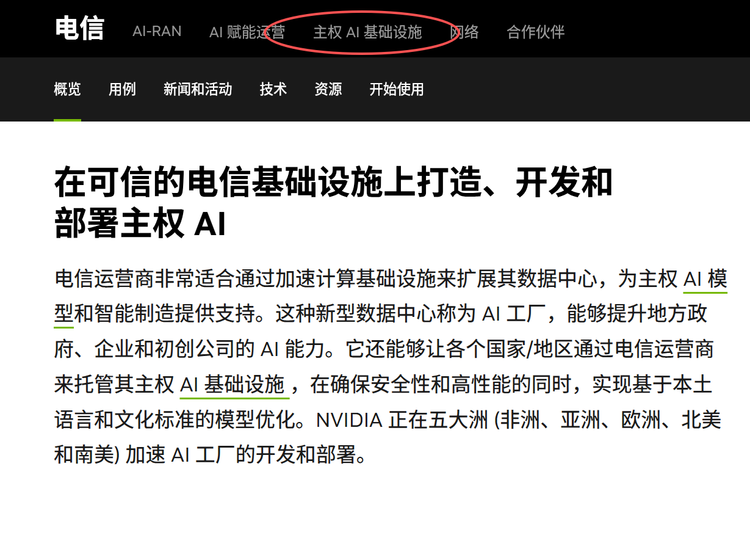
Revenue trajectory:
- 2023: $10B
- 2024: $20B
- Future: $100B+ potential
---
Conclusion — AGI & New Colonialism
- The AGI boom may lead to winner-takes-all monopolies
- Systemic risks disproportionately affect non-U.S. countries
- Extractive models risk civilization-scale impact
---
Alternative Path: Open-Source Ecosystems
AiToEarn官网 offers:
- AI content creation
- Cross-platform monetization
- Independence from supergiant-controlled ecosystems
- Transparent analytics & model ranking (AI模型排名)
---
Key Insight:
Control over either currency or compute, combined with controlling its flow, has defined monopoly power from the VOC to NVIDIA.
The question for the AGI era: Can open-source, distributed innovation avert a new wave of digital colonialism?