One-Off Apps Emerge, Personal Unicorns Rise: Top Evangelist Jeff Barr on How AI Is Reshaping the Developer Ecosystem | InfoQ Exclusive Interview with Jeff Barr
The Rise of Disposable Applications and AI-Driven Restructuring
In the future, we will see a proliferation of disposable applications — akin to “use-and-discard” puzzle pieces — that can be rapidly assembled, validated, and reconstructed.

> “A large number of disposable applications will emerge, functioning like ‘use-and-discard’ puzzles — quickly assembled, validated, and rebuilt. This model will give rise to personal unicorn companies — a single person, one computer, and an AI collaboration system can sustain a complete product.”
Jeff Barr, a core founding member of AWS, shared this vision in his exclusive InfoQ interview. From technology to ecosystems to organizational models, AI-driven restructuring is touching every sector.
---
From Cloud Computing Pioneer to AI Wave Leader
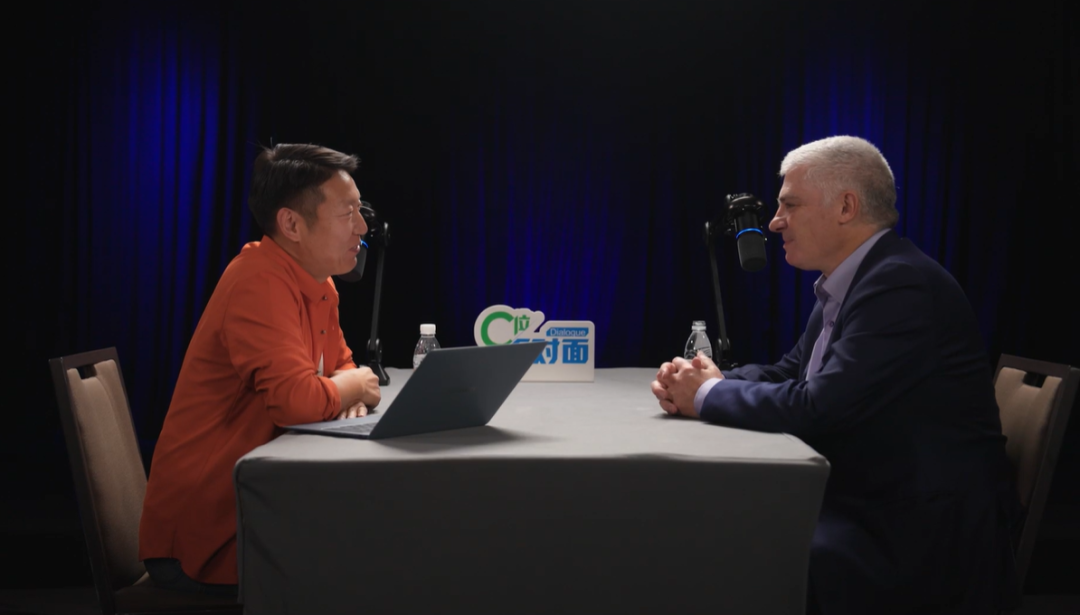
Sixteen years ago, Jeff Barr introduced “cloud computing” to China via QCon — then a controversial concept. Now, he stands at the forefront of the AI wave, emphasizing a new stage: creative reconstruction.
Since co-founding AWS in 2004, he has documented major leaps in cloud computing through 3,300 blog posts and nearly 1.5 million words. From assembly language and machine code to AI-driven development tools, Barr has seen half a century’s change. His takeaway: tools change but the goal — making machines understand human intent — never has.
---
1 AI Coding — Accelerator or Rebuilder?
“AI is not a substitute, but a capability amplifier.”
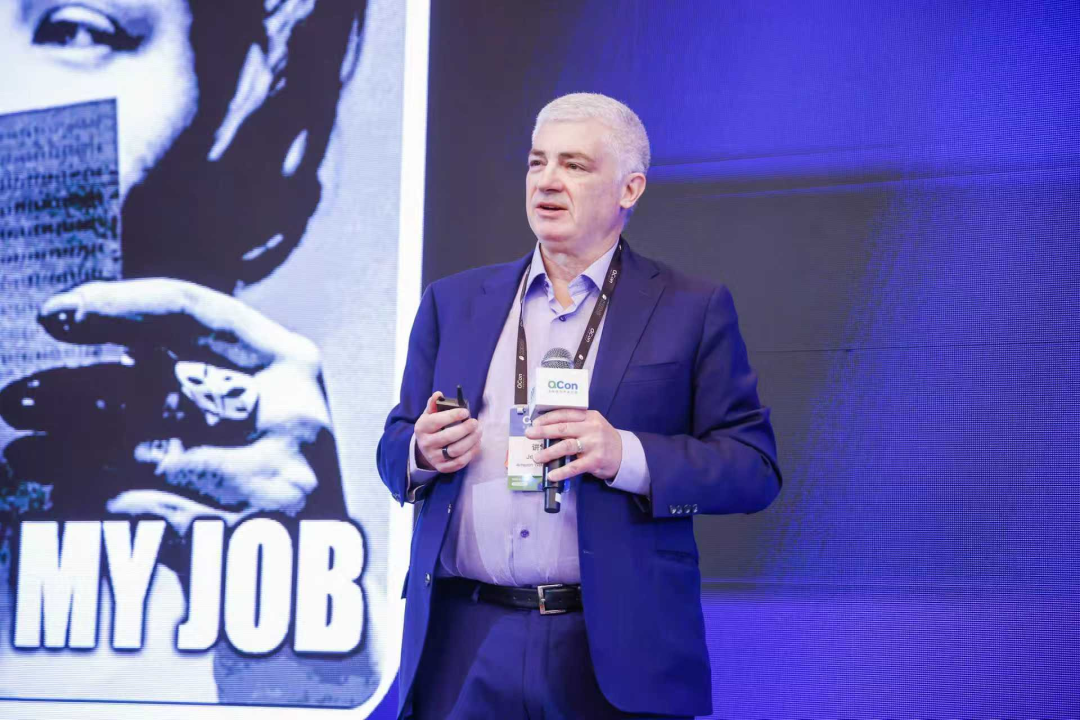
With AI coding tools like Kiro, GitHub Copilot, Claude Code, Cursor, and Lovable, coding is no longer intimidating. AI can:
- Understand requirements
- Generate code
- Self-debug
This prompts the core question: What remains for human developers?
Jeff Barr’s answer, shaped by decades of experience:
> “Every developer has limits in skill and knowledge. AI helps us solve problems beyond our own experience.”
The Shift in Developer Value
- Past focus: How to write
- Future focus: How to understand
- Judge AI output, dissect systems, evaluate logic.
Barr calls this "creativity reconstruction" — AI taking care of the "dirty work" so humans focus on creative problem-solving.
He prefers “builders” over “developers” — those who grasp business/customer problems and can communicate them to AI tools.
---
Defining AI-Native Applications
Platforms like AiToEarn官网 embody this intersection of AI and creativity.
AiToEarn is an open-source AI content monetization system enabling creators to:
- Generate & publish content
- Push across Douyin, Kwai, WeChat, Bilibili, Xiaohongshu, Facebook, Instagram, LinkedIn, Threads, YouTube, Pinterest, X/Twitter
- Integrate analytics & model rankings
This mirrors Jeff Barr’s “personal unicorn” vision.
---
Agents in AI systems act as autonomous executors:
- Centered on language models
- Reason, decide, and invoke external tools
- Maintain contextual memory
- Break down complex tasks into executable steps
This isn't “adding AI” to an app — it’s making AI the neural hub with reasoning and execution loops. Examples: AWS Bedrock, Strands Agents SDK.
Key skill evolution:
From “writing code” to “reading code” — becoming reviewers of AI logic.
Communication becomes the bottleneck:
Developers must translate business context into machine-language prompts that elicit correct outputs.
> “The core value of future developers will be making high-quality requests so machines truly understand.”
---
AI’s Technical Egalitarianism
LLMs let anyone program via natural language. This draws in non-technical creators, but without deep technical grounding, outcomes may plateau.
Two pillars for future development quality:
- AI Coding Assistants — amplify speed & expressiveness
- Formal Verification — mathematically prove correctness
Summary: AI speeds creation; formal verification secures deployment.
---
2 Disposable Applications & Data as the New Moat
Disposable applications:
- Rapidly generated by AI
- Used for prototyping/temporary function/business validation
- Lifespan: short, project-bound
Systemic code:
Mission-critical software — OS, databases, cloud infrastructure — requiring rigorous testing and governance.
Emerging ecosystem:
- Human-crafted foundational code
- AI-generated upper-layer code
In this model, data outlives applications:
> “Competitiveness shifts from who has more apps to who has better data.”
Barr advises investing in:
- Data modeling
- Quality control
- Governance
---
3 AI Reshaping Organizations
Jeff Bezos’ Two-Pizza Team rule: small teams for agility. AI now enables one-person full-cycle builders — everything from code to testing to docs.
> Prediction: One-Person Unicorns — billion-dollar firms built solo.
Advice:
Re-test core AI tools every 3 months. Continuous experimentation beats stagnation.
Startups must embrace AI for speed, but the real edge lies in customer acquisition & retention.
---
4 Practical Vibe Coding — Freedom vs. Control
Vibe Coding: turning ideas into prototypes within hours via AI.
Works best for:
- Small teams
- Simple builds
Challenge:
Large-scale projects need standards and version control.
AWS Kiro:
- Vibe Mode — high freedom, fast iteration
- Spec-Driven Development Mode — AI-guided requirements, full specs, API definitions, tests
- Includes review checkpoints
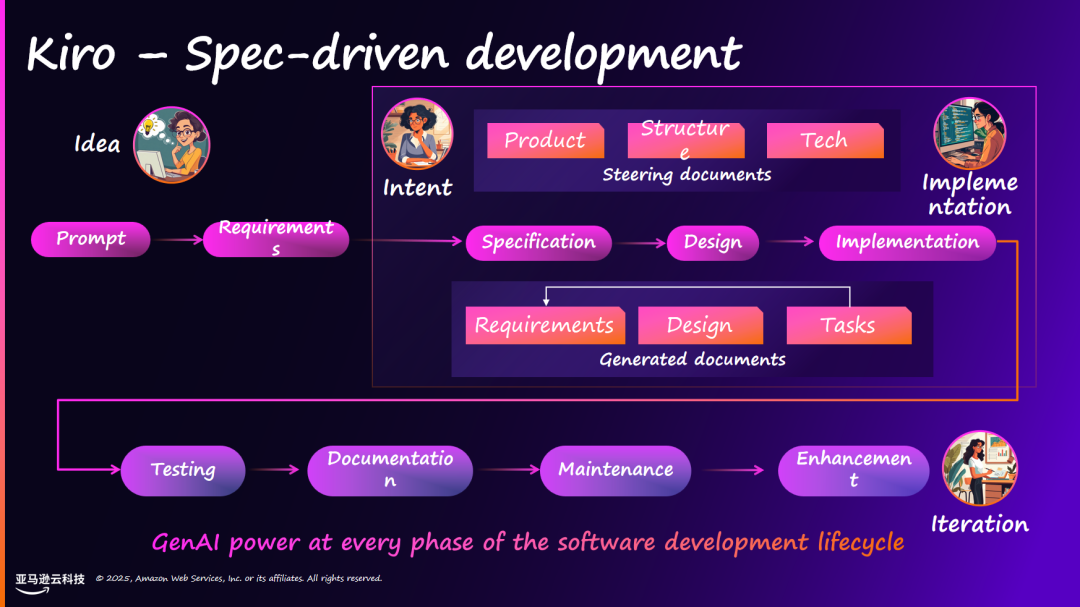
Success lies in mastering both modes — freeform creation and disciplined collaboration.
---
5 AI Redefining the Cloud
> “Cloud isn’t going away. Microservices remain optimal.”
From cloud-native to AI-native, the mindset shifts to bigger-picture problem-solving.
AI is part of the stack — it amplifies, not replaces.
Microservices + AI agents: retain decoupling, enhance collaboration for complex tasks.
Future cloud = compute pool + self-optimizing intelligent system
---
Fundamental Insight
AI is unprecedented—no direct predecessor.
It embodies decades of IT wisdom in one tool, shifting the developer path to:
- Idea → Intent → Implementation → Iteration
Natural language is now the interface, but context and constraints remain essential for predictable outputs.
> “AI’s barrier isn’t code — it’s expression.”
Career tips:
- Dedicate 4–8 hrs/week to learning new tools
- Mid-career engineers with deep business knowledge are best positioned to leverage AI
---
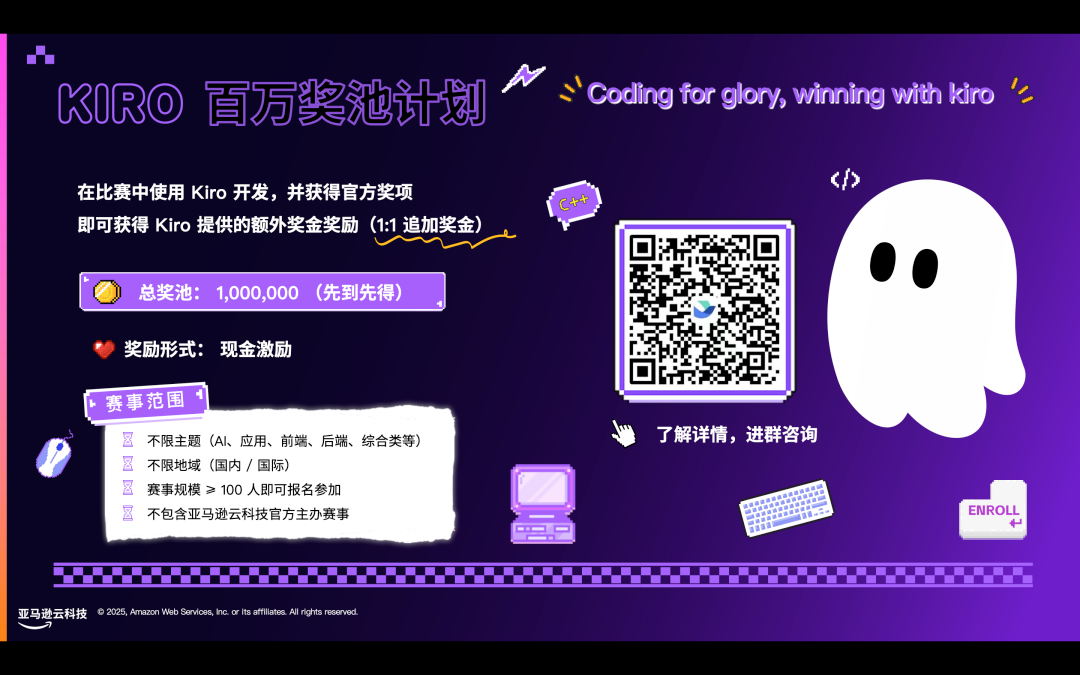
Event Highlight — Kiro Million Prize Pool Challenge
- Prize doubling for Chinese devs winning competitions with Kiro
- Max per event: 200,000 RMB, total pool 1M RMB
- Steps: join, generate poster, tag with #Kiro百万奖池 & #MadeWithKiro
---
Recommended Reading
- India enters the era of "zero-cost" AI tools
- Alibaba executive joins Sam’s Club app team
- Six AI heavyweights debate AI bubble
---
Bottom line:
AI accelerates the how, but humans still define the why.
Platforms like AiToEarn官网 — integrating AI creation, cross-platform publishing, analytics, and model ranking — can help innovators bridge strategy and technology, turning ideas into monetizable results in the AI era.