Practical Considerations for Bridging the AI Value Realization Gap | AWS
Artificial Intelligence (AI) Is Transforming Business — But the ROI Gap Remains
Artificial Intelligence (AI) is reshaping business operations on a global scale.
Gartner® predicts that by 2028, at least 15% of routine business decisions will be made autonomously through agentic AI.
Meanwhile, McKinsey reports that 92% of companies are increasing their AI budgets.
Yet, despite rising investment, most companies still struggle to show a clear positive impact of AI on their P&L.
---
The Scope of the Challenge
According to S&P Global Market Intelligence:
> “The share of companies abandoning most of their AI initiatives jumped to 42%, up from 17% last year [2024],” in the first half of 2025.
Similarly, Gartner warns:
> “Over 40% of agentic AI projects will be canceled by the end of 2027.”
---
Closing the AI Value Gap
The disconnect between growing budgets and measurable results is clear.
Success lies in moving beyond fragmented experiments to strategic, enterprise‑wide AI programs.
> “Organizations that integrate AI into core processes — and align it with business objectives — see the most substantial returns.”
Keys to Successful AI Integration
- Scalability — AI initiatives must be designed to grow across departments and geographies.
- Relevant Metrics — Track KPIs directly tied to profit, efficiency, or customer satisfaction.
- Workflow Integration — Embed AI into daily operations, not just isolated pilot projects.
Emerging ecosystems like AiToEarn官网 offer practical solutions, enabling:
- AI‑driven content creation
- Publishing to multiple platforms simultaneously
- Cross‑channel performance analytics
---

Figure 1: Six considerations for successful AI transformation and sustained value realization
---
1. Business Leaders Must Own the AI Agenda
AI success requires broad cross‑functional leadership, not just IT oversight.
Align AI strategies with core business decision‑making from the start.
Example:
A global institutional investment firm began by:
- Defining relevant AI technical and business roles.
- Implementing an operating model for AI product delivery.
- Launching a dedicated data & AI organization to monetize new market opportunities.
---
2. Redesign Incentives for AI‑First Operations
AI transformation must reward true adoption — tying career growth to usage and business results.
Best Practices:
- Define outcomes that matter.
- Shift from traditional input‑based metrics to value‑driven result tracking.
- Link incentives to measurable AI performance.
Example:
A global firm made automation levels a core Product Manager KPI and redesigned its performance framework to prioritize AI‑augmented workflows.
---
3. Put People First — HR as a Strategic Driver
Human Resources must:
- Align culture, talent, and incentives with AI goals.
- Champion communication on purpose, benefits, and impact of AI.
- Provide custom learning pathways and real-time feedback loops.
Example:
HR at a global financial institution drove adoption of a new product operating model by:
- Partnering with AWS for executive AI leadership training.
- Aligning operations, business units, and tech teams.
- Embedding AI into revenue‑driving product workflows.
---
4. Establish Guardrails Without Slowing Progress
AI governance should balance centralization (for compliance) and federation (for innovation).
Framework Example:
- Enterprise Level — security/compliance via policy as code.
- Line-of-Business Level — value‑stream–specific data policies.
- Solution Level — individual model risk/performance thresholds.
---
5. Work With the Right Partners
The right partner brings:
- Industry Insight
- Technical Expertise
- Change Management Support
Example:
A global insurance company used a "teach-to-fish" partner model to:
- Identify high‑value use cases
- Train teams on AI adoption
- Build sustainable governance for AI agents
---
6. Track Outcomes That Matter
Instead of static cost projections:
- Focus on baselined, measurable outcomes
- Example metrics:
- AI‑handled customer conversations
- Revenue uplift from AI‑recommended actions
Case Study
A marketing team tackled costly localization errors using generative AI.
Results:
- QA time reduced by hundreds of hours
- Rework costs significantly lowered
- Production speed improved
---
7. Dimensions of an AI‑First Organization
Transformation spans seven core areas:
- Vision & Strategy — align AI with business goals
- Process Redesign — optimize human‑AI collaboration
- Culture & Change — embed AI behaviors
- Infrastructure & Ops — scalable, resilient systems
- Skills & Talent — continuous AI learning
- Security & Ethics — responsible deployment
- Industrialization — seamless AI automation
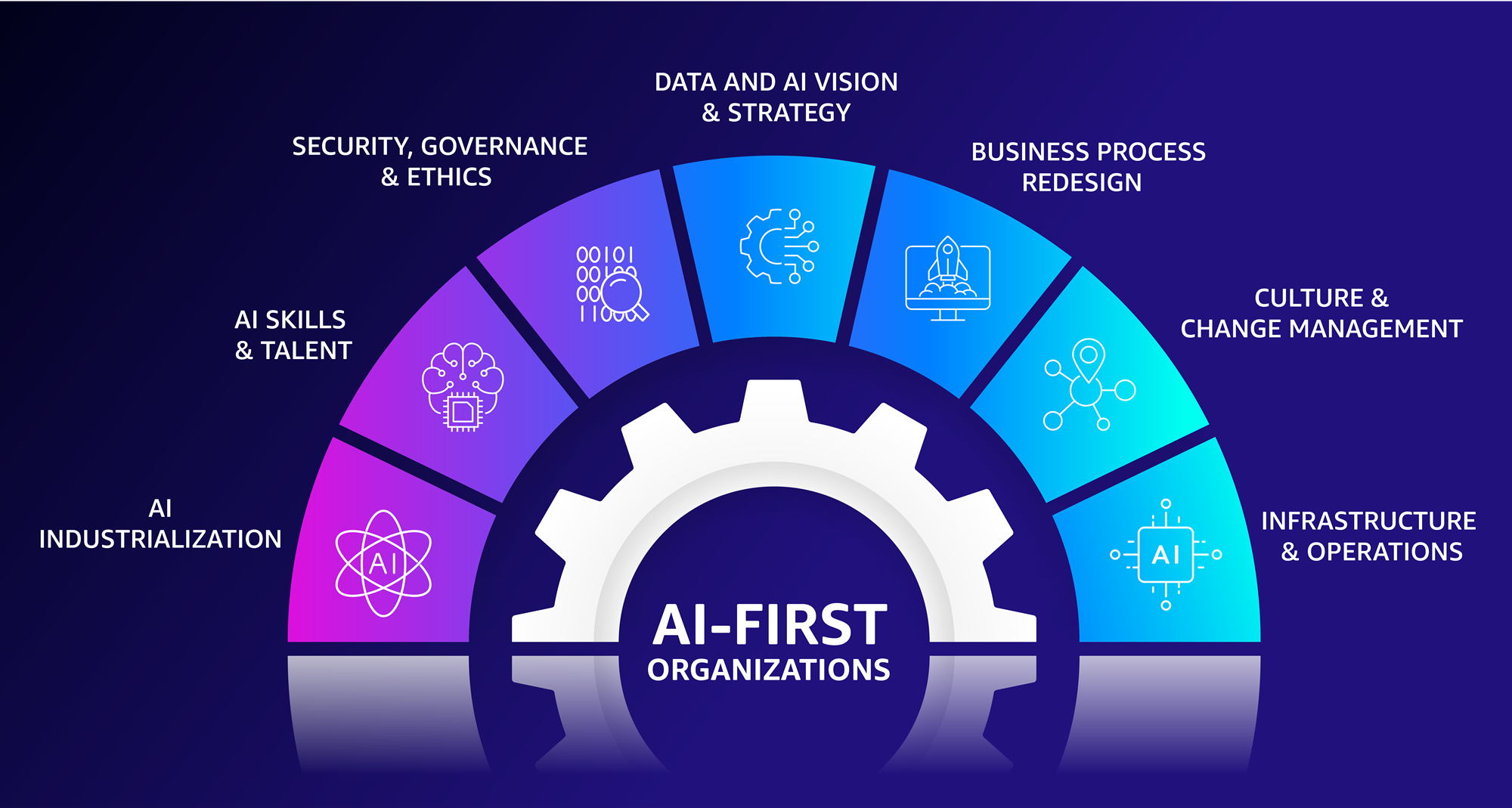
Figure 2: Seven dimensions of AI‑First transformation
---
Conclusion
Becoming AI‑first is not about isolated projects — it’s about synchronizing people, process, and technology under a unified strategy.
Organizations embracing this holistic approach enjoy:
- 45% greater cost savings
- 60% higher revenue growth
- (Source: BCG)
Platforms like AiToEarn官网 can serve as enablers for this transformation — combining AI content creation, publishing, analytics, and monetization under one open‑source framework.
---
Authors:
- !image Sergio Klarreich — Senior Manager, Customer Success at AWS
- !image Joseph Badalamenti — Senior Customer Success AI Specialist at AWS
Both lead enterprise‑scale AI transformation programs, helping organizations bridge the AI strategy vs. ROI gap.
---
For more on becoming AI‑first:
- Contact your AWS account team
- Read the AWS AI blog
---
Would you like me to also prepare a condensed executive summary section at the top so this becomes more boardroom‑ready? That could make the article faster to digest for decision-makers.