Published in a Nature Journal! I Built an “AI Social Science Lab” with AgentScope
AI-Powered Academic Simulations: CiteAgent & AgentScope
Scientists can now experiment on science itself.
Classic Social Science Challenges
- Verifying social theories – How to quickly find tens of thousands of survey volunteers?
- Shortening research cycles – How to make society “evolve faster”?
- Proving causality – How to create a true control group in social studies?
In the real world, setting up genuine control groups for sociology or academic studies is nearly impossible.
---
Introducing CiteAgent: A Virtual Academic Universe
Tongyi Laboratory, in collaboration with Renmin University of China, developed CiteAgent — a simulated academic universe populated by tens of thousands of AI scientists built on the AgentScope multi-agent framework.
This work has been accepted by Humanities & Social Sciences Communications, the top-ranked interdisciplinary social sciences journal in the Nature portfolio.
(Reply "CiteAgent" to the official WeChat account to obtain the original paper.)

---
Building the Sandbox for Science
To tackle these research challenges, the team designed and implemented CiteAgent using Tongyi’s self-developed AgentScope framework.
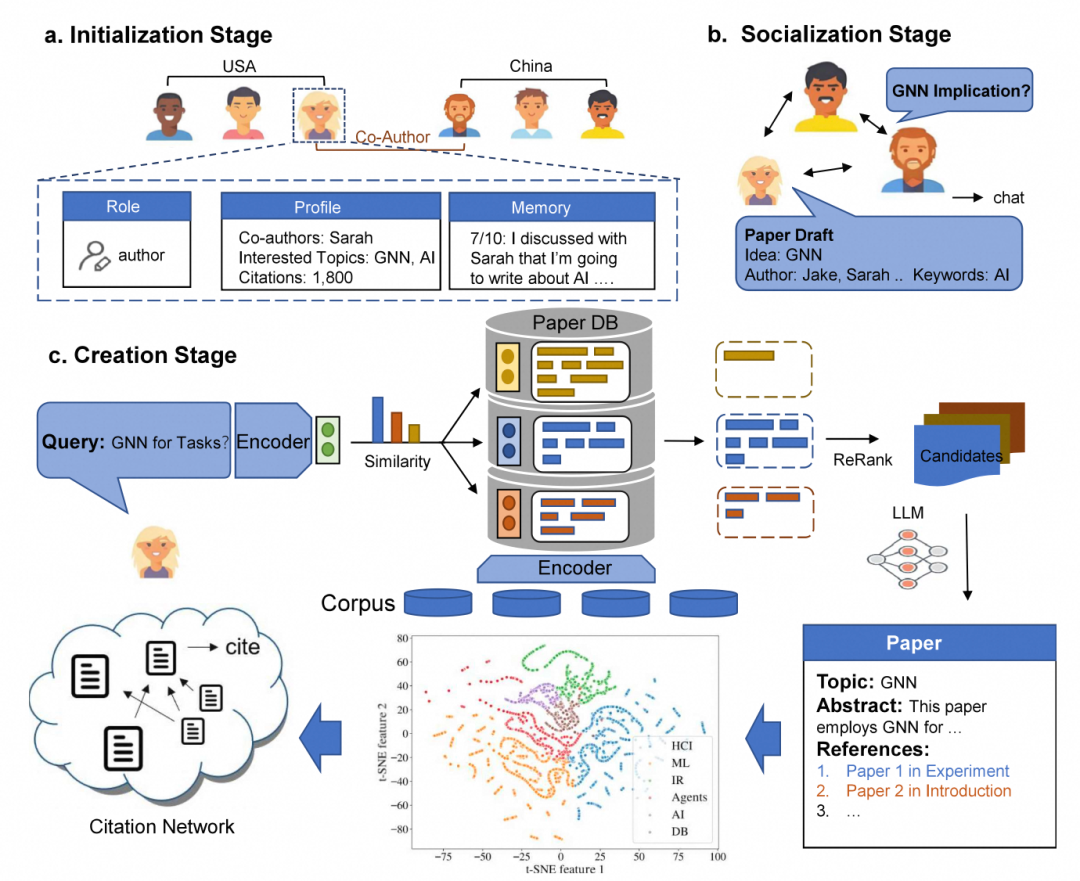
Core Workflow
CiteAgent integrates classical sociological methods—questionnaire surveys and controlled experiments—into Large Language Model (LLM) agent simulations, introducing two new paradigms:
- LLM-SE: LLM Survey Experiment
- LLM-LE: LLM Laboratory Experiment
---
Simulating Academic Phenomena
By coordinating thousands of AI agents, CiteAgent reproduced three well-known patterns in citation networks:
- Power-law distribution – A few papers dominate citations.
- Citational distortion – Papers from core countries are cited disproportionately.
- Shrinking diameter – The academic community is becoming more interconnected.
Findings from simulations:
- Power-law: Driven by preference for highly cited work.
- Distortion: Structural cumulative advantage from unequal author distribution per country.
- Shrinking diameter: New papers connect isolated knowledge nodes.
These reproducible results give social science something it never had — a laboratory environment.

---
AgentScope: The Engine Behind CiteAgent
AgentScope enables tens of thousands of AI scholars to:
- Think in parallel
- Collaborate in shared environments
- Build and cite academic work at scale
Key advantages:
- High-efficiency multi-agent concurrency
- Distributed deployment for massive simulations
- Minimalist interfaces for non-technical researchers
---
High-Concurrency Agent Scheduling
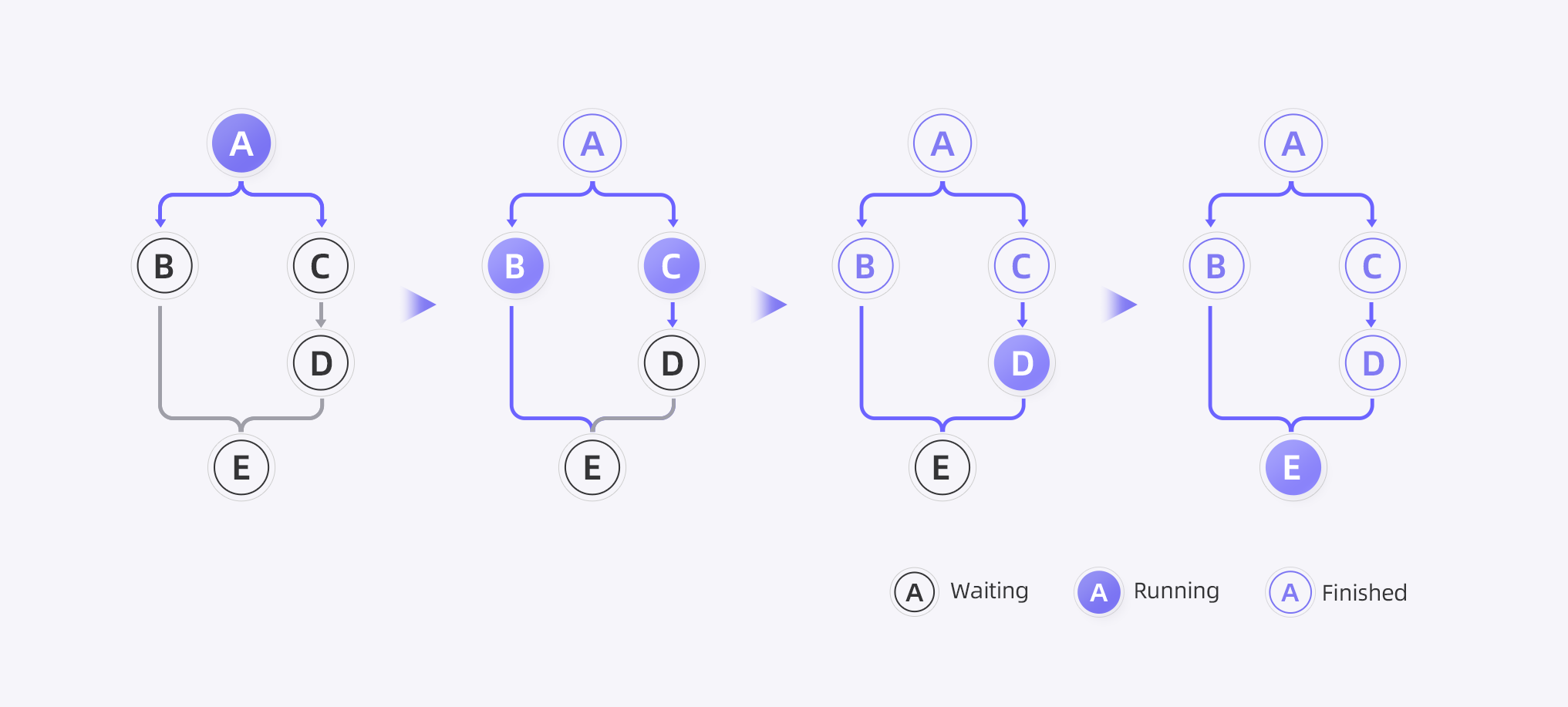
AgentScope’s core is built on the Actor concurrency model, where:
- Each AI scholar functions as an independent Actor.
- Private states are maintained per agent.
- Communication occurs through asynchronous messaging.
This decentralization allows automatic parallelism — for example, while one agent retrieves literature, thousands write or debate simultaneously, reducing tasks from weeks to hours.
---
One-Click Scalable Deployment
Features:
- Seamless scaling from dozens to millions of agents.
- Distributed deployment across multiple computing nodes.
- Stable performance for very large simulations.
Minimalist interfaces mean:
- Single-machine simulations can be converted to distributed ones with minimal code changes.
- Social scientists can focus solely on experiment design and simulation logic without worrying about infrastructure.

---
Implications Beyond Academia
AgentScope + CiteAgent show the power of modeling and testing entire systems in silico before implementation.
For creators and researchers:
- AiToEarn offers an open-source global AI content monetization platform.
- It connects AI generation, cross-platform publishing, analytics, and model ranking.
- Supports publishing to Douyin, Kwai, WeChat, Bilibili, Rednote, Facebook, Instagram, LinkedIn, Threads, YouTube, Pinterest, and X.
More info:
---
Conclusion
CiteAgent proves AgentScope’s capability for large-scale social science simulation, shortening research cycles and enabling reproducible experiments.
As AI for Science progresses, AI for Social Science emerges as a promising frontier — helping researchers understand human behavior patterns and shaping the future of academic study.
The synergy of multi-agent simulation and AI monetization platforms like AiToEarn may usher in a new era where AI experiments and AI creativity thrive side-by-side.