Quark AI Glasses Review: Ultra-Thin Temples, Flagship-Level Smartphone Image Quality
Quark AI Glasses — Smart Tech That Looks Just Like Ordinary Eyewear
For smart glasses, “looks just like ordinary glasses” is actually high praise — and it’s the standout advantage of the Quark AI Glasses.
Yesterday, Alibaba’s Quark officially launched two product lines:
- S1 series (with display) — starting at RMB 3,799
- G1 series (without display) — starting at RMB 1,899
I tested the flagship S1 model and my first impression was: these might be the closest smart glasses yet to resembling regular eyewear.
---
Ultra-Thin Temples, Compact Optical Engines
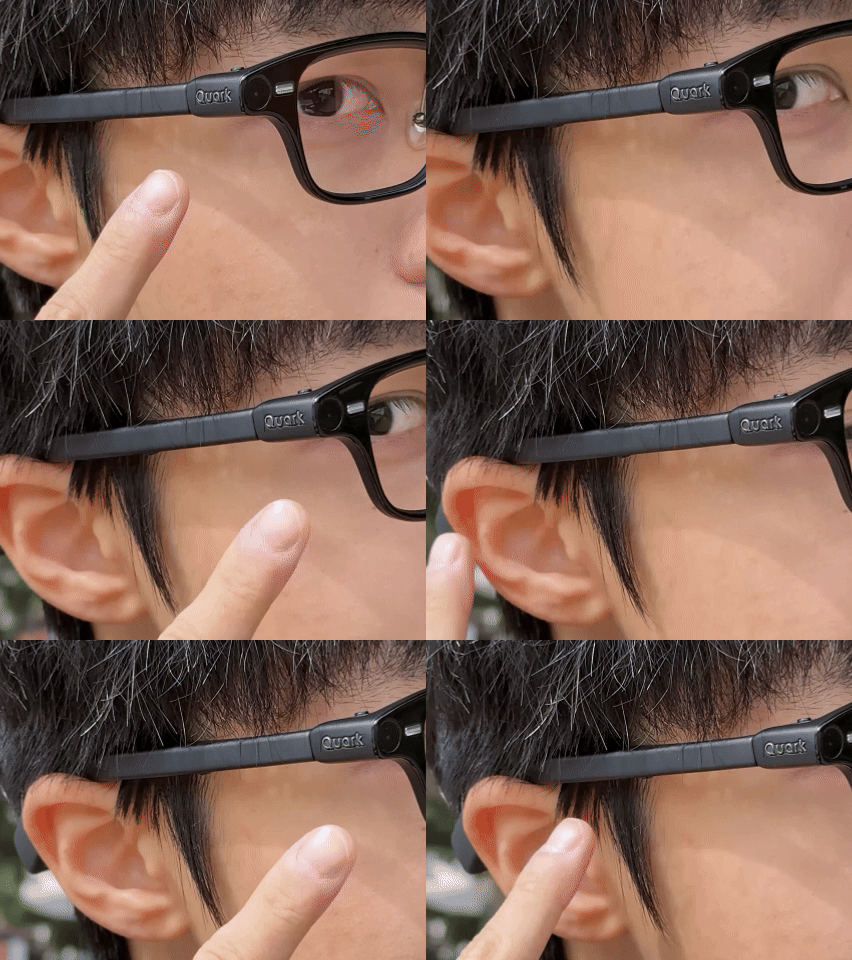
A common pain point for smart glasses is bulky temples. Quark’s design is different:
- Temple width: just 7.5 mm, the narrowest globally in this category
- Side profile: almost identical to traditional eyewear

Key design choices:
- Batteries at temple ends — one per side for balance
- Swappable battery on the right side — extends usage with quick changes

Despite reduced space, Quark integrates dual optical engines for both eyes with brightness up to 4000 nits — bright enough for outdoor visibility.
Unique feature: Adjustable convergence distance via mobile app
- Translation view: 2 m (ideal for face‑to‑face conversation)
- Navigation view: 9 m (better road awareness)
This flexibility reduces eye strain and enhances safety while traveling.


---
Smartphone-Grade Imaging — Above Expectations
Smart glasses typically struggle to balance display and camera quality. The S1 breaks that pattern:
- Daytime: Quick, stable snapshots in good light
- Nighttime: RAW-domain processing, low noise, excellent color fidelity


Video capabilities:
- Shoots native 1080p and 3K
- Excellent stabilization even in cycling tests
- AI post‑processing upgrades footage to 4K@60 fps with:
- Super‑resolution
- Frame interpolation
- Additional stabilization
---
Deep Alibaba Ecosystem Integration
A major differentiator is the built‑in Alibaba Qianwen closed-source AI model paired with:
- Five‑microphone array
- Bone conduction audio (clear capture in noisy environments)
AI functions include:
- Voice Q&A
- Display/sound adjustments
- Navigation initiation
- Photo‑based product search with price identification

Native App Connectivity
- Taobao: Price recognition directly in view
- Amap (Gaode): Phone navigation cast to glasses
- Alipay: First‑party hardware support for “Check Payment”

Travel & Media Integration
- Real-time flight/train/taxi updates via Amap Taxi, Fliggy Travel, Alibaba Business Travel
- Music streaming from NetEase Cloud Music and QQ Music, with lyrics displayed in‑view

---
Verdict — A Strong First Showing
The Quark AI Glasses S1 demonstrate:
- Design advancement — ultra‑thin temples create a truly everyday glasses feel
- High‑quality optics & display
- Polished AI capabilities
- Deep Alibaba ecosystem integration
Smart glasses are one of the fastest‑growing consumer electronics trends — with AI, mobile, and optics companies all joining the race. Alibaba’s S1 is a promising debut in this space.

---
AI Content Creation Synergy
As AI wearables advance, multi‑platform content creation will rise in importance.
AiToEarn offers:
- AI tools for generating, publishing, and monetizing content
- Cross‑platform support — Douyin, Kwai, Bilibili, Instagram, YouTube, X (Twitter)
- Analytics for audience engagement
For creators exploring tech like smart glasses, AiToEarn核心应用 makes it easier to connect innovation with audiences.
---
Would you like me to also restructure this into a punchy product review format with pros/cons and a quick spec summary? That would make it even easier for readers to scan.