
Raised $8 Million — AI-Native Folders Are Here
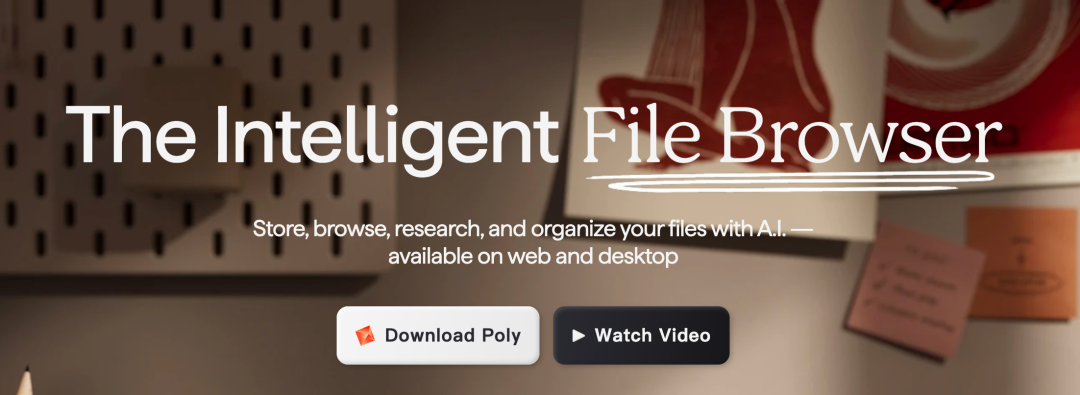
Rethinking the File System for the AI Era
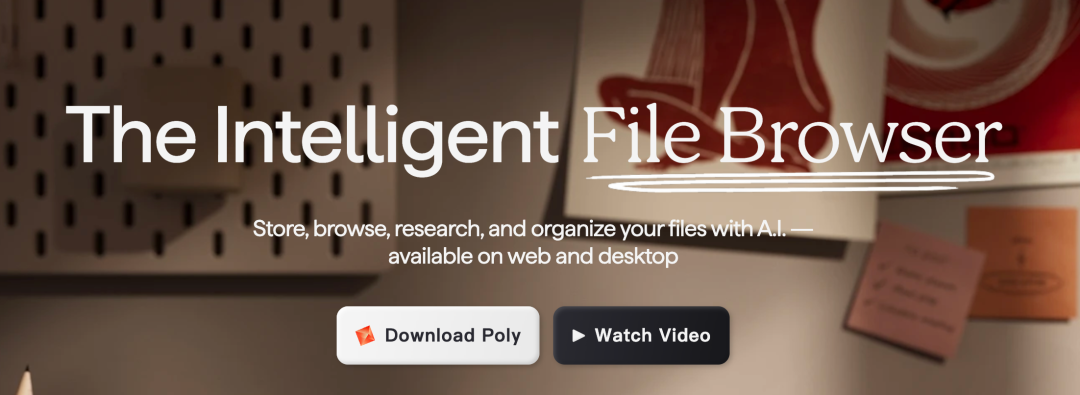
Even in 2025, we still manage files much like we did 40 years ago — navigating nested folders and relying on memory to recall filenames.
It’s inefficient: knowledge workers waste an average of 19% of their time searching for information — nearly 8 hours per week.
A YC-incubated startup, Poly, has raised $8M seed funding (led by Felicis with participation from Bloomberg Beta, NextView, Figma Ventures, AI Grant, Wing Ventures, and MVP Ventures) to tackle this by reinventing the file system itself.
Founder Abhay Agarwal states:
> “In an AI-first world, the file system itself must evolve.”
This captures the massive gap between the explosion of data and the stagnant file management tools we still use — a gap Poly intends to close.
---
From 3D Assets to File Intelligence: Poly's Pivot
Poly started in 2022 as an AI tool for generating 3D assets from prompts.
But the generative AI space quickly became crowded, pushing the team to:
- Interview users about pain points.
- Discover a huge unmet need in organizing complex file systems.
- Pivot entirely in 2023 to focus on file management.
Co-founder Sam Young departed; Agarwal now leads the vision, drawing on his Microsoft background in visual AI accessibility tools.
Lesson: Instead of doubling down in an overcrowded market, Poly shifted from content creation to content understanding and management — reflecting the AI industry's shift toward practical, workflow-centric solutions.
---
What Poly Is Building
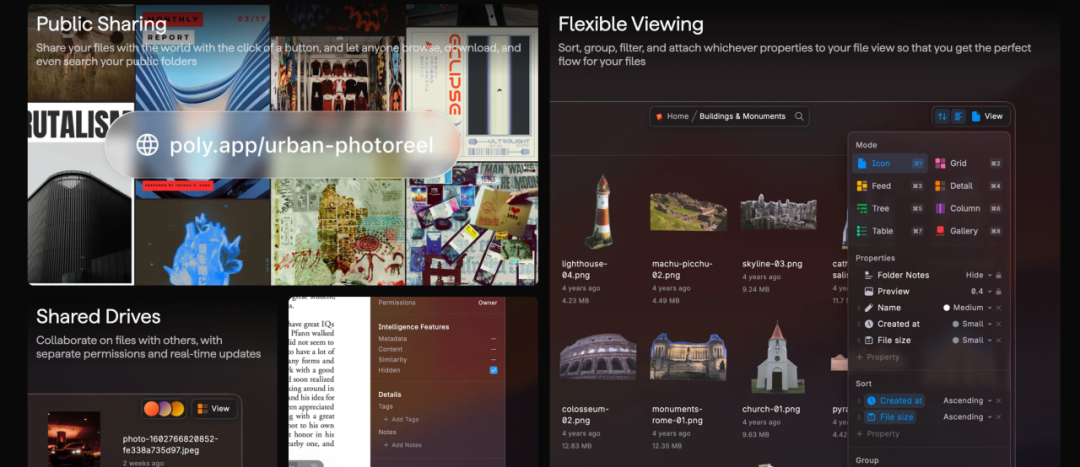
Poly integrates AI at the core of file organization, search, and access:
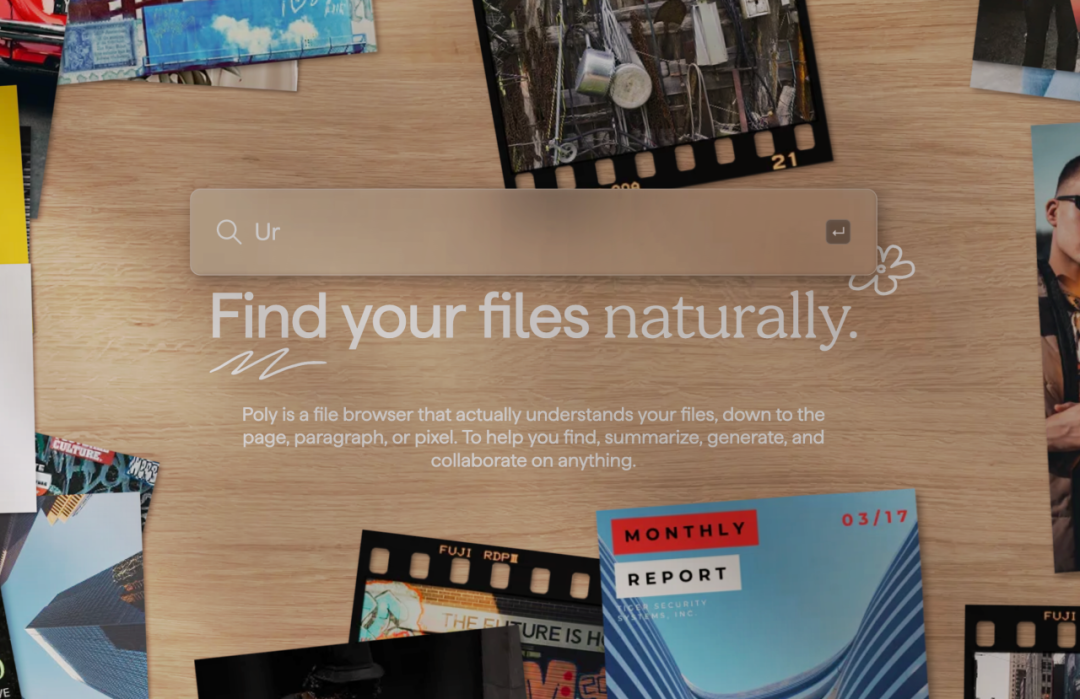
- Understands meaning, context, and relationships between files.
- Enables conversational search: ask “What’s the Q4 budget?” or “Summarize this video.”
- Returns precise answers with timestamps, page numbers, references.
- Goes beyond metadata — operates on content understanding.
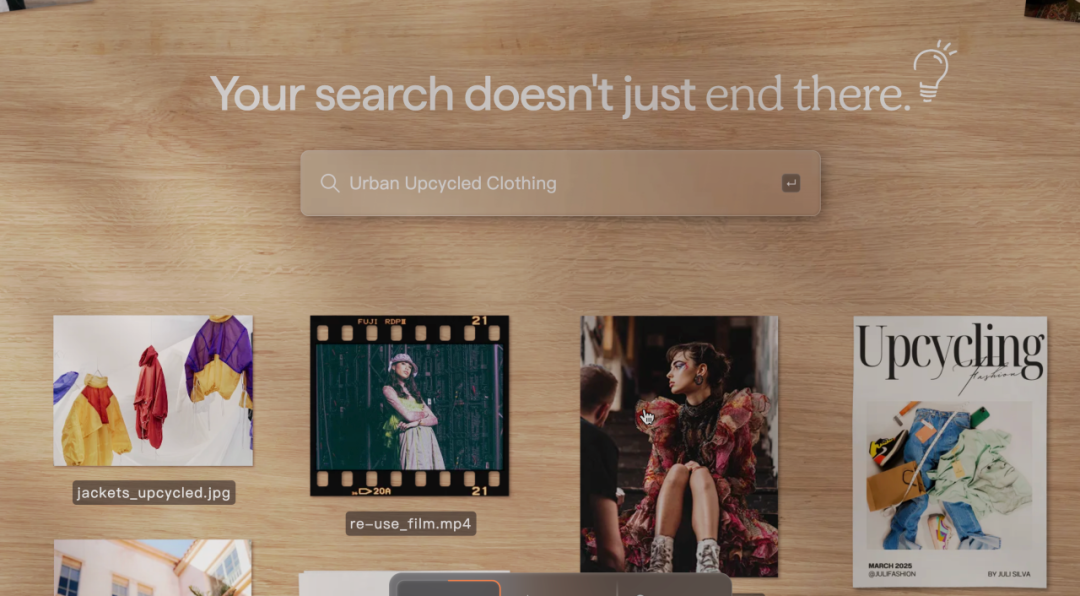
Poly invites users to sync files to its cloud (while keeping local copies), adding:
- AI-powered search and auto-tagging
- Summarization across file types
- Instant content generation from links (e.g., YouTube video summaries)
- Collaboration within shared drives
---
Positioning vs. Competitors
Poly aims to replace Finder / File Explorer entirely, unlike competitors’ search add-ons:
- NotebookLM is a research assistant, but not a file browser.
- Dropbox / Google Drive offer AI search — but Poly says its Polyembed‑v1 model outperforms them.
Polyembed‑v1 is trained on:
- Text, PDFs, presentations, spreadsheets
- Audio, video, code, URLs
- Multimodal queries (text + media)
Key Differentiator: Retrieval quality decides the winner in AI file systems — and Poly claims best-in-class search precision.
---
Why Change Is Overdue

From 1984's Finder to today’s file managers, the model hasn’t changed:
Hierarchical folders, filename search, manual organization.
This fails in the data explosion era where:
- We can’t recall filenames.
- Needed info is inside files, not titles.
- Searches should work on visual or contextual cues (e.g., “photo with a dog”).
Poly delivers content-level search — a radical improvement.
---
Poly vs. the Giants

Difference in Architecture:
- Storage-first (Google Drive, Dropbox): AI search is bolted on.
- AI-first (Poly): Retrieval and understanding are the core — storage is secondary.
Pricing:
- Free tier: 100GB (vs Google Drive’s 15GB, Dropbox’s 2GB).
- Paid: $10/month for 2TB.
- Target users include:
- Knowledge workers
- Researchers
- Creative teams
- Analysts
---
Technical Edge: Polyembed‑v1
Embedding models turn diverse data (text, image, video) into comparable semantic vectors.
Advantages:
- Cross-format understanding (e.g., find a video relevant to a spreadsheet).
- Supports multimodal queries.
- Better citation accuracy with page/timestamp references.
- Hybrid architecture: local + cloud = offline access + AI orchestration.
---
Roadmap Highlights
Planned features:
- Web search integration
- Styled report generation
- Text/Markdown editors
- Custom metadata & Google Docs linking
- AI agents for spreadsheet analysis
- Direct file/folder sharing beyond shared drives

Vision: “LLM with unlimited context from your life” — turning Poly into your intelligent project workspace.
---
Investor Perspective
Bloomberg Beta’s James Cham:
> “We badly need the return of the file browser.”
NextView’s David Beisel:
> “Poly surfaces context and creativity, turning everyday files into a personal intelligence layer.”
---
Challenges Ahead
- User migration — moving from entrenched tools.
- Integration gaps — needs native hooks into platforms like Slack, Notion, Google Workspace.
- Privacy & security — essential for enterprise adoption.
- Competition — giants can copy features, but may lack ground-up AI architecture.
---
Why Poly Matters
Poly represents a data-centric model of computing:
- Files become queryable, actionable intelligent assets.
- AI acts as the universal interface across all formats.
- Search is semantic, not just keyword-based.
---
Closing Thoughts
Poly is part of a wider trend in AI-powered personal knowledge ecosystems.
Platforms like AiToEarn complement this shift by enabling creators to:
- Generate AI content
- Publish across multiple platforms (Douyin, Kwai, Instagram, LinkedIn, YouTube, X/Twitter, etc.)
- Analyze and monetize (AI模型排名)
Together, tools like Poly and AiToEarn signal the convergence of AI intelligence, content actionability, and distribution.
---
Actionable Takeaway:
In the AI era, file systems must evolve from static containers to interactive, intelligent assistants. Whether Poly leads this transformation or inspires others, the need for reinvention is already here.
---
💬 What’s your view on AI-native file systems? Could you see yourself replacing Finder or Explorer with something like Poly?