
Self-Service “Sugarcane Stealing” Goes Viral — The Farm-Stealing Game Never Ends

The Viral “Steal Sugarcane” Phenomenon

Recently, a 9.9 RMB “steal sugarcane” experience has exploded in popularity online.
For just 2.99 RMB entry, visitors can step into a sugarcane field in Meishan, Sichuan to enjoy a playful FarmVille-style thrill — sneaking among the cane rows, dodging staff role-playing as “catcher NPCs,” cutting stalks, and taking them home for 9.9 RMB each.
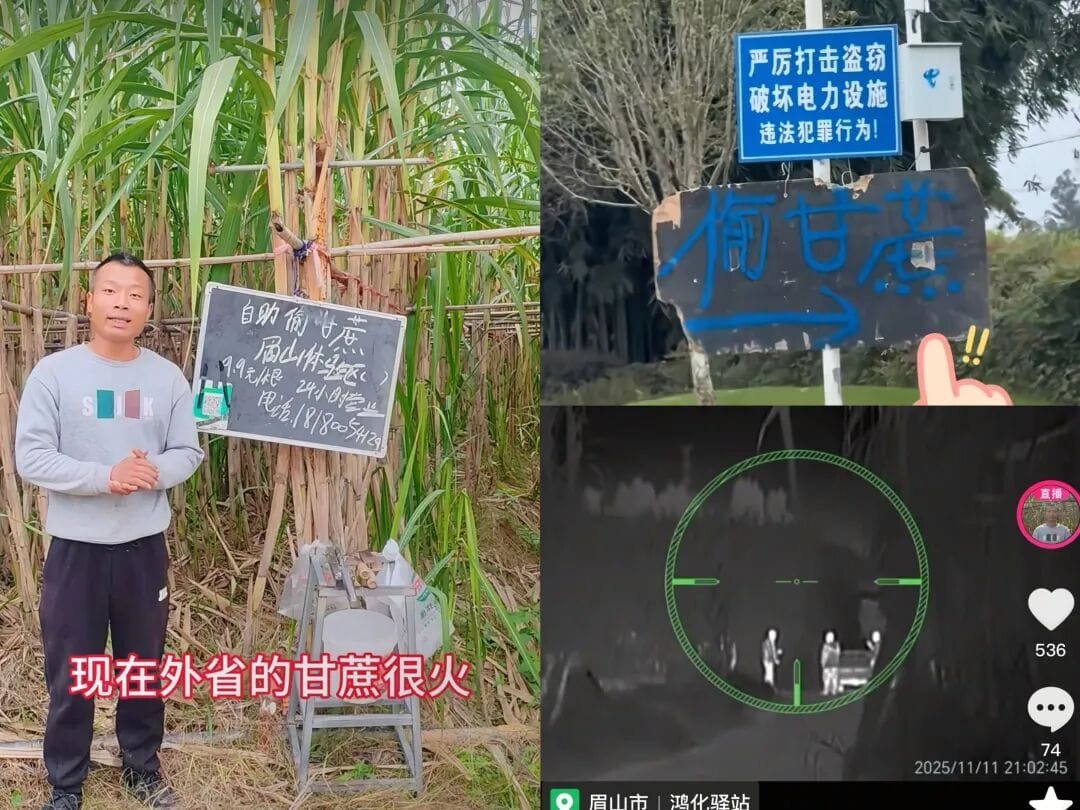
_Image source: Douyin @Meishan Sugarcane Bro Xiao Dongjiang_
In November, this sugarcane field in Qing Shen County became a trending check-in hotspot. Local university students volunteered as catchers, office workers came on weekends to “play thief,” and at peak, the site welcomed 1,000+ daily visitors, earning nearly 10,000 RMB per day.
The craze spread rapidly nationwide:
- Longquan turned sugarcane fields into “stealable” zones
- Deyang launched a “steal oranges” event
- Shijiazhuang offered “steal apples” in an orchard
The key insight? Selling sugarcane alone wasn’t enticing — selling sugarcane + a roleplay adventure was irresistible.
---
The Cat-and-Mouse in the Cane Rows
At night in the countryside, a flashlight beam cuts across the cane field.
In the distance, silhouettes weave between tall stalks… until the light catches a group mid-cut. They’re “arrested,” laughing, and squatting at the edge of the rows, hands on heads, chanting mock confessions: “I’ll never steal again.”
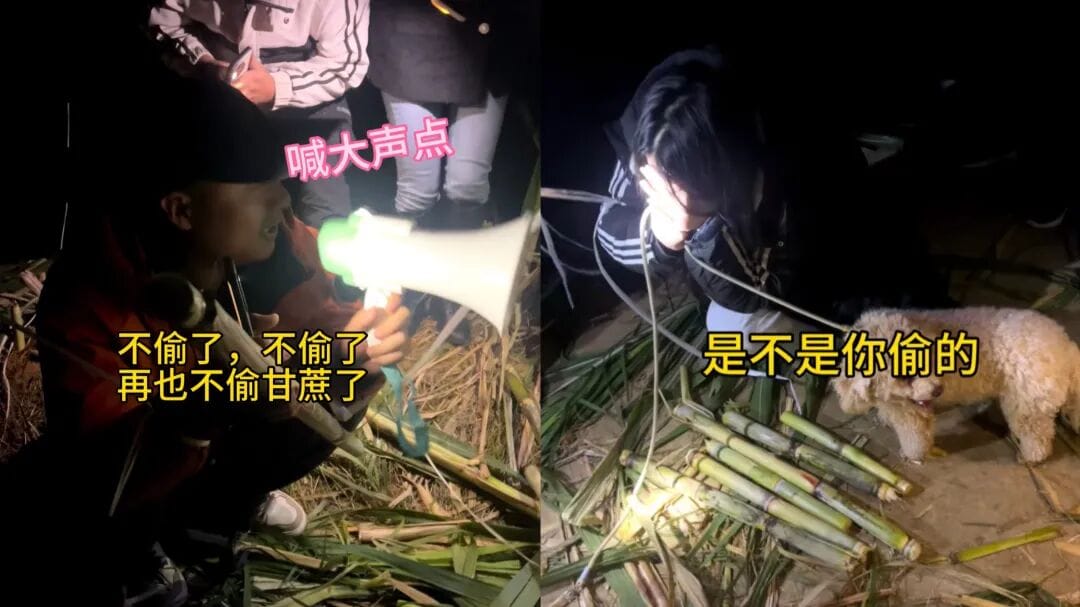
_Image source: Douyin @Meishan Sugarcane Bro Xiao Dongjiang_
For thrill-seekers who want the rush of getting caught without real consequences, this offers a convincing, guilt-free adrenaline hit.
---
Meet the Mastermind: Tong Pengfei
- Location: Honghua Village, Qing Shen County, Sichuan
- Background: Every November, Tong’s cane ripens; he must sell quickly
- Marketing hook: Humorous short-video promotions (“The Sichuan army’s out, but my cane’s still here!”)
- Turning point: Mid-November launch of a 24/7 “steal sugarcane” event to evoke 80s–90s childhood nostalgia
The result? Crowds poured in. Netizens even suggested livestreamed cane theft hunts, which Tong implemented. Soon, thousands tuned in at midnight to watch him “hunt” trespassers.
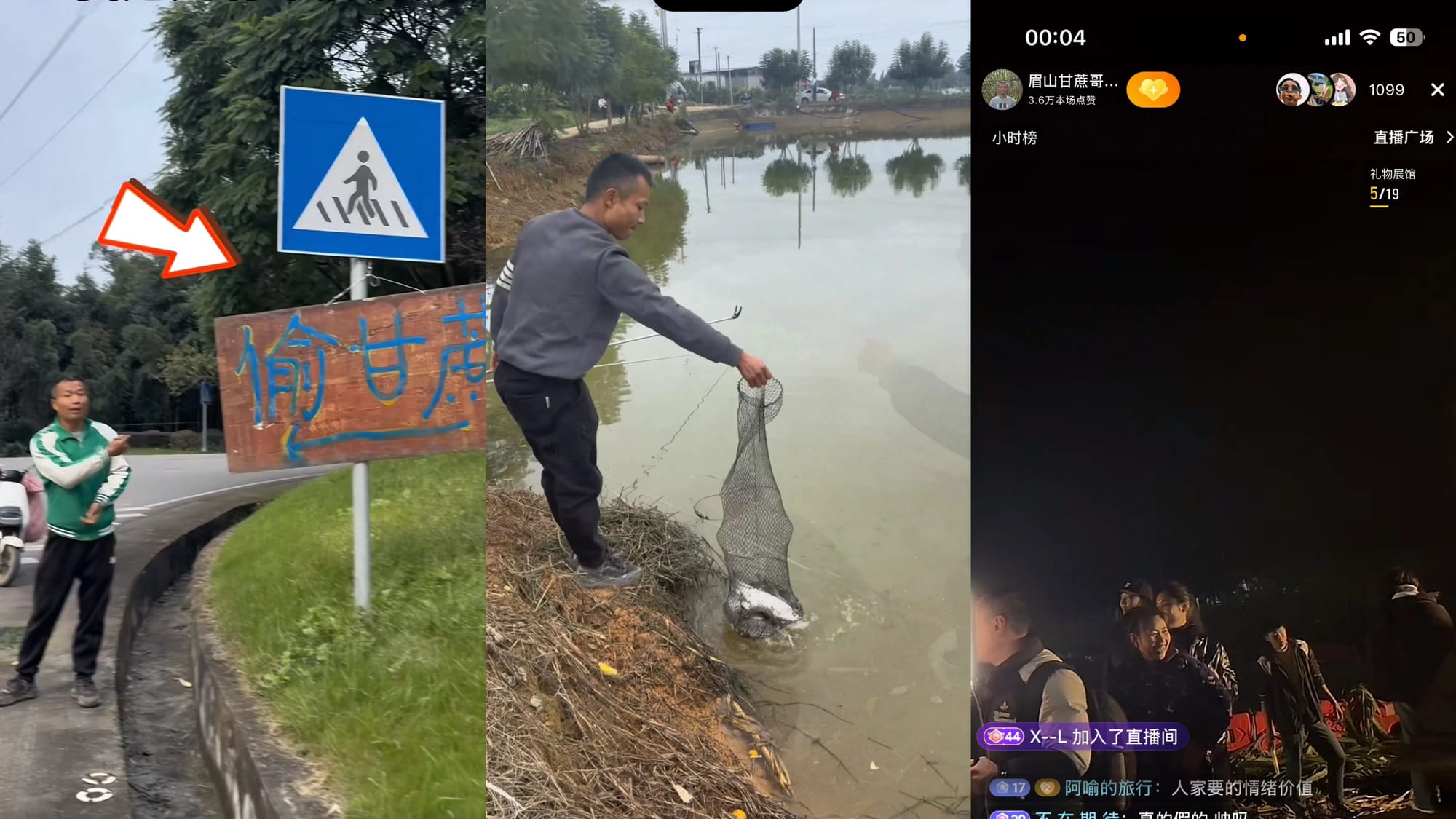
_Image source: Douyin @Meishan Sugarcane Bro Xiao Dongjiang_
Visitors posted “stealing vlogs”:
- Masked attempts to avoid detection
- Footage of mock arrests
- “Punishments” like dancing, singing, or shouting through loudspeakers: “I won’t steal again!”
---
From Viral Fun to Exhaustion
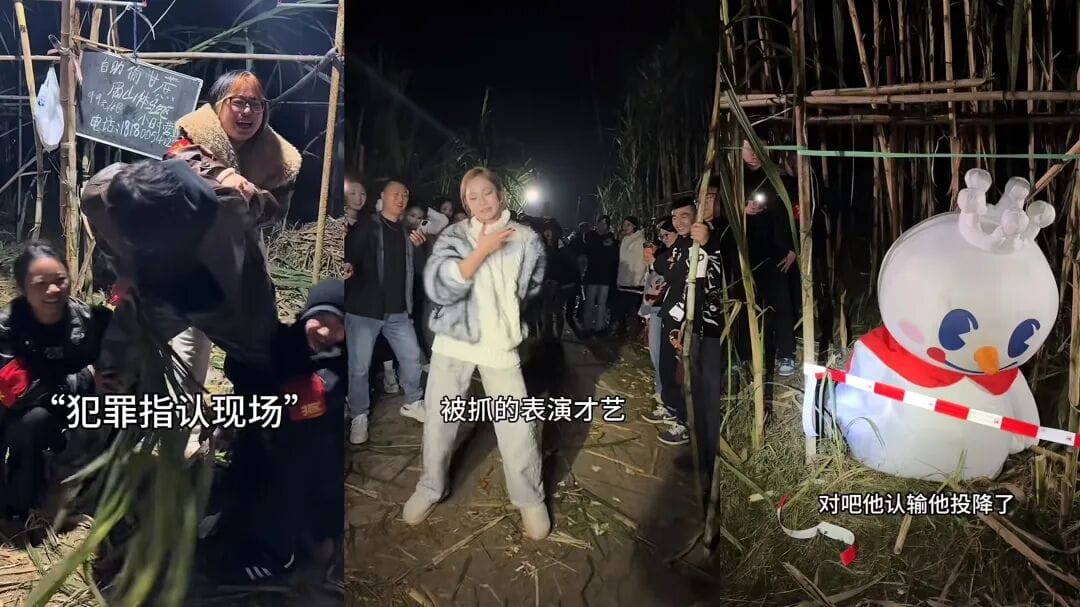
The event went viral — even Mixue Bingcheng’s Snow King mascot showed up for marketing synergy.
But high traffic brought challenges:
- Some visitors ate cane on the spot without paying → Entry fee introduced
- Crowds overwhelmed resources → Field closed at 3 a.m., NPC catchers added
By Nov 28, the field was picked clean. The month-long phenomenon ended.
---
Echoes of Kaixin Farm’s “Stealing Crops”

In 2009, Kaixin001’s Stealing Crops game went viral:
- Millions played “virtual farming” — watering, fertilizing, harvesting
- If late to harvest, friends could steal crops
- Frenzied habits emerged: midnight alarms, hired “stealing agents”

_Image source: "Kaixin Farm" Baidu Baike entry_
Later adapted into QQ Farm, Tencent expanded to 4,000+ servers, gaining 70 million active users in one quarter.
The sugarcane-stealing events essentially brought the online mischief offline.
---
Why “Stealing” Works: Safe Rule-Breaking

From Kaixin Farm to real-life fields, the core appeal is crossing boundaries in a safe, controlled way.
This mix of novelty, adventure, and “rule-bending without harm” draws all ages — offering:
- Economic benefits: Sell crops, clear stock, cut labor costs
- Social entertainment: Memorable, shareable experiences
---
Expansion Across China
The concept spread:
- Inspired by nostalgic comments, farmer Wang Yonglong in Zhejiang launched night-time “self-service cane stealing” → Earned 40,000+ RMB
- Farmers added theatrical enhancements: guard dogs, talent performance punishments, playful “tying” props
Important: Despite the name, no actual theft occurs. You still pay for stalks; the thrill comes from the act and chase.
---
Controlled Rebellion in Modern Life
- Middle-aged visitors relive childhood
- Young professionals escape daily routine at night
- Comparable challenges: Wilderness survival games in Hunan, crawls on campus, quirky livestream challenges
These events:
- Release compressed freedom in high-pressure society
- Reframe “rebellion” within safe boundaries
- Turn idle resources into viral cultural experiences
---
The Role of AI and Multi-Platform Publishing
Creators can turn niche local events into global phenomena using:
- AiToEarn官网 — AI-powered multi-platform publishing
- Simultaneous sharing to Douyin, Kwai, WeChat, Bilibili, Xiaohongshu, Facebook, Instagram, LinkedIn, Threads, YouTube, Pinterest, X
- Analytics & AI Model Rankings: AI模型排名
- Open-source integration: AiToEarn开源地址
This enables small rural stunts — like sugarcane stealing — to scale globally, monetize efficiently, and preserve the freedom and creativity at their core.
---
Key Takeaways
- Playful rule-bending is universally appealing
- Gamified experiences accelerate tourism and product sales
- Digital tools can amplify local phenomena worldwide
- Controlled thrills satisfy a deep human need for novelty and rebellion
Life doesn’t have to follow a template. Whether “stealing” sugarcane or reinventing everyday play, the freedom to choose your own style is the real prize.