
Team Empowerment: Decentralized Architectural Decisions

Learning from Slime Molds: A Metaphor for Decentralized Architecture

Image credit
---
Nature’s Lesson in Efficiency
The multi-headed slime mold (Physarum polycephalum) offers an unexpected case study for software architects. This organism can form complex, efficient networks entirely on its own — without any central authority.
Key experiment:
Scientists placed food sources in positions matching stations around Tokyo. The slime mold:
- Probed locally for nutrients and hazards
- Made decentralized growth decisions
- Developed a network similar to Tokyo’s subway, but more efficient
This behavior challenges traditional centralized architectural practices — raising the question:
> Can software teams emulate slime molds to design better decentralized decision-making processes?

Above: After 26 hours, the slime mold network resembles Tokyo’s subway system
---
Our Transformation Journey
The Problem
In 2020, our legacy environment had:
- Multiple codebases with mixed .NET versions
- Scattered libraries and packages
- Manual deployments prone to error
- Release cycles of 3–6 months with long UAT phases and bug fix loops
The Goal
Re-architect as a cloud-native SaaS platform, supported by modern engineering practices and a fundamental shift in how architectural decisions were made.
---
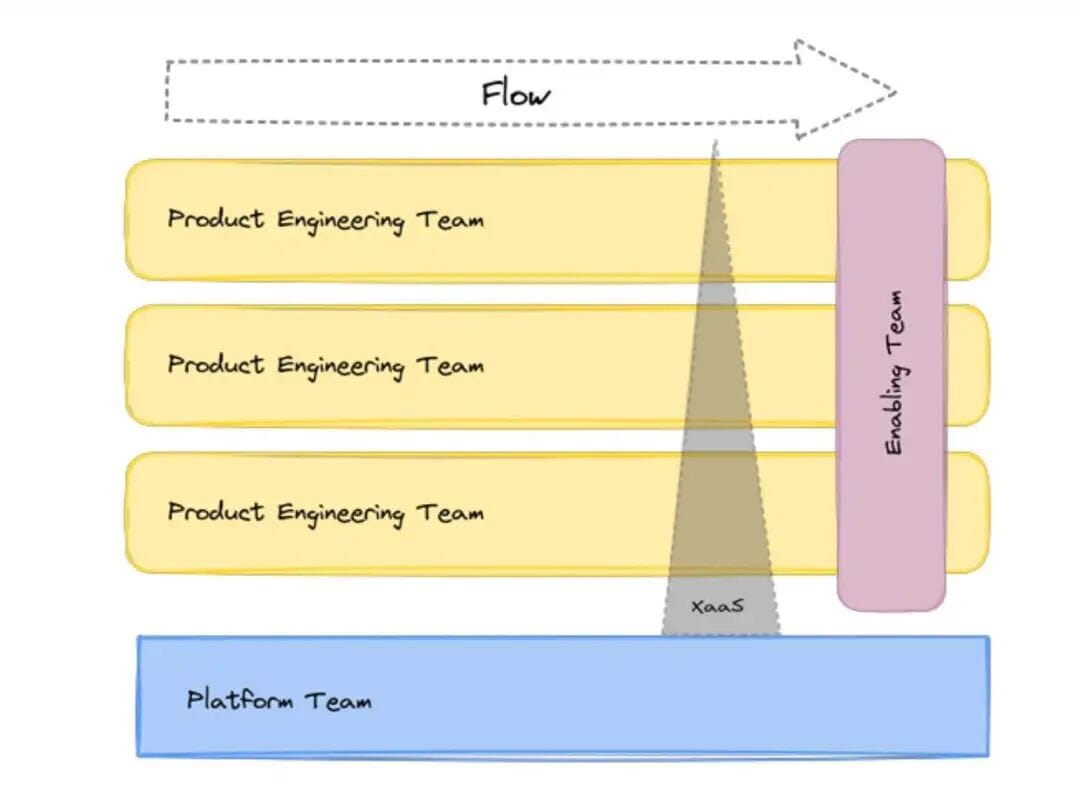
Building Fast-Flow Teams
Drawing inspiration from Team Topologies by Skelton & Pais:
- 3 product engineering teams
- Support team of SMEs/specialists
- Platform team to reduce cognitive load and support re-platforming
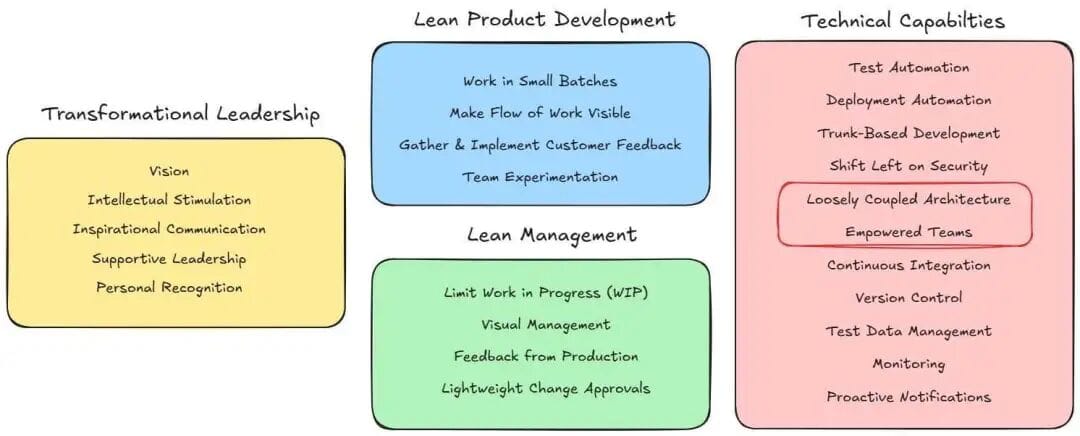
From DORA research (Accelerate):
- Loosely coupled architectures
- Empowered teams
The intended result: distributed architecture with local autonomy for problem-solving.
---
The Advice Process: Our Decision Framework
We adopted the Advice Process (Thoughtworks Tech Radar "Trial" ring):
- Any team can decide if they seek advice from affected parties & experts
- Document decisions publicly
- Note contrary advice and rationale if not followed
Supporting tools:
- Architecture principles
- ADR — Architecture Decision Records
- Architecture Advisory Forums (AAF)
---
Mapping Contexts for Clear Boundaries
Legacy platform: 15+ years old, outdated tech, mixed patterns, single-tenant desktop tools.
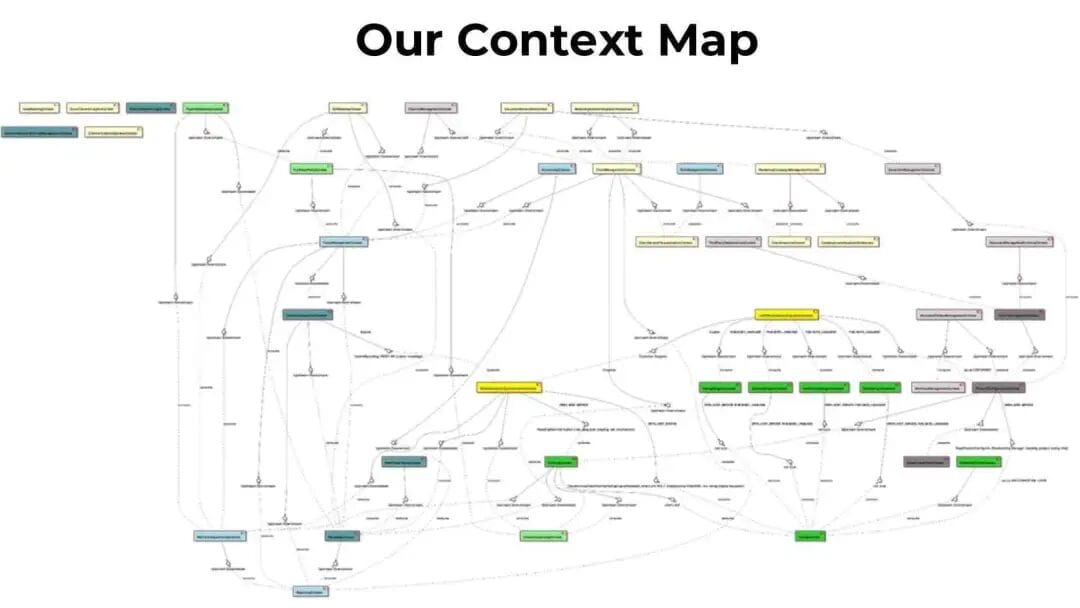
We applied Domain-Driven Design (DDD) to produce a context map that:
- Identified bounded contexts
- Defined ownership per team
- Visualized relationships & contracts between contexts
We faced:
- Grey areas (no clear ownership)
- Shared contexts (multiple teams use)
Despite challenges, context maps:
- Reveal dependencies before changes
- Highlight technical debt for re-architecture
- Empower independent team planning
---
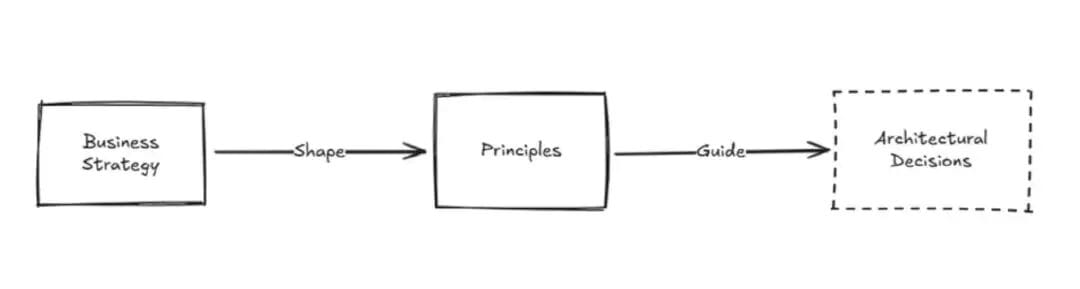
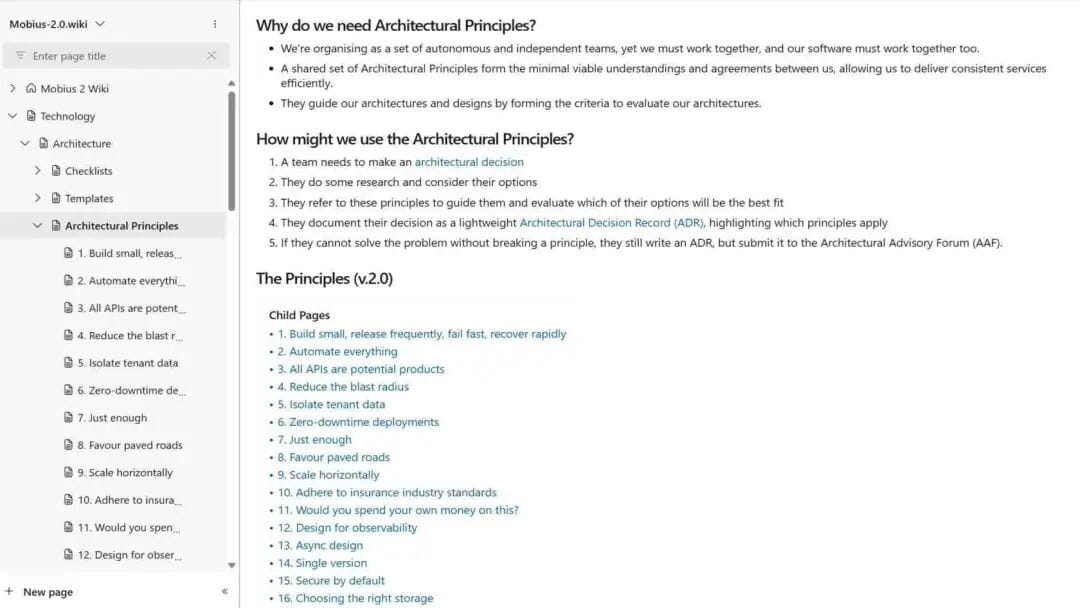
Architecture Principles: Shared Guideposts
Collaboratively developed with domain experts:
- 16 principles with:
- Clear intent
- Alignment to strategic goals
- Rationale & benefits
- Positive & negative implications
Example: Isolate Tenant Databases
- Business goal alignment: tenant data security & stability
- Trade-off: increased hosting cost
---
ADRs: Capturing the "Why" Behind Decisions
An ADR includes:
- Unique ID/title
- Author
- Status (Draft, Proposed, Accepted, Superseded)
- Concise decision description
- Related principles
ADRs record:
- Context triggering the decision
- Alternatives considered
- Consequences (pros & cons)
- Advice received (who, when, recommendation)
Immutable once approved — superseded ADRs for changes.
---
Architecture Advisory Forum (AAF)
Weekly, open to all teams:
Agenda:
- Upcoming sprint discussions
- ADR presentations/demos
- DORA metrics review
- Azure cost tracking
- SLO dashboard for visibility
---
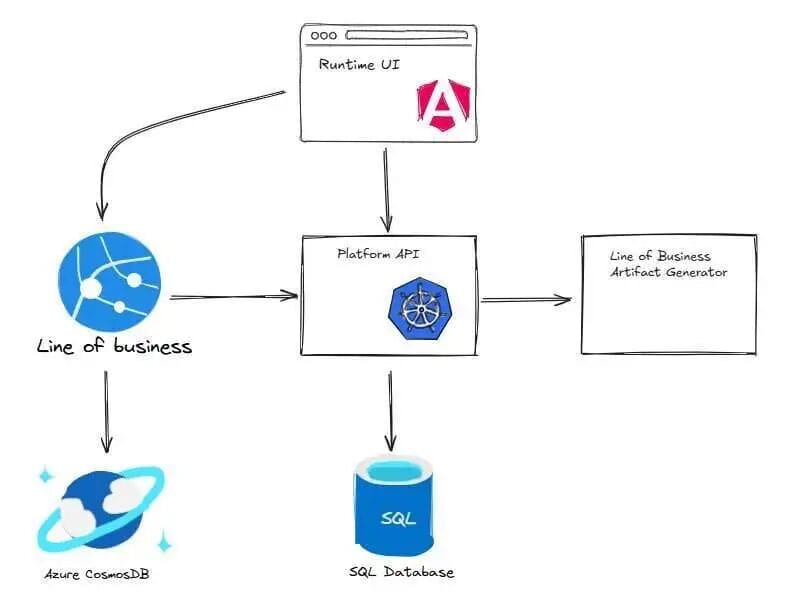
The First ADR: Microservices Shift
Context: Business line bounded context with heavy dependencies, monolithic desktop tools, quality/performance issues
Decision:
- Introduce microservices with independent Azure Cosmos DB instances
- Decouple from shared SQL database
- Enable independent deployment & scaling
Outcome:
- Faster releases
- Complex dependency management needed
- Big cultural and technical shift
---
Decision Evolution Stages
- Unaware – Teams wait for approvals, leadership must resist centralizing
- Excited – Surge in tech exploration & experimentation
- Aware – Experience impacts (good & bad)
- Balanced – Self-correct, peer accountability, quality ADRs submitted
---
Benefits & Outputs
Advantages:
- Increased trust & transparency
- Faster flow
- Greater team ownership
- Stronger architecture quality through collaboration
Architects' role:
- Facilitate complex workshops (event storming, threat modeling)
- Bridge impacts across contexts
- Focus on high-value architecture problems
---
Conclusion
Like slime molds, decentralized teams self-organize efficiently when guided by visible principles and lightweight processes.
Key enablers:
- Context mapping
- Architecture principles
- ADRs
- Advisory forums
Expected challenges:
- Cultural change needed
- Iterative learning curve
- Consistency must be managed
Result:
Over 200 ADRs later — better alignment, faster delivery, shared ownership.
---
Empowering Teams: Decentralizing Architectural Decision-Making
Why Decentralize?
- Agility: Faster responses to change
- Ownership: Teams feel responsible
- Innovation: More diverse thinking
- Reduced bottlenecks: Less central approval delay
Challenges
- Consistency of standards
- Knowledge gaps
- Governance for security/compliance
Principles
- Define non-negotiable constraints
- Share patterns & best practices
- Document via ADRs
- Build a community of practice
Role of Architects
- Act as coaches/enablers
- Facilitate communication
- Provide toolkits/assets
- Lead long-term visioning
Tools & Processes
- ADRs
- Playbooks
- InnerSource repositories
- Automated governance rules
Conclusion
When done well:
- Teams innovate & adapt faster
- Organizations maintain alignment through shared principles
- Architects focus on enabling rather than gatekeeping
Platforms such as AiToEarn官网 show how distributed creation and sharing ecosystems reinforce decentralized practices — connecting generation, documentation, and dissemination across multiple channels.
---
Would you like me to create a visual diagram summarizing the Advice Process + ADR + Context Maps flow so this becomes an easy onboarding guide? That would make the framework easier to adopt across teams.