The Dilemma of Choice in the AI Era: Which City Should We Start From?
China’s AI Race Enters the “City League” Era
When more than 600 large models are collectively registered, AI competition shifts from a corporate race to a city ranking race.
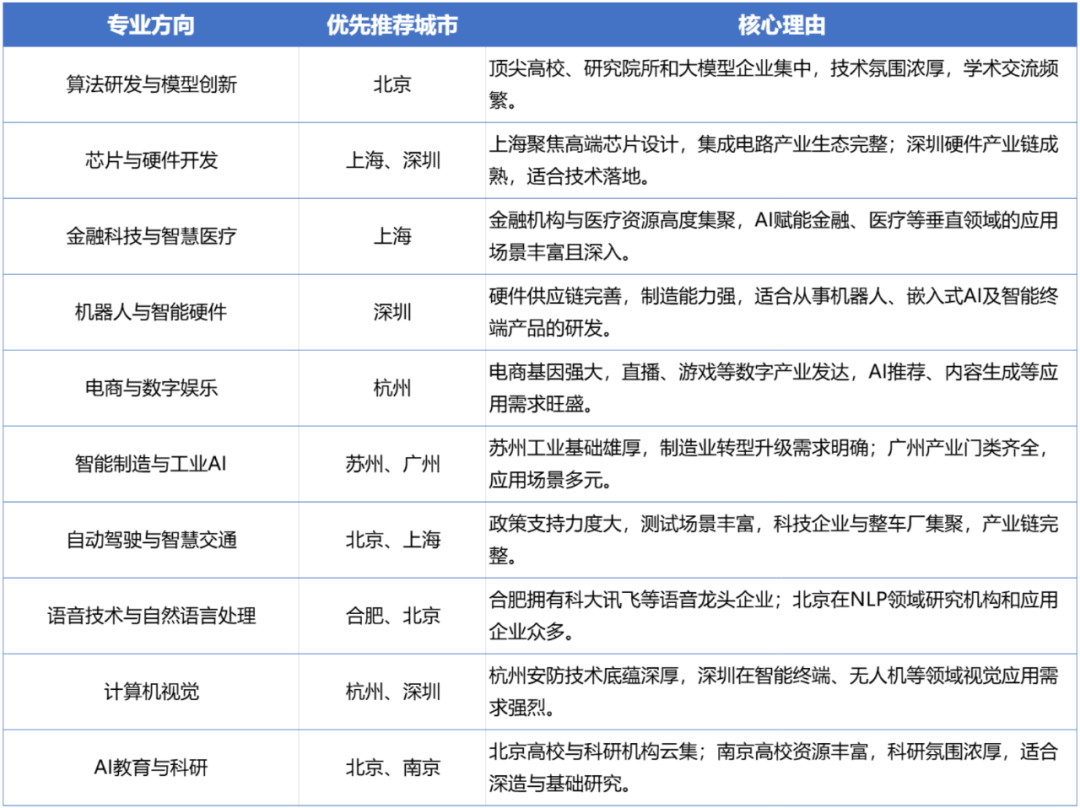
Beijing leads the charge, followed closely by Shanghai, Shenzhen, and Hangzhou — each leveraging distinct industrial strengths and resource density to attract next-generation AI talent.
---
Milestone: 600+ Registered Large Models
The Cyberspace Administration of China has announced:
> The number of registered large models nationwide has surpassed 600, ushering in a new stage in China’s AI race — the city league phase.
Now, with Beijing ahead, Shanghai and Shenzhen in strong pursuit, and Hangzhou as a rising dark horse, AI professionals face a crucial choice:
> Which city offers the best career development path for me?
Choosing a city in AI is more than a job hunt — it’s about growth speed, mindset shaping, and long-term possibilities.
Let’s unfold the AI city map.
---
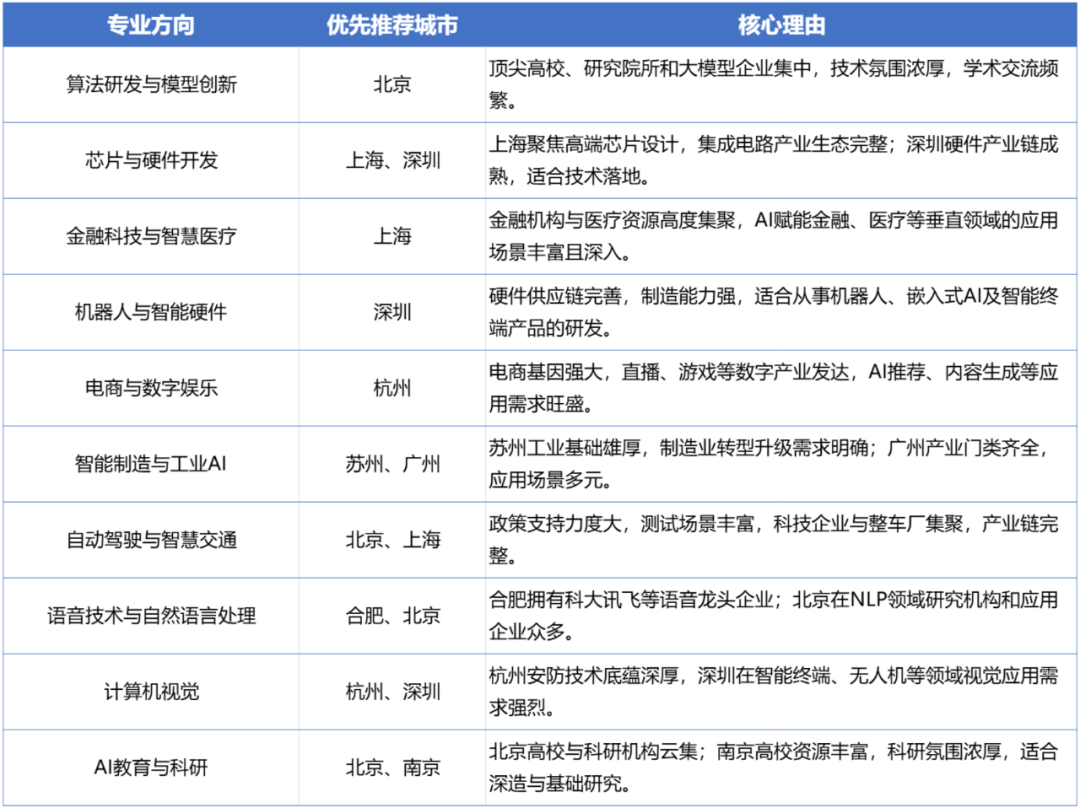
Beijing: Comprehensive Ecosystem & Top-Tier Resources
Stats:
- 176 registered large models (highest in China)
- 2,400+ AI companies
- 40% of national AI financing deals
- Home to 121 top global AI scholars (over 40% of China’s leading experts)
Key Advantages:
- Largest concentration of top universities nationwide.
- Rich tech industry base from the internet boom era.
- Full industrial chain layout, covering everything from frameworks to applications.
Career Edge:
Beijing offers deep academic exchange, cutting-edge research opportunities, and robust industry support.
Best For:
- Goal-driven professionals ready for high competition.
- Specialists aiming at core AI technology or academic frontiers.
---
Shanghai: International Vision & Industry Integration
Profile:
- Hub for multinational tech companies’ China HQs and R&D centers.
- Leading national computing power index and scale.
- Strong cross-domain AI application in finance, healthcare, manufacturing.
Key Advantages:
- International exposure and cross-cultural environment.
- AI deeply embedded into traditional industries.
- Mature infrastructure for industry-computation synergy.
Best For:
- Professionals focused on AI commercialization.
- Innovators aiming for global expansion.
- Talent integrating AI into traditional industries.
---
Shenzhen: Hardware Powerhouse & Manufacturing Expertise
Profile:
- China’s “manufacturing capital” — the hands of AI.
- Giants like Huawei and Tencent anchor the ecosystem.
- 120 AI financing deals last year (more than Shanghai).
Strengths:
- Complete hardware ecosystem and supply chain.
- Rapid prototyping and full cycle development from model to product.
- Leading in AI-powered robotics and smart devices.
Best For:
- Practical-minded engineers.
- Innovators turning AI algorithms into physical products.
- Problem-solvers tackling real-world engineering challenges.
---
Hangzhou: Agile Innovation & Academic Synergy
Profile:
- Former e-commerce hub now reinvented as a tech innovator.
- Breakthrough successes: DeepSeek-R1 and Unitree robotics boom.
- Zhejiang University — Top 3 in China for AI talent output.
Strengths:
- Efficient industry–academia–research conversion.
- Blend of Alibaba’s entrepreneurial DNA with strong academic backing.
- High energy for rapid iteration from idea to market.
Best For:
- Creators thriving in fast-paced ecosystems.
- Professionals valuing agility and market responsiveness.
---
Beyond Tier-1: Regional Hubs & Niche Opportunities
Cities like Nanjing, Chengdu, and Wuhan offer:
- Lower living costs than Tier-1 cities.
- Strong specializations:
- Nanjing: Government–enterprise collaboration.
- Chengdu: Culture, tourism, and gaming AI.
- Wuhan: Fast-growing AI industry, Optics Valley ecosystem.
Best For:
- Specialists building deep expertise in niche sectors.
- Talent seeking balanced work–life rhythm.
- Professionals contributing to ground-up industry formation.
---
Choosing the Right City: Four Key Principles
- Follow Technology Trends
- Focus on cities aligned with your desired AI track (e.g., AI Agents).
- Align with Industrial Chains
- Match your skills with the city’s dominant AI sectors.
- Assess Innovation Density
- Look for districts with high concentration of creative talent.
- Understand Implicit Knowledge
- Adapt to local work culture, norms, and unwritten rules.
---
Final Words: Your Best City is Your Best Choice
There is no universal “best” — only the best fit.
Beijing offers vastness, Shanghai precision, Shenzhen pragmatism, and Hangzhou vitality.
The real winners are those who create value anywhere they go.
Platforms like AiToEarn官网 enable AI creators to monetize globally:
- Publish across Douyin, WeChat, Instagram, YouTube, X
- Access tools for AI content generation, cross-platform publishing, analytics, and model rankings (AI模型排名)
With such tools, your impact and income are no longer tied to any single city.
Good luck in finding your launchpad for AI success!