This Year’s Guangzhou Auto Show: The Main Spotlight Isn’t on Carmakers
From Booth Models to “Little Bees” – A Changing Auto Show Scene
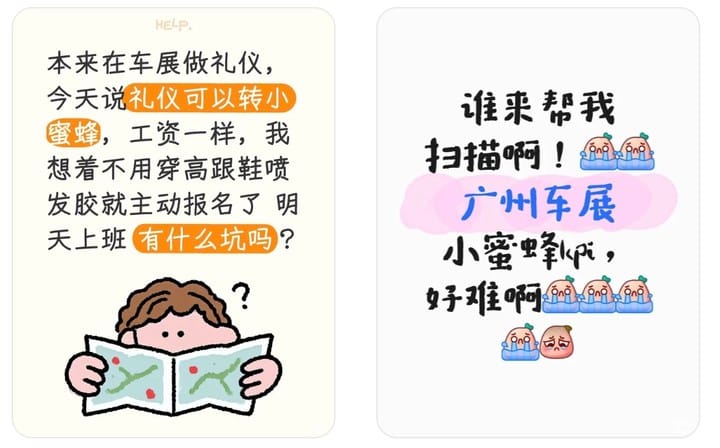
Last Friday, on my way home from media day at the Guangzhou Auto Show, I came across a post on Xiaohongshu.
A young woman who had worked as a hostess at a booth asked:
> “Is being a ‘little bee’ easier than working at a booth?”
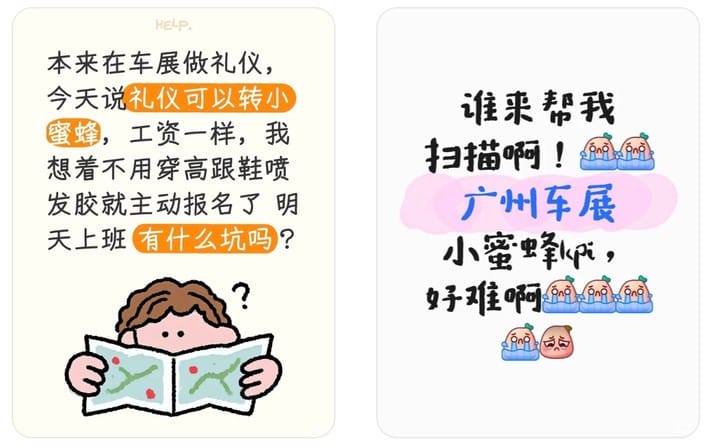
At first, I wasn’t sure what “little bee” meant. After a quick search, I learned it refers to part‑time workers who roam the exhibition hall holding signs, handing out gifts, and directing traffic to their brand’s booth.
I forwarded the post to a friend, who laughed and replied:
> “In that case, last year’s CEOs like Lei Jun and Yu Chengdong were the biggest ‘little bees’.”
And in a way, they were. On the first day of last year’s show, tech and auto CEOs — Lei Jun, Yu Chengdong, and others — walked from booth to booth attracting dense crowds wherever they went.
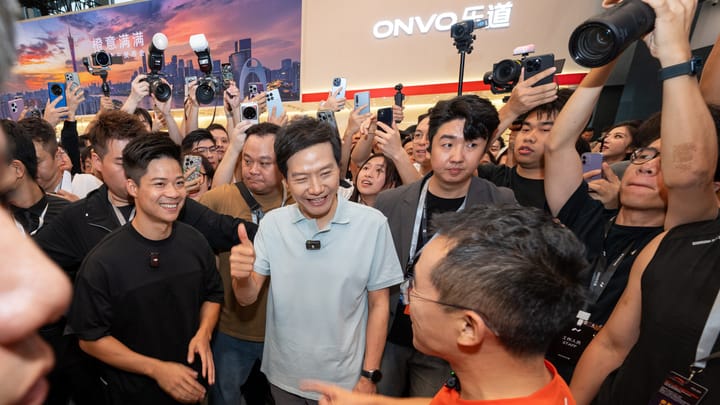
▲ 2024 Guangzhou Auto Show — Lei Jun and Su Bingtian at the LeDao booth
---
A Quieter Atmosphere in 2024
This year felt different:
- Fewer top executives attended — Li Bin (Nio), He Xiaopeng (XPeng), Wei Jianjun (Great Wall) were present, but without major product launches.
- Crowds were smaller and less celebrity‑driven.
- Visitor focus shifted back to the cars themselves, without the overwhelming hype of previous years.
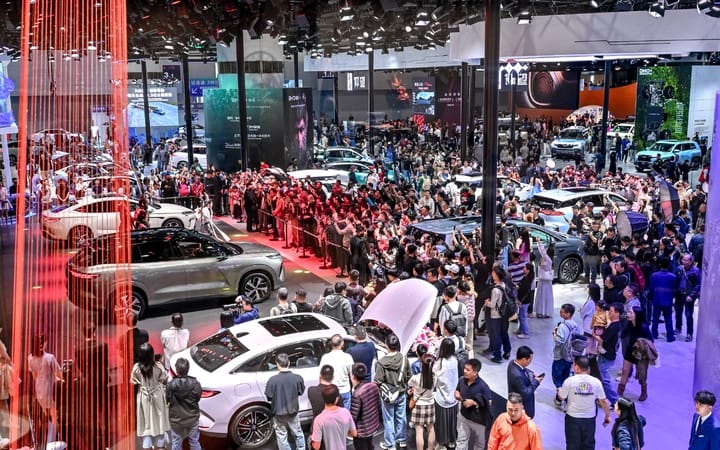
▲ Audience waiting for BYD’s press conference to begin
The buzz around auto shows is fading, reflecting a broader industry shift — from rapid expansion to stock-market competition.
---
Luxury Sales Fall, NEV Firms Re‑Focus on Products
- Ultra‑luxury brands selling only two‑digit units no longer dominate headlines.
- Former hype‑led NEV brands now face:
- Market homogenization
- Tightened regulations
- Pressure to focus on tangible product strength
Yet that product strength is increasingly defined by suppliers, not the automakers themselves.
---
The Stage Has Changed – Suppliers Take the Spotlight
Huawei’s Qiankun Intelligent Driving
At this year’s show, Huawei’s booth was a prime example of change:
- Nearly 20 partner models from Audi, Changan, Fangchengbao, GAC, etc., arranged around the Qiankun exhibit.
- Out of 13 passenger car halls, 10 featured Qiankun-equipped vehicles.
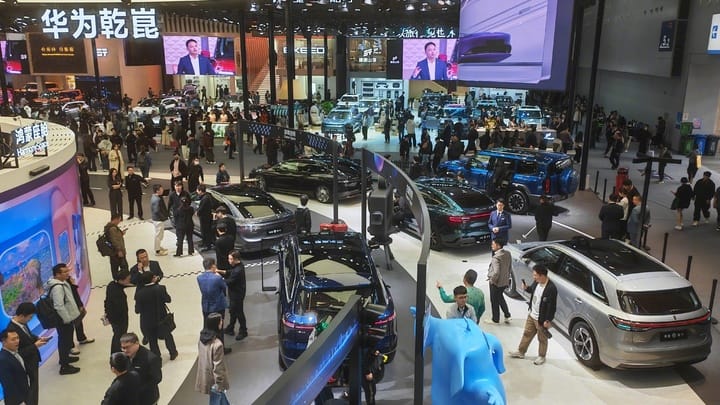
Tech supplier names — “Huawei,” “CATL,” “Momenta” — dominated main screens, promotional materials, and public conversation.
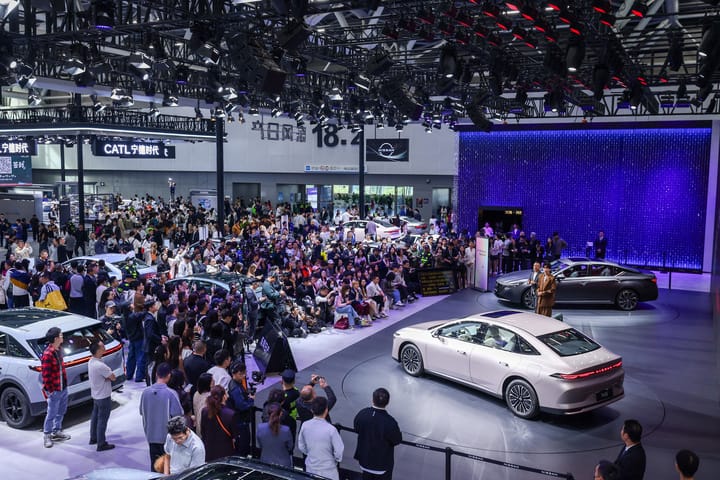
▲ Dongfeng Nissan and CATL booths
---
AI Models Outshine Cars
SAIC Roewe held a press event for its Doubao Deep Thinking Large Model, debuting on the Roewe M7 DMH sedan.
> When tech is differentiated enough, it becomes a product in its own right.
---
Tier‑1 Power: Old vs. New
- Fuel-era dominance: Bosch, Continental, Denso held control with closed, proprietary systems.
- Early electrification hopes: Automakers aimed for vertical integration and sovereignty.
- Reality: New Tier‑1s — Huawei, CATL, Momenta — now wield equal or greater influence, defining standards and ecosystems.
Huawei’s “not building cars” strategy enhances platform openness and reusability.
---
Supplier Alliances Reshape the Market
By Oct 2025:
- Huawei Qiankun: Partnerships with 14 automakers, 33 production models, priced RMB 150k–1M+.
- “YiJing” & “QiJing” debuted with Dongfeng & GAC; “HuaJing” with SAIC‑GM‑Wuling — forming Huawei’s “Five Realms and Three Jings” strategy.
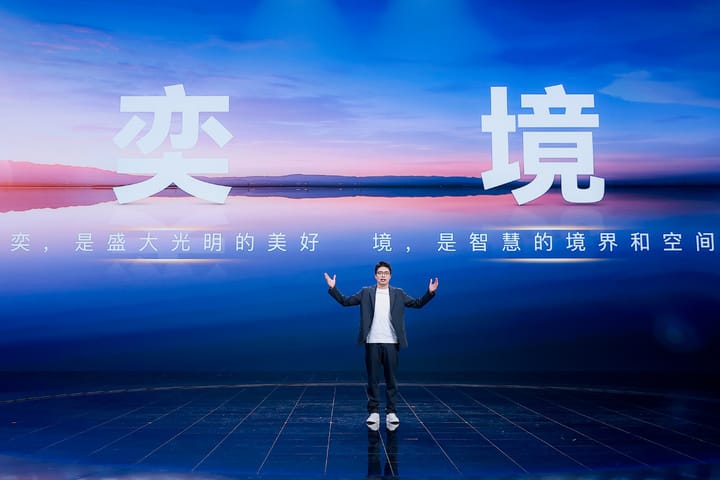
Momenta:
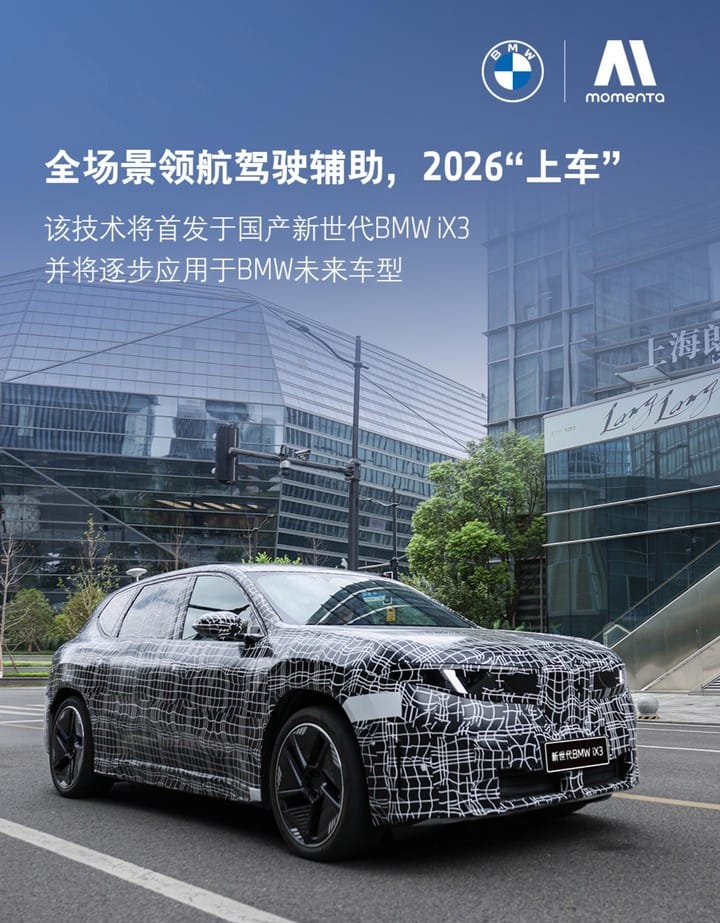
- Adopted by top brands (BMW, Mercedes, Toyota, Nissan, Honda, Buick, Cadillac).
- Known as “Savior of Joint Ventures”, offering modular solutions to speed up tech integration.
Horizon Robotics:
- Journey chips + HSD system — scalable from basic to high-level ADAS.
- Over 10 million chips shipped.
---
NEVs Lose Their “Intelligence” Monopoly
Rapid Downward Diffusion
Standardized tech stacks now make once‑premium features affordable:
- Highway NOA, automated parking, voice AI assistants, OTA upgrades — now available on sub‑RMB 100k cars.
- Example: Deepal L06, Starway ET5 achieve full-scenario ADAS with Horizon’s Journey 6P chips.
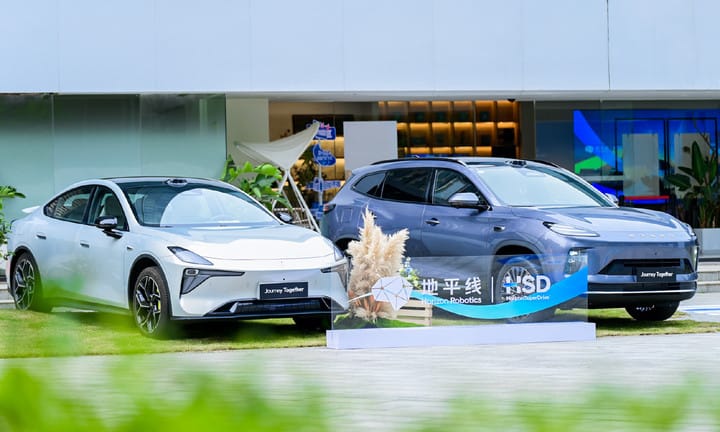
▲ Deepal L06 and Starway ET5 using Horizon solutions
---
ICE Brands Embrace Intelligence
Volkswagen, Nissan, Chery now actively market L2 ADAS, smart cockpits in ICE vehicles.
Case: Dongfeng Nissan Teana·HarmonyOS Cockpit — RMB 130k, comes with:
- 15.6-inch Huawei screen
- HarmonyOS Cockpit 5.0
- AI voice assistant
- Cross-device interaction
- Mic-free karaoke

---
Divergence and Reshuffle
Path 1: “All‑Rounders” — Full Stack Control
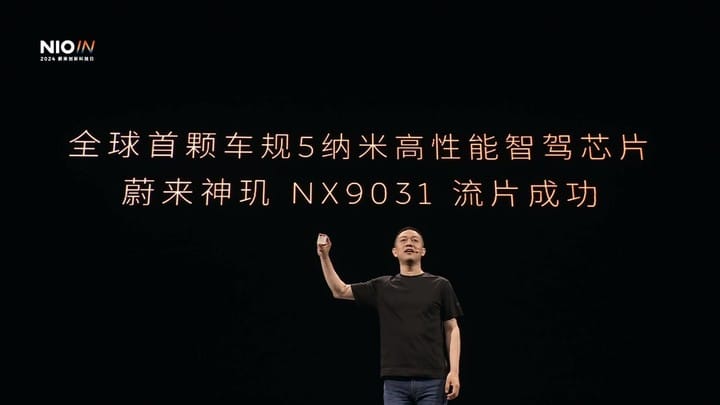
Tesla, BYD, Xiaomi, NIO:
- Develop chips, algorithms, batteries, cockpit systems, OSs in-house.
- Own entire supply chain.
- Build vertically integrated moats.
---
Path 2: “Integrators” — Agile Partnerships
Most brands:
- Outsource core systems to Tier‑1 leaders.
- Focus on product definition, UX, and marketing.
- Achieve competitive offerings at speed.
---
The New Battlefield – User Experience
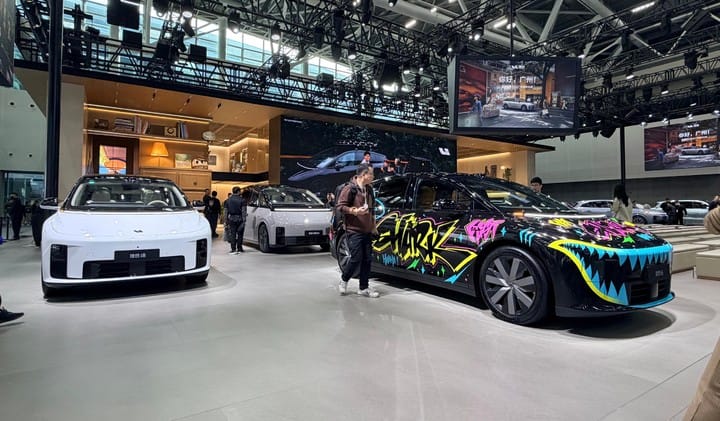
With hardware and intelligence commoditized, competitive advantage now depends on:
- Precision in product definition
- Quality of human–machine interaction
- Power to shape brand perception
- Depth of ecosystem services
- End‑to‑end user lifecycle operations
> Intelligence is no longer a moat — it’s the ticket to entry.
> The battle is now about delivering a continuously evolving premium experience.
---
Lessons from Smartphones
Just as in smartphones:
- Not every OEM needs core tech R&D, but survivors excel in ecosystem, design, service, or UX.
- Auto industry now faces the same rapid elimination cycle.
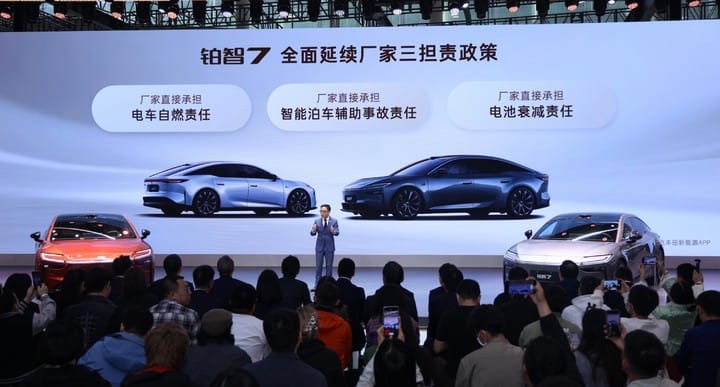
▲ GAC Toyota’s “Three Manufacturer Responsibilities Policy” at the auto show
---
Final Takeaways
Enterprises without:
- Deep tech capabilities, and
- Precision user operations
will fade in the next reshuffle.
The market will reward those who transform advanced tech into trusted, perceivable experiences that customers happily pay for.
---
Pro Tip for Creators: Platforms like AiToEarn官网 mirror this integration-and-scale model:
- AI-generated content
- Multi-network publishing (Douyin, Xiaohongshu, YouTube, LinkedIn, etc.)
- Analytics + model rankings
- Monetization tools
In both automotive and creative industries, ecosystem mastery defines success.