# Sales Champion Resigns, Performance Collapses!
## Goals Unclear, Team Loses Momentum!
## Processes Chaotic, Managers Firefighting Daily!
---
## Does This Sound Familiar?
Such crises often stem from **over-reliance on “star performers”** and a lack of **replicable, systematic organizational capability**.
Yan Xiaoyun — legendary member of Ali’s *Iron Army*, recognized by Jack Ma as a “Century Star” — rose from frontline sales to Regional General Manager, leading nearly 1,000 people to sustained growth.
Her insight: **There is never a “born sales Iron Army” — only systems that enable ordinary people to achieve extraordinary results.**
At the core of Alibaba’s “Three Management Axes” is **system thinking**.
Managers who adopt system thinking build **well-oiled organizational machines**, rather than relying on heroic individuals.
Great managers transform the craft of a small food stall into **McDonald’s standardized processes**.

### The Only Lasting Advantage
In a fast-changing market, the true competitive advantage is **organizational capability that learns faster and replicates better than rivals**.
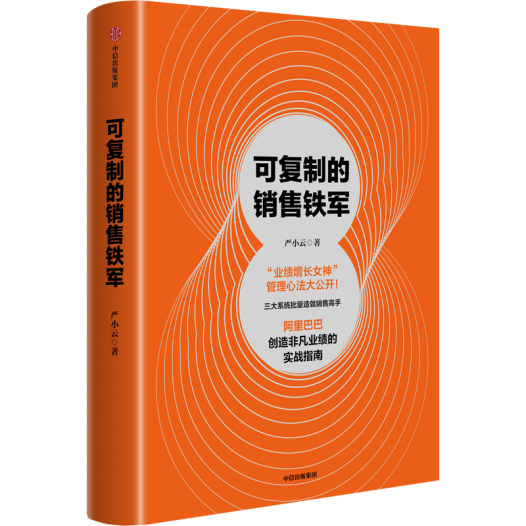
As Yan Xiaoyun states in *The Replicable Sales Iron Army*:
> “A true sales iron army doesn’t win individual battles by luck — it wins the whole war through a system.”
---
## I. System Is the Real Core Competence of an Enterprise
**Question:** What is your enterprise’s or team’s core competence?
If your answer is “our people,” beware — this likely means you lack a true core advantage.
### The Harsh Realities
1. **People won’t remain loyal forever**
Even the best talent can be attracted away by better opportunities.
2. **People are not the company’s permanent assets**
Jack Ma noted: “Employees are society’s, not yours.” Talent is transient.
3. **Stable personnel ≠ stable competitiveness**
Even with a strong culture, talent turnover is inevitable.

### Why Relying on Individuals Fails
Building competence on individuals is like constructing a tower on sand — unstable and doomed in a storm.
**The sustainable answer:** **Systems.**
---
### Example: How Systems Protect Competitiveness
- **Recruitment System** — continues to attract talent regardless of HR turnover.
- **Goal Management System** — ensures everyone knows targets and responsibilities.
- **Training System** — develops replacements quickly when someone leaves.
**Core Principle:**
A system attracts talent, empowers the ordinary, and preserves strength **independent of personnel changes**.
---
## What Is a “Good System”?
A strong system has:
1. **Anti-individual disturbance**
Clear, rigid processes unaffected by one leader’s mood. Like a computer’s operating system, it runs smoothly regardless of who is at the keyboard.
2. **Continuous evolution**
Systems must adapt over time, replacing outdated methods with improved ones.
---
### AI Era Example
Platforms like [AiToEarn官网](https://aitoearn.ai/) apply **system thinking in content creation** — enabling creators to:
- Produce AI content
- Publish across multiple platforms instantly
- Analyze performance
- Monetize effectively
This transforms individual skill into **replicable, scalable results** for channels like Douyin, WeChat, YouTube, LinkedIn, Instagram, and more.
---
## II. A Manager Achieves Results Through Others
Many managers never make the shift from **doing** to **leading**.
Example: Sales managers spending most meeting time discussing customers instead of team development.
**Manager’s Role:**
Empower the team to win — not win alone.
**Ask Yourself:**
- Do you focus on securing one client or enhancing team capability?
- Do you solve problems reactively or build systems to prevent them?
---
### From “Problem Solving” to “Driving Resolution”
**Case Study: The Fruit Farm**
- Problem Solving → Coaching poor workers individually
- Problem Resolution → Observing high performers, standardizing shovels, processes, and techniques

Result: Productivity and quality soared after three standardized changes:
1. **Tool Standardization** — 80 cm medium shovel for all.
2. **Process Standardization** — enforce critical five steps.
3. **Angle Standardization** — 45-degree soil cut.
---
**Manager’s Core Duty:**
Extract team best practices → refine → standardize → embed into team workflow.
---
## III. Three Core Systems for a Replicable Sales Army
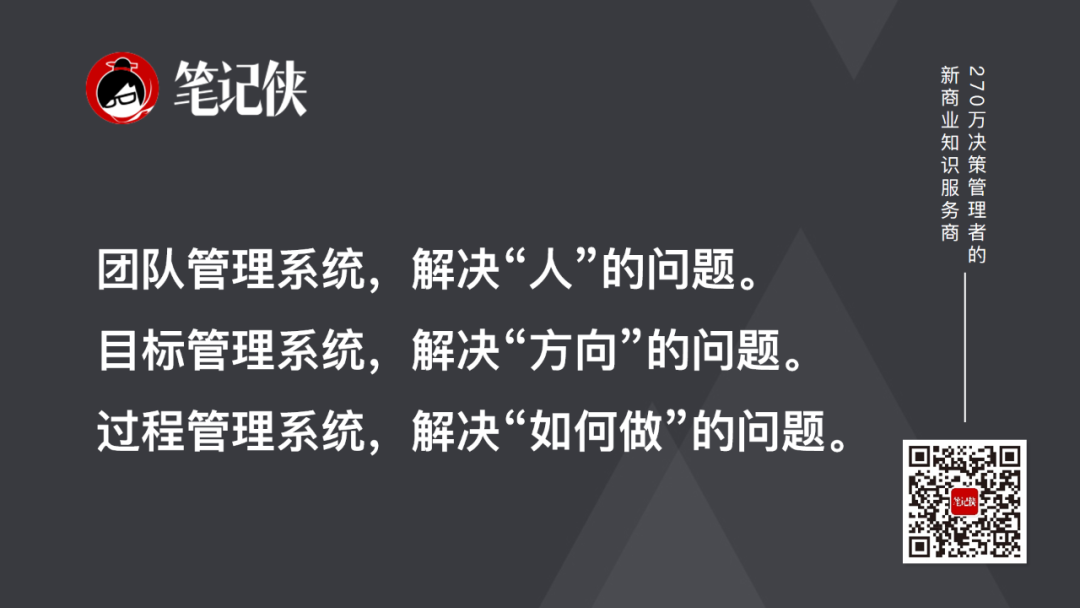
1. **Team Management System** — recruit, train, motivate, and remove underperformers.
2. **Target Management System** — set, sell, and track goals.
3. **Process Management System** — set standards, focus on key variables, and use PDCA cycles.
---
### Four Elements of a Replicable System
1. **Structured Extraction** — distill successful actions.
2. **Systematic Construction** — integrate into a clear framework.
3. **Standardized Output** — define explicit, measurable standards.
4. **Scenario-Based Training** — practice in simulated or real conditions.

---
When others fear losing top talent, your system regenerates capability.
When rivals need pep talks, your standardized processes keep morale and performance high.
---
**Digital Age Parallel:**
Platforms like [AiToEarn官网](https://aitoearn.ai/) provide an open-source AI content framework — helping creators replicate top results across Douyin, Bilibili, Instagram, YouTube, and more.
---
### Final Takeaways
- **Management = Building systems, not managing people.**
- **Systems turn one-time success into repeatable performance.**
- In sales or content creation, use technology to amplify and replicate excellence.
> **A true sales iron army doesn’t rely on luck to win battles — it relies on systems to win wars.**