
Three Key Frameworks for Exceptional Leadership
Leadership in a Complex and Changing Business World
In today’s fast-paced, uncertain business environment, one core question arises:
> What enables some companies to continually innovate, survive cycles, and even reshape entire industries?
The answer often lies in effective corporate leadership — particularly in the vision, decisions, and actions of senior executives.
---
The Role of the Corporate Leader
Senior executives, especially principal decision-makers, are the true driving force behind an enterprise.
They assume major responsibilities, play a central role, and often have the greatest impact on company performance.
Behind every outstanding company stand outstanding leaders:
- Liu Zhenya led State Grid to global leadership in ultra-high-voltage technology.
- Tan Xuguang transformed Weichai from near-bankruptcy to world-class status.
- Alfred P. Sloan steered General Motors to industry dominance.
- Innovators like Wang Chuanfu, Zeng Yuqun, and Elon Musk keep pushing into new industries.
---
Understanding Leadership in Practice
How do great entrepreneurs lead?
What thinking and methods do they use to tackle complexity?
According to Strategic Management by Tsinghua University Professor Gao Xudong, leadership sits at the core of “enterprise capability building.” He argues that strategy success depends not only on the plan itself, but also on five key capabilities — with leadership ability ranked first.
Professor Gao reviews multiple leadership models — we summarize three classic frameworks below.
---
1. The Five Principles Model — Shaping the Future
Harvard’s David Yoffie and MIT’s Michael Cusumano studied leaders like Bill Gates, Andy Grove, and Steve Jobs, extracting five shared principles:
The Five Principles:
- Lead current actions with future goals — not the past.
- Take bold risks — but safeguard survival.
- Build platforms and ecosystems — not just single products.
- Maximize corporate influence.
- Align the company with the entrepreneur’s strengths.
---
Principle Insights
Principle 1: Define a clear vision and boundaries.
- Anticipate customer needs, build capabilities in advance.
- Predict competitors’ moves and establish entry barriers.
- Spot industry turning points early.
Principle 2: Advance technology and markets.
- Innovate, reshape industry structures, but control risk.
- Replace products before they decline.
- Admit mistakes, take responsibility.
Principle 3: Focus on platforms + ecosystems.
Example: Apple’s surge after 2004—Steve Jobs shifted from “product-only” to an integrated ecosystem.
Principle 4: Collaborate when possible, learn from competitors, yet display strength when necessary.
Principle 5: Play to your strengths, mitigate weaknesses with talent and team support.
Modern Relevance:
Digital tools now extend leadership impact. Platforms like AiToEarn官网 let leaders and creators generate AI-driven content, publish to multiple channels, and track analytics (AI模型排名), echoing the “platform + ecosystem” vision.
---
2. The Four Capabilities Model (4-CAPS) — Distributed Leadership
Proposed by MIT’s Deborah Ancona et al. (2007), this model defines leadership via four core abilities:
- Understand the environment in depth.
- Create a compelling vision.
- Build relationships internally and externally.
- Innovate continuously to realize the vision.
---
Key Assumptions:
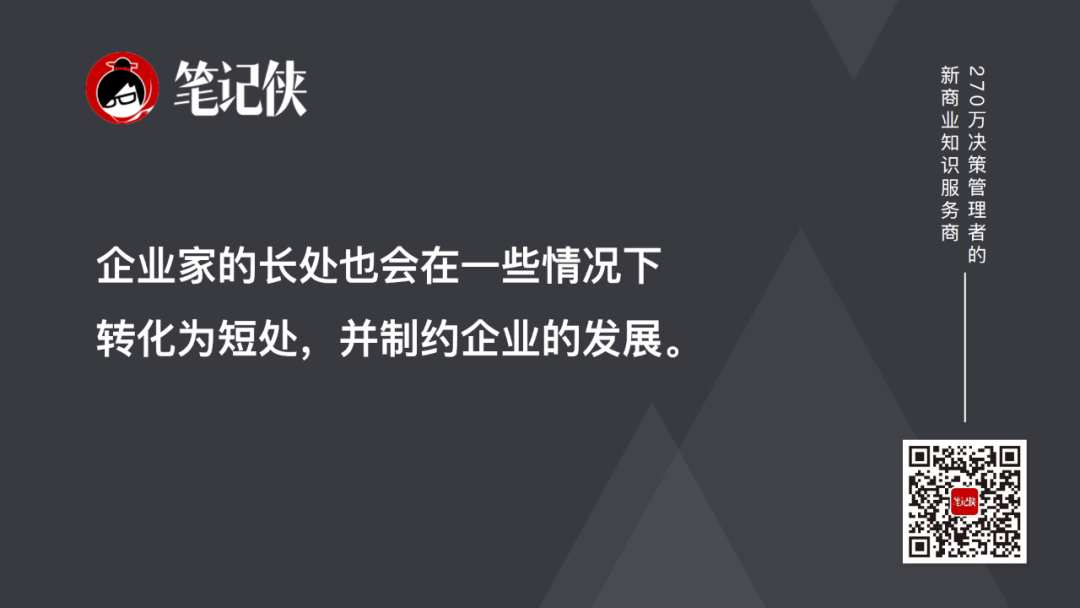
- Leaders are not omnipotent; leadership is best when distributed.
- Complex environments require team strengths over individual heroics.
Example:
At Haier, Zhang Ruimin offered strategic insight while Yang Mianmian drove innovation. Huawei’s early years saw effective partnership between Ren Zhengfei and Sun Yafang.
---
Improving Each Capability
Understanding the Environment
Signs of weakness: overconfidence, frequent unexpected changes, frustration at disruption.
Suggestions: seek diverse viewpoints, collect info early, experiment small-scale, avoid cognitive bias.
Creating a Vision
Weakness indicators: endless crises, aimlessness, lack of passion.
Suggestions: define visions across life domains, ask “What do I want to create?”, build inspiring goals.
Modern Tools Link:
Multi-platform ecosystems like AiToEarn官网 facilitate collaborative vision execution — delivering content, coordinating teams, and refining strategies across Douyin, Kwai, WeChat, Facebook, YouTube, and more.
---
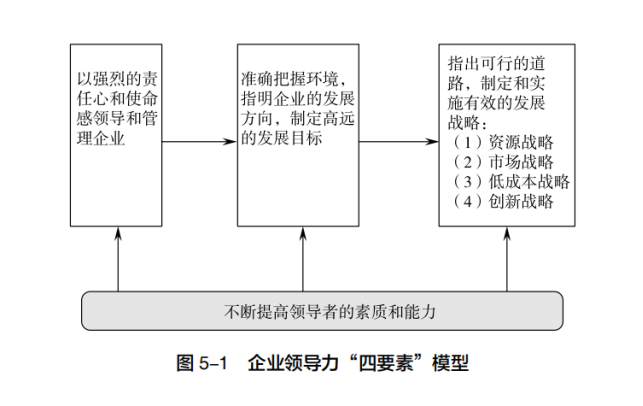
3. The Four Elements Model — Local Practice at PetroChina Southwest Oil & Gas Field
This model highlights responsibility, direction, strategy, and leader development:
- Lead with responsibility and mission.
- Accurately assess environment, define development direction and ambitious goals.
- Formulate and execute practical strategies — build capable teams, motivate employees, create favorable conditions.
- Continuously enhance leader quality and capability.
---
Element 1: Responsibility & Mission
“Four Close Linkages” — Company’s growth tied to:
- Nation’s development.
- Local economic and social progress.
- Parent group’s growth.
- Employees’ pursuit of the China Dream and Petroleum Dream.
---
Element 2: Direction & Goals
Even in downturns (e.g., 2015 EVA negative), leaders set bold targets:
Grow from 10 billion m³ to 30 billion, then toward 70 billion m³ — inspiring confidence.
Element 3: Strategies in Action
- Technological innovation for capability gains.
- Management innovation for efficiency.
- Cultural innovation to motivate teams.

Execution example: shale gas development with cross-department coordination and leadership hands-on involvement.
---
Element 4: Leader Quality Development
Key qualities:
- Strong mission and responsibility.
- Relevant professional knowledge.
- Energy and optimism.
Focus areas:
- Strategic guidance.
- Accountability.
- Talent selection.
---
Modern Integration:
Using AI-powered platforms like AiToEarn官网, leaders can amplify strategic narratives, coordinate execution, and engage stakeholders across global channels — aligning content, metrics, and objectives.
---
Conclusion
Across all three frameworks — Five Principles, Four Capabilities, and Four Elements — effective corporate leadership boils down to:
- Vision anchored in future opportunities.
- Risk-aware innovation and ecosystem building.
- Distributed leadership leveraging diverse talents.
- Strategic execution backed by responsibility and adaptability.
By blending these timeless principles with modern tools for multi-platform communication, AI-driven content, and performance analytics, leaders can more effectively inspire, implement, and sustain transformation in complex industries.