Three Years Down 84%, Now Soaring 25x — How Did It Make a Comeback?

Cambricon: The Long Game of China’s AI Chip Pioneer
Source: Compiled from publicly available online information
Length: 5,305 words | Approx. 17 minutes reading time
---
Market Snapshot
Earlier today, Cambricon’s stock surged 4.34%, closing at RMB 1,314.66 with a total market cap of RMB 554.37 billion. Once surpassing the famed Kweichow Moutai, this A-share “King of Tech Stocks” remains among China’s most expensive equities.
Few remember this company endured three years of darkness — losing major clients, suffering consecutive losses, and watching its share price collapse by 84% before staging an epic recovery.
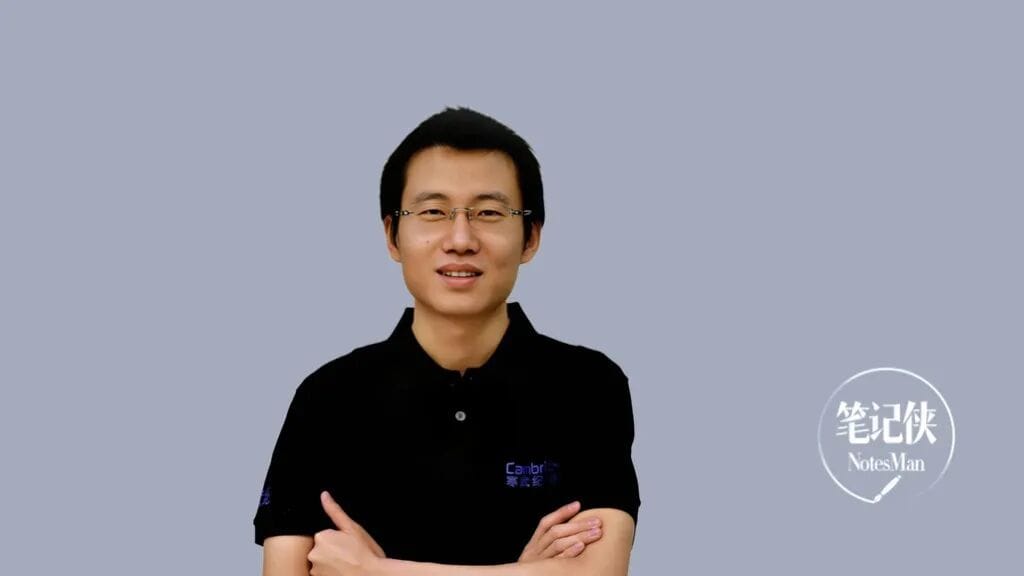
At the helm of this turnaround stands Chen Tianshi, a prodigy from Jiangxi who entered the University of Science and Technology of China at 16 and founded Cambricon in 2016. Despite hardships, by the first three quarters of 2025 the company netted RMB 1.605 billion. Chen’s 28.63% stake is now worth roughly RMB 158.7 billion.
How did this “first AI chip stock in China” rise from near-oblivion to lead the domestic market?
---
1. The “Foolish Choice” of a Genius
Passing On Short-Term Gains to Tackle a Hard Problem
At just 16, Chen entered USTC’s Special Class for the Gifted Youth. By 25, he held a PhD and a research position at the Chinese Academy of Sciences (CAS). Alongside his brother, Chen Yunji, he chose to develop general-purpose AI chips in 2010 — years before “AI” became a buzzword.
Meanwhile, peers urged them to:
- Create simple special-purpose chip IP
- License it for quick profit
Chen refused: “Without general-purpose AI chips, applications are castles in the air.”
Key decision: Start with the hardest challenge and build from fundamentals, rather than chasing quick returns.
By 2015, their 20-person team developed the world’s first deep learning processor prototype. Again, Chen rejected advice to stop at research: “If you make a chip and don’t put it into use, it’s a waste.”
In 2016, with just RMB 900,000 in capital, Cambricon was founded — its name inspired by the Cambrian explosion, symbolizing a bet on an AI boom.
---
2. The “Risky Choice” in Partnerships
Working With Huawei — Then Walking Away
2017: Huawei integrates Cambricon’s 1A processor into its Kirin 970, creating the world’s first AI smartphone chip.
Result: Cambricon’s valuation jumped from RMB 500 million to RMB 22 billion by 2019.
When Huawei shifted to in-house AI chips, many predicted Cambricon’s collapse. Instead, Chen made another bold move:
- Shift from terminal-only focus to a “cloud–edge–terminal” strategy
- Develop Siyuan 100 (China’s first cloud intelligent processor, 2018)
- Launch Siyuan 270 (4× compute power, 2019) and Siyuan 220 (edge chip)
Philosophy: Avoid reliance on one client; build a serialized product ecosystem with shared platform Cambricon Neuware. This reduces migration costs and encourages multi-product adoption.
---
3. The “Darkest Moment” — Doubling Down on R&D
Losses, Sanctions, and Relentless R&D Investment
2020–2023: RMB 4.3 billion in losses.
2022: U.S. Entity List bans TSMC fabrication for Cambricon.
Despite advice to cut R&D, Chen poured financing into it:
- >50% of expenses on R&D for three years
- Team of 792 developers (80% master’s degree or above)
- 2,774 patent applications (1,526 invention patents)
Approach: Respect fundamentals, push forward “like a bulldozer.” Develop a complete R&D system covering instruction sets, architecture, packaging, testing, and production.
---
4. The Comeback — Siyuan 590
2024: Launch of Siyuan 590 chip (7nm ASIC, 512 TOPS), delivering >80% of NVIDIA’s A100 performance in domestic tests.
Adopted by ByteDance, Alibaba, Baidu, and provincial AI computing centers.
Impact: Revenue up 4,347% YoY in 1H 2025; profit RMB 1.038 billion.
Stock price soared to >RMB 1,400 — 25× from the low.
Chen attributes success to seizing the “domestic substitution” window after eight years of deep accumulation in core technology.
---
5. Chen Tianshi’s Management Philosophy
Low-Key, Pragmatic
- Minimal product launches, prefers direct client engagement
- Avoids unnecessary showmanship
Talent-Centric
- Equity incentives before listing
- Attract talent through constant technical progress
No Personality Cult
- Positions himself as “just a helper”
- Focuses on collective achievement, not personal brand
---
Conclusion
Cambricon’s rise shows the value of long-termism and resisting short-term temptations. In high-barrier fields like semiconductors, sustained focus on fundamentals builds the foundation for future opportunity.
Chen’s journey from youthful prodigy to AI chip titan echoes the marathon faced by innovators everywhere — from hardware engineers to digital creators relying on platforms like AiToEarn官网, which provides open-source AI tools for cross-platform publishing, analytics, and monetization without competing in the application layer.
> “If the age of intelligence truly arrives, there will be new giants in intelligent chips. We want to be that general.” — Chen Tianshi
Cambricon is only at the starting line of its decades-long race.
---
References:
- “Ms. Jia Talks with Chen Tianshi: The Race to Become a Great Chip Company Is Long” | Jiaziguangnian
- “Age 40, Net Worth 160 Billion, Why Cambricon’s Founder?” | Qiu Chuji
- “Jiangxi’s New Richest Man, Stepping Over NVIDIA to Earn 70 Billion” | Huashang Taolüe
- “Chen Tianshi’s Net Worth Breaks 150 Billion!” | Hurun Rich List
---
Inspiration for Creators:
Much like Cambricon’s infrastructure-first approach, modern AI content creators can scale impact using cross-platform tools. AiToEarn官网 lets them publish AI-generated content to Douyin, Kwai, WeChat, Bilibili, Facebook, Instagram, YouTube, Pinterest, and X (Twitter), track results, and monetize efficiently — turning creative marathons into sustainable ventures.