Transformer Author Reveals GPT-5.1 Secrets — OpenAI’s Internal Naming Rules in Disarray
A Quiet Yet Fundamental AI Paradigm Shift
Significance comparable to the birth of the Transformer itself.
---
Two Opposing Views on AI Development
Over the past year, opinions have split into two clear camps:
- Camp 1:
- "AI growth is slowing, models have peaked, pretraining is useless."
- Camp 2:
- Regular "big AI weeks" with releases like GPT‑5.1, Gemini 3, and Grok 4.1.
Recently, Łukasz Kaiser — original co‑author of the Transformer and now a research scientist at OpenAI — shared rare, first‑hand insights in an interview.
---
Key Takeaways from Łukasz Kaiser
> AI hasn’t slowed — it has changed generations.
> GPT‑5.1 is not just a minor version bump; OpenAI revised its internal naming rules.
> Multimodal reasoning will be the next breakthrough.
> AI will not make humans entirely jobless.
> Home robotics may become the next major visible AI revolution after ChatGPT.
---
From Pretraining to Reasoning Models: The New Paradigm

Łukasz argues that the perception of slowdown is misleading:
> From the inside, AI capability growth is a smooth exponential curve, similar to Moore’s Law — accelerated by GPUs and technological iteration.
Why the Misperception?
- Paradigm Shift: From pretraining to reasoning models — a second turning point after the Transformer’s invention.
- Economic Optimization: Focus on smaller, cheaper models with similar quality.
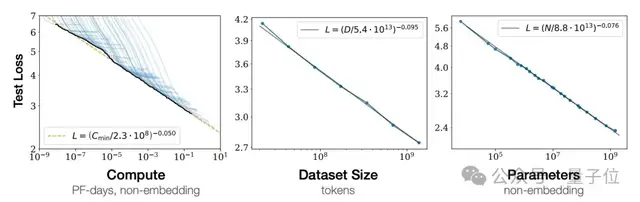
Reasoning models are still early in their “S‑curve,” which means rapid progress lies ahead.
---
What Has Changed?
GPT Evolution
- GPT‑3.5: Answers recalled directly from training data.
- Modern ChatGPT: Actively browses sources, reasons, and delivers more accurate outputs.
Coding Assistance
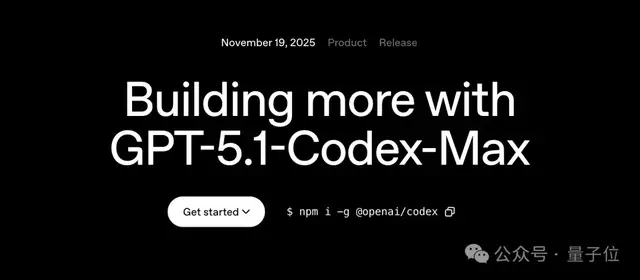
- Shift from “human coding first” to “Codex first, then human fine‑tuning” — a deep though subtle change.
---
Essence of Reasoning Models
- Maintain large foundation model core.
- Prioritize thinking (chain-of-thought) before output.
- Use external tools, like web browsing, during reasoning — and include these processes in training.
- Depend more on reinforcement learning (RL) than gradient descent.
RL in Detail:
- Utilizes reward mechanisms to guide answers.
- Requires fine-grained datasets for precise tuning.
- Enables self-correction during training.
---
Opportunities for Creators in the AI 2.0 Era
Platforms like AiToEarn官网 help creators harness reasoning-model capabilities for monetizable content creation.
Key Features:
- Open-source global ecosystem for AI-driven content.
- Integrates generation, publishing, analytics, and model ranking.
- Simultaneous publishing to major channels — Douyin, Kwai, WeChat, Bilibili, Rednote, Facebook, Instagram, LinkedIn, Threads, YouTube, Pinterest, and X (Twitter).
---
Future of Reinforcement Learning
Expect broader RL applications:
- Large models evaluating correctness and preference.
- Richer human preference data.
- Expanded into multimodal reasoning.
While Gemini can already generate images during reasoning, RL could greatly enhance this.
---
GPT‑5.1: Behind the Naming
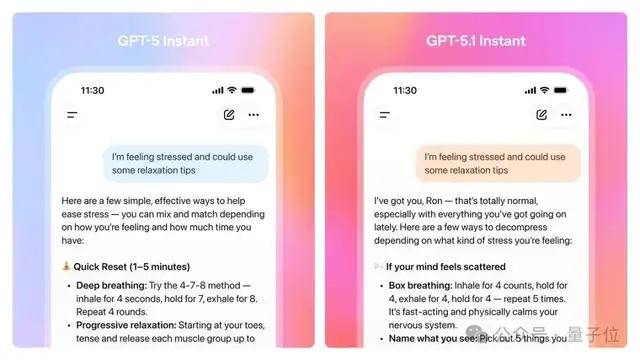
- Not a minor tweak — a major stability iteration.
- Transition from GPT‑4 → GPT‑5 driven by RL + synthetic data.
- GPT‑5.1 focuses on post-training improvements:
- Enhanced safety
- Reduced hallucinations
- Style options (nerdy, professional)
Naming Strategy:
- User experience–oriented:
- GPT‑5: Base model.
- GPT‑5.1: Refined variant.
- Mini: Smaller, faster, cheaper.
- Reasoning: For complex task solving.
---
Limitations of GPT‑5.1

Example:
A simple odd/even counting problem with a shared dot — easy for a 5‑year‑old but failed by GPT‑5.1 and Gemini 3.
Issue: Weak multimodal transfer of reasoning patterns between similar problems.
---
Birth of the Transformer

Łukasz Kaiser’s Path:
- PhD in theoretical computer science & math in Germany.
- Tenure in France researching logic/programming.
- Joined Google during deep learning’s rise.
- Initially in Ray Kurzweil’s team, later Google Brain, collaborating with Ilya Sutskever.
Transformer Creation Trivia:
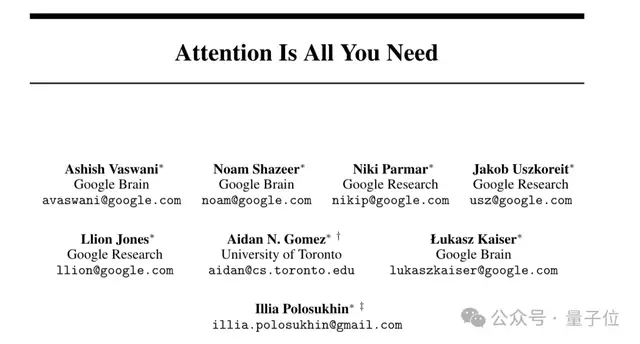
- Eight co‑authors never all met in person.
- Each contributed unique expertise — attention, feed-forward memory, engineering.
At the time, using one model for many tasks was against the norm — but history proved them right.
---
OpenAI vs Google Brain Culture
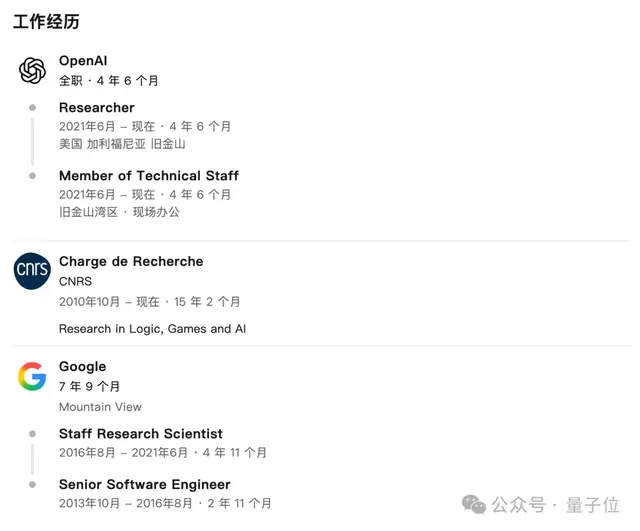
- Joined OpenAI at Ilya’s invitation.
- Google Brain’s scale & remote culture no longer fit.
- OpenAI uses flexible, project-focused teams.
- GPU resource competition is real — pretraining consumes the most, followed by RL and video models.
---
Future of AI and Work
> AI will change work — but will not eliminate it.
Example: Translation
Even with high-accuracy AI translation, human experts remain essential for trust, nuance, and high-visibility cases.
---
Home Robotics: The Next AI Revolution

Why?
- Breakthroughs in multimodal abilities, RL, and general reasoning.
- Hardware for intelligent manipulation is maturing.
- Will be more tangible and perceptible than ChatGPT.
---
References
[1] https://www.youtube.com/watch?v=3K-R4yVjJfU&t=2637s
---
Creator Takeaway
In this fast‑shifting AI landscape, integrated platforms like AiToEarn官网 can maximize distribution, monetization, and impact for AI-generated creativity. They provide:
- Cross-platform publishing to 13+ channels.
- Analytics and AI model ranking (AI模型排名).
- Seamless workflow for creators riding the wave of reasoning-driven AI.
---
Would you like me to also create a side-by-side visual timeline showing Transformer → Pretraining dominant phase → Reasoning model emergence? That could make this paradigm shift even clearer.