
9/16 x 9/16 Measurement Guide for Woodworking and Plumbing
Learn how to read, convert, and work with 9/16 x 9/16 measurements for woodworking, plumbing, and metalwork with accuracy and safety tips.
Understanding 9/16 x 9/16 Measurements
When working in woodworking, plumbing, metal fabrication, or hardware installation, the measurement 9/16 x 9/16 comes up frequently. This figure refers to two equal dimensions — width and height (or depth) — both measuring nine-sixteenths of an inch. Because these measurements are identical, they usually describe square stock, fittings, or threaded components where an exact match in both directions is essential.
Knowing how to interpret, convert, and accurately cut or install materials in 9/16 x 9/16 size will help ensure proper fit, alignment, and performance in your projects.
---
Fractional Inches Explained
In the imperial measurement system, inches are often expressed as fractions rather than decimals. This convention is prominent in trades where analog tape measures and rulers remain the norm.
- An inch can be split into halves, quarters, eighths, or sixteenths (the most common for fine work).
- 9/16 inch literally means nine out of sixteen equal divisions of an inch.
Working with fractions allows quick visual reading and avoids the need for mental decimal conversions.
---
Converting 9/16 Inch to Decimal
Many precision tasks — from machining to CAD drafting — require decimal-inch values.
Formula:
Decimal inches = numerator ÷ denominatorFor 9/16:
= 9 ÷ 16
= 0.5625 inches
Thus, 9/16 x 9/16 equates to 0.5625" x 0.5625" in decimal form. Using decimals can improve compatibility with digital measuring tools.
---
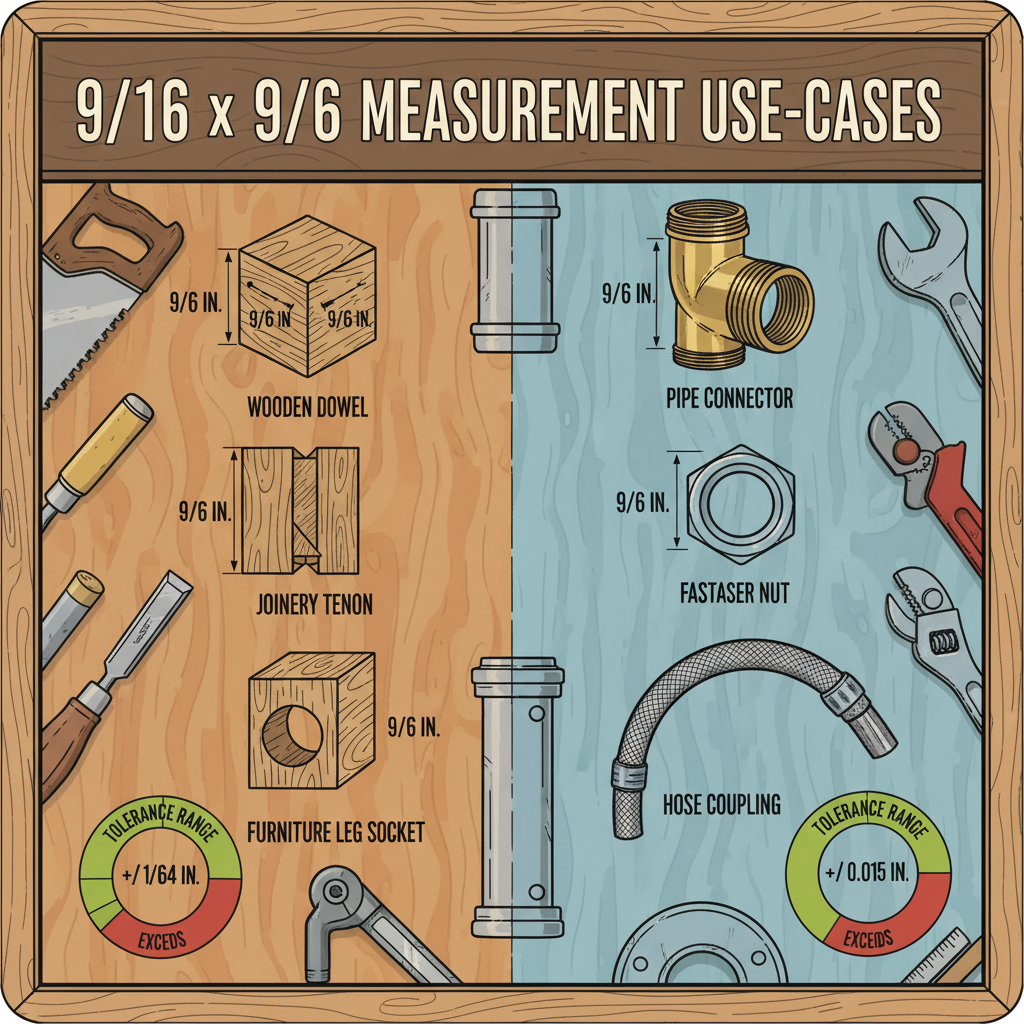
Common Uses of 9/16 x 9/16
This specific square profile appears in a variety of applications:
- Plumbing – Compression fittings, nuts, and valves often have 9/16” flats or openings.
- Woodworking – Custom trim pieces, small square dowels, or joinery components may require an exact 9/16” square cut.
- Fasteners & Hardware – Some bolts and hex nuts specify this size for wrench fit or shank diameter.
- Metal Fabrication – Steel, brass, or aluminum stock is frequently sold as 9/16” square bar.
---
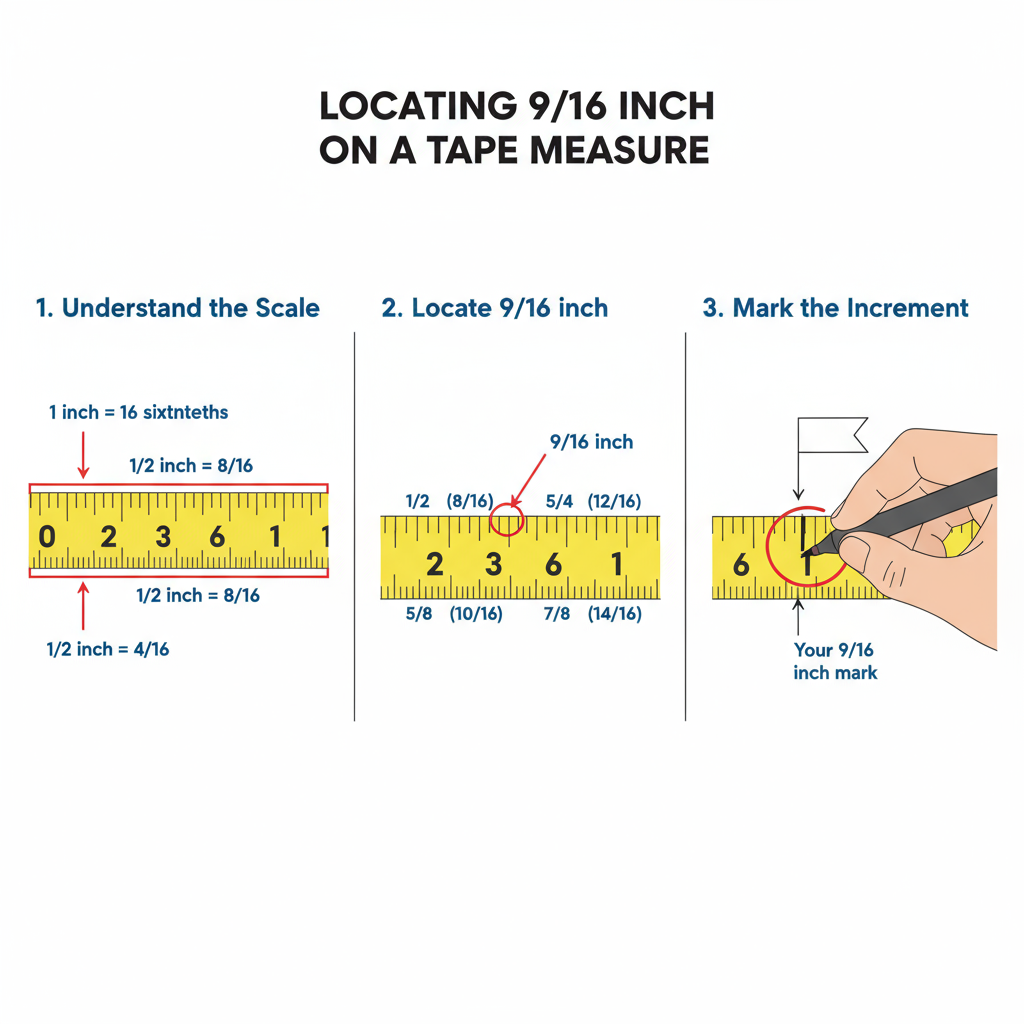
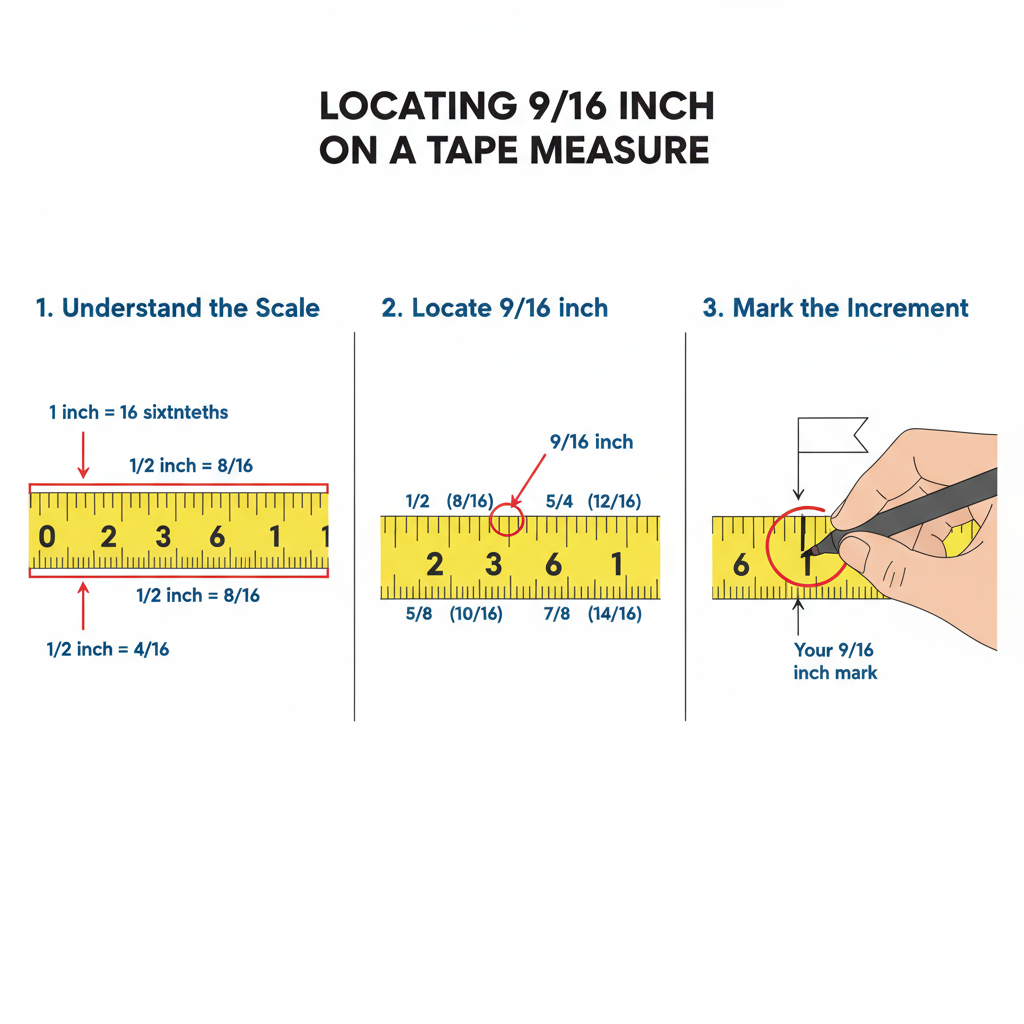
Reading 9/16 on a Tape Measure
On an imperial tape:
- Each inch is marked into 16 equal parts.
- The ninth line from zero is 9/16".
- It is positioned one mark after the 8/16" (1/2") line and one before the 10/16" (5/8") line.
Tip: Mark this measurement in bright ink if used often, to save time and reduce mistakes.
---
Converting 9/16 x 9/16 to Millimeters
In international projects, you may need the metric equivalent.
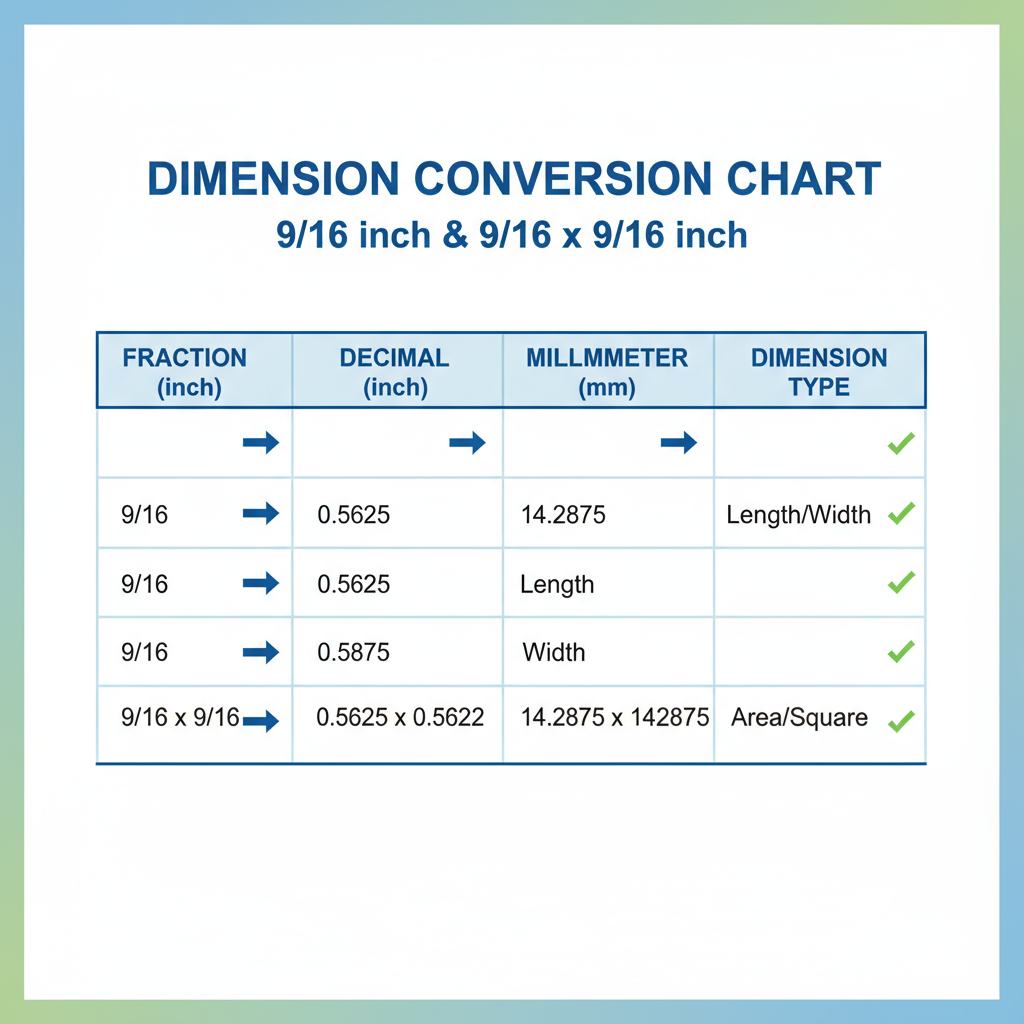
1 inch = 25.4 mm
0.5625 inches × 25.4 mm/inch = 14.2875 mmRounded to two decimal places: 14.29 mm x 14.29 mm.
---
Tolerance Considerations
Real-world dimensions rarely match the exact nominal size. Tolerance is the allowable deviation.
- Woodworking – ±1/64" is often acceptable.
- Precision Metalwork – ±0.005" may be required.
Factors such as blade kerf, humidity-related material expansion, or machine calibration can affect accuracy.
---
Choosing the Right Tools for 9/16 x 9/16 Cuts
To obtain precise square dimensions, match the tool to the task:
| Application | Tool | Why It Works |
|---|---|---|
| Woodworking | Table saw with fence | Ensures repeatable, square cuts |
| Plumbing | Adjustable or 9/16” wrench | Fits common fittings securely |
| Metal cutting | Band saw or chop saw | Produces clean, square edges on metal |
| Measuring | Combination square + steel rule | Confirms both dimensions match |
---
Safety Precautions
Keep these safety measures in mind when working with 9/16" stock:
- Wear safety glasses for all cutting tasks.
- Use push sticks for small wood pieces on saws.
- Clamp work securely to prevent shifting.
- Avoid forcing tools — this enhances both safety and accuracy.
---
Avoiding Common Mistakes
When dealing with fractions:
- Don’t confuse 9/16" with 5/8" (10/16").
- Remember: in 9/16 x 9/16, both sides are this length.
- Factor in tolerance and potential material changes when converting units.
---
Buying 9/16 x 9/16 Parts
To purchase with confidence:
- Confirm both imperial and metric dimensions in the specs.
- Select the desired material — wood, steel, brass, or plastic.
- Check images to verify square profile.
- Inquire about tolerance for machined components.
- If needed, buy oversized pieces for later fine-tuning.
---
Summary and Quick Reference
9/16 x 9/16 indicates two equal sides of nine-sixteenths of an inch — 0.5625" or approximately 14.29 mm.
This measurement is widely used across trades, and mastering its reading, conversion, and cutting will prevent costly misfits.
Quick Reference Table
| Fraction | Decimal (inches) | Millimeters | Notes |
|---|---|---|---|
| 9/16 | 0.5625 | 14.29 | Common for square stock, fittings |
| 1/2 | 0.5 | 12.70 | Slightly smaller than 9/16 |
| 5/8 | 0.625 | 15.88 | Slightly larger than 9/16 |
---
By understanding 9/16 x 9/16 in fractional, decimal, and metric formats, and by applying proper measuring, cutting, and purchasing techniques, you can achieve a professional fit and finish in woodworking, plumbing, and metal fabrication projects. Start incorporating these precise measurement skills today to elevate your craftsmanship and avoid costly rework.


