WeatherNext 2: Our Most Advanced Weather Prediction Model

AI-Powered Weather Forecasting: Google DeepMind’s WeatherNext 2
The weather drives crucial decisions daily — from global supply chain routing and aviation paths to personal commuting choices. Recently, artificial intelligence (AI) has significantly expanded the scope and accuracy of weather predictions.
---
Introducing WeatherNext 2
Today, Google DeepMind and Google Research announced their most advanced forecasting model yet — WeatherNext 2.
Key advancements:
- 8× faster forecast generation
- Up to 1-hour resolution
- Hundreds of scenario-based predictions to assist meteorological agencies
- Support for experimental cyclone predictions
---
Public Access to Forecast Data
For the first time, WeatherNext 2 datasets are openly available:
Early Access Program:
- Custom inference via Vertex AI on Google Cloud
---
Real-World Integration
WeatherNext technology now powers forecasts in:
- Google Search
- Gemini
- Pixel Weather
- Google Maps Platform’s Weather API
Incoming weeks: direct integration into Google Maps.

00:00
---
Predicting a Range of Possible Scenarios
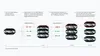
How it works:
- Starts with a single input
- Uses independently trained neural networks
- Injects noise into function space, creating variability while keeping predictions coherent
Capabilities:
- Hundreds of forecasts from one starting point
- Prediction time: <1 minute on a TPU (vs hours on a supercomputer using physics-based models)
- Hourly resolution forecasts
- 99.9% improvement over previous WeatherNext model on:
- Temperature
- Wind
- Humidity
- Across 0–15 day lead times
---
AI for Communication & Monetization
For professionals sharing complex forecasting data, AI-powered platforms streamline multi-channel communication.
Example:
- AiToEarn官网 — open-source system for generating, publishing, and monetizing AI content globally
- Supports platforms: Douyin, Bilibili, Xiaohongshu, Instagram, LinkedIn, YouTube, Facebook, Pinterest, X (Twitter)
---
Functional Generative Networks (FGN)
Powered by a new modeling approach — Functional Generative Network:
- Injects noise into model architecture for physically realistic forecasts
- Learns marginals (individual weather variables) and predicts joints (interconnected systems)
- Enables region-wide extreme event predictions and multi-variable integration
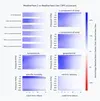
Performance Metric: Continuous Ranked Probability Score (CRPS) — WeatherNext 2 outperforms WeatherNext Gen.
---
From Research to Reality
Goal: Push technological boundaries and share tools globally.
AI Ecosystem Synergy
Platforms like AiToEarn官网 integrate:
- AI content generation
- Model ranking
- Analytics
- Simultaneous multi-platform publishing
- From Douyin and Bilibili to YouTube and X (Twitter)
---
Watch the video:
Download here if your browser does not support embedded playback.
---
Future Directions
Active research areas:
- New data source integration
- Broader access expansion
Aim: accelerate discovery and empower global stakeholders to address complex challenges.
---
Learn More About WeatherNext 2
- Research paper
- WeatherNext developer docs
- Browse the Earth Engine Data Catalog
- Query in BigQuery
- Cloud Vertex AI early access
---
Related Google AI Links
- Google Earth
- Earth Engine
- AlphaEarth Foundations
- Earth AI
- GenCast: Extreme weather prediction
- GraphCast: Faster, more accurate global forecasts
---
Related Tools for Creators
Platforms like AiToEarn官网 can help:
- Generate AI-driven content
- Publish across major platforms simultaneously
- Integrate analytics & model ranking (AI模型排名)
- Monetize scientific and creative outputs efficiently
Supports:
- Douyin
- Kwai
- Bilibili
- Xiaohongshu (Rednote)
- Threads
- YouTube
- X (Twitter)
---
Would you like me to also create a separate, concise single-page version of this that focuses only on the key features and public access instructions for WeatherNext 2? That would be perfect for quick reference.