World’s First Undergraduate Program in Embodied AI! Shanghai Jiao Tong Announces Joint Training with Huawei, Led by Fei-Fei Li’s Protégé
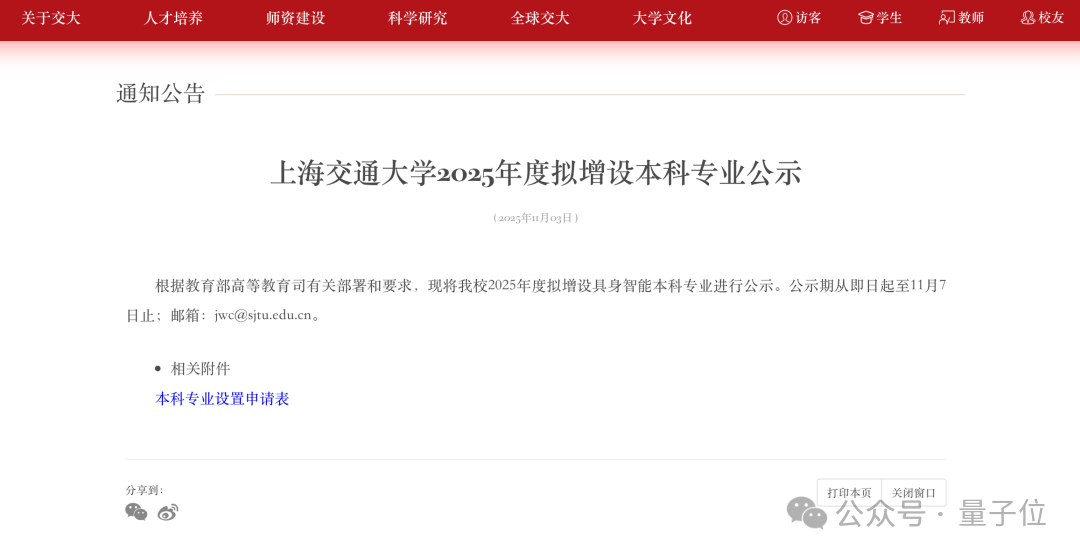
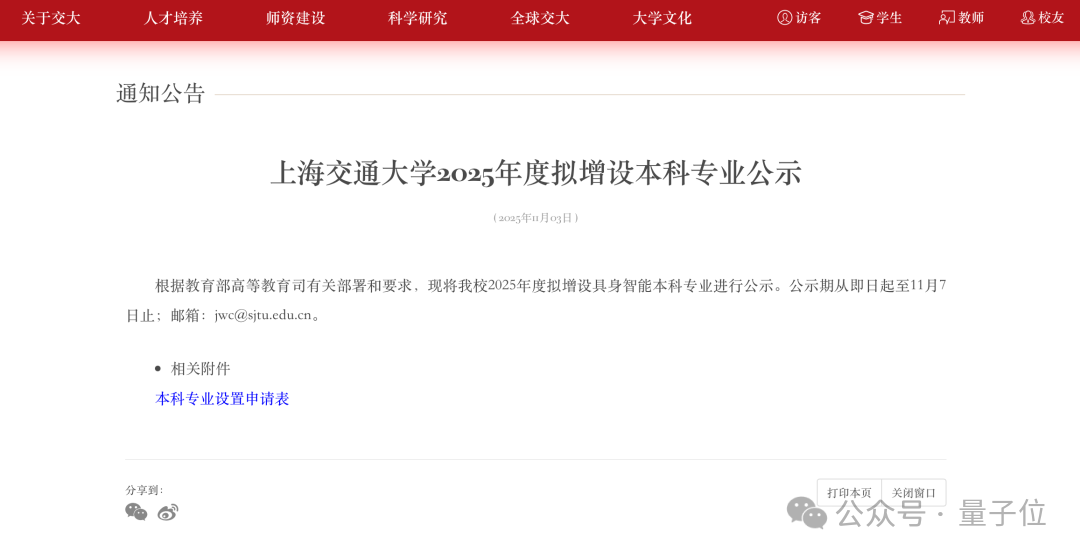
Shanghai Jiao Tong University Launches First-Ever Bachelor’s Program in Embodied Intelligence
The wave of embodied intelligence has officially reached universities, with Shanghai Jiao Tong University (SJTU) announcing it will introduce a Bachelor’s program in Embodied Intelligence, effective from the 2025 academic year.
---
A Global First
- No precedent exists worldwide for an independent undergraduate major in embodied intelligence.
- Globally, related education has only been integrated into aligned disciplines or specialized modules.
- With this launch, SJTU becomes the first in China — and the world to offer such a program.
SJTU was among the first in China to launch an Artificial Intelligence major and is known for pioneering initiatives — or as they say, willing to “be the first to eat the crab.”
---
Program Overview
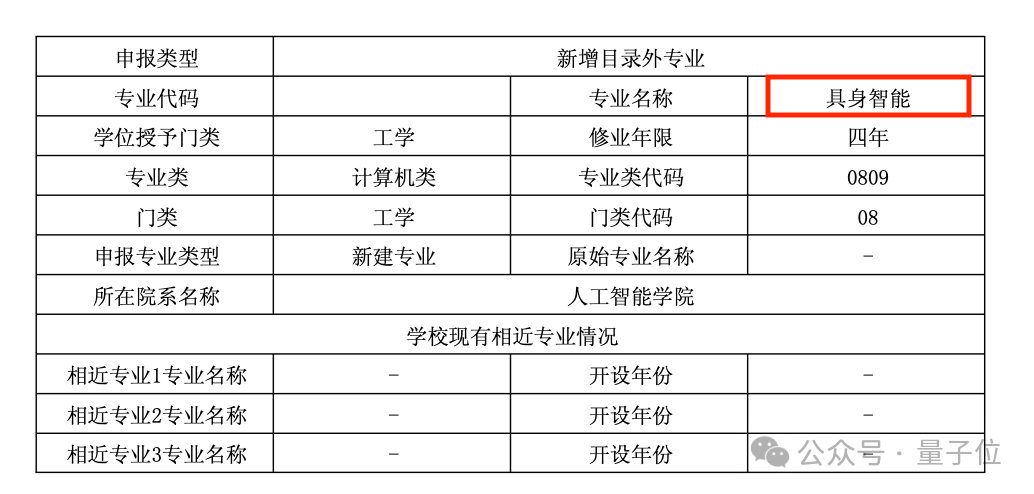
- School & Discipline: School of Artificial Intelligence, Computer Science category
- Degree: Engineering
- Duration: Four years
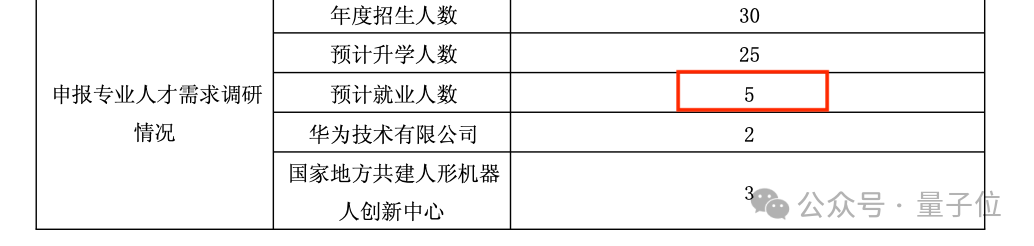
- Annual Enrollment: 30 students
- 25 to postgraduate studies (≈83% progression rate)
- 5 to enter workforce directly
- 2 co-trained by Huawei
- 3 to join National-Local Joint Innovation Center for Humanoid Robots
Curriculum Focus
The program will integrate expertise from:
- Artificial Intelligence
- Mechanical Power Engineering
- Computer Science & Technology
Aim: Cultivate cross-disciplinary talent spanning perception → decision → control → body design, filling key gaps in current talent pipelines.
---
Industry Context
- China’s 2025 embodied intelligence market: 5.295 billion RMB (~27% of global share)
- Global growth projection: USD 17.09B (2024) → USD 124.26B (2034)
SJTU’s timing reflects a belief that embodied intelligence will drive unprecedented AI industry transformation.
Internationally, labs such as Stanford and MIT lead academic research, while companies like Google and Tesla actively invest. Domestically, universities still lack coherent embodied intelligence training — leaving companies to bear high post-hire training costs.
---
Academic Leadership
Program Director: Professor Lu Cewu
- Vice Dean, School of Artificial Intelligence, SJTU
- Postdoc at Stanford AI Lab under Fei-Fei Li & Leo Guibas
- Research areas: embodied intelligence, behavior understanding, computer vision
- Publications: 100+ papers (including Nature)
- Conference leadership: CVPR 2020, ICCV 2021, IROS 2021
Dual Role in Academia & Industry
- Co-founder of Qiongche Intelligence (embodied AI startup)
- Focus: Foundational models, full-stack embodied AI systems
- Funding: multi-hundred-million RMB Pre-A++ and new Alibaba-led round
---
Institutional Strengths
SJTU houses:
- Machine Intelligence & Interaction Lab
- Embodied Intelligence Innovation Space
- Embodied intelligence listed as one of the School of AI’s three frontier technologies
- Shanghai Artificial Intelligence Institute (est. 2019), with significant research output in embodied intelligence
---
Industry Partnership Examples
- Intern-Robotics ("Shusheng"): Recently open-sourced embodied full-stack engine supporting:
- "One brain, many forms"
- Virtual–real integration
- Integrated training–evaluation toolchain
- Zhiyuan Robotics:
- Co-incubated by Shanghai AI Lab & Sequoia Capital
- Developed EnerVerse, first 4D robotics world model
- Qianjue Robotics: Tactile sensing tech provider for Zhiyuan
---
Growing Enthusiasm in Other Universities
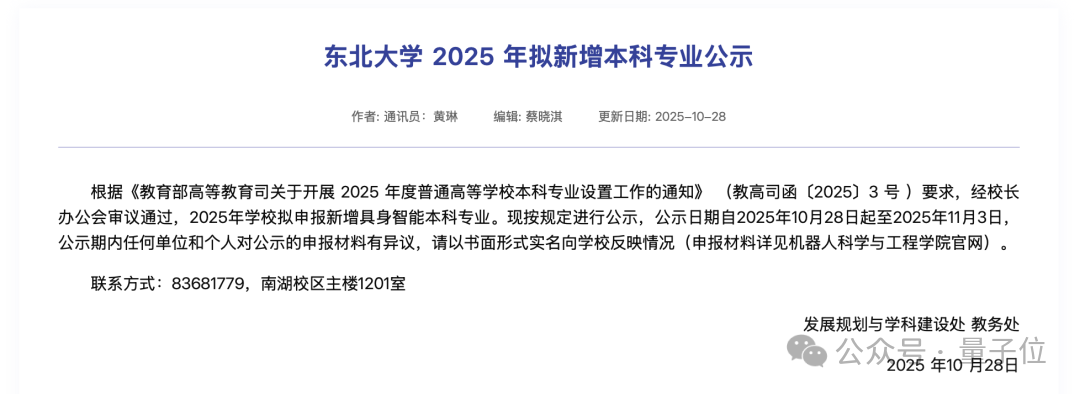
- Northeastern University: Plans to establish an embodied intelligence undergraduate major
- Nanjing University of Aeronautics and Astronautics: Adding Electric Transportation Engineering, Digital Economy, and Embodied Intelligence majors
- University of Science and Technology of China: Robotics Engineering with dual tracks in Intelligent Manufacturing & Embodied Intelligence
- Applications also filed by Beihang University, BIT, BUPT, Zhejiang University, Xi’an Jiaotong University
---
Expanding Industry–Academia Labs
- Zhipingfang + Peking University: Joint lab tackling 4D world models & autonomous agents
- Nanjing University + Digua Robotics + Volcano Engine: Cloud–edge–endpoint integrated lab
- Tsinghua University Dept. of Automation + Beijing Institute of General AI: Embodied Intelligent Systems Beijing Key Lab
---
Startup & Funding Boom
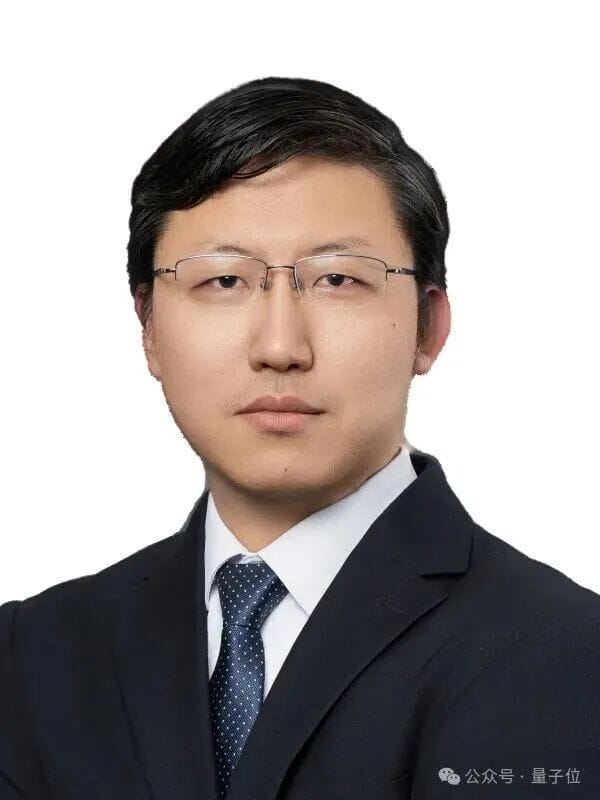
- Itosh Zhihang: Founded by Chen Yilun, raised $240M USD at angel stage
- Shenzhen Nuoyin Zhixing Technology: Founded by Li Yinchuan, first round closed within one month of launch
- First half of 2025:
- 144 publicly disclosed financing events
- ~19.5B RMB total — exceeding last year’s full amount
- 100M+ RMB single rounds common; state capital increasingly involved
- Fastest-growth examples: Xinghaitu (5 rounds in 6 months), Zhipingfang (7 rounds at 100M+ RMB each)
---
Strategic Significance
The embodied intelligence sector now mirrors the AI undergraduate expansion of 2018, combining:
- Academic research
- Industry collaboration
- Capital infusion
Parallel in AI Content
Platforms like AiToEarn官网 demonstrate how open-source, global ecosystems connect innovation with commercialization.
- Multi-platform publishing
- AI-powered analytics & model ranking (AI模型排名)
- Supports content distribution to Douyin, Kwai, YouTube, X, and more
Such frameworks reflect the multidisciplinary collaboration needed for embodied intelligence success.
---
Conclusion:
Shanghai Jiao Tong University’s move to establish the world’s first embodied intelligence undergraduate major marks a significant milestone — not just for academia, but for the future of AI’s integration into robotics, industry, and society.
---
Would you like me to also create a concise one-page version of this article for quick reading? That could make this much more shareable.